
农业技术合作

Search documents
“我们找到了一条通往富裕的道路”
Ren Min Ri Bao· 2026-02-27 06:14
Core Insights - The article highlights the successful implementation of agricultural technology cooperation between China and The Gambia, focusing on rice production improvements through modern techniques and equipment [4][6]. Group 1: Agricultural Technology Cooperation - The Chinese agricultural technology cooperation project in The Gambia has introduced advanced farming techniques and machinery, significantly enhancing local rice production [4][6]. - The project includes hands-on training for local farmers, providing them with knowledge on seed selection, planting, and the use of modern equipment like rice transplanters and harvesters [4][5]. Group 2: Impact on Local Farmers - Local farmer Musa Dabo experienced a transformation in his farming practices, leading to a rice yield of 10.8 tons per hectare, which is 2 to 3 times higher than traditional local varieties [4][5]. - The introduction of a cooperative model has allowed over 2,000 local farmers to access quality seeds, fertilizers, and comprehensive mechanized services, fostering community development [5]. Group 3: Government Support and Food Security - The Gambian Minister of Agriculture, Demba Sabally, emphasized that the high-yield seeds and modern agricultural practices brought by the Chinese team are crucial for achieving food security in The Gambia [6]. - The collaboration is seen as a pathway to reduce reliance on rice imports and enhance local agricultural productivity, instilling confidence in the country's food security goals [6].

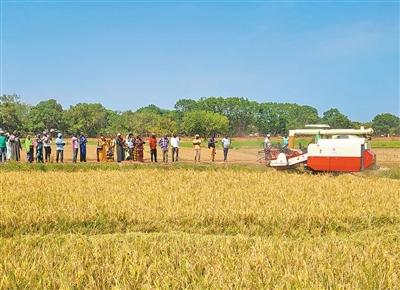
中国技术助力冈比亚水稻增产 当地农户感慨——“我们找到了一条通往富裕的道路”
Ren Min Ri Bao· 2026-02-26 22:10
Core Viewpoint - The collaboration between Gambian farmers and Chinese agricultural experts has significantly improved rice production in The Gambia, showcasing the impact of modern agricultural technology and practices on local farming. Group 1: Agricultural Transformation - The introduction of hybrid rice varieties and modern farming techniques has led to a rice yield of 10.8 tons per hectare, which is 2 to 3 times higher than local varieties [1] - The use of Chinese machinery, such as combine harvesters, has drastically reduced labor time and losses, with a reported 30% decrease in losses during harvesting [2] Group 2: Cooperative Development - A "company + farmer" cooperative model has been established, providing over 2,000 local farmers with access to quality seeds, fertilizers, and comprehensive mechanized services [2] - The cooperative approach has transformed local farming from subsistence to a pathway towards prosperity, as noted by cooperative member Roshy Samate [2] Group 3: Government Support and Food Security - The Gambian Minister of Agriculture, Demba Sabally, highlighted that the collaboration with Chinese experts has been crucial in achieving record rice production, contributing to the country's food security goals [2]
“助力塞拉利昂早日实现粮食自给自足”(共创繁荣发展新时代)
Ren Min Ri Bao· 2025-12-08 22:10
Core Viewpoint - The agricultural cooperation between China and Sierra Leone has significantly improved local rice production through the introduction of advanced agricultural techniques and machinery, leading to increased yields and enhanced farming practices [1][2]. Group 1: Agricultural Technology and Yield Improvement - The introduction of high-quality rice seeds and technology by the Chinese agricultural expert group has increased rice yields in Sierra Leone from approximately 3 tons per hectare to about 9 tons per hectare [1]. - The agricultural expert group has established six demonstration farms, showcasing Chinese agricultural techniques, which have led to a rise in local maize yields from about 400 jin per mu to approximately 1000 jin per mu [2]. Group 2: Training and Capacity Building - The agricultural expert group has conducted 18 training sessions, covering over 400 participants, focusing on pest control, machinery usage, and other agricultural practices [2]. - Local farmers and agricultural students have received hands-on training in operating advanced machinery, such as tractors and combine harvesters, enhancing their skills and productivity [1][2]. Group 3: Infrastructure Development - The expert group has assisted in building infrastructure such as water pump generator rooms and leveling field roads to facilitate local agricultural production [2]. - New drying facilities for harvested crops have been constructed, providing convenience for local farmers in processing their yields [2].
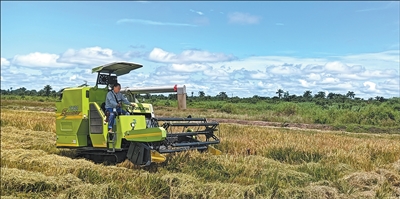
中国援塞农业专家组打造农业示范基地、推广应用新技术—— “助力塞拉利昂早日实现粮食自给自足”(共创繁荣发展新时代)
Ren Min Ri Bao· 2025-12-08 22:03
Core Insights - The agricultural cooperation project between China and Sierra Leone has significantly improved local rice yields, with production increasing from approximately 3 tons per hectare to about 9 tons per hectare due to the introduction of high-quality rice seeds and technology [1] - The project has established multiple agricultural demonstration farms, showcasing advanced agricultural techniques and training local farmers, which has led to a rise in the adoption of Chinese crop varieties [2] Group 1 - The Chinese agricultural expert team has established six demonstration farms in Sierra Leone, including Ogou Farm, Kenema Farm, Bo City Farm, and Engala Farm, to showcase agricultural technology and practices [2] - The introduction of high-yield maize cultivation techniques at Ogou Farm has increased local maize production from approximately 400 jin per mu to about 1000 jin per mu [2] - The expert team has conducted 18 training sessions, covering over 400 participants, focusing on pest control, machinery use, and other agricultural practices [2] Group 2 - The project has also facilitated the construction of infrastructure such as water pump generator rooms and the leveling of field roads to enhance local agricultural productivity [2] - The Engala Farm has become a site for field investigations by local research institutions, indicating its role in agricultural research and development [2] - Local university officials believe that the Chinese rice varieties are well-suited for cultivation in Sierra Leone and have significant potential for increasing production, supporting the goal of food self-sufficiency [2]
中方技术助力乌兹别克斯坦提升马铃薯产量
Xin Hua She· 2025-11-26 07:44
Core Insights - The "China-Uzbekistan High-Yield Potato Technology Joint R&D Base" has successfully completed its project acceptance, showcasing significant advancements in potato cultivation techniques [1][2] - The Qingdao Agricultural University team conducted field trials with four potato varieties and 16 different cultivation techniques, achieving an average yield of 34 tons per hectare, with five techniques exceeding 40 tons per hectare, and two reaching 45 tons per hectare [1] - The average yield of conventional autumn potatoes in the surrounding area was approximately 18 tons per hectare, highlighting the effectiveness of the new techniques [1] Agricultural Techniques - The Qingdao Agricultural University team developed a "technical combination" tailored to local climate conditions, incorporating seed treatment with agents, standardized precision sowing, and integrated water and fertilizer management [1] - Techniques such as drip irrigation, shading, and optimized planting density were employed to enhance both the yield and quality of potatoes [1] Future Collaboration - The director of the Uzbek Academy of Sciences expressed a desire to deepen agricultural cooperation with China, focusing on increasing crop yields and developing drought-resistant varieties [1] - The application of Chinese technology in local agricultural practices has shown significant results, ensuring high yields and efficient water resource management, which is strategically important for local agriculture [2]
巴基斯坦芒果节在京举办 “黄金水果”架起友谊桥
Zhong Guo Jing Ji Wang· 2025-08-14 06:58
Core Points - The event "Mango Festival" held by the Pakistani Embassy in China aims to enhance economic cooperation and cultural exchange between China and Pakistan through mangoes, which are considered a symbol of hospitality in Pakistan [3][4] - Pakistan is the sixth largest mango exporter globally, with over 200 varieties, and has maintained an annual export volume of 120,000 to 130,000 tons over the past decade [3] - In 2023, mango exports to China reached 115,000 tons, generating a trade value of $80 million, making China one of the fastest-growing markets for Pakistani mangoes [4][6] Economic Cooperation - The Pakistani Senate's Finance Committee Chairman expressed hopes to promote trade in high-quality agricultural products and deepen bilateral relations through this event [3] - Cold chain logistics cooperation has reduced transportation time for Pakistani mangoes by 50%, significantly lowering loss rates [4] - The introduction of e-commerce platforms has led to peak sales of over 100,000 pounds in a single day, with a 98% satisfaction rate from consumers [4] Future Plans - Pakistan aims to double its mango exports to China within the next five years, leveraging China's expertise in agricultural technology and practices [6] - The Pakistani government is actively supporting mango exports, including the establishment of an expedited customs clearance process for mango products [6] - A B2B investment meeting focusing on the fruit and vegetable industry is scheduled for September 4, aiming to attract investment and enhance cooperation [6] Cultural Significance - The mango is viewed as a "diplomat of taste," symbolizing the deep-rooted cultural ties and friendship between China and Pakistan [9] - Social media engagement around "Pakistani mangoes" has reached over 500 million views, indicating strong consumer interest and support for these products [9] - Suggestions for future cooperation include mutual recognition of quarantine standards and investment in mango industry parks to develop new varieties suitable for air transport [9]
中国援布隆迪农业专家组帮助当地种植杂交水稻3800公顷 “为布隆迪农业发展注入新动力”(共创繁荣发展新时代)
Ren Min Ri Bao· 2025-08-03 21:55
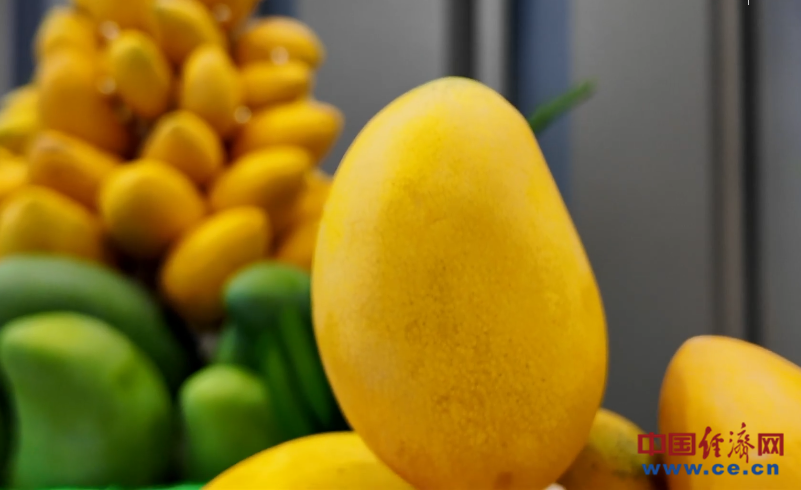
Core Insights - The agricultural cooperation project between China and Burundi has significantly improved rice production in Burundi, leading to enhanced livelihoods for local farmers [1][2][3] Group 1: Agricultural Development - Chinese agricultural experts have established 76 demonstration villages in 15 major rice-producing areas, successfully breeding 7 rice varieties suitable for local conditions [2] - The area of hybrid rice cultivation has reached 3,800 hectares, resulting in an annual increase of 28,500 tons in production and an income boost of 14.25 million USD [2] - In Rutana Province, the area for hybrid rice cultivation has expanded to 900 hectares, with yields exceeding 12 tons per hectare [2][3] Group 2: Economic Impact - Farmers in Burundi have reported significant increases in income due to the introduction of hybrid rice, with yields rising from 2.5-3 tons per hectare to over 10 tons [3] - The "productive input fund" model introduced by Chinese experts has helped 134 households in Linge Four Village achieve complete poverty alleviation [3] - The Burundian government has incorporated the reliance on Chinese agricultural technology for rice production into its national agricultural development plan [3]

中拉在现代化征程上并肩前行
Jing Ji Ri Bao· 2025-05-16 21:56
Group 1: China-Latin America Cooperation - The fourth ministerial meeting of the China-Latin America and Caribbean Community Forum opened in Beijing, highlighting the forum's role as an important platform for equal dialogue and mutually beneficial cooperation over the past decade [1] - The cooperation between China and Latin America has developed into a comprehensive, multi-level, and wide-ranging dialogue and cooperation network, showcasing numerous success stories [1] Group 2: Clean Energy Initiatives - The Peñasco Port solar power project in Mexico, built by a Chinese company, has significantly improved local electricity supply, becoming the largest solar project in Latin America upon completion [2] - Over the past decade, China-Latin America cooperation in clean energy has illuminated many homes in Latin America, with projects like the Belo Monte transmission project in Brazil and the Punta wind farm in Chile contributing to local sustainable development [2][3] - The geographical and climatic conditions in Latin America are suitable for clean energy development, and China's expertise in project construction and operation complements this potential [2] Group 3: Agricultural Technology Collaboration - The use of Chinese agricultural drones in Guyana's rice cultivation has improved yield from 5.9 tons per hectare in 2019 to an expected 6.6 tons per hectare in early 2024, with further increases anticipated [5] - The project includes training and guidance from Chinese experts, resulting in the establishment of a digital agriculture framework in Guyana [5] - Broader agricultural technology cooperation between China and Latin America is yielding significant results, contributing to sustainable agricultural development globally [6]
特稿|在各自现代化征程上并肩前行——中拉双向奔赴的四季故事
Xin Hua She· 2025-05-13 13:47
Group 1: China-Latin America Cooperation - The China-Latin America and Caribbean Countries Community Forum has become an important platform for equal dialogue and mutually beneficial cooperation over the past decade [1] - The cooperation has led to significant projects such as the Peñasco Port photovoltaic power station in Mexico, which will be the largest solar project in Latin America upon completion, with a total installed capacity of 300 MW and a daily maximum output of 2.04 million kWh [3][4] - The collaboration in clean energy has illuminated many homes in Latin America, with projects in Brazil, Chile, Cuba, and Colombia contributing to local energy needs [3][4] Group 2: Cultural Exchange - The popularity of Brazilian acai in China reflects the growing cultural exchange, with increasing interest in Brazilian products and culture among Chinese consumers [5][6] - The "Chinese fever" in Latin America has led to a rise in cultural exchanges, including language learning and participation in international book fairs [7][8] Group 3: Agricultural Technology Cooperation - The use of Chinese agricultural drones in Guyana's rice cultivation has improved yields from 5.9 tons per hectare in 2019 to 6.6 tons per hectare in 2024, with further increases expected [10][11] - The project includes training and guidance from Chinese experts, enhancing local agricultural capabilities and contributing to food security goals [11][12] Group 4: Trade and Economic Cooperation - The sales of Peruvian amaryllis in China's flower market have surged, with sales in Shanghai increasing by nearly 80% compared to the previous year, showcasing the success of Sino-Latin American trade [13][14] - The trade volume between China and Latin America exceeded $510 billion in 2024, doubling from ten years ago, with China being the second-largest trading partner for Latin America [14]