
农村假冒伪劣食品整治

Search documents
广西玉林向农村假冒伪劣食品“亮剑”
Xin Lang Cai Jing· 2026-01-12 01:28
Core Viewpoint - The Guangxi Zhuang Autonomous Region's Yuzhou District Market Supervision Bureau has initiated a special campaign to combat counterfeit and inferior food products in rural areas, focusing on regulatory enforcement and education to enhance compliance among food operators [1][2] Group 1: Campaign Overview - The special campaign has inspected 134 rural food business entities, identifying two issues that have been rectified by January 8 [1] - The focus of the inspections includes rural food production enterprises, small restaurants, workshops, shops, vendors, and rural markets [1] Group 2: Inspection Focus - In the production phase, the campaign checks for valid production licenses, the use of unknown or contaminated raw materials, and the unauthorized use of food additives [1] - In the sales phase, the campaign targets the sale of "three-no" products (no production license, no quality guarantee, no manufacturer) and counterfeit goods [1] Group 3: Educational Efforts - Enforcement personnel are providing face-to-face administrative guidance to enhance compliance capabilities among operators [1] - The campaign includes increased public awareness efforts, utilizing local events to promote food safety knowledge and consumer rights [1] Group 4: Future Plans - The Market Supervision Bureau plans to deepen the special campaign against counterfeit food, strengthen regulatory measures, and establish a long-term supervision mechanism [2] - The bureau aims to implement "tracking rectification" and "follow-up inspections" to prevent the recurrence of identified issues and improve the overall consumer environment [2]
一问到底丨如何守护舌尖上的安全?聚焦食品添加剂、校园餐、直播售卖等
Yang Shi Wang· 2025-12-23 15:48
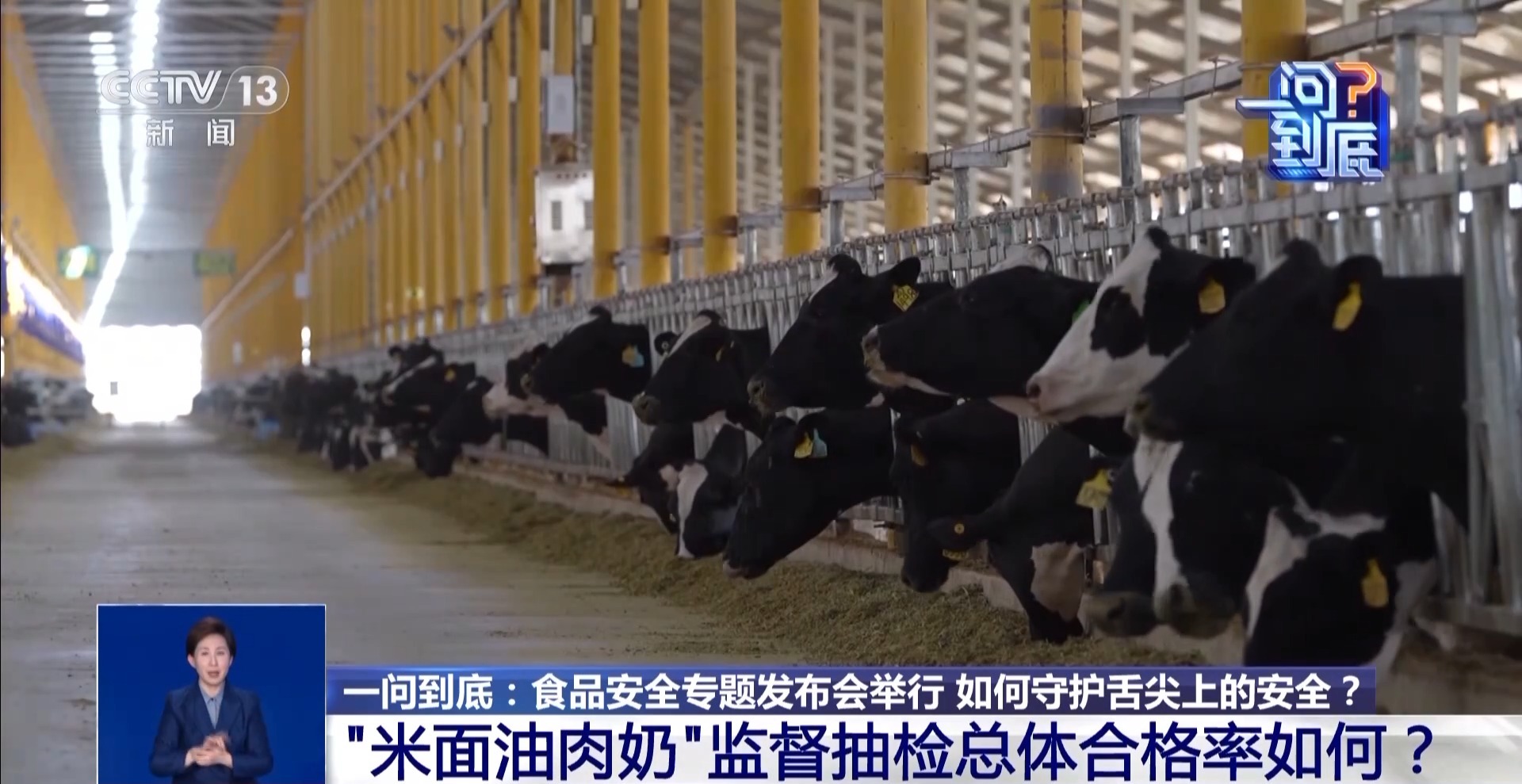
Core Viewpoint - The National Market Supervision Administration (NMSA) has conducted a comprehensive food safety inspection, revealing a stable overall food safety situation in China, with specific focus on meat products and edible oils, and has implemented new regulations to enhance food safety in various sectors, including e-commerce and school cafeterias [1][4][11]. Group 1: Food Safety Inspection Results - As of November this year, the NMSA completed 6.1769 million batches of food safety inspections, detecting 172,300 non-compliant batches, resulting in a non-compliance rate of 2.79% [1] - Among 39 categories of inspected foods, 24 categories had a non-compliance rate of less than 1%, with staple foods like rice, flour, oil, meat, and milk showing low non-compliance rates of 0.17%, 0.01%, 0.66%, 0.52%, and 0.08% respectively [1][3]. Group 2: Special Rectification of Meat Products and Edible Oils - The NMSA has focused on rectifying issues related to adulteration in meat products and edible oils, inspecting 2.45 million meat production and operation entities, leading to 35,529 cases filed and 1,511 cases referred for criminal investigation [4] - For edible oils, 1.892 million entities were inspected, resulting in 2,581 cases being filed, indicating significant progress in addressing these issues [4]. Group 3: Improvement in Infant Formula Safety - The compliance rate for domestic infant formula has remained above 99.95% for four consecutive years, with inspections covering all registered production and sales enterprises [3]. Group 4: Issues with Food Additives and Counterfeit Products - The NMSA has intensified efforts against counterfeit and substandard food products, filing 129,600 cases and seizing 2,071 tons of counterfeit food, while also addressing the misuse of food additives with 13,180 cases investigated and fines totaling 90.38 million yuan [7]. Group 5: Enhancements in Campus Food Safety - New measures have been implemented to strengthen food safety in schools, including the establishment of a dual food safety supervisor system for contracted school cafeterias to prevent management responsibility from being shifted [10][11]. Group 6: New Regulations for E-commerce and Chain Stores - The NMSA is set to release new regulations for live-streaming e-commerce, clarifying the food safety responsibilities of platforms and streamers, and enhancing consumer protection against substandard products [11][17] - Regulations for chain stores require headquarters to manage food safety across all branches, ensuring accountability and compliance with safety standards [19][21].

新疆乌苏市市场监管局扎实推进农村假冒伪劣食品整治工作 普及食品安全知识
Zhong Guo Shi Pin Wang· 2025-12-10 11:18
Core Viewpoint - The Urumqi City Market Supervision Bureau is actively promoting food safety and legal awareness in rural areas through various outreach activities aimed at combating counterfeit and inferior food products [1][2] Group 1: Food Safety Initiatives - The Market Supervision Bureau has implemented a series of activities to educate the public about food safety, utilizing methods such as on-site inspections, distribution of manuals, and legal knowledge dissemination [1] - The activities leverage the high foot traffic of local markets to effectively reach consumers and merchants, focusing on the dangers of counterfeit food products and methods for identification [1] Group 2: Legal Awareness and Community Engagement - The initiative includes targeted legal education tailored to different groups, using case studies to clarify common legal issues related to consumer complaints and dispute resolution [1] - Over 500 promotional materials were distributed, and 36 consultations were provided during the events, enhancing community engagement and legal understanding [1] Group 3: Future Plans and Community Involvement - The Market Supervision Bureau plans to continue its food safety legal education efforts, integrating legal promotion with food safety governance and improving the business environment [2] - The Bureau encourages public participation and media involvement in monitoring food safety issues, providing a contact number for consumers to report counterfeit food products [2]
我市发布第二批 农村假冒伪劣食品专项整治典型案例
Mei Ri Shang Bao· 2025-11-12 22:23
Core Points - The articles highlight multiple cases of food safety violations in Hangzhou, focusing on the use of expired ingredients and illegal additives in food production [1][2][3][4] - The Hangzhou Market Supervision Administration has initiated a special campaign to address counterfeit and substandard food products, particularly in rural areas [4] Group 1: Specific Cases of Violations - A company in Fuyang District was found using expired candied fruit and vegetable fillings for mooncakes, leading to a fine of 101,300 yuan for violating food safety laws [1] - A vegetable food company in Qiantang District was penalized 100,200 yuan for using expired soy sauce in pickled vegetables and falsely advertising prices online [2] - A hotel in Jiande City was fined 15,400 yuan for illegally selling wild animal meat without legal sourcing documentation [3] Group 2: Regulatory Actions - The Hangzhou Market Supervision Administration has launched a special rectification action targeting counterfeit and substandard food products, focusing on rural food production enterprises and markets [4] - The second batch of typical cases from this campaign includes five significant violations, emphasizing the ongoing efforts to enhance food safety standards [4]
河南省市场监管局公布一批农村假冒伪劣食品整治典型案例
Zhong Guo Zhi Liang Xin Wen Wang· 2025-08-05 09:14
Core Viewpoint - The article highlights the efforts of the Henan Provincial Market Supervision Administration to combat counterfeit and substandard food products in rural areas, showcasing several cases of violations and the corresponding penalties imposed on offenders [1][2][3][4][5][6]. Group 1: Case Summaries - Case 1: A supermarket in Jiyuan was found selling counterfeit Fenjiu, violating trademark laws, leading to criminal prosecution [1]. - Case 2: A trading company in Zhengzhou was penalized for selling food with false production dates and expired products, resulting in a fine of 150,150 yuan [1]. - Case 3: A food processing factory in Xinyang used expired raw materials and had misleading labels, incurring a fine of 85,000 yuan [1]. - Case 4: A food company in Pingdingshan was caught producing adulterated products, leading to a fine of 85,000 yuan and revocation of its production license [2]. - Case 5: A grocery store in Shangqiu sold counterfeit "Unified" green tea, resulting in a fine of 62,757 yuan [3]. - Case 6: A food company in Xinxiang was penalized for marking false production dates on its products, with a fine of 50,000 yuan [4]. - Case 7: A hot spring hotel in Kaifeng was fined 44,720 yuan for producing bottled water without a license [5]. - Case 8: A food factory in Zhumadian was found using another company's name and label for its products, incurring a fine of 37,100 yuan [6]. - Case 9: A food company in Luohe was penalized for selling expired beef products, resulting in a fine of 27,900 yuan [6]. - Case 10: A retail store in Xuchang was fined 25,000 yuan for false advertising of health food products [6].
北京开展农村假冒伪劣食品专项整治 涉及制假售假、欺骗误导消费
Bei Jing Shang Bao· 2025-04-14 09:26
Core Viewpoint - Beijing's market supervision authority is launching a 10-month special campaign to combat counterfeit and substandard food products in rural areas, focusing on issues such as raw material contamination, counterfeiting, and misleading consumer practices [1][2] Group 1: Campaign Details - The campaign will rigorously target illegal activities in food production and sales, including the excessive use of food additives, sale of "three-no" products (no production license, no quality guarantee, no label), and false advertising [1] - Key areas of focus include rural food production units, centralized trading markets, and online food trading platforms [1] Group 2: Consumer Guidelines - Consumers are advised to follow the "seven refusals" principle when shopping, which includes rejecting expired products, "three-no" foods, and counterfeit items that closely resemble well-known brands [1][2] - Additional guidelines include being cautious of packaging details, avoiding products with dark colors, unclear patterns, or printing defects, and ensuring that imported foods have proper inspection certificates [2]
北京启动农村假冒伪劣食品专项整治行动
Xin Jing Bao· 2025-04-14 03:43
Core Viewpoint - Beijing's market regulatory authority has launched a 10-month special campaign to combat counterfeit and inferior food products in rural areas, focusing on enhancing consumer awareness and providing guidelines to identify fake products [1] Group 1: Special Campaign Details - The campaign targets issues such as raw material contamination, counterfeiting, and misleading consumer practices [1] - Key areas of focus include food production and operation units, centralized trading markets, and online food trading platforms [1] - The authority encourages consumers to report illegal activities related to counterfeit food products through hotlines [1] Group 2: Consumer Guidelines - Seven principles for consumers to avoid risks include rejecting expired food, "three-no" products, counterfeit products, and those with false health claims [2][3][4][5][6][7][8] - Consumers are advised to prioritize purchasing from licensed retailers and to check product appearance and smell to avoid spoiled items [9][10] - Important label information such as production date, expiration date, and manufacturer details should be verified before purchase [11]