
创新药医保准入

Search documents
医保准入:上市即入保,大幅提升药品可及性
Yang Zi Wan Bao Wang· 2025-12-09 05:31
Core Insights - The recent inclusion of AbbVie's innovative drug, Risankizumab (brand name: Skyrizi), in the 2025 National Medical Insurance Directory represents a significant breakthrough for Crohn's disease treatment, as it will be reimbursed starting January 1, 2026, reducing the financial burden on patients [1][2][3] Group 1: Disease Overview - Crohn's disease is a chronic inflammatory bowel disease that primarily affects young adults aged 18-35, with symptoms including abdominal pain, diarrhea, and weight loss [1] - The number of Crohn's disease patients in China is increasing at an annual rate of 5%-10%, leading to significant healthcare costs for families [2] Group 2: Treatment Landscape - Risankizumab is the first IL-23 inhibitor specifically targeting moderate to severe active Crohn's disease, with over 40 countries having real-world usage experience for more than three years [2] - The drug has shown impressive efficacy, with mucosal healing effects approximately double that of similar drugs and 85% of patients maintaining clinical remission for two years [2] Group 3: Financial Implications - Prior to its inclusion in the insurance scheme, the high cost of Risankizumab made it a challenging option for many patients, often leading to difficult choices between treatment efficacy and affordability [3] - With the drug now covered by insurance, the out-of-pocket expenses for patients will significantly decrease, making it more accessible and alleviating financial pressure on families [3]
从医保准入打开增量,来看轩竹生物-B(2575.HK)以差异化管线筑牢价值根基
Ge Long Hui· 2025-12-08 10:04
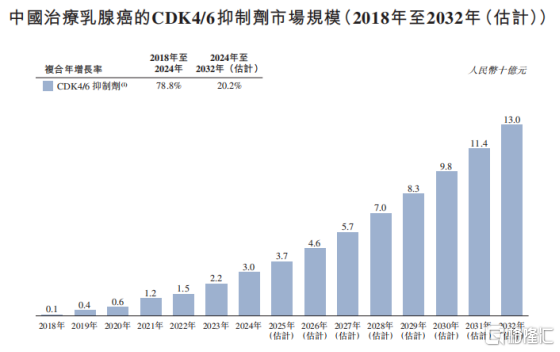
Core Insights - The recent adjustment of the National Medical Insurance Directory for 2025 has significantly benefited XuanZhu Biotech, marking a pivotal moment for its innovative drugs [1][2] - The inclusion of the CDK4/6 inhibitor Palbociclib and the renewal of the proton pump inhibitor Anaprazole in the insurance directory are crucial for the commercialization phase of these products [2][4] Product Developments - Palbociclib is the only approved single-agent treatment for HR+/HER2- breast cancer in China, with a projected market growth from 3 billion yuan in 2024 to 13 billion yuan by 2032, reflecting a compound annual growth rate of 20.2% [5][8] - Anaprazole, as the first self-developed PPI in China, has shown steady revenue growth, achieving approximately 30.1 million yuan and 17.9 million yuan in revenue for the fiscal years ending December 31, 2024, and June 30, 2025, respectively [10] Market Positioning - The successful inclusion of these drugs in the insurance directory enhances patient accessibility and aligns with the industry's trend towards addressing clinical needs and achieving scale [4][10] - XuanZhu Biotech's strategic focus on differentiated innovation and expanding its product pipeline positions it well against the backdrop of increasing competition in the innovative drug sector [12][13] Financial Performance - The company has demonstrated a robust capital structure, with over 20% of its shares held by external investment institutions, indicating strong recognition of its R&D capabilities [2] - The transition from a biotech phase reliant on financing to a biopharma phase capable of generating cash flow is evident as the company’s R&D expenditures decrease while revenue increases [22] Strategic Collaborations - XuanZhu Biotech's collaboration with Akamis Bio to introduce the injectable oncolytic virus therapy NG-350A highlights its commitment to expanding its innovative pipeline and enhancing its market presence [16] - The company is also advancing several first-in-class products, such as the HER2 dual-targeting ADC KM501 and the CD80 fusion protein KM602, which are currently in clinical trials [15] Market Trends - The innovative drug sector is experiencing a shift from a focus on pipeline scarcity to a demand for tangible commercialization results, with investors prioritizing companies that can efficiently convert R&D into marketable products [18][19] - XuanZhu Biotech's established sales teams and distribution networks in the oncology and digestive disease sectors provide a solid foundation for rapid product uptake [20] Long-term Outlook - The combination of immediate revenue growth from newly approved products and a long-term strategy focused on differentiated pipeline development positions XuanZhu Biotech favorably for future valuation increases [25] - The company's ability to balance short-term performance with long-term growth potential is expected to attract investor interest in the evolving landscape of the innovative drug market [23][24]

2025医保、商保双目录公布:医保新增50种一类创新药,多款CAR
Xin Lang Cai Jing· 2025-12-08 07:57
Core Insights - The National Healthcare Security Administration (NHSA) and the Ministry of Human Resources and Social Security have issued a new drug directory for basic medical insurance and commercial health insurance, effective from January 1, 2026, which includes 114 new drugs, with 50 being innovative drugs, marking an 88% success rate compared to 76% in 2024 [2][12] Group 1: Commercial Health Insurance Drug Directory - The first edition of the commercial health insurance innovative drug directory includes 19 drugs, with a price reduction range of 15% to 50%, significantly lower than the basic medical insurance negotiation intensity [3][13] - Among the 19 drugs, there are 5 CAR-T products, 2 Alzheimer's drugs, and 6 rare disease medications, primarily focusing on high-cost treatments for catastrophic diseases [3][14] - The inclusion of CAR-T therapies in the commercial insurance directory represents a significant milestone, with all 5 domestic CAR-T therapies successfully entering the directory [3][13] Group 2: Innovative Drug Characteristics - The commercial health insurance directory emphasizes high innovation, significant clinical value, and substantial patient benefits, particularly for drugs that exceed basic medical insurance coverage [4][14] - Notable drugs include Takeda's injection of teduglutide for short bowel syndrome and North Sea Kangcheng's injection of velaglucerase alfa for Gaucher disease, which could significantly reduce treatment costs for patients [5][15] Group 3: Policy Support and Market Implications - Drugs included in the commercial health insurance directory will benefit from the "three exclusions" policy, which provides a more favorable environment for clinical application and timely treatment for patients [6][16] - The new drug directory is seen as a positive development for new drug launches, with commercial insurance attempting to address issues related to medical insurance funds [7][17] Group 4: Additional Drug Listings and Market Dynamics - The 2025 national medical insurance directory also includes drugs that fill gaps in basic insurance coverage, such as Sanofi's innovative blood cancer drug, which is the first of its kind approved in China [8][18] - Some high-profile drugs did not make it into the directory, highlighting the competitive nature of the approval process [8][19]

2025国谈落地:从用得上走向用得起
2 1 Shi Ji Jing Ji Bao Dao· 2025-12-07 23:50
Core Insights - The Chinese medical insurance directory will undergo its largest expansion of innovative drugs in history starting January 1, 2026, adding 114 new drugs, including 50 class 1 innovative drugs, while removing 29 drugs that are either unavailable or can be replaced by better alternatives [1][9] - The new directory will increase the total number of drugs to 3,253, significantly enhancing coverage for key areas such as oncology, chronic diseases, mental health, rare diseases, and pediatric medications [1][9] - The inclusion of innovative drugs in the medical insurance directory reflects a strong commitment to support genuine innovation and differentiated innovation in the healthcare sector [1][9] Medical Insurance Directory Expansion - The new medical insurance directory will include 114 new drugs, with nearly 44% being class 1 innovative drugs, indicating a growing emphasis on innovative treatments [1][2] - The directory aims to balance the clinical value of innovative drugs, corporate profits, and the sustainability of the insurance fund, with a new commercial insurance directory established for high-cost innovative drugs [2][15] - The entry of innovative drugs into the medical insurance directory is seen as a critical step in making these treatments accessible to patients, thereby reducing their economic burden [13][23] Market Dynamics and Trends - The inclusion of innovative drugs in the medical insurance directory is expected to accelerate sales growth for these products, reshaping the business models of Chinese innovative drug companies [4][20] - Companies like Hengrui Medicine and Innovent Biologics have successfully included multiple innovative products in the new directory, indicating a trend of increasing market access for innovative therapies [4][5] - The commercial insurance directory, which includes 19 innovative drugs, aims to provide additional support for high-cost treatments, potentially lowering patient treatment costs significantly [15][18] Focus on Key Therapeutic Areas - The new directory emphasizes significant clinical value and urgent patient needs, particularly in oncology, with new drugs targeting various types of cancers being added [10][11] - The inclusion of drugs for rare diseases and conditions like severe asthma highlights a commitment to addressing critical healthcare challenges faced by patients [16][17] - The directory also includes innovative treatments for chronic conditions such as diabetes, further expanding access to essential therapies for a large patient population [8][12] Policy and Regulatory Environment - Recent reforms in drug approval and medical insurance payment systems have created a conducive environment for the development of innovative drugs in China [19][20] - The acceleration of drug review processes and the establishment of a more rigorous value assessment framework are expected to enhance the accessibility of innovative treatments [19][22] - The collaboration between policy and capital markets is crucial for fostering innovation and ensuring the sustainability of the healthcare system [21][22] Future Outlook - The successful implementation of the new medical insurance directory is anticipated to restore investor confidence in the innovative drug market, which has seen a slowdown in investment interest recently [18][21] - The ongoing development of commercial insurance options for innovative drugs is expected to play a significant role in expanding patient access and improving treatment outcomes [18][19] - The transition from merely making innovative drugs available to ensuring they are affordable and effective represents a significant shift in the Chinese healthcare landscape [23][24]
信达生物7款创新药进入新版国家医保目录
Zheng Quan Ri Bao Wang· 2025-12-07 09:41
Group 1 - The National Healthcare Security Administration released the 2025 National Basic Medical Insurance, Maternity Insurance, and Work Injury Insurance Drug Catalog, along with the Commercial Health Insurance Innovative Drug Catalog [1] - Innovent Biologics has seven innovative products successfully included in the new medical insurance catalog, including the PD-1 inhibitor, Tyvyt (sintilimab injection), which has a new indication for advanced endometrial cancer [1][2] - Tyvyt is the only PD-1 inhibitor in its treatment area to be included in the medical insurance catalog, and it has been approved for eight indications since its launch in 2018, covering various cancers [1] Group 2 - Another innovative drug included in the new medical insurance catalog is IBI302 (teprotumumab), which is the first IGF-1R antibody drug approved in China and the second globally, marking a significant advancement in the treatment of thyroid eye disease [2] - Other innovative drugs added to the catalog target prevalent diseases such as lung cancer and hematological malignancies, including drugs like IBI308 (lazertinib), IBI310 (entrectinib), and IBI311 (ibrutinib) [2] - The inclusion of innovative drugs in the medical insurance catalog is a crucial step towards making these treatments accessible and affordable for more patients in China [2]
2024年抗肿瘤药物医保目录准入回顾
Huafu Securities· 2025-08-05 11:40
Group 1 - The core viewpoint of the report highlights the accelerated inclusion of anti-tumor drugs in the medical insurance directory, with significant effects from target coverage and volume expansion [2][10] - In 2024, 91 new drugs were added to the medical insurance directory, of which 29 were anti-tumor and immune modulators, accounting for 32% of the total [10][11] - The hospital sales revenue for anti-tumor and immune modulators reached 57.9 billion yuan, representing over half of the total sales for negotiated varieties [10][11] Group 2 - The report notes that the new anti-tumor drugs are predominantly focused on lung cancer, with 11 new drugs added for this indication, while no new drugs were included for liver, stomach, or esophageal cancers [4][23] - The current directory adjustments do not align with the cancer spectrum in China, where lung cancer accounts for 27.7% of cancer deaths, indicating unmet needs in other cancer types [4][23] Group 3 - High-priced therapies face dual challenges regarding medical insurance funds and efficacy value, particularly CAR-T therapies, which are priced significantly above the implicit payment threshold [5][27] - The report emphasizes the need for innovative payment ecosystems to support high-value therapies, as the current pricing and reimbursement models are unsustainable [28][27]