
利率干预

Search documents
10%利率上限=宣战华尔街?特朗普这招,是为民做主还是政治作秀?
Sou Hu Cai Jing· 2026-01-14 01:01
Group 1 - Trump has proposed a cap on credit card interest rates at 10% starting January 20, aiming to protect consumers from what he describes as "extortion" by financial institutions [1][3] - Current credit card interest rates in the U.S. are generally above 20%, with 50% of products exceeding 25% and 30% reaching nearly 30% [1] - Major banks and financial institutions have expressed strong opposition to Trump's proposal, threatening to terminate credit card and loan services if the cap is enforced [3][6] Group 2 - Trump's intervention in interest rates is seen as a continuation of his conflict with the financial sector, having previously criticized the Federal Reserve and threatened to replace its chairman [4][6] - Approximately 578 million Americans hold credit card accounts, with total credit card debt exceeding $1 trillion, indicating a significant portion of households are burdened by credit card balances [6] - The proposal is viewed as a political maneuver to gain support ahead of upcoming elections, although its feasibility is questioned due to strong resistance from the financial industry [6][9] Group 3 - The financial sector's resistance to Trump's proposal reflects the deep entrenchment of capital interests in U.S. politics, making it difficult for such measures to be implemented [6][9] - The ongoing conflict between Trump and financial institutions may lead to increased volatility in the U.S. financial markets, as investor confidence is shaken by political interventions [9] - Recent market reactions include declines in U.S. stock index futures, the dollar, and U.S. Treasury bonds, while gold prices have reached historical highs, indicating a shift in investor sentiment [9]

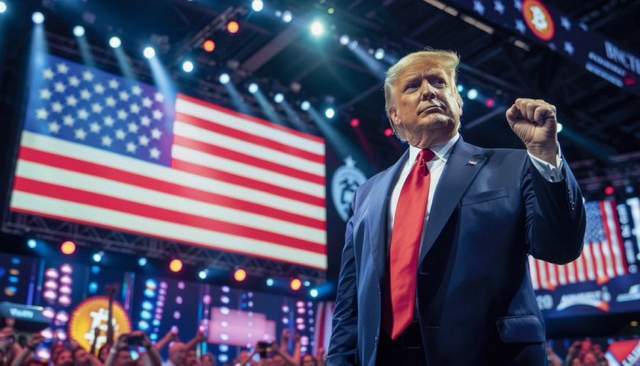
为保中期选举 特朗普向两种利率“下手”
Jin Rong Shi Bao· 2026-01-13 08:08
Core Viewpoint - The Trump administration is exerting pressure on the Federal Reserve to lower interest rates, which is seen as a challenge to the Fed's independence and reflects the political pressures ahead of the 2026 midterm elections [1] Group 1: Economic Context - The upcoming 2026 midterm elections are critical for the Trump administration, as a loss for the Republican Party could alter the balance of power in Congress, impacting policy implementation and Trump's political future [1] - Rising living costs are increasing public concern about the future, with a New York Fed survey indicating a worsening perception of credit access among households compared to the previous year [1] - The probability of consumers being unable to make minimum debt payments in the next three months has risen by 1.6 percentage points to 15.3%, the highest level since April 2020, particularly affecting older individuals, those with lower education, and households earning under $50,000 annually [1] Group 2: Policy Measures - The Trump administration is focusing on improving consumer debt affordability, with Trump proposing a cap on credit card interest rates at 10% for one year starting January 20, despite lacking legal support for this measure [2] - Trump's call for a credit card interest rate cap has faced criticism, with concerns that it could lead to credit card companies withdrawing services, forcing consumers to seek high-interest loans [2] - Additionally, Trump has requested Fannie Mae and Freddie Mac to purchase $200 billion in mortgage-backed securities to lower interest rates and monthly payments, indicating direct intervention in financial markets [3] Group 3: Market Implications - The administration's strategy of targeting credit card and mortgage rates is seen as a more immediate approach compared to influencing the federal funds rate, which has seen limited adjustments by the Fed [4] - The effectiveness of Trump's request for Fannie Mae and Freddie Mac to buy mortgage bonds in genuinely reducing mortgage burdens remains uncertain, as mortgage rates typically follow the trends of long-term U.S. Treasury yields [4]
从“房贷QE”到“信用卡限价”:当特朗普开始亲自定价利率
Hua Er Jie Jian Wen· 2026-01-10 11:44
Core Viewpoint - The Trump administration is intervening in the credit card interest rate market, proposing a cap of 10%, which reflects a shift in the traditional roles of monetary policy and executive power in determining interest rates [1][10]. Group 1: Mortgage Market Intervention - The Trump administration's approach to the mortgage market involves directing Fannie Mae and Freddie Mac to purchase mortgage-backed securities (MBS), aiming to mitigate the impact of the Federal Reserve's balance sheet reduction on MBS demand [4][5]. - This intervention is characterized by three features: it operates through market transactions rather than direct pricing, it affects spreads rather than benchmark rates, and it has historical precedents in quantitative easing (QE) [5]. Group 2: Credit Card Rate Cap Proposal - The proposal to impose a 10% cap on credit card interest rates is alarming to the market, as credit card rates are not merely a function of funding costs but are influenced by high risk and default rates [6][7]. - Currently, the average APR for credit cards in the U.S. ranges from 20% to 25%, and enforcing a cap at 10% would disrupt the risk pricing mechanism without any fiscal support, potentially leading banks to withdraw from the market [8]. Group 3: Broader Implications of Administrative Intervention - The deeper concern lies in the establishment of a precedent where the executive branch directly intervenes in interest rate settings, which could extend beyond credit cards to other loans such as auto and student loans [10][11]. - If this trend continues, it raises fundamental questions about how financial markets will reprice risk and capital, shifting the determination of interest rates from market forces to political judgments [12].