动力电池梯次利用

Search documents
天臣控股(01201.HK)携手时代星云及中汇智慧 引入光储充检一体化技术 推动香港电池梯次利用产业发展
Ge Long Hui· 2025-12-22 10:10
Group 1 - The company Tianchen Holdings (01201.HK) has signed a strategic cooperation agreement with Fujian Times Star Cloud Technology Co., Ltd. and Zhonghui Smart Technology Co., Ltd. to introduce advanced energy storage applications in Hong Kong [1] - The collaboration aims to establish a high-power charging facility with leading battery service performance testing technology and create a zero-carbon industrial internet ecosystem service platform in Hong Kong [1] - The introduction of battery testing technology is expected to create opportunities for the development of power battery cascade utilization in Hong Kong [1] Group 2 - Power battery cascade utilization refers to the process of reusing recovered power batteries from electric vehicles through various procedures before they enter recycling facilities, maximizing battery lifespan and promoting resource recycling and green low-carbon development [2]
天臣控股(01201)与时代星云、中汇智慧达成战略合作落地香港
智通财经网· 2025-12-22 10:07
Group 1 - The company Tianchen Holdings has signed a strategic cooperation agreement with Fujian Times Star Cloud Technology and Zhonghui Smart Technology to introduce advanced energy storage applications in Hong Kong [1] - The collaboration aims to establish a high-power charging facility with leading battery service performance testing technology and create a zero-carbon industrial internet ecosystem in Hong Kong [1] - The introduction of battery testing technology is expected to create opportunities for the development of power battery cascade utilization in Hong Kong [1] Group 2 - Power battery cascade utilization refers to the process of reusing electric vehicle batteries through various procedures before they are sent to recycling facilities, maximizing battery lifespan and promoting resource recycling and green low-carbon development [2]
天臣控股与时代星云、中汇智慧达成战略合作落地香港
Zhi Tong Cai Jing· 2025-12-22 10:07
Group 1 - The company has signed a strategic cooperation agreement with Fujian Times Star Cloud Technology Co., Ltd. and Zhonghui Smart Technology Co., Ltd. to introduce advanced energy storage applications in Hong Kong [1] - The collaboration aims to establish a high-power charging facility with leading battery service performance testing technology and create a zero-carbon industrial internet ecosystem in Hong Kong [1] - The introduction of battery testing technology is expected to create opportunities for the development of power battery cascade utilization in Hong Kong [1] Group 2 - Power battery cascade utilization refers to the process of reusing batteries recovered from electric vehicles through various procedures before they enter recycling facilities, maximizing battery lifespan and promoting resource recycling and green low-carbon development [2]
退役电池大潮来临,卖给谁你的收益最大?
3 6 Ke· 2025-11-19 08:31
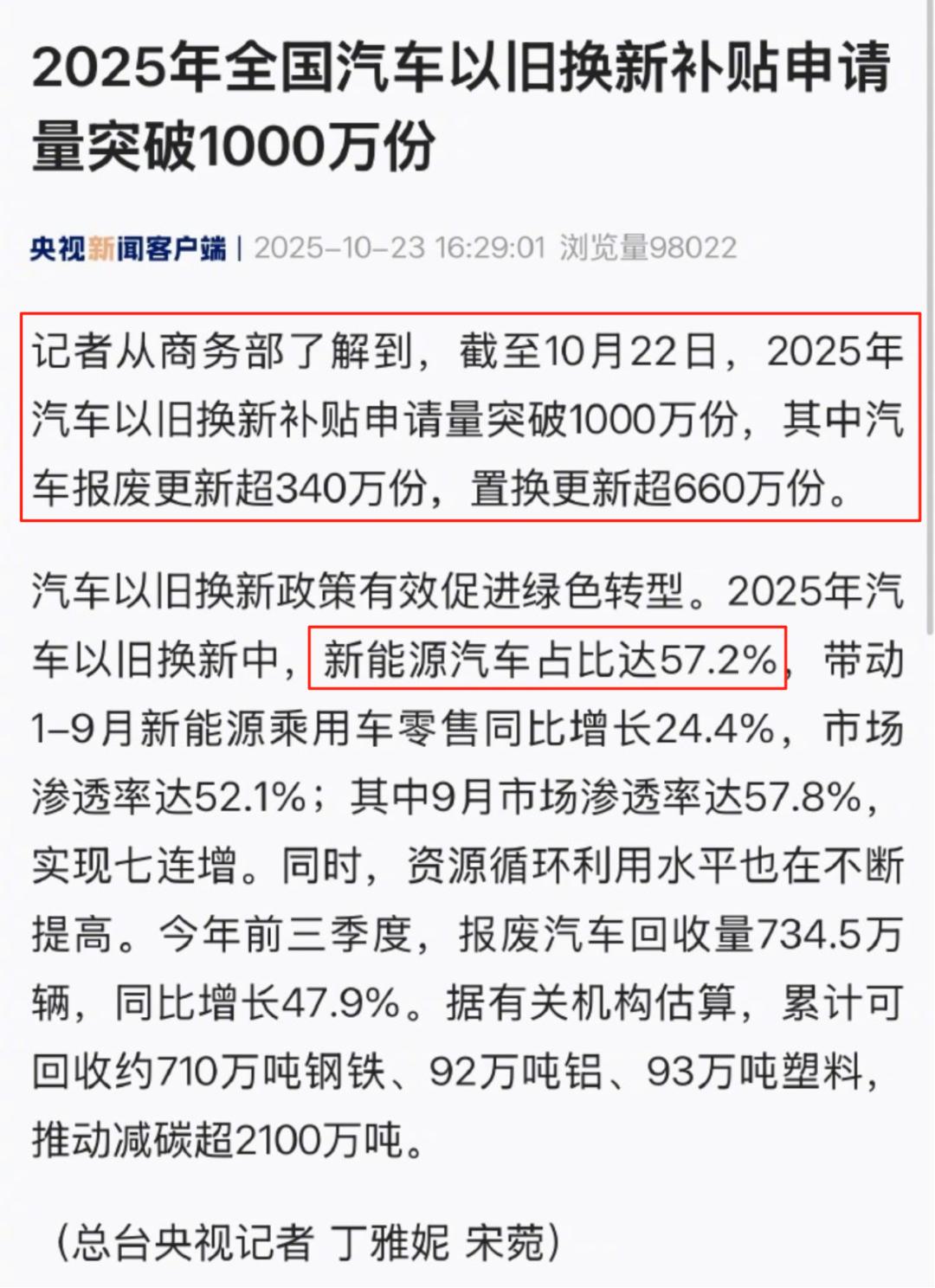
Core Insights - The article highlights the significant growth in the number of applications for vehicle trade-ins, with over 10 million applications by October 22, 2025, of which more than 3.4 million are for scrapping and over 6.6 million for replacement, with 57.2% being new energy vehicles [1][3]. Group 1: Market Trends - The main drivers for scrapping and replacing old new energy vehicles are their aging, rapid battery degradation, and safety concerns, with owners eligible for subsidies up to 20,000 yuan [3][4]. - The first wave of battery retirements is expected as the initial batch of new energy vehicles, which were popular from 2014 to 2017, reaches the end of their battery life, with a projected retirement volume of 820,000 tons by 2025 [4][8]. Group 2: Battery Recycling and Utilization - The article discusses two main pathways for handling retired batteries: "cascade utilization" for secondary applications and "recycling" for extracting valuable metals, which are essential for environmental sustainability and resource efficiency [10][11]. - The number of companies involved in battery recycling has surged to 172,000, indicating a growing interest and investment in this sector [8][10]. Group 3: Channels for Battery Disposal - There are four primary channels for disposing of retired batteries: official channels (government and manufacturer networks), third-party commercial channels (scrap yards and second-hand dealers), gray market channels (informal recyclers), and innovative models (like battery-as-a-service) [12][17][20]. - Official channels have established a network of over 10,908 battery recycling service points across China, with prices ranging from 150 to 400 yuan per kilowatt-hour depending on battery quality [15][17]. Group 4: Economic Considerations for Consumers - Consumers can maximize their returns by carefully choosing disposal methods, with potential earnings from battery sales and government subsidies reaching up to 22,000 yuan [29][33]. - The article emphasizes the importance of adhering to legal and environmental standards when disposing of batteries to avoid penalties and environmental harm [31][36]. Group 5: Policy Implications - Recent policy changes, such as the suspension of vehicle scrapping subsidies in certain regions, may impact consumer decisions regarding trade-ins and replacements [35][36]. - The article concludes that the transition in the new energy vehicle sector is not just a commercial challenge but also a test of sustainability and social responsibility in the context of battery recycling [36][37].