动画电影崛起

Search documents
动画电影的奇迹,2026年还能延续吗?
Cai Jing Wang· 2026-01-14 15:20
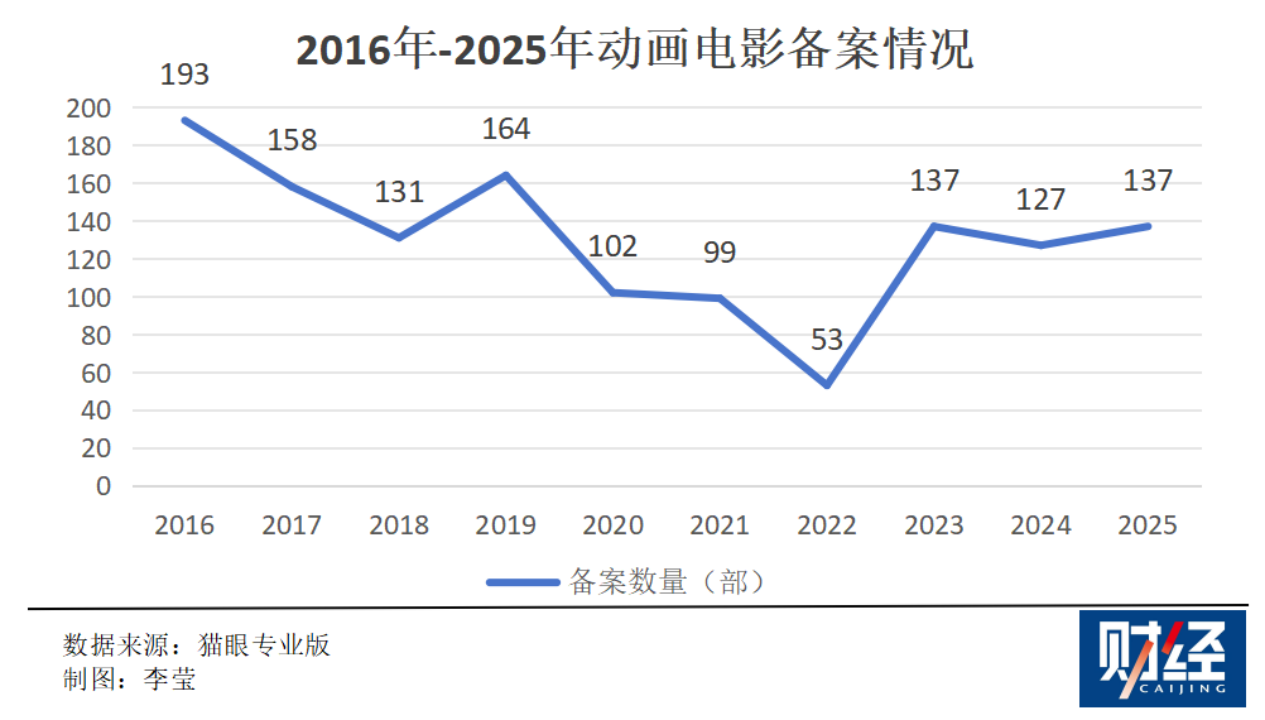
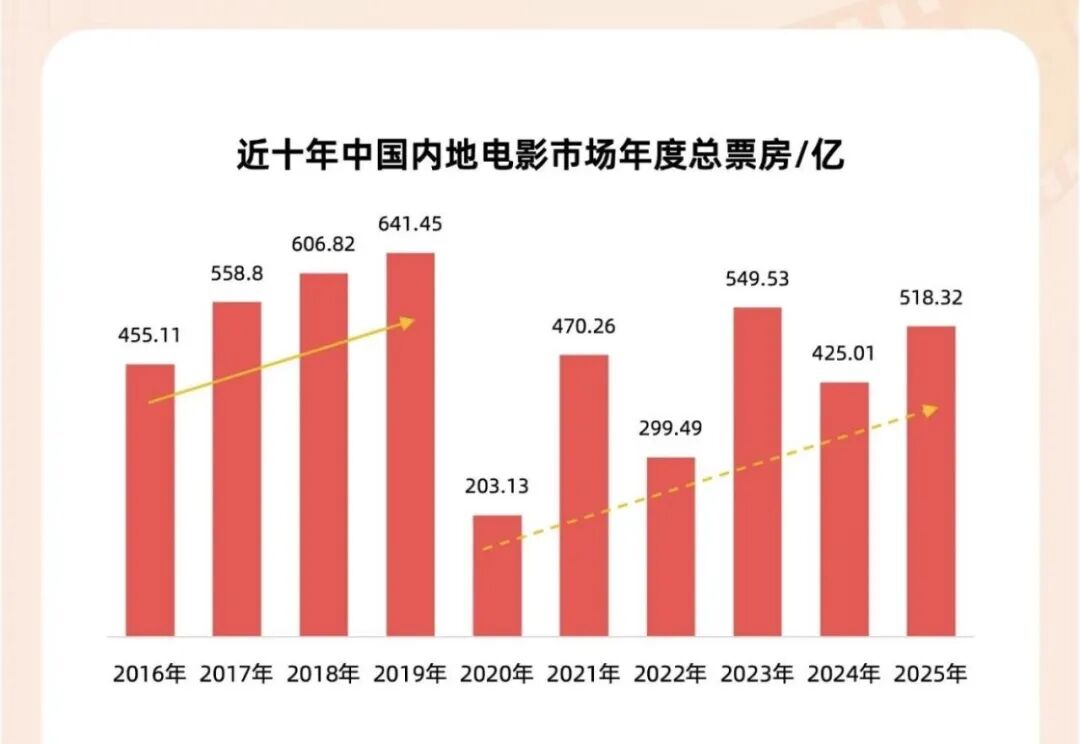
Core Insights - In 2025, animated films emerged as a key driver of box office performance in China, contributing nearly half of the total box office revenue of 518.32 billion yuan, with animated films generating 254.85 billion yuan [1][5][6] - The total box office for animated films in 2025 saw a remarkable increase of 272% compared to 2024, setting a new record for animated film box office in China [2] - The success of animated films like "Nezha 2" and "Zootopia 2" has raised questions about the sustainability of this trend in 2026, as traditional box office draws are losing their effectiveness [3][4] Industry Performance - The Chinese film market in 2025 included 289 films, with 57 being animated, accounting for approximately 19.7% of total releases [1] - The overall box office in 2025 grew by about 22% year-on-year, marking the second time since 2020 that the annual box office surpassed 500 billion yuan [5][6] - The market is experiencing a significant polarization, with a notable absence of films in the 2 billion to 3 billion yuan box office range, indicating a gap in mid-tier films [3][16] Factors Driving Animation Success - The rise of animated films is attributed to several factors, including the appeal of established IPs, industrial upgrades, and emotional resonance with audiences [8] - Animated films have successfully attracted a broader audience, including adults, by addressing complex themes while maintaining child-friendly elements [7][8] - The animation sector has shown resilience against the uncertainties faced by live-action films, which are often affected by star power and public controversies [7] Future Outlook - The animation industry is expected to continue evolving, with a shift towards IP-driven models that integrate licensing, merchandise, and new business collaborations [9][10] - Despite the current success, there are concerns about the sustainability of animated film production, as the number of new projects has not significantly increased [13][15] - The industry is facing challenges in maintaining a steady supply of high-quality animated films, with a limited number of strong IPs available for future releases [15][16]

2025电影票房破518亿,但观众还信不信电影?
3 6 Ke· 2026-01-04 00:32
Core Insights - The Chinese film market in 2025 shows a total box office of 51.832 billion yuan, with domestic films accounting for 41.293 billion yuan, representing 79.67% of the total [1] - The box office has seen a year-on-year growth of 21.95%, indicating a gradual recovery [1] Group 1: Market Structure and Challenges - Despite the overall box office recovery, there is a significant structural imbalance, with the top 10 films accounting for 65.3% of the total box office, highlighting a widening gap between blockbuster and smaller films [3][5] - The top film, "Nezha: Birth of the Demon Child," grossed 15.446 billion yuan, making up 29.8% of the total box office, while the second highest, "Zootopia 2," earned only 4.023 billion yuan, creating a disparity of over 10 billion yuan [3][4] - The number of films released exceeded 400, but only 8 films surpassed 1 billion yuan at the box office, with over 300 films sharing less than 20 billion yuan, leading to financial losses for many [5] Group 2: Animation Film Success - Animation films have emerged as a significant highlight, contributing over 25 billion yuan to the total box office, marking a historical high [7][9] - Four animation films made it to the top 10, collectively earning 22.01 billion yuan, indicating a strong market presence and positive audience reception [9][11] - The success of animation films is attributed to their ability to resonate emotionally with audiences, contrasting with the fluctuating quality of live-action films [22] Group 3: Audience Dynamics and Preferences - The audience demographic is shifting, with 23% of viewers aged 40 and above, and ticket sales from third and fourth-tier cities contributing 42% of the total box office, indicating a structural migration in viewing habits [16] - Young audiences are increasingly reluctant to visit cinemas, influenced by a decline in trust towards new films and a preference for rewatching classic films [18][20] - The average ticket price has risen to 45.6 yuan, creating a barrier for price-sensitive younger viewers, which affects their decision to attend theaters [24] Group 4: Future Opportunities - The future growth of the film market may lie in mid-tier films that focus on specific audiences and unique storytelling, rather than relying solely on blockbuster strategies [28] - The industry must innovate beyond traditional models, enhancing emotional engagement in storytelling and improving the overall cinema experience to justify ticket prices [31]
单人观影攀升至35%,《2025中国电影市场年度盘点报告》出炉
Yang Zi Wan Bao Wang· 2026-01-01 08:09
Core Insights - The Chinese film market is experiencing a strong recovery and significant changes in 2025, with total audience numbers reaching a nearly ten-year high of 570 million, marking the largest scale of new audience attraction since 2020 [1][3] Group 1: Market Performance - The total number of moviegoers in 2025 reached 570 million, the highest in nearly a decade, driven by major hits like "Nezha 2," which alone attracted 324 million viewers, showcasing unprecedented audience engagement [3][5] - "Nezha 2" had a remarkable ability to attract new viewers, with 50% of its audience being new or returning viewers, making it the most effective film in terms of audience expansion in the last ten years [3][5] - The market saw a significant increase in the number of young and lower-tier city audiences, with ticket sales from these regions accounting for 42% of the national total, and four-tier cities achieving a record box office of 11.89 billion [12] Group 2: Genre Trends - Animation films emerged as a dominant force in 2025, contributing over 25 billion in box office revenue, which accounted for half of the total market, with "Nezha 2" and "Zootopia 2" each surpassing 100 million viewers [8] - The success of animated films is attributed to innovations in production, storytelling, and character development, leading to a significant increase in audience appreciation for domestic animation [8] - In contrast, live-action films leveraged emotional storytelling and nostalgia, with titles like "Detective Chinatown 1900" and "Nanjing Photo Studio" driving box office growth through strong emotional connections [8] Group 3: Audience Behavior - The report indicates a shift in audience viewing habits, with solo moviegoing rising to 35%, particularly among younger viewers who prefer entertainment-focused films and are less inclined towards emotional or didactic narratives [12] - The traditional "hot release periods" are losing their ticket sales contribution, as audience attention increasingly focuses on the quality of individual films rather than the timing of their release [5] - The primary motivation for viewers remains the story and subject matter of films, with audience interest driven by innovation, relevance, and high production quality [9]


快评 | 250亿票房背后的硬核崛起
Xin Lang Cai Jing· 2025-12-21 14:32
Core Insights - In 2025, the Chinese animation film market achieved a historic milestone with total annual box office revenue surpassing 25 billion yuan, accounting for nearly half of the total annual box office, marking the highest year for animation film revenue in Chinese history [2] - A series of high-quality and high-grossing animated films, including "Ne Zha," "The King's Avatar," and "Zootopia 2," contributed to this success, with "Ne Zha" leading at over 15.4 billion yuan [2] Industry Progress - The rise of Chinese animation films is attributed to a decade of solid advancements in the animation industry, overcoming previous stereotypes of "low-quality effects" and "childish plots" [3] - The integration of digital technology has enabled Chinese animation to achieve high-quality visual presentations and blend various artistic styles, such as ink wash and hand-drawn aesthetics [3] - The breaking down of core technological barriers is exemplified by "Ne Zha," which utilized innovative "particle ink" technology, combining 3D animation with traditional Chinese ink art to reach international standards [3] Storytelling and Themes - Successful animated films this year share a strong narrative foundation and themes that resonate widely, such as "Ne Zha" addressing the rebellious spirit of self-determination and "The King's Avatar" reflecting the struggles of ordinary individuals [3][4] - The core narrative structure of these films often revolves around "growth narratives," exploring how individuals establish their identities within systems, a topic of significant interest to contemporary youth [4] Commercial Potential - The success of animated films has activated their commercial potential as intellectual property (IP) sources, expanding beyond cinema into a "movie+" multi-consumption ecosystem [6] - This includes merchandise, toys, books, game licensing, theme exhibitions, and collaborations with online series, showcasing the long-term operational potential of these animated IPs [6] - The explosion of animation films in 2025 is seen as a culmination of technological advancements, a return to story-centric creative philosophies, and successful localization of narratives that connect with contemporary emotions [6]
数娱工场 |《疯狂动物城2》7天狂揽20亿 动画电影成票房新势力
Xin Hua Cai Jing· 2025-12-02 12:59
Core Insights - The animation film industry is experiencing a significant surge in popularity, with "Zootopia 2" achieving record-breaking box office numbers in China, surpassing 20 billion yuan within just seven days of release [1][2] - Animation films are becoming a crucial pillar for box office revenue, contributing nearly half of the projected 500 billion yuan total box office in China for 2025 [2] - The global trend shows that animation films dominate box office rankings, with significant contributions from both North America and Japan [2][3] Box Office Performance - "Zootopia 2" set a new record for single-day viewership in China, with over 18.76 million attendees on November 29, surpassing the previous record held by "Nezha 2" [2] - The anticipated total box office for "Zootopia 2" in mainland China is projected to reach 42.17 billion yuan, which would significantly contribute to the overall box office growth [2] - Animation films like "Nezha 2" and "The Little Monsters of Langlang Mountain" have also shown strong box office performances, indicating a trend in the animation genre [1][2] Industry Trends - The animation film sector is characterized by lower production costs and higher potential returns compared to live-action films, making it an attractive investment opportunity [7] - The average production cost for successful animation films is significantly lower, with "Nezha 2" costing around 500 million yuan, while live-action films often exceed several billion yuan [7] - Animation films are increasingly appealing to family audiences, enhancing ticket sales through their "family-friendly" nature [5][6] Creative and Market Dynamics - The rise of animation films is attributed to their ability to create imaginative narratives and emotional connections, which resonate well with audiences [5][6] - The industry is witnessing a shift in audience preferences, with viewers seeking immersive experiences that animation films can provide [5][6] - The potential for long-term revenue through merchandise and brand collaborations is significant, as seen with "Zootopia 2" partnering with nearly 70 brands for promotional activities [7][8] Future Outlook - The animation film industry must focus on maintaining high-quality content to sustain its growth trajectory and appeal to diverse audiences [6][8] - There is a need for innovation in storytelling and production techniques to keep pace with evolving audience expectations [9] - Collaborations that blend traditional and modern animation techniques can enhance the cultural relevance and marketability of animation films [9]
迪士尼(DIS.US)《疯狂动物城2》首映狂揽2.72亿美元 创中国影史进口片第二佳绩
Zhi Tong Cai Jing· 2025-12-01 04:25
Core Insights - Disney's "Zootopia 2" has achieved a remarkable box office of $272 million in its opening in China, making it the second highest opening for an overseas film in Chinese history [1] - The film is projected to reach a cumulative box office of approximately 4.26 billion RMB (around $600 million), potentially matching the record set by "Avengers: Endgame" [1] - The success of "Zootopia 2" highlights Disney's long-term efforts to establish the franchise as a leading IP in the Chinese market, despite geopolitical tensions and regulatory uncertainties [1] Box Office Performance - "Zootopia 2" is noted as the best-performing overseas film in China since "Avengers: Endgame" [1] - The film has set a record for the highest opening box office for an overseas animated film in China [1] - Prior to "Zootopia 2," the leading overseas film was "Demon Slayer: Mugen Train" with approximately 620 million RMB, followed by "Jurassic World: Dominion" and "Mission: Impossible 8" [3] Market Dynamics - The rise of animated films in China is attributed to government support for the struggling film market and a shift in audience preference towards animated content for quality viewing experiences [2] - Domestic animated films like "Ne Zha" have also performed exceptionally well, with box office figures exceeding $2 billion [2] - "Zootopia 2" is expected to significantly boost box office revenues in the coming weeks, especially with limited competition from other major releases [3] Theme Park Influence - The Shanghai Disneyland has maintained the IP's popularity through a dedicated "Zootopia" themed area, although its limited visitor capacity is not the primary driver of the film's success [2] - The immersive experiences offered at the theme park have contributed to sustaining interest in the franchise during the nine-year gap since the first film [2]

暑期电影怪谭:纸片妖怪完胜光膀子明星
3 6 Ke· 2025-08-15 00:06
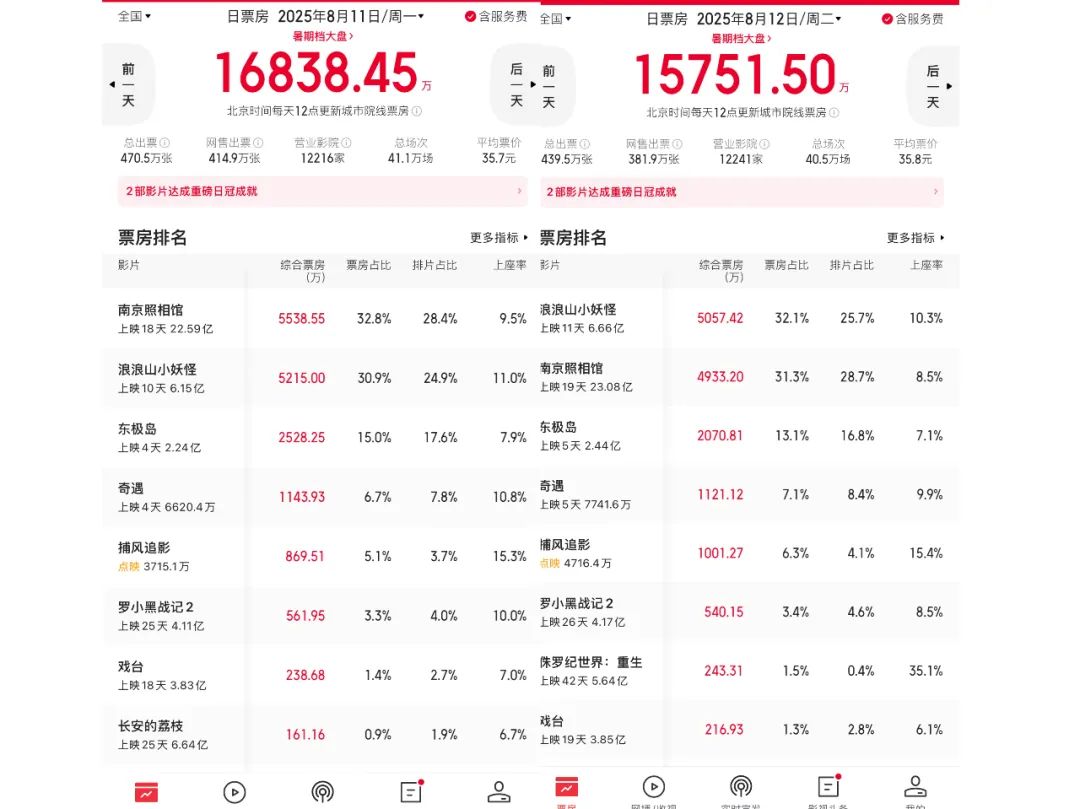
Core Insights - The animated film "Wang Wang Mountain Little Monster" has achieved a daily box office of 28.82 million, outperforming the 9.44 million of "Dongji Island" and previously grossing 400 million from "Little Black War 2," indicating a significant trend where animated films are surpassing big-budget productions by renowned directors [1][2][9] - This trend began with "Nezha 2," which easily defeated "Fengshen 2" in box office performance, highlighting a shift in audience preference towards animated films over traditional blockbuster formats [1][9] Industry Trends - The animation sector has evolved significantly over the past decade, with annual box office revenue increasing from 1.657 billion in 2018 to over 10 billion in 2025, showcasing a remarkable growth trajectory [9][18] - Animated films are increasingly exploring diverse themes and narratives, such as "Tea Ah Er Zhong," which focuses on campus life, and "Lion Boy," which integrates traditional culture with modern storytelling [9][12] Audience Preferences - Modern audiences are becoming more discerning, favoring films that resonate emotionally rather than those that rely solely on high production values or star power [20][21] - The success of films like "Nezha" and "Wang Wang Mountain Little Monster" illustrates a shift towards stories that reflect ordinary people's struggles and experiences, contrasting with the declining appeal of grandiose narratives typical of high-budget productions [18][20] Director and Production Dynamics - There is a growing critique of established directors who continue to rely on outdated tropes and aesthetics, such as the obsession with male physicality, which may not align with contemporary audience values [4][6][15] - The industry is witnessing a backlash against the traditional "star-director" model, as audiences increasingly reject films that fail to deliver compelling narratives, regardless of the director's reputation or the film's budget [15][17] Cultural Reflection - The resurgence of animated films often incorporates elements of Chinese traditional culture, indicating a broader cultural renaissance within the industry [12][21] - The narrative focus on relatable, everyday experiences in animated films contrasts sharply with the often convoluted and less relatable plots of recent high-budget live-action films [20][21]