IP驱动

Search documents
动画电影的奇迹,2026年还能延续吗?
Cai Jing Wang· 2026-01-14 15:20
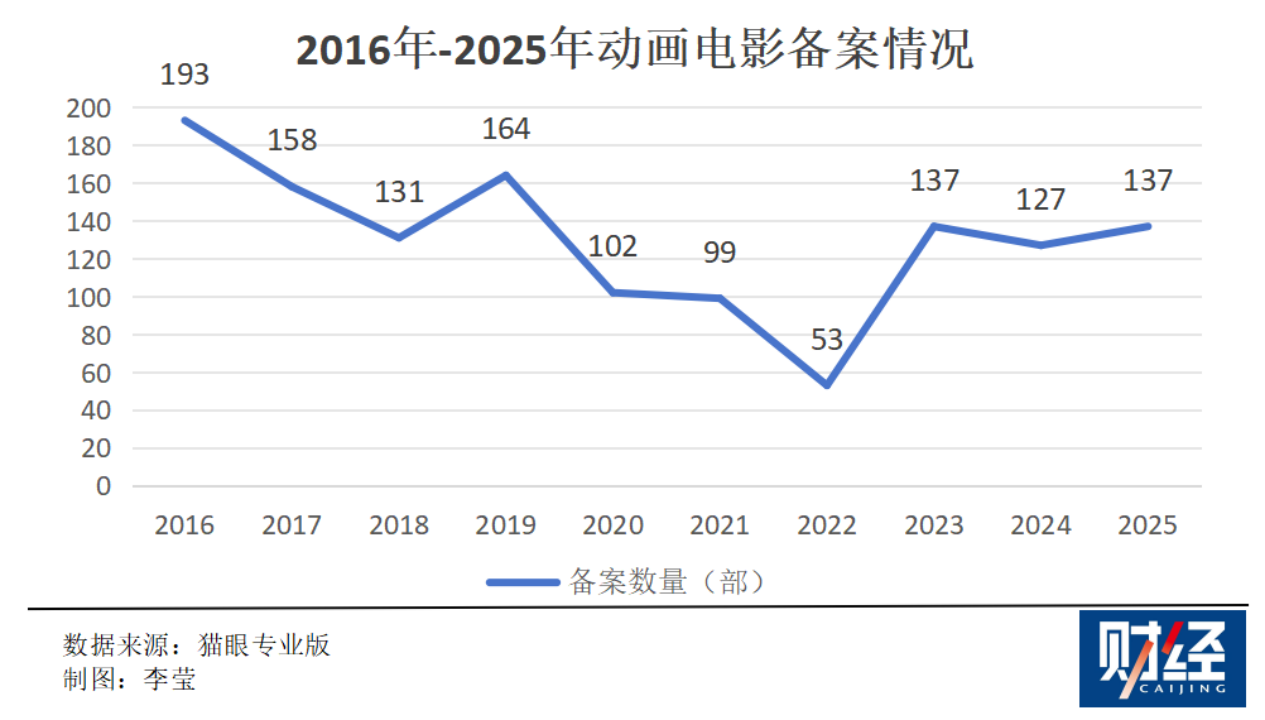
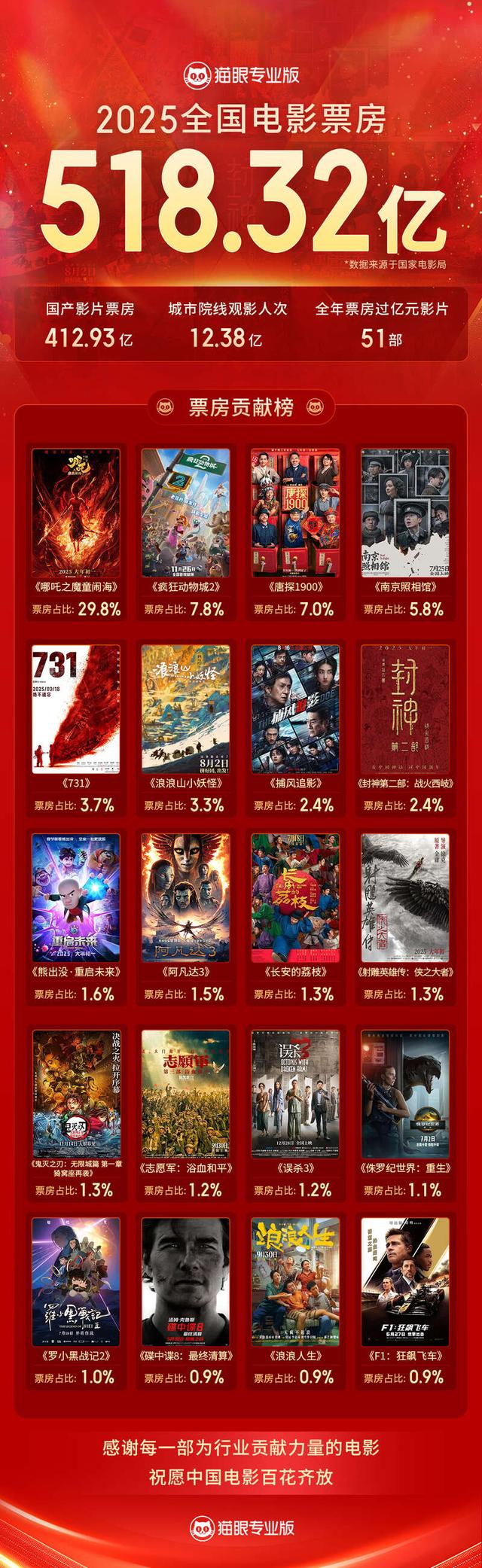
Core Insights - In 2025, animated films emerged as a key driver of box office performance in China, contributing nearly half of the total box office revenue of 518.32 billion yuan, with animated films generating 254.85 billion yuan [1][5][6] - The total box office for animated films in 2025 saw a remarkable increase of 272% compared to 2024, setting a new record for animated film box office in China [2] - The success of animated films like "Nezha 2" and "Zootopia 2" has raised questions about the sustainability of this trend in 2026, as traditional box office draws are losing their effectiveness [3][4] Industry Performance - The Chinese film market in 2025 included 289 films, with 57 being animated, accounting for approximately 19.7% of total releases [1] - The overall box office in 2025 grew by about 22% year-on-year, marking the second time since 2020 that the annual box office surpassed 500 billion yuan [5][6] - The market is experiencing a significant polarization, with a notable absence of films in the 2 billion to 3 billion yuan box office range, indicating a gap in mid-tier films [3][16] Factors Driving Animation Success - The rise of animated films is attributed to several factors, including the appeal of established IPs, industrial upgrades, and emotional resonance with audiences [8] - Animated films have successfully attracted a broader audience, including adults, by addressing complex themes while maintaining child-friendly elements [7][8] - The animation sector has shown resilience against the uncertainties faced by live-action films, which are often affected by star power and public controversies [7] Future Outlook - The animation industry is expected to continue evolving, with a shift towards IP-driven models that integrate licensing, merchandise, and new business collaborations [9][10] - Despite the current success, there are concerns about the sustainability of animated film production, as the number of new projects has not significantly increased [13][15] - The industry is facing challenges in maintaining a steady supply of high-quality animated films, with a limited number of strong IPs available for future releases [15][16]

布鲁可(00325):公司动态研究报告:看IP驱动新品与海外进展
Huaxin Securities· 2026-01-11 13:03
Investment Rating - The report maintains a "Buy" investment rating for the company [7] Core Insights - The company is positioned to benefit from the rapid growth of the building block toy market, particularly in the character-based segment, which has a projected CAGR of 29.0% from 2023 to 2028 in China [4] - The company has successfully commercialized 19 IPs with 925 SKUs, and several new products are expected to launch in 2026, which could drive revenue growth [4] - The overseas market, particularly North America, has shown significant growth, with a 898.6% year-on-year increase in overseas revenue in the first half of 2025, contributing to 38.6% of total revenue [5] - Revenue forecasts for 2025-2027 are projected at 29.40 billion, 37.85 billion, and 47.34 billion yuan respectively, with corresponding EPS of 2.47, 3.15, and 4.24 yuan [6] Summary by Sections Market Performance - The building block toy segment is expanding rapidly, with a focus on character-based toys, which are becoming a new market highlight [4] Product Development - The company plans to launch multiple new products in 2026, including both Eastern and Western IPs, which are expected to attract consumer attention and boost sales during the Chinese New Year [4] International Expansion - The company has made significant strides in the overseas market, with a focus on localized products and a robust multi-channel sales strategy [5] Financial Projections - The company is expected to achieve substantial revenue growth, with a projected increase in net profit from a loss of 401 million yuan in 2024 to a profit of 1.057 billion yuan by 2027 [6][9]
2025中国电影市场大幅回暖,动画票房贡献显著
Zhong Guo Qing Nian Bao· 2026-01-01 09:42
Core Insights - The 2025 Chinese film market shows a positive trend amid structural adjustments, driven by blockbuster films and strong IP content, injecting growth momentum into the market [1] Market Performance - The total box office for the Chinese film market in 2025 reached 51.832 billion yuan, with total audience attendance at 1.238 billion, reflecting over a 20% increase compared to the previous year [28] - The top 10 films of the year included 4 films exceeding 3 billion yuan and 8 films surpassing 1 billion yuan, indicating a robust box office performance [28] - Domestic films maintained a box office share slightly higher than the previous year, with the number of new domestic films grossing over 1 billion yuan remaining stable [28] Animation Film Highlights - Animation films emerged as a significant highlight in 2025, with 57 films contributing over 25 billion yuan to the total box office, showcasing a remarkable growth trajectory [28] - The audience base for animation films is expanding, with young users aged 18 to 30 actively engaging in content platforms, while viewers aged 30 and above remain a stable support for box office performance [29] - The IP-driven effect is particularly pronounced in animation films, with high repeat viewing rates for films like "Nezha: Birth of the Demon Child" and "Demon Slayer: Mugen Train" [29] Audience Trends - The film market is witnessing a shift in audience preferences, with domestic films increasingly adopting a grassroots narrative approach, seeking new angles within traditional content [29] - The trend of film consumption is moving towards lower-tier cities, with the contribution from these markets reaching the highest level in five years, indicating a broader market expansion [30] Industry Outlook - The Chinese film market is characterized by a solid audience foundation and significant growth potential, with the challenge of continuously attracting viewer attention and creating high-quality content that resonates with audience preferences [30]

2025-2026文旅行业八大趋势
Sou Hu Cai Jing· 2025-12-08 14:13
Core Insights - The cultural and tourism market in China is experiencing unprecedented growth opportunities, driven by the digital economy and consumption upgrades, with projections indicating the market size will exceed 70 trillion yuan by 2025 and reach 150 trillion yuan by 2030 [1] Group 1: Technological Empowerment - AI, VR, and AR technologies are reshaping the tourism experience, creating immersive experiences that blend virtual and real worlds [1] - Examples include Zhejiang Museum's VR experiences and HTC's immersive VR exhibition of Notre-Dame Cathedral, allowing visitors to engage deeply with cultural heritage [1] - AI is enhancing the entire tourism process, with applications like AI space selection for accommodations and personalized itinerary planning based on visitor preferences [1] Group 2: Consumer Transformation - By 2025, "emotional value" will become the core driver of cultural tourism consumption, shifting from "check-in tourism" to "immersive vacations" [3] - 83% of young people prefer "partner travel" over traditional group tours, indicating a trend towards more personalized and less structured travel experiences [3] - There is a growing demand for high-quality, personalized travel experiences that combine scenery, culture, and unique activities [3] Group 3: Industry Integration - The "tourism+" model is fostering cross-industry integration, creating a resilient and innovative new ecosystem [4] - The 12th World Games in Chengdu have boosted local industries such as dining and accommodation, highlighting the synergy between sports and tourism [5] - Cultural and tourism industries are deepening their integration, with companies like Fosun Tourism launching new product lines that blend various experiences [5] Group 4: Market Penetration - By 2025, county-level tourism is expected to account for 38% of total domestic tourism, emerging as a new growth point [6] - Unique county models, such as Yiwu's "micro-vacation + agricultural entrepreneurship," are driving significant revenue increases [6] - However, challenges remain in balancing urban and rural tourism development, as many rural areas lag in innovation [6] Group 5: IP-Driven Development - The operation of cultural IP is entering a new phase of deep development and cross-industry integration, becoming a core element of value creation [7] - IP is shifting from mere observation to active participation and cultural transmission, with experiential projects gaining popularity [7] - Successful IP operations focus on long-term strategies rather than short-lived trends, as seen in the case of Shaanxi's Fucha Town [7] Group 6: Sustainable Development - The tourism industry is transitioning towards standardized and quantifiable green and low-carbon practices, driven by dual carbon goals [8] - The introduction of the first "Green and Low-Carbon Tourism Activity Evaluation Technical Guidelines" fills a gap in the field [8] - A star rating system for green tourism activities will guide consumer choices and encourage environmentally friendly practices [8] Group 7: International Expansion - The expansion of China's visa-free "circle" to 15 countries is revitalizing the inbound tourism market and fostering a new pattern of international cultural exchange [9] - The popularity of Chinese travel content on platforms like TikTok indicates a growing global interest in Chinese tourism [9] - Chinese tourism brands are increasingly "going global," with successful examples like Songcheng Performing Arts replicating their models in Southeast Asia [9] Group 8: Service Enhancement - The upgrade of tourism services is evolving from convenience to intelligence and personalization, enhancing overall efficiency [10] - A focus on comprehensive, personalized service throughout the travel cycle is becoming a priority [11] - Future competition in tourism will center on cultural depth, technological advancement, and service quality, transforming travel into a holistic lifestyle experience [11]

LABUBU火爆全球:从情绪连接到文化认同
Zhong Guo Jing Ying Bao· 2025-07-14 06:31
Group 1 - Generation Z, as the "natives" of the internet and new consumption, increasingly values community identity and emotional expression, leading to the rise of emotional consumption where emotional connections are prioritized over storytelling [1] - The success of LABUBU is attributed to a combination of unique artistic design, effective commercial operation, scarcity in collectible value, viral social media marketing, celebrity influence, and alignment with Generation Z's psychology [2] - The company has established a closed-loop ecosystem centered around IP, utilizing blind boxes as an engine, data as a link, and community as the soil for growth, which enhances user retention and value accumulation [2] Group 2 - The company is accelerating its international expansion, aiming to transform its IP into a globally recognizable cultural symbol while exploring diversified business avenues such as theme parks and home decor to find new profit curves [2] - The shift from relying on cost advantages and scale to leveraging unique IP and emotional connections marks a significant transition in the global competition landscape for Chinese brands [3]

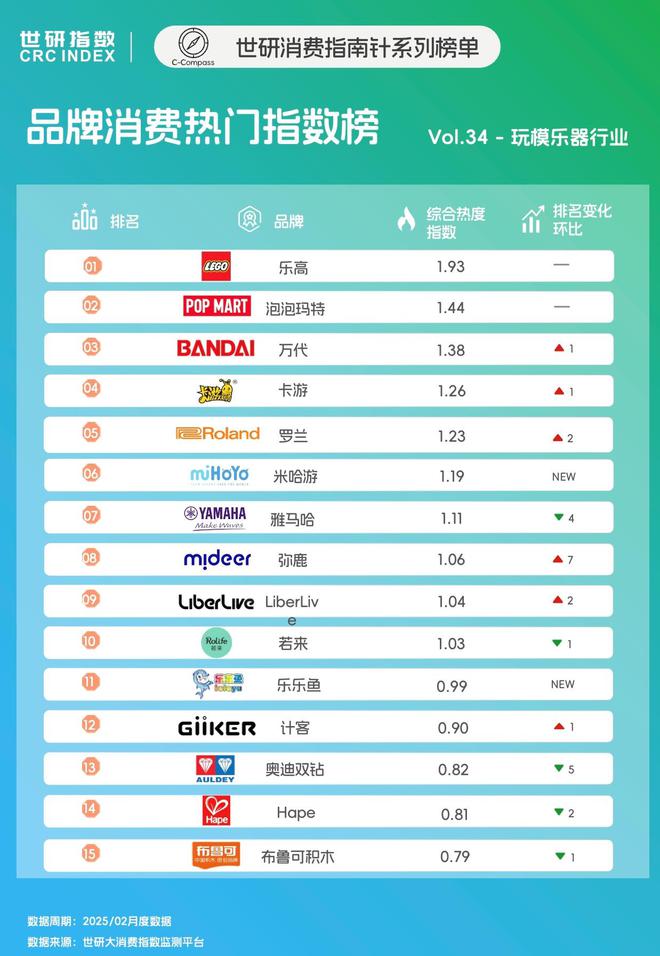
2月玩模乐器品牌TOP榜,IP驱动社交玩法创新|世研消费指数品牌榜
3 6 Ke· 2025-05-13 07:17
Group 1 - The core trend in the industry is driven by IP and social engagement, with leading brands like LEGO, Pop Mart, Bandai, and miHoYo focusing on emotional connections with users through strong IP content and immersive experiences [2] - LEGO maintains the top position with a heat index of 1.93, leveraging classic building blocks combined with popular IPs from films and games, appealing to a wide age range [2] - Pop Mart is expanding its product categories and enhancing its brand experience, as evidenced by the opening of its global flagship store in Shanghai, which has generated significant social media buzz [2] Group 2 - Technology empowerment and scene innovation are key competitive factors, with brands like GİİKER, Ruolai, and Mideer making notable advancements in their respective niches [3] - GİİKER focuses on smart toys and games, introducing products that cater to parents' demands for STEAM education [3] - Mideer has successfully differentiated itself in the puzzle segment by developing products that incorporate Chinese historical stories and cultural themes, enhancing educational value [3]