化妆品监管

Search documents
京西“美丽卫士”上线!守护“颜值安全”不打烊
Zhong Guo Zhi Liang Xin Wen Wang· 2026-02-09 06:51
Core Viewpoint - The article highlights the establishment of the "Beautiful Guardians" team in Beijing's western districts to enhance the regulatory effectiveness of the cosmetics industry by conducting cross-supervision inspections to ensure safety in cosmetic usage [1][2]. Group 1: Regulatory Actions - The cross-supervision inspections are aligned with the requirements of the Beijing Municipal Drug Administration, focusing on eight core areas to conduct a comprehensive "check-up" of the cosmetics business operations [2]. - The inspection team utilized various methods such as document review, system verification, and report listening to assess the execution of annual regulatory plans, risk warning and control measures, and the handling of complaints and online monitoring clues [2]. - The inspections involved on-site visits to various cosmetic businesses, including beauty salons and specialty stores, to verify qualifications, product labeling, and inventory check procedures, with no significant violations found [2]. Group 2: Experience Sharing and Development - The cross-supervision inspections served as a platform for valuable experience exchange among frontline law enforcement personnel, discussing common regulatory challenges and gathering seven suggestions for improving cosmetics regulation capabilities [3]. - The Fengtai District Market Supervision Bureau introduced a unique approach to ensure cosmetic safety through a three-pronged educational initiative focusing on legal interpretation, risk warnings, and case studies [3]. - The collaboration among multiple departments aims to promote the establishment of a complete cosmetics industry chain in the district, including the registration of new raw material companies and certification of efficacy testing enterprises [3].
50批次化妆品不符合规定,国家药监局通告
Jing Ji Guan Cha Wang· 2026-02-05 03:07
Group 1 - The National Medical Products Administration (NMPA) announced that 50 batches of cosmetics, including the product "Qiao Yinzi Herbal Cleansing Mud Mask Powder," failed to meet regulations during inspections conducted by the Guizhou Provincial Food and Drug Inspection Institute [1] - The NMPA has mandated local drug supervision departments in Zhejiang, Guangdong, and Qinghai provinces to investigate the registered entities, record keepers, and contract manufacturers associated with the non-compliant cosmetics [1] - Relevant enterprises are required to implement risk control measures and conduct self-inspections and rectifications as per the regulations [1] Group 2 - Provincial drug supervision departments are instructed to order the cessation of sales of the non-compliant cosmetics and to investigate the purchase and inspection records of the related products [1] - The NMPA emphasizes the need for tracing the source of illegal products and will impose strict penalties for any violations found, including referral to law enforcement if criminal activities are suspected [1]
子市监处罚〔2025〕61号
Xin Lang Cai Jing· 2026-01-05 00:10
Group 1 - The administrative penalty was issued by the Zichang City Market Supervision Administration [1] - The penalty date is December 30, 2025 [1] - The types of penalties include confiscation of illegal property, warning, and fines [1] Group 2 - The penalty is based on Article 60, Item 5 of the Cosmetics Supervision and Administration Regulations [1] - The administrative penalty decision document has not been uploaded [1]
化妆品监管难在哪
Jing Ji Guan Cha Wang· 2025-12-31 11:07
Core Viewpoint - The rapid development of the domestic cosmetics industry is accompanied by significant regulatory challenges, particularly concerning product safety and transparency in online sales channels [1][2][3] Group 1: Industry Development and Challenges - The domestic cosmetics industry is experiencing rapid growth, with a total retail sales of 786 billion yuan in the first three quarters of 2025, representing a year-on-year increase of 5.89% compared to the same period in 2024 [3] - The industry faces challenges such as illegal additives, false advertising, and counterfeit products, which directly impact product safety [1] - The reliance on imported raw materials is high, with nearly 60% of materials being imported, complicating regulatory oversight from the source [1] Group 2: Regulatory Framework and Reforms - The National Medical Products Administration issued the "Opinions on Deepening Cosmetics Regulation Reform to Promote High-Quality Development" in November 2025, referred to as the "24 Articles," which aims to address regulatory challenges and promote industry innovation [2][3] - The first measure in the "24 Articles" focuses on streamlining the registration process for new efficacy cosmetics, allowing for immediate review upon application [3] - The regulatory framework emphasizes the need for clear definitions of cosmetic claims, ensuring that products do not claim to treat medical conditions [4] Group 3: Online Sales and Regulatory Difficulties - The shift towards online sales channels complicates regulatory oversight due to the complexity and opacity of the sales process, including multiple stakeholders and dynamic advertising content [2] - There is a long-standing mismatch between regulatory resources and the volume of tasks, which hampers the effectiveness of oversight [2]
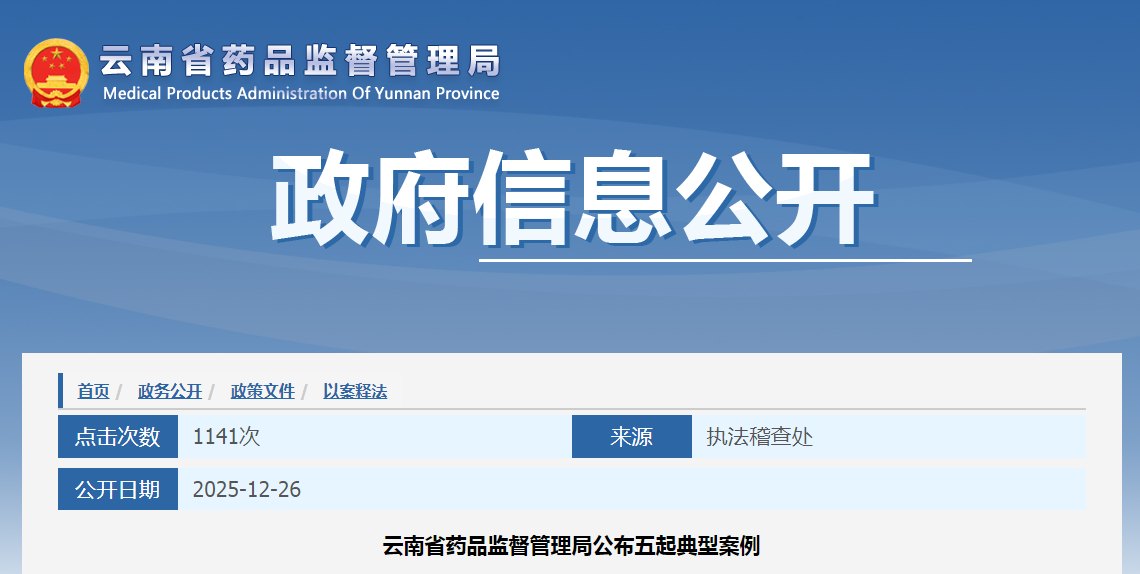
云南省药品监督管理局公布五起典型案例
Zhong Guo Zhi Liang Xin Wen Wang· 2025-12-30 08:34
Core Viewpoint - The Yunnan Provincial Drug Administration has published five typical cases to strengthen the supervision of drug safety and combat illegal activities related to drugs, cosmetics, and medical devices, ensuring public health and safety. Group 1: Case Summaries - Case 1: A pharmacy in Changning purchased drugs from unqualified individuals, leading to the confiscation of illegal drugs and a fine totaling 250,000.00 yuan for the illegal purchase of drugs valued at 33,252.00 yuan [2][3] - Case 2: A gang led by Jiang Mouyan was involved in the production and sale of counterfeit drugs, resulting in the seizure of over 1.1 million suspected counterfeit drugs and a total case value exceeding 50 million yuan. The main offenders received prison sentences ranging from 1 year to 11 years and fines totaling 233,000 yuan [4][5] - Case 3: A traditional Chinese medicine clinic in Gejiu used expired drugs, leading to a fine of 20,000.00 yuan and the confiscation of expired drugs valued at 942.85 yuan [6][7][8] - Case 4: A hospital in Wenshan prepared traditional Chinese medicine without the necessary license, resulting in the confiscation of 381 bags of unlicensed medicine and a fine based on illegal gains of 28,600.00 yuan [9][10] - Case 5: A hair product store in Shangri-La sold unregistered cosmetics and failed to maintain proper purchase records, leading to a total fine of 5,105.00 yuan and the confiscation of 13 bottles of cosmetics [11][12]

国家药监局持续深化化妆品监管;华纳药厂撤回一份药品注册申请
2 1 Shi Ji Jing Ji Bao Dao· 2025-12-30 00:40
Group 1: Regulatory Developments - The National Medical Products Administration (NMPA) held a meeting to summarize the regulatory achievements of 2025 and discuss key work for 2026, emphasizing the need for comprehensive regulatory reforms in the cosmetics industry [1] - The meeting highlighted that the Chinese cosmetics market is projected to reach a total transaction value of 1,073.82 billion yuan in 2024, indicating continuous market expansion [1] - Despite the growth, the industry faces structural issues, with over 20,000 registered cosmetics companies but low market concentration and a lack of globally influential brands [1] Group 2: Clinical Innovations and Approvals - The first non-injection epinephrine product, Neffy® (优敏速®), has been approved in China for emergency treatment of severe allergic reactions, marking a significant milestone in drug innovation [4] - HaiXiang Pharmaceutical announced the initiation of Phase II clinical trials for NWRD06, a novel nucleic acid drug aimed at preventing liver cancer recurrence, which is the first of its kind targeting the GPC3 marker [5] - Xinhua Medical received registration for two types of medical devices, enhancing its competitiveness in the in vitro diagnostics market [6] Group 3: Financing and Market Expansion - Beijing Ruifeng Biotechnology completed a C-round financing of over 100 million yuan, aimed at expanding its commercial capabilities and enhancing research and development in both human and animal health [8][9] - Humatrix Medical announced the completion of an A+ round financing of over 100 million yuan, which will be used to advance clinical trials for its core product and expand its product pipeline [10] Group 4: Healthcare Insurance and Spending - The National Healthcare Security Administration reported that from January to November 2025, the total income of the basic medical insurance fund reached 2.632 trillion yuan, with total expenditures of 2.110 trillion yuan, indicating stable fund operations [12]


国家药监局召开化妆品监管工作座谈会
Zheng Quan Shi Bao Wang· 2025-12-29 06:49
Core Viewpoint - The National Medical Products Administration (NMPA) held a meeting on December 29 to summarize the regulatory achievements of 2025 and outline key work strategies for 2026, emphasizing the importance of comprehensive regulatory reforms and high-quality development in the cosmetics industry [1] Group 1 - The year 2026 marks the beginning of the "14th Five-Year Plan," highlighting the need for deep implementation of the spirit from the 20th National Congress of the Communist Party and subsequent plenary sessions [1] - The meeting focused on continuous deepening of the entire process regulatory reform and strengthening safety measures across the cosmetics industry [1] - The NMPA aims to promote high-quality development throughout the entire supply chain of the cosmetics industry [1]
韩束:旗下所有产品均未添加人表皮生长因子(EGF)成分
Cai Jing Wang· 2025-12-27 07:48
Core Viewpoint - The company, Han Shu, has publicly responded to concerns regarding the presence of epidermal growth factor (EGF) in its products, assuring consumers that all its products do not contain EGF [1] Group 1: Company Response - Han Shu issued a statement on its official Weibo account, addressing consumer worries about the "Han Shu Plumping and Firming Essence Mask" and "Han Shu Brightening and Whitening Mask" allegedly containing EGF [1] - The company has initiated a comprehensive self-inspection and traceability process following the reports [1] - In November 2025, the Shanghai Municipal Drug Administration conducted on-site verification and testing of the products, confirming that no EGF was found in the samples tested [1] Group 2: Commitment to Regulations - Han Shu expressed its commitment to adhere strictly to national regulations such as the "Cosmetics Supervision and Administration Regulations" and "Cosmetics Safety Technical Specifications" [1] - The company emphasized its dedication to continuous improvement of products and services, aiming to maintain consumer trust and expectations [1]
山东省药监局强化化妆品国抽任务 筑牢“美丽消费”安全防线
Qi Lu Wan Bao· 2025-12-02 09:33
Group 1 - The core viewpoint emphasizes the importance of enhancing cosmetic regulation to ensure public safety and effectiveness in monitoring [1] - The Shandong Provincial Drug Administration is implementing a targeted sampling inspection plan for cosmetics in 2025, focusing on children's cosmetics, special cosmetics, and products with high non-compliance rates [1] - The sampling process will cover the entire production and sales chain, with increased inspection efforts in key areas such as trading markets and e-commerce platforms to ensure representativeness and problem orientation [1] Group 2 - A strict "five measures in place" principle will be enforced for non-compliant cosmetics, including product control, source tracing, cause investigation, administrative penalties, and corrective actions [2] - Immediate actions will be taken against confirmed non-compliant products, including orders for removal, suspension, and recall, along with legal investigations into the source of issues [2] - A traceability mechanism for non-compliant products will be established, facilitating collaboration with regulatory bodies in other regions to enhance cross-regional regulatory efforts [2]
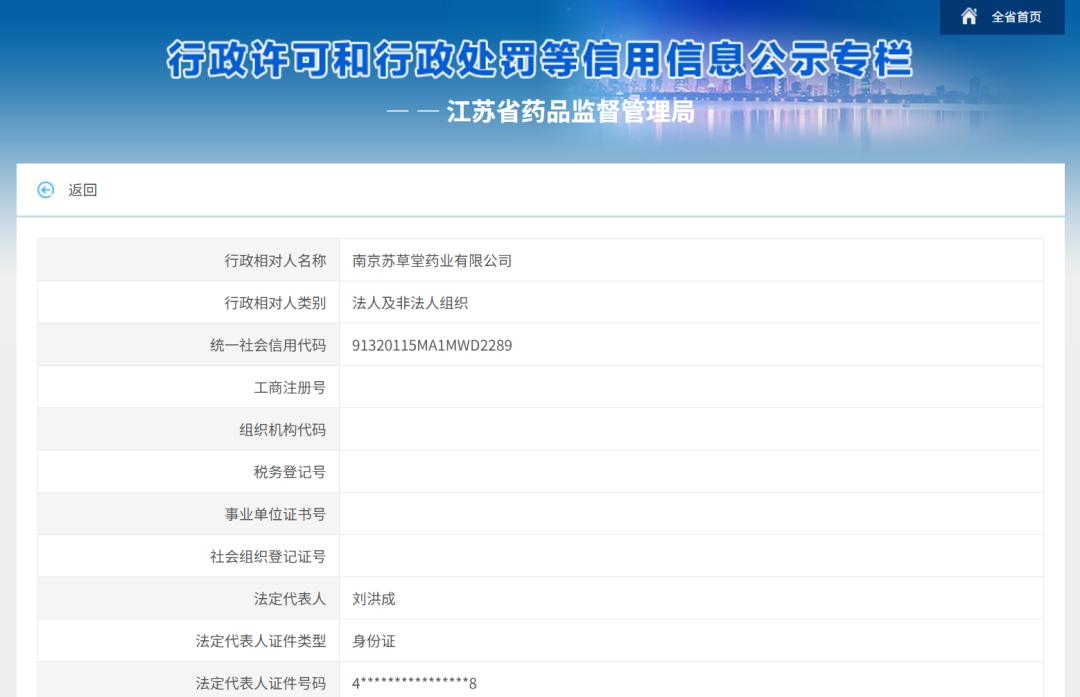
伪造备案材料,知名企业被重罚207万
3 6 Ke· 2025-11-14 00:34
Core Viewpoint - The article highlights the severe penalties imposed on Nanjing Sucao Tang Pharmaceutical Co., Ltd. for providing falsified cosmetic registration documents, reflecting a strict regulatory stance in the cosmetics industry against such fraudulent practices [1][2][17]. Group 1: Regulatory Actions - Nanjing Sucao Tang was fined a total of over 2.07 million yuan for submitting fake "test reports" and safety assessment documents for 14 cosmetic products [1][4]. - The penalties included a fine of 2,052,345.63 yuan, confiscation of illegal gains amounting to 24,000 yuan, and the cancellation of product registrations for 14 items [4][18]. - The company is barred from submitting related registration applications for three years, indicating a zero-tolerance policy from regulatory authorities towards registration fraud [2][4]. Group 2: Company Background and Violations - Nanjing Sucao Tang, established in 2016, operates in various sectors including medical beauty and personal care, with brands such as Sucao Tang and Suberal [3][4]. - The company has a history of regulatory violations, having been penalized multiple times in the past three years, indicating systemic compliance issues [6][11]. - The specific violations involved the submission of falsified documents, which contravenes the requirements for the authenticity of registration materials as per the Cosmetics Supervision and Administration Regulations [4][17]. Group 3: Industry Implications - The incident underscores a broader trend in the cosmetics industry towards stricter regulatory enforcement, with increasing penalties for violations becoming a norm [17][21]. - Regulatory measures now encompass financial penalties, qualification penalties, and market bans, reflecting a comprehensive approach to compliance enforcement [18][21]. - The article emphasizes the need for companies to establish robust compliance systems to navigate the increasingly stringent regulatory landscape, as any attempts to circumvent regulations will face severe repercussions [17][21].