药品零售

Search documents
医药周报20260329:创新药筑底反攻思路、兼论长护险
Guolian Minsheng Securities· 2026-03-30 00:50
Investment Rating - The report maintains a "Recommended" rating for the pharmaceutical industry [1] Core Insights - The pharmaceutical sector has shown resilience, with the innovative drug segment leading a rebound, driven by positive industry dynamics and market sentiment [7][10] - The report emphasizes the potential for continued growth in innovative drugs, supported by favorable government policies and strong performance in recent financial disclosures from biotech and biopharma companies [7][10] - The long-term care insurance (LTCI) policy in China is expected to accelerate the development of the elderly care industry, drawing parallels with Japan's successful model [10][23] Summary by Sections 1. Long-term Care Insurance and Elderly Care Industry - The Chinese government aims to establish a long-term care insurance system within three years, initially covering employees, retirees, and gradually including unemployed rural residents [10] - The LTCI system is designed to alleviate the financial burden on families and improve care for the elderly, with a focus on home and community care [10][23] - Investment opportunities in the elderly care sector include home medical devices, rehabilitation equipment, and elderly care institutions [23] 2. Pharmaceutical Market Review and Hotspot Tracking - The pharmaceutical index increased by 1.56% during the week of March 23-27, outperforming the ChiNext and CSI 300 indices [24] - The overall trading volume for pharmaceuticals was 449.11 billion yuan, accounting for 4.28% of the total market, below the historical average of 7.06% [46] - The report highlights the strong performance of innovative drugs, with companies like Meinuohua and Wanbangde leading the gains [49] 3. Investment Recommendations - The report suggests focusing on companies involved in the overseas big pharma BD 2.0 phase, such as Kelun Pharmaceutical and Xinlitai, as well as small and mid-cap biotech firms with innovative technologies [7][23] - It also recommends monitoring the supply chain and technology sectors, including CROs and CDMOs, as they are expected to benefit from ongoing industry trends [7][23]


内蒙古出新规严管自助售药机和自动售械机
Xin Lang Cai Jing· 2026-02-26 20:43
Core Viewpoint - The Inner Mongolia Autonomous Region has issued regulations for the management of self-service medicine and medical device vending machines to ensure the safety, effectiveness, and accessibility of medications and medical devices for the public [1][2]. Group 1: Regulations for Self-Service Medicine Vending Machines - The regulations define the qualifications for setting up self-service medicine vending machines, allowing only retail pharmacies with a valid drug business license to operate them [1]. - The sales range for self-service medicine vending machines is limited to Class B non-prescription drugs, explicitly prohibiting the sale of prescription drugs and Class A non-prescription drugs [1]. - The vending machines must be equipped with features such as automatic temperature and humidity monitoring, remote alarms, safety monitoring, drug traceability, and online pharmaceutical services [1]. Group 2: Regulations for Automatic Medical Device Vending Machines - The regulations stipulate that the storage and sales processes for automatic medical device vending machines must comply with quality management standards for medical device operations, limited to devices for personal use [2]. - The vending machines must meet strict conditions, including temperature and humidity monitoring, full video surveillance, issuance of sales receipts, and information traceability [2]. - Companies operating these machines are required to have dedicated personnel for daily maintenance and quality management to ensure the entire process of storage, sales, and traceability is controllable [2]. Group 3: Regulatory Oversight and Collaboration - The regulations clarify the local regulatory responsibilities of drug supervision departments and establish a collaborative regulatory mechanism across regions and departments [2]. - There is an emphasis on building a system for information sharing, joint inspections, and mutual recognition of results to create a coordinated regulatory environment [2].
北京市平谷区市场监管局着力推动药品零售企业提质升级
Xin Lang Cai Jing· 2026-02-25 04:35
Group 1 - The core viewpoint of the articles emphasizes the transformation of the pharmaceutical retail industry from a "drug sales terminal" to a "health service hub" in Beijing's Pinggu District [1][2] - The Pinggu District Market Supervision Administration is conducting on-site inspections of key pharmaceutical chain enterprises to ensure compliance with storage safety and health service system upgrades [1] - The administration encourages enterprises to enhance their pharmaceutical service platforms and optimize remote prescription review mechanisms to address service gaps during non-working hours [1] Group 2 - Enterprises are urged to extend their service offerings to include medication guidance and health consultations while ensuring strict drug traceability to prevent counterfeit drugs from entering the market [1] - The Pinggu District Market Supervision Administration aims to support the development of pharmacies while enforcing strict compliance with fair competition rules to maintain reasonable drug pricing and accessibility for the public [1][2] - Future efforts will focus on upgrading pharmacies from "drug sales" to "health management" services, creating health stations that meet the needs of the local community [2]
2.14犀牛财经早报:“春躁”行情或将延续
Xi Niu Cai Jing· 2026-02-14 03:11
Group 1: Market Performance and Trends - The Shanghai Composite Index increased by 25.58% during the Year of the Snake, with the Shenzhen Component Index rising by 38.84%, the ChiNext Index by 58.73%, and the Sci-Tech Innovation Board Index by 64.20% [1] - Institutions predict that after the Spring Festival, the technology sector, particularly AI, is likely to regain its leading position in the market [1] - Historical data shows that the market generally performs well after the Spring Festival, with the Shanghai Composite Index rising in 7 out of the last 10 years during the first five trading days post-holiday [1] Group 2: Industry Developments - The precious metals market has entered a phase of consolidation after experiencing extreme volatility, with prices under pressure due to various macroeconomic factors [2] - Major automotive companies are increasingly investing in the robotics sector, with firms like Tesla and Chery transforming production lines to focus on robot manufacturing [2] - The pharmaceutical retail industry is undergoing a transformation driven by policy support, with a focus on industry consolidation and new business models [3] Group 3: Corporate News - Meituan expects a loss of approximately 23.3 billion to 24.3 billion yuan for the fiscal year 2025, a significant shift from a profit of about 35.8 billion yuan in 2024, primarily due to losses in its core local business segment [6] - Tianfeng Securities is under investigation by the China Securities Regulatory Commission for alleged violations related to financing and information disclosure [7] - Ningde Times, Luoyang Molybdenum, and Laopu Gold are set to be included in the Hong Kong Hang Seng Index, increasing the number of constituent stocks from 88 to 90 [8]
政策红利持续释放 药品零售行业迎转型新机遇
Zhong Guo Zheng Quan Bao· 2026-02-13 20:45
Core Viewpoint - The recent policy initiatives in China's pharmaceutical retail industry aim to promote high-quality development through industry integration, prescription outflow, and commercial insurance, signaling a transition towards a more structured and profitable market environment [1][2][3] Industry Transformation - The policy encourages horizontal mergers and acquisitions among pharmaceutical retail enterprises to enhance industry efficiency and service quality [2] - Local governments are optimizing the business environment, including streamlining the application process for drug operating licenses and allowing the continuation of existing medical insurance qualifications during transitions [2] - The retail pharmaceutical market in China is projected to grow from CNY 2.41 trillion in 2020 to CNY 2.95 trillion by 2024, representing a 22.4% increase [2] Shift to Health Services - The industry is transitioning from traditional drug sales to comprehensive health services, enhancing community health support and emergency supply capabilities [3] - Policies are designed to facilitate the transformation of retail pharmacies into health service hubs, encouraging the expansion of services such as health consultations and chronic disease management [3][6] Corporate Responses - Companies like YaoXingTang are actively responding to the new policies by exploring mergers and acquisitions to enhance their service offerings [4] - LaoBaiXing is focusing on improving the quality of its franchise and alliance businesses while identifying potential acquisition targets to strengthen its market position [4] - HeYe Health is developing an integrated service system combining medical, pharmaceutical, and insurance services, aiming to alleviate outpatient medication payment pressures [4] Benefits for Industry Leaders - The new policies are expected to provide long-term benefits to leading retail pharmacies, enhancing their ability to manage outpatient prescriptions and increasing their market influence [6][7] - The industry is moving towards a new profit ecosystem that includes diversified services such as chronic disease management and medication guidance, which will improve revenue sources and customer loyalty [6][7]
药品零售行业迎转型新机遇
Zhong Guo Zheng Quan Bao· 2026-02-13 20:23
Core Insights - The recent policy initiatives from nine government departments aim to promote high-quality development in the pharmaceutical retail industry, focusing on industry integration, prescription outflow, and commercial insurance [1][2][3] - The pharmaceutical retail market in China is expected to grow from CNY 2.41 trillion in 2020 to CNY 2.95 trillion by 2024, representing a 22.4% increase [2] - The industry is transitioning from traditional drug sales to comprehensive health services, enhancing community health support and resilience in the health security system [2][3] Industry Transformation - The policy encourages horizontal mergers and acquisitions among retail pharmaceutical companies to enhance efficiency and service quality [3][5] - Local governments are optimizing the business environment for retail pharmacies, including streamlining the application process for drug operation licenses [1] - Jiangxi Province has reported an increase in the retail pharmacy chain rate from 50.2% in 2024 to 60.3% in 2025, surpassing the national average [1] Company Responses - Yao Yi Tang is committed to responding to the new policies by enhancing its community health service capabilities and improving consumer access to quality healthcare [3] - Lao Bai Xing is exploring merger and acquisition opportunities while maintaining communication with potential targets to strengthen its alliance business [3] Industry Leaders' Benefits - The policy is expected to provide long-term benefits to leading retail pharmacies, enhancing their ability to manage outpatient prescriptions and increasing their market position [5][6] - The industry is entering a critical phase of structural transformation, characterized by store closures, increased concentration, and a restructured profit model [4][6] - The focus on diverse services such as chronic disease management and medication guidance will create a new profit ecosystem combining drugs, medical devices, and health management [4]

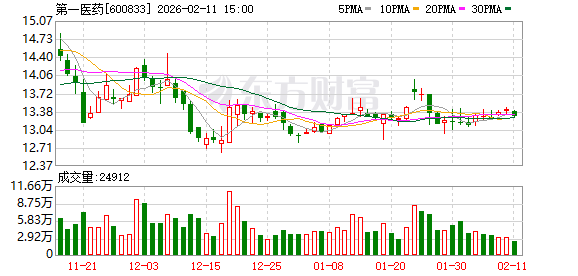
第一医药:第一医药“氛子药局”落子上海衡复风貌区
Zheng Quan Ri Bao· 2026-02-11 13:11
Core Viewpoint - The company is responding to the call from the Ministry of Commerce and other departments to promote high-quality development in the pharmaceutical retail industry by transforming its brand from "pharmaceutical sales" to "health services" [2] Group 1: Company Initiatives - The company has launched "氛子药局," a health space designed by a youth team, located in Shanghai's Hengfu historical area [2] - This new concept integrates health tea drinks, social interactions, and a cosmetics laboratory, aiming to create a multi-functional health space [2] - The initiative seeks to cater to the health consumption and emotional value needs of the younger generation, particularly the urban Z generation [2] Group 2: Market Positioning - The company aims to break the traditional stereotype of pharmacies and enhance the health service experience [2] - By aligning the professional heritage of the brand with contemporary health demands, the company intends to inject lasting vitality into its brand [2]


河北省阳原县市场监管局开展节前药品检查
Xin Lang Cai Jing· 2026-02-09 08:56
Core Viewpoint - The article highlights the proactive measures taken by the Yangyuan County Market Supervision Administration in Hebei Province to ensure drug safety during the upcoming Spring Festival by conducting a special inspection of the pharmaceutical market [1] Group 1: Inspection Focus - The inspection primarily targets retail pharmacies, focusing on commonly used medications during the festival, such as cold and fever remedies, health supplements, and emergency drugs [1] - Key areas of scrutiny include drug procurement channels, storage conditions, and expiration date management [1] Group 2: Compliance and Enforcement - The inspection emphasizes the enforcement of regulations regarding prescription drug sales and the presence of licensed pharmacists on duty [1] - Issues identified during the inspection, such as non-compliant record-keeping and untimely temperature and humidity documentation, were addressed on-site with immediate rectification orders [1] Group 3: Safety Measures and Future Actions - The inspection has contributed to the regulation of the local pharmaceutical market and the identification of potential drug safety hazards [1] - The Yangyuan County Market Supervision Administration plans to increase inspection efforts leading up to the festival, ensure follow-up on problem rectifications, and maintain open channels for complaints and reports [1]
北京今年市场监管聚焦平台经济垄断行为
Bei Jing Shang Bao· 2026-02-08 15:50
Group 1 - The Beijing Municipal Market Supervision Administration will focus on addressing monopolistic behaviors in platform economies and will implement comprehensive measures to rectify "involution" competition in the accommodation and catering sectors by 2026 [1][2] - A nationwide live e-commerce monitoring platform is being accelerated to adapt to the challenges posed by new business models in live streaming e-commerce, aiming to create a data-driven and multi-governance monitoring system [2][3] - The administration will enhance the enforcement of regulations against counterfeit goods, false advertising, and predatory pricing, promoting a fair and competitive market environment [3] Group 2 - In 2025, the number of business entities in Beijing reached 2.8697 million, marking a year-on-year growth of 6.83%, with over 40% being technology-based enterprises [6] - The survival rate of enterprises in Beijing has remained above 75% for the past three years, indicating a robust business environment and high-quality development of business entities [6] - The Beijing Municipal Market Supervision Administration has introduced various reforms to improve the business environment, including the issuance of new local standards for business registration and the promotion of innovative regulatory practices [7]
北京2026年市场监管重点:严查平台垄断、整治“内卷式”竞争
Bei Jing Shang Bao· 2026-02-08 12:55
Core Insights - Beijing's Market Supervision Administration will focus on addressing monopolistic behaviors in platform economy sectors, particularly in accommodation and catering industries, by implementing comprehensive regulations and monitoring systems by 2026 [1][2][7] Group 1: Regulatory Actions - The administration will conduct a thorough "health check" on key platform enterprises, particularly in the accommodation and catering sectors, to combat "involution" competition [2][7] - A negative list of eight types of behaviors will be established to regulate the platform economy, with a focus on enhancing compliance management [7] - The administration is accelerating the establishment of a national live e-commerce monitoring platform to address the challenges posed by new business models [2][7] Group 2: Consumer Protection and Rights - In 2025, the administration upgraded the management of single-purpose prepaid cards and introduced local standards for administrative mediation of consumer disputes [8] - Plans for 2026 include the establishment of 100 consumer rights protection service stations and 50 consumer education bases to enhance consumer protection [8] - The administration will maintain a high-pressure stance against "professional store closers" and promote third-party platforms for consumer compensation [8] Group 3: Business Environment and Growth - By the end of 2025, the number of business entities in Beijing reached 2.8697 million, a year-on-year increase of 6.83%, with over 40% being technology-based enterprises [11] - The survival rate of enterprises over the past three years has exceeded 75%, indicating a robust business environment [11] - The administration has implemented various innovative measures to improve the business environment, including the launch of a series of local standards for business registration services [11][12] Group 4: Food Safety and Quality Control - In 2026, Beijing will enhance its food safety traceability and risk warning systems, focusing on online dining safety and implementing special rectification actions [9][10] - The administration has introduced a new supply model for school meals, integrating digital platforms for food processing oversight [10] Group 5: Monitoring and Compliance - The administration has improved its monitoring capabilities, covering over 8,000 key live streaming rooms and releasing ten measures to regulate unreasonable business practices in live commerce [7] - A comprehensive regulatory framework is being developed to ensure fair competition and address issues such as counterfeit goods and false advertising [7][12]