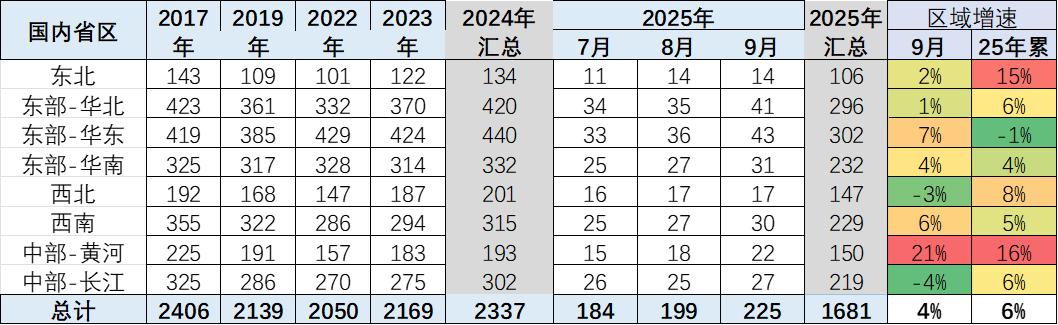
北强南弱

Search documents
【乘联分会论坛】2025年11月乘用车区域市场流向分析
乘联分会· 2026-01-06 09:07
Core Viewpoint - The article discusses the structural changes in the Chinese automotive market driven by economic development, policy incentives, and regional performance variations, highlighting a significant shift towards the northern regions and the impact of subsidy policies on vehicle sales [2][4]. Regional Market Trends Analysis - The automotive market is experiencing a pronounced divergence, with northern regions, particularly Northeast and Northwest, showing strong growth, while southern regions lag behind [4][5]. - In November 2025, the northern market's share decreased by 3.7 percentage points compared to the previous year, but it increased by 5.4 percentage points compared to 2022 [3]. - The overall market growth is characterized by a "strong north, weak south" pattern, with northern regions outperforming southern ones in recent years [3][4]. Policy Impact on Regional Structure - The "Two New" subsidy policies have significantly encouraged the sales of low-end and economic vehicles, particularly benefiting A00 and A0 class electric vehicles in northern regions [2][5]. - The market structure is complex due to varying subsidy policies across regions, with some areas experiencing strong monthly performance despite weaker annual trends [4][5]. - The central region's market share increased by 1.2 percentage points year-on-year in 2025, indicating a recovery in the Yangtze River area [5] . Vehicle Class Market Structure Changes - The SUV segment is experiencing robust growth, particularly in the central and western regions, driven by geographical demand and the popularity of new energy SUVs [7][8]. - The demand for traditional fuel vehicles remains significant in northern and central regions, while eastern regions are seeing a higher penetration of new energy vehicles [8][9]. New Energy Power Structure Analysis - In November 2025, the penetration rate of new energy vehicles is notably high in regions like Hainan and Guangxi, exceeding 60%, while other areas are approaching 50% [8][9]. - The growth of pure electric vehicles is particularly strong in northern regions, reflecting a shift in consumer preferences and policy support for new energy vehicles [8][9].

中国汽车流通协会:新能源车在北方加速普及 10月北上广大型SUV等表现较强
智通财经网· 2025-12-01 09:04
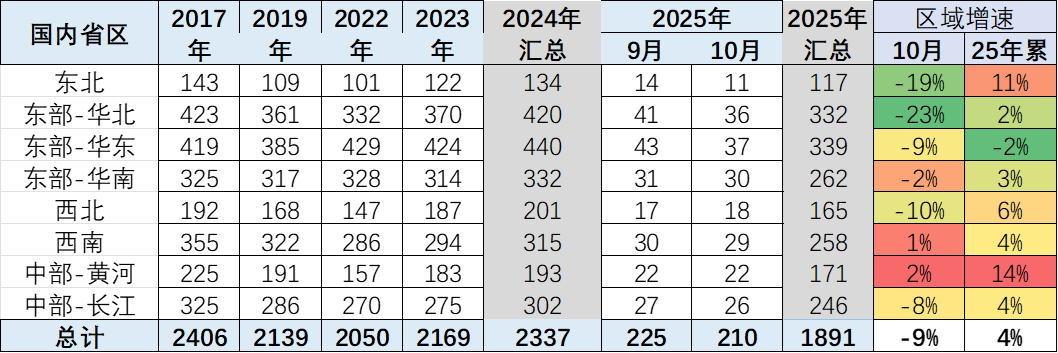
Core Insights - The report from the China Automobile Dealers Association indicates that the structure of the regional car market is changing due to economic development and diversified domestic demand and exports. The retail sales of passenger cars in China are expected to grow by 7% year-on-year by October 2025, reflecting strong growth characteristics in the domestic car market from February to October [1]. Market Trends - The "North Strong, South Weak" pattern continues, with the northern car market showing strength, particularly in Northeast and Central Yangtze regions. Although the market share in the North decreased by 0.2 percentage points in October 2025 compared to the previous year, it increased by 5.6 percentage points compared to 2022 [3][4]. - The A00 and A0 class electric vehicles are performing well in North China and Northeast regions, benefiting significantly from subsidy policies aimed at promoting economic vehicles [1][3]. Regional Performance - The Northeast region's market share increased to 6.4% in October 2025, while the East China region's share decreased to 17.9%. The Central region's market share increased by 1.2 percentage points compared to the previous year, indicating a recovery in the Central Yangtze area [3][4]. - The overall car market in the North is expected to outperform the South, with significant growth in regions like Heilongjiang, Shanxi, and Ningxia, while the South shows relatively weaker performance [5][6]. Policy Impact - The "Two New" subsidy policies have effectively encouraged the growth of low-end and economic vehicles, demonstrating fairness in policy implementation. The subsidies have significantly benefited the sales of small and micro electric vehicles [1][11]. - Recent changes in subsidy policies have led to complex market structure changes, with some regions like Qinghai and Guizhou announcing the suspension of vehicle replacement subsidies [6][8]. Vehicle Type Trends - The SUV segment is experiencing strong growth, particularly in the Central and Western regions, while the demand in Eastern regions is relatively weaker. The market for SUVs is robust in mountainous and hilly areas, aligning with regional geographical characteristics [7][9]. - The penetration rate of new energy vehicles is increasing, especially in Northern regions, where the growth of pure electric vehicles is notable. In contrast, traditional fuel vehicles still hold a significant market share in the Central and Western regions [9][10]. Consumer Behavior - The report highlights a shift towards more rational consumption, with the majority of regions benefiting from the "Two New" subsidy policies, which have positively impacted the sales of economic vehicles. The subsidies for new energy vehicles are more favorable compared to traditional fuel vehicles, encouraging consumer enthusiasm for purchasing [11][12].
崔东树:国内车市强势增长 新能源车在北方加速普及
Zhi Tong Cai Jing· 2025-11-03 09:04
Core Insights - The report indicates that the domestic passenger car market in China is expected to see a cumulative retail growth of 9% year-on-year by September 2025, driven by economic development and diversified demand [1][2] - A notable trend is the "strong North, weak South" characteristic in the regional car markets, with the northern regions, particularly Northeast and Northwest, showing significant growth [3][4] - The policy support for low-end and economical vehicles has led to a recovery in the A00 and A0 class electric vehicles, highlighting the fairness of the subsidy policies [1][2] Regional Market Trends - The northern regions, especially Northeast and Northwest, are experiencing robust growth, while the southern regions, particularly East China, are facing declines [3][4] - By September 2025, the market share of the northern regions is projected to increase by 5.7% compared to 2022, despite a slight decrease of 0.2% year-on-year [2][3] - The overall market structure is shifting, with the central regions showing better performance than the eastern regions, as evidenced by a 1.1% increase in market share for the central region compared to the previous year [3][4] Policy Impact Analysis - The "Two New" subsidy policies are significantly influencing the regional market structure, encouraging the growth of small and economical electric vehicles [1][2] - The policies have led to a notable performance of A00 class vehicles in North and Northeast China, demonstrating the effectiveness of subsidies in promoting electric vehicle adoption [1][2] Market Structure Changes - The SUV segment is showing strong demand in the central and western regions, while the eastern regions are leaning towards lower-end electric vehicles due to their geographical characteristics [6][7] - The overall structure of the passenger car market is shifting towards SUVs, particularly in mountainous and hilly areas, where demand is higher [6][7] New Energy Vehicle Trends - By September 2025, the penetration rate of new energy vehicles is expected to reach significant levels, with traditional fuel vehicles still holding a substantial market share in the northern and central regions [9][10] - Regions like Hainan and Guangxi are witnessing a rapid increase in the share of new energy vehicles, reaching around 60% [10]