区域发展战略

Search documents
招商银行行长王良谈零售转型:多板块均衡协同发展、多区域共同相互促进
Xin Lang Cai Jing· 2026-03-30 02:57
Core Insights - The core viewpoint of the news is that China Merchants Bank is undergoing a strategic transformation in its retail banking business, which has contributed over 50% to its revenue and profit, but is currently facing challenges due to a significant decline in retail credit growth and changes in the wealth management sector [1][3]. Group 1: Retail Business Challenges - The retail banking sector has experienced a dramatic decline in credit growth, impacting the revenue and profit contributions from retail and credit card segments [1][3]. - The wealth management business is facing challenges due to decreasing fees from fund and insurance sales, leading to a gap in revenue growth [1][3]. Group 2: Strategic Adjustments - The bank is implementing a strategy for balanced development across four major segments: retail finance, corporate finance, investment banking and financial markets, and asset and wealth management [2][4]. - There is an emphasis on accelerating the "four transformations," particularly focusing on international development, with plans to enhance cross-border, overseas, and foreign exchange businesses [2][4]. - A regional development strategy is being adopted, shifting focus from the three core cities of Beijing, Shanghai, and Shenzhen to the Pearl River Delta, Yangtze River Delta, and Bohai Rim regions [2][4]. - The strategic adjustments aim to transition the bank from a retail-focused model to a more diversified and sustainable high-quality development path [2][4].

2026年外资银行布局揭秘:上海领先,南京成黑马
Sou Hu Cai Jing· 2026-02-19 01:56
Core Insights - The number of foreign banks in China has reached 41, with Shanghai leading at 21, followed by Beijing with 9 and Shenzhen with 5, while Nanjing has emerged as a surprising player with 3 banks [1][2][3] Group 1: Foreign Bank Distribution - Shanghai's dominance in foreign bank presence is evident, having more than double the number of banks compared to Beijing and over four times that of Shenzhen [1] - Nanjing's rise to having 3 foreign banks is attributed to the integration strategy of the Yangtze River Delta and reflects foreign banks' new assessments of regional economic development [2] - Other cities like Tianjin, Zhuhai, and Xiamen have only 1 foreign bank each, indicating a more conservative approach to foreign bank establishment [2] Group 2: Historical Context and Trends - The entry of foreign banks into China began with Morgan Stanley in 1984, with a significant increase in the number of banks during the first decade of the 21st century, accounting for nearly 70% of the current total [2] - Since 2018, the pace of new foreign bank establishments has slowed, although branch offices continue to grow, with 7 new branches established in 2025 [2][3] - The total number of foreign bank branches in China has reached 775, showcasing the success of China's financial market opening [3] Group 3: Regional Economic Dynamics - Shanghai's ability to attract foreign banks is supported by its comprehensive financial market system, mature business environment, and a rich pool of international talent [3] - Beijing's financial development is more focused on regulatory bodies and large state-owned financial institutions due to its political status [3] - Nanjing's growth is linked to its strategic position in the Yangtze River Delta and its abundant educational resources [3] Group 4: Future Outlook - The development of foreign banks in China over the past 40 years reflects a commitment to financial openness and international capital's long-term confidence in the Chinese market [3] - While Shanghai's leading position is unlikely to be challenged in the short term, the future performance of emerging cities like Nanjing will be closely monitored [3]


相向而行 融合加速
Shan Xi Ri Bao· 2026-01-18 00:24
Core Viewpoint - The integration of Xi'an and Xianyang is a significant regional development strategy for Shaanxi, enhancing transportation, industry collaboration, and public services, ultimately benefiting the local economy and residents [4][9]. Transportation Infrastructure - The Xi'an to Xingping expressway expansion, completed on December 30, significantly improves connectivity between Xi'an and Xianyang, reducing travel time to 30 minutes [2]. - The new expressway alleviates traffic congestion and enhances the flow of people, goods, and information, with nearly 300,000 daily commuters between the two cities [3]. Industrial Collaboration - The establishment of the Xi'an Xidian Group Xianyang Smart Industrial Park is a key project promoting industrial cooperation and resource sharing between Xi'an and Xianyang [6]. - The park focuses on the power transmission and transformation equipment industry, contributing to the high-end, intelligent, and green development of Xianyang's industrial sector [6]. - By 2025, the two cities plan to publish a supply-demand list with over 130 items related to eight jointly built industrial chains, facilitating the transfer of technological achievements [6]. Technological Empowerment and Talent Support - The successful implementation of high-performance aluminum alloy manufacturing technology in Xianyang, with an investment of 172 million yuan, exemplifies the integration of technology and industry [7]. - Xianyang has reformed its talent development system, establishing teams of technology advisors and managers to accelerate the transformation of scientific achievements into production [7]. Education and Public Services - Educational collaboration is deepening, with 40 schools in Xianyang partnering with prestigious schools in Xi'an to form a quality education alliance [8]. - Public services are becoming more integrated, with pension standards aligning and healthcare services allowing for seamless patient care across regions [8]. Urban Development and Integration - Xianyang is actively participating in the construction of a metropolitan area, focusing on urban integration and infrastructure connectivity [9]. - The strategy emphasizes the integration of spatial planning, innovation, industry development, and public services, creating a cohesive community with shared resources [9].
打破天山地理阻隔 乌鲁木齐至尉犁高速公路通车
Xin Lang Cai Jing· 2025-12-26 06:43
Core Viewpoint - The G0711 Urumqi to Yili Expressway (referred to as "U-Y Expressway") has officially opened, significantly reducing travel time between Urumqi and Korla from 7 hours to 3.5 hours, thus eliminating the geographical barrier between northern and southern Xinjiang and creating a one-day living circle across the Tianshan Mountains [1][4]. Group 1: Project Overview - The U-Y Expressway will begin trial operations on January 1, 2026, with a public experience event scheduled from December 26, 2025, to December 31, 2025 [3]. - The expressway is a key component of the national expressway network, stretching 324.7 kilometers from the Urumqi city ring road to Yili County in Bayingolin Mongol Autonomous Prefecture, and took 5 years and 8 months to complete since construction began in April 2020 [3]. - The project features the Tianshan Victory Tunnel, which is 22.13 kilometers long, setting two world records for the longest expressway tunnel and the deepest vertical shaft in an expressway tunnel [3]. Group 2: Economic and Social Impact - The U-Y Expressway facilitates easier movement of talent, culture, and resources between northern and southern Xinjiang, significantly lowering circulation costs and accelerating industrial collaboration, logistics, and cultural tourism integration [4]. - The expressway connects the Urumqi metropolitan area, northern Xinjiang urban belt, and southern Xinjiang urban clusters, promoting rapid connectivity between the Junggar Basin and the Tarim Basin [4]. - It is expected to play a vital role in establishing a new development pattern for Xinjiang, enhancing internal connectivity and external access [4].

中公教育拟斥资1.5亿元设立珠海横琴子公司 深化大湾区战略布局
Xin Lang Cai Jing· 2025-11-21 10:52
Core Viewpoint - Zhonggong Education Technology Co., Ltd. announced the establishment of a wholly-owned subsidiary in the Hengqin Guangdong-Macao Deep Cooperation Zone, with a registered capital of 150 million yuan, aiming to enhance its strategic layout in the Greater Bay Area and strengthen business collaboration in South China [1][2]. Group 1 - The board meeting was held on November 20, 2025, with all 7 directors present, and the decision to invest was unanimously approved [1]. - The new subsidiary is tentatively named "Zhonggong Zhiyuan (Zhuhai Hengqin) Education Technology Co., Ltd." and will be fully funded by Beijing Zhonggong Zhiyuan Technology Co., Ltd. [1]. - The investment aims to expand the company's education service network in the Guangdong-Hong Kong-Macao Greater Bay Area and enhance regional market competitiveness [1][2]. Group 2 - This investment is seen as a significant move for Zhonggong Education to respond to national regional development strategies and optimize its national business layout [2]. - The new subsidiary is expected to leverage Hengqin's policy and geographical advantages, becoming a core hub for Zhonggong Education's outreach in the South China market [2].

“十五五”规划建议解读:区域经济有哪些新进展、新使命、新提法?
Yin He Zheng Quan· 2025-10-31 13:58
Group 1: New Developments in Regional Economy - The gap in regional development remains to be further narrowed, with GDP growth from 29.74 trillion in 2020 to an estimated 29.67 trillion in 2024, indicating minimal progress[6] - Overall execution of regional development strategies has been relatively good, with significant breakthroughs in regional development systems and mechanisms[5] - The optimization of major productivity layouts is essential for better coordination of development and safety[5] Group 2: New Missions for Regional Economic Development - Building a unified national market is crucial for accelerating the construction of a new development pattern[19] - Efforts to reduce regional development disparities are aimed at promoting common prosperity for all people[19] - Emphasis on efficiency and safety in optimizing major productivity layouts is necessary[19] Group 3: New Proposals for Regional Economic Development - Focus on leveraging strategic overlay effects to enhance policy effectiveness[27] - Attention to regional coordinated development to reduce disparities through collaboration[31] - Highlighting the role of key growth areas to support major economic provinces in taking the lead[36]
抓铁有痕 踏石留印——“社会主义是干出来的”系列述评之三
Xin Hua She· 2025-10-20 02:57
Core Viewpoint - The article emphasizes the importance of the "Eight Regulations" implemented by the Chinese Communist Party, highlighting their role in promoting integrity and effective governance within the party and the country [2][4]. Summary by Sections Implementation of the Eight Regulations - The Eight Regulations, though concise, address significant issues such as corruption and waste, demonstrating a commitment to thorough governance [2]. - The approach involves tackling specific problems systematically, with a focus on various festivals and events to maintain discipline [2][3]. - The success of the Eight Regulations is seen as foundational for further regulations and party building efforts [2]. Leadership and Governance Philosophy - The article discusses the "nail-driving" spirit advocated by Xi Jinping, emphasizing the need for persistent and methodical efforts in governance [3]. - It highlights the importance of practical action over superficial efforts, advocating for a grounded and diligent approach to governance [4]. Regional Development Strategies - The article outlines the establishment of national strategies for regional development, including the "river strategy" and various economic zones, emphasizing systematic and coordinated efforts [6][7]. - It stresses the need for practical implementation of plans rather than mere rhetoric, with a focus on achieving tangible results [7]. Focus on Precision and Collaboration - The article underscores the importance of precision in reform efforts, targeting specific issues effectively, such as poverty alleviation and pollution control [8]. - It advocates for collaborative approaches in regional development, urging leaders to think beyond local interests for broader national goals [8]. Commitment to Continuous Improvement - The article concludes with a call for leaders to embody a spirit of responsibility and practical capability, ensuring that the decisions made by the central government are effectively executed [9].
国家药监局药品和医疗器械审评检查京津冀分中心、华中分中心、西南分中心挂牌成立
Xin Lang Cai Jing· 2025-09-24 10:45
Core Viewpoint - The establishment of regional centers for drug and medical device review and inspection by the National Medical Products Administration (NMPA) is a significant step towards enhancing regulatory reforms and promoting high-quality development in the pharmaceutical industry across various regions in China [1] Group 1: Regional Development Strategy - The NMPA's new centers in Beijing-Tianjin-Hebei, Central China, and Southwest China aim to support major regional development strategies, including coordinated development in the Beijing-Tianjin-Hebei area, the rise of Central China, and the promotion of Western China's development [1] - These centers are intended to deepen the regulatory reform of drugs and medical devices, aligning with national strategies for regional growth [1] Group 2: Collaboration and Implementation - The NMPA plans to work closely with local governments in Beijing, Hubei, and Chongqing to implement cooperation agreements and ensure the effective operation of the new centers [1] - The focus will be on comprehensive execution of responsibilities and efficient functioning of the centers to enhance the local pharmaceutical industry [1]
国盛证券:后续还有哪些重大项目可以期待?
智通财经网· 2025-07-27 06:07
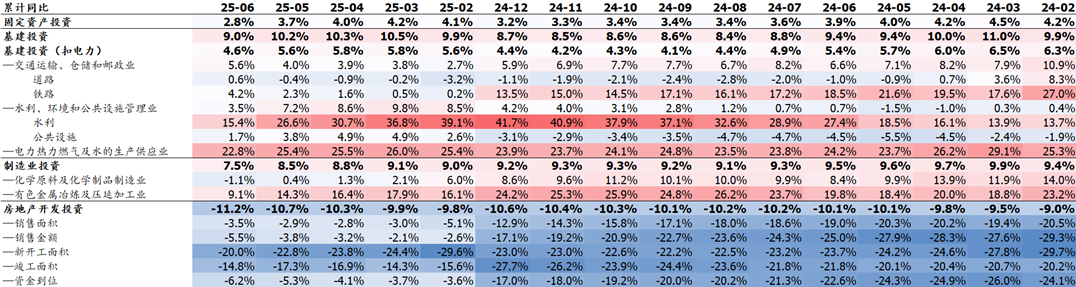
Core Viewpoint - The launch of the Yaxia Hydropower Station indicates a clear trend of central government leverage, with expectations for a series of major projects and regional development strategies to stabilize overall infrastructure investment and total demand [1][2] Infrastructure Investment and Major Projects - The central government is expected to introduce significant projects and regional strategies to maintain infrastructure investment and total demand, especially in light of declining economic indicators such as fixed asset investment and real estate sales [2][6] - Key upcoming projects include major transportation initiatives like the China-Kyrgyzstan-Uzbekistan Railway and the New Tibet Railway, with substantial investments planned [6][10] Beneficiaries of Infrastructure Projects - Recommended beneficiaries include leading state-owned construction enterprises such as China Energy Engineering, China State Construction, and China Railway Construction, which are expected to benefit from large-scale infrastructure projects [1][7] - Specific companies highlighted for their roles in construction and materials include China Communications Construction, China Railway Group, and regional players like Qing Song Jian Hua in Xinjiang [1][10] Canal Projects and Economic Impact - The development of major canal projects is anticipated to enhance logistics efficiency and stimulate economic growth, with significant investments planned for projects like the Pinglu Canal and the Zhejiang-Jiangxi-Guangdong Canal [11][14] - The estimated total investment for these canal projects is approximately 620.4 billion, which is expected to provide strong support for investment in 2023 [11][14] Xinjiang Regional Strategy and Coal Chemical Industry - The Xinjiang region is expected to receive increased support from the central government, with significant investments in coal chemical projects projected to exceed 800 billion by 2025 [16][19] - Key players in this sector include China Chemical Engineering and local construction firms, which are well-positioned to capitalize on the anticipated growth in coal chemical investments [16][19] Strategic Hinterland Development - Sichuan has been identified as a strategic hinterland for national development, with policies expected to support infrastructure and investment growth in the region [21][24] - Companies involved in transportation infrastructure, such as Sichuan Road and Bridge, are likely to benefit from these strategic initiatives [21][24]