半导体自立自强

Search documents
中国2025年对美出口降20%
日经中文网· 2026-01-15 03:27
Core Viewpoint - China's exports to the United States are projected to decline to $420 billion in 2025, marking the largest drop since 1994, as the country gradually reduces its reliance on the U.S. market [2][4]. Group 1: Trade Statistics - In 2025, China's exports to the U.S. are expected to decrease by 20% year-on-year, reaching $420 billion, the highest decline since comparable data began in 1994 [2]. - The trade surplus with the U.S. will also decrease by 22%, the largest drop since 2007 [8]. - The decline in exports to the U.S. surpasses the previous record of a 13% drop in 2023 and exceeds declines during the trade war in 2019 and the Lehman crisis in 2009 [4]. Group 2: Trade Relations and Tariffs - Ongoing trade frictions have negatively impacted trade relations, with the U.S. imposing tariffs on Chinese imports since February 2025, leading to a near embargo-like situation [6]. - In May 2025, the impact of tariffs exceeding 100% peaked, resulting in a 35% year-on-year decline in exports [6]. - Despite some tariff reductions following a summit in November, exports continued to remain below the previous year's levels [6]. Group 3: Sector-Specific Impacts - From January to November 2025, smartphone exports from China fell by 35%, while fireworks exports decreased by 11% [6]. - Imports from the U.S. also saw a 15% decline, marking four consecutive years of negative growth [4]. Group 4: Economic Context and Future Outlook - The ongoing downturn in China's real estate sector has led to persistent domestic demand shortages and sluggish economic growth [8]. - To maintain growth rates, there is an increasing necessity to boost external demand, suggesting a gradual bottoming out of exports to the U.S. [8]. - China's five-year plan from 2026 to 2030 emphasizes self-reliance in high-tech sectors like AI and semiconductors, aiming to build supply chains independent of the U.S. [8].


华为在强化半导体供应链
日经中文网· 2025-11-29 00:33
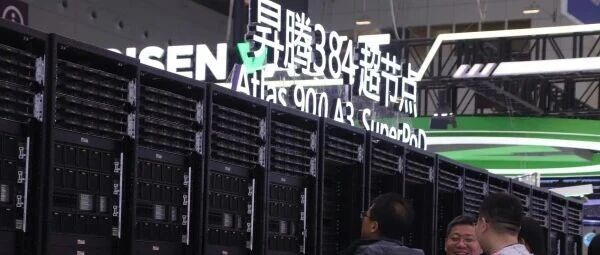
Core Viewpoint - Huawei is actively developing a self-sufficient semiconductor supply chain in China, particularly focusing on high-performance AI servers and semiconductors like Ascend, in response to U.S. sanctions since 2019 [2][6][9]. Group 1: Investment and Development - Huawei has established a fully-owned investment company "Hubble" and invested in over 60 semiconductor-related companies to align their development with Huawei's goals [2][6]. - The company is strengthening its position in the semiconductor industry through mergers and acquisitions, as well as increasing production capacity [6][9]. - A notable investment includes Huahai Chengke New Materials, which plans to acquire a leading domestic competitor with an investment of approximately 1.6 billion yuan [9]. Group 2: AI Server Capabilities - The AI server cluster "CloudMatrix384," featuring Huawei's self-developed AI semiconductor Ascend, was prominently showcased at the China International High-tech Achievements Fair [4][5]. - Huawei claims to possess the world's largest computing power, positioning itself to compete with U.S. companies like NVIDIA [5]. Group 3: Factory Construction and Collaboration - Huawei has invested 4% in Zonghui Chip Light Semiconductor Technology, which recently launched a new factory in Jiangsu with an investment of 550 million yuan [10]. - The company is also collaborating with Chinese enterprises in the development of essential semiconductor design tools, despite not directly investing in some of these firms [10]. - The Chinese government has initiated a policy fund exceeding 7 trillion yen to support semiconductor-related enterprises, emphasizing the goal of self-reliance in high-tech fields [10]. Group 4: Future Projections - China plans to invest 94 billion USD in advanced 300mm wafer semiconductor manufacturing equipment from 2026 to 2028, leading the global market [13]. - Despite the significant investments, there remains a considerable gap in technology compared to U.S. companies, with uncertainties regarding the extent of self-developed technology improvements [13].
半导体自立自强将支撑更强大的国内大循环
Zhong Guo Jing Ying Bao· 2025-06-13 18:14
Core Viewpoint - The recent mergers and acquisitions in the semiconductor sector, driven by regulatory reforms, are aimed at enhancing the domestic supply chain and achieving self-sufficiency in China's semiconductor industry [1][2][3]. Group 1: Recent Mergers and Acquisitions - Haiguang Information's merger with Zhongke Shuguang will create a "computing power giant" with a market value of nearly 400 billion yuan, addressing chip shortages in the intelligent computing sector [2]. - Guokewei's acquisition of Zhongxin Ningbo will transform it into a chip company with its own wafer fab, enhancing industry synergy [2]. - Beifang Huachuang's acquisition of Chip Source Microelectronics will facilitate the integration of domestic semiconductor equipment [2]. - Gekun Electronics' acquisition of Ruicheng Chip and Huada Jiutian's acquisition of Chip and Semiconductor are seen as critical battles for the integration of China's EDA industry [2]. Group 2: Regulatory Environment - The "Eight Measures for Deepening the Reform of the Sci-Tech Innovation Board" and the "Six Opinions on Deepening the Reform of the Mergers and Acquisitions Market" are providing a "system dividend" that supports mergers and acquisitions in the semiconductor sector [1][3]. - These policies aim to enhance resource allocation efficiency and promote the self-reliance of China's semiconductor industry [3]. Group 3: Industry Context - The semiconductor industry is crucial for national economic stability, with a global market value exceeding $600 billion, supporting various electronic products and the digital economy [2]. - China's semiconductor imports reached $385.6 billion in 2024, highlighting the ongoing trade deficit in this sector despite efforts to boost domestic production [3]. - The goal of developing the semiconductor industry is to ensure supply chain security and national security, rather than merely eliminating trade deficits [3]. Group 4: Future Outlook - The integration wave in the semiconductor sector is expected to accelerate domestic substitution and enhance China's competitive position in the global market [3]. - The emphasis on mid-to-low-end chips and the potential in compound semiconductors indicate a strategic focus on areas where China can achieve significant advancements [4].