
历史文化

Search documents
地名里的丰台 | 右安门:三千年岁月沉淀
Xin Lang Cai Jing· 2026-02-23 03:12
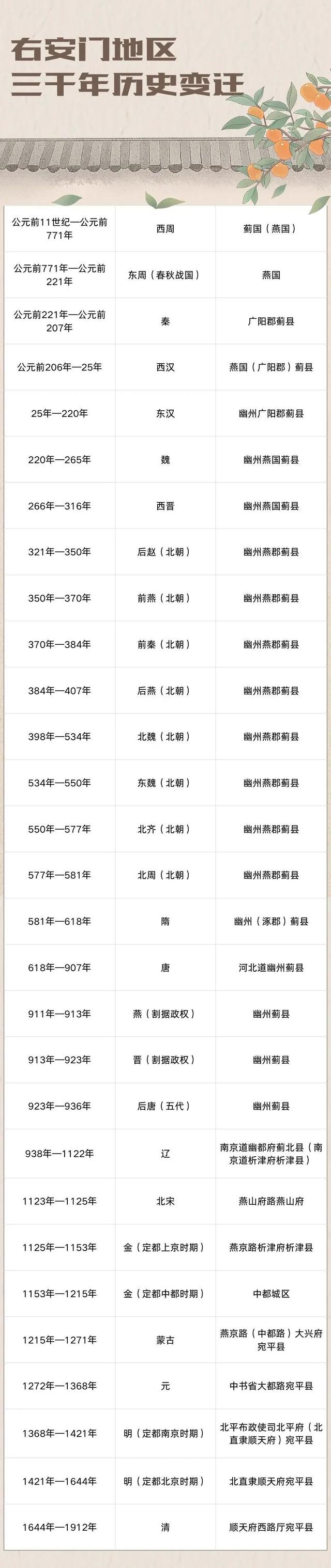
Core Viewpoint - The article explores the historical significance and evolution of the You'anmen area in Fengtai District, Beijing, highlighting its transformation from ancient civilization to a modern urban center [1]. Historical Development - The You'anmen area is located in the Beijing Plain, known for its favorable climate and abundant water resources, making it a habitat for early human civilization as far back as 25,000 years ago [1]. - Archaeological discoveries in the region include ancient human cultural sites and relics from the Xia and Shang dynasties, indicating a rich historical background [1]. Political and Administrative Changes - The area has undergone significant political changes, being part of various states and dynasties, including the ancient Ji state, the Yan state, and later the Jin dynasty, which marked a pivotal shift by establishing the city of Zhongdu [5][6]. - The construction of the outer city of Beijing during the Ming dynasty was influenced by historical events, such as the attack by Mongolian forces, leading to the establishment of the You'anmen gate as part of the city's defensive structure [9][10]. Modern Transformation - The administrative structure of the You'anmen area was formalized in 1957, establishing the You'anmen office, which later became part of Fengtai District, contributing to its development as a modern urban area [14]. - Today, You'anmen has transformed into a vibrant street that combines historical heritage with modern vitality, featuring significant infrastructure like the Beijing South Railway Station and ecological projects along the Liangshui River [16][18]. Cultural and Community Development - The area has seen improvements in community welfare, including the renovation of old residential buildings and the establishment of a comprehensive elderly care network, enhancing the quality of life for residents [18]. - The You'anmen area is now characterized by a blend of historical significance and contemporary urban living, making it a desirable place for both residents and businesses [21].

漫步荔湾老城
Xin Lang Cai Jing· 2026-02-02 00:29
Core Viewpoint - The article highlights the historical and cultural significance of the Liwan district in Guangzhou, emphasizing the blend of traditional architecture and modern life, showcasing the unique charm of the area. Group 1: Historical Significance - The article discusses the origins of Fengyuan Street, tracing back to the Qing Dynasty, and its connection to local history through its architecture and cultural heritage [1]. - The West Side Big House is identified as a distinctive architectural style in Guangdong, representing the residences of wealthy families in the past, showcasing the region's unique building styles [1][2]. Group 2: Architectural Features - The article describes the unique door design of the West Side Big House, including a large sturdy door protected by wooden bars and a smaller decorative door, which serves practical purposes such as privacy and security [2]. - The "foot door" and "sliding bars" are explained as traditional features that reflect the wisdom of ancestors in architectural design, providing both functionality and aesthetic appeal [2]. Group 3: Local Life and Culture - The vibrant atmosphere of the old streets and alleys is depicted, highlighting the lively interactions among residents and the picturesque scenes that evoke a sense of nostalgia and community spirit [3]. - The presence of banyan trees in Liwan is noted as a significant cultural symbol, representing the deep-rooted connection of local residents to their childhood memories and the essence of their hometown [3]. Group 4: Modern Developments - The article mentions the transformation of Liwan into a historical and cultural district, integrating modern elements such as trendy cultural products and contemporary art centers, indicating a dynamic evolution of the area [3][4]. - Despite being an old city, Liwan is portrayed as vibrant and modern, successfully merging its historical charm with contemporary developments, thus attracting both locals and tourists [4].
密云有“神柏” 九搂十八杈
Bei Jing Wan Bao· 2026-01-28 06:56
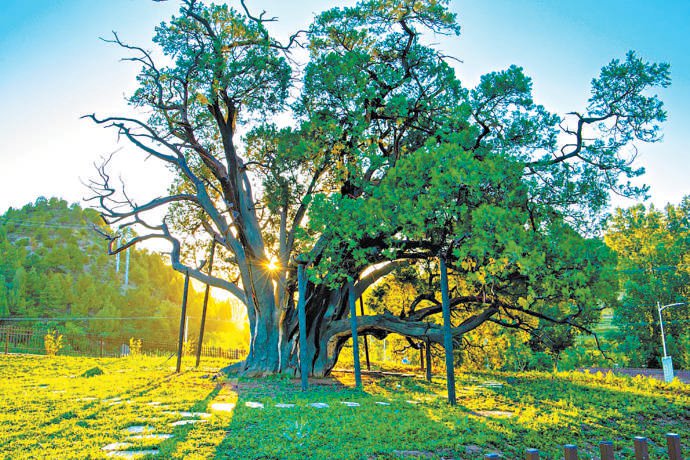
Core Viewpoint - The ancient cypress tree, known as "Shenbai," located in the Xinchengzi Village of Miyun, Beijing, is a symbol of resilience and historical significance, having stood for 3,500 years and witnessed various historical events [2][3]. Group 1: Historical Significance - The "Shenbai" tree dates back to the early Zhou Dynasty, making it older than the city of Beijing itself, and has survived through multiple dynasties including Han, Sui, Tang, Song, Ming, and Qing [3]. - The tree is associated with various cultural beliefs, such as being a symbol of steadfastness and integrity, as it remains evergreen and is often planted in significant locations like palaces and temples [3]. Group 2: Cultural and Community Impact - In 2018, the "Shenbai" tree was recognized as one of Beijing's "Top Ten Most Beautiful Trees," leading to the establishment of a park to protect it, enhancing the local landscape and community pride [3][4]. - The tree has historical ties to local folklore, including stories of treasure hunters and its role in providing shelter for villagers and soldiers throughout history, particularly during the anti-Japanese war [4]. Group 3: Environmental and Aesthetic Value - The park surrounding the "Shenbai" tree features lush greenery and serves as a recreational area for both locals and visitors, blending natural beauty with historical context [4][5]. - The tree's unique structure, with its numerous branches and height, contributes to its majestic appearance, making it a focal point of the local environment [2][4].
“乐温”何以“名城”
Xin Lang Cai Jing· 2026-01-27 17:52
Group 1 - "乐温" refers to the historical significance of the Longshou District in Chongqing, which has a rich cultural heritage and is known as a "historical and cultural city" [1] - Longshou District has a history of over 1800 years, originally established as Chang'an County during the Shu Han period [1] - The district is strategically located near the Yangtze River and the Three Gorges Reservoir, making it a fertile area historically known for agriculture [1] Group 2 - Ba Qing, recognized as one of China's earliest female entrepreneurs, gained wealth through the trade of cinnabar and contributed to significant projects like the Great Wall [2] - The site of Huaiqing Terrace, associated with Ba Qing, has historical importance, although it has been affected by modern developments [2] Group 3 - Qiao Ding, a prominent Neo-Confucian scholar from the Northern Song Dynasty, significantly influenced the development of Confucianism in the Sichuan region [3] - His teachings and the school he founded, the Fuling School, played a crucial role in shaping Chinese philosophy for nearly two centuries [3] Group 4 - Nie Xian, a notable official during the Ming Dynasty, served in various high-ranking positions and was known for his integrity and contributions to education [4] - His legacy includes the establishment of a school in his hometown, which reflects his commitment to education and community [4] Group 5 - "Huan Zhu Lou Zhu," also known as Li Shangi, is celebrated as a master of modern martial arts novels, influencing the genre significantly [5] - His works, characterized by imaginative plots and rich character development, have inspired many subsequent authors in the martial arts literature field [5] Group 6 - Huan Zhu Lou Zhu was also a prolific playwright, collaborating with notable figures in the Peking opera scene and contributing to various new theatrical works [6] Group 7 - Yang Keming and Cheng Qianmou are recognized as significant figures in the history of the Red Army, contributing to the revolutionary efforts in the region [7] - Their sacrifices and leadership during critical periods of Chinese history highlight the importance of local figures in the broader narrative of the revolution [7] Group 8 - The Longshou District's historical street, "Guan Kou," has been designated as a "municipal historical and cultural street," showcasing its rich industrial heritage [8] - This area serves as a key cultural and historical site, reflecting the development of modern industry in Southwest China [8]
广东最牛县城诞生
3 6 Ke· 2026-01-27 02:28
Core Viewpoint - Huizhou's Boluo County has become the first "billion county" in Guangdong Province, marking a significant economic milestone for the region [1] Group 1: Economic Achievement - Boluo County's GDP has surpassed 100 billion yuan, establishing it as a leading economic area within Guangdong, China's most economically robust province [1] Group 2: Historical and Cultural Significance - Boluo County has a history of over 2000 years and is recognized as one of the four ancient counties in Guangdong, with its fame largely attributed to the presence of Mount Luofu [3][4] - The cultural heritage of Boluo is deeply connected to Mount Luofu, which has been celebrated by historical figures such as Sima Qian and Su Dongpo, who contributed to its literary and cultural legacy [4][5] Group 3: Tourism and Local Culture - Boluo County features a unique Hakka cultural system, with over 70% of its population identifying as Hakka, preserving traditional customs and cuisine [6] - The region has developed into a popular tourist destination, with scenic routes like the 218 beautiful tourism road connecting Mount Luofu and Nankun Mountain, attracting visitors for leisurely drives [7]
串联7000多年历史文化发展脉络 中国考古博物馆文物“上新”
Yang Shi Xin Wen· 2026-01-23 07:08
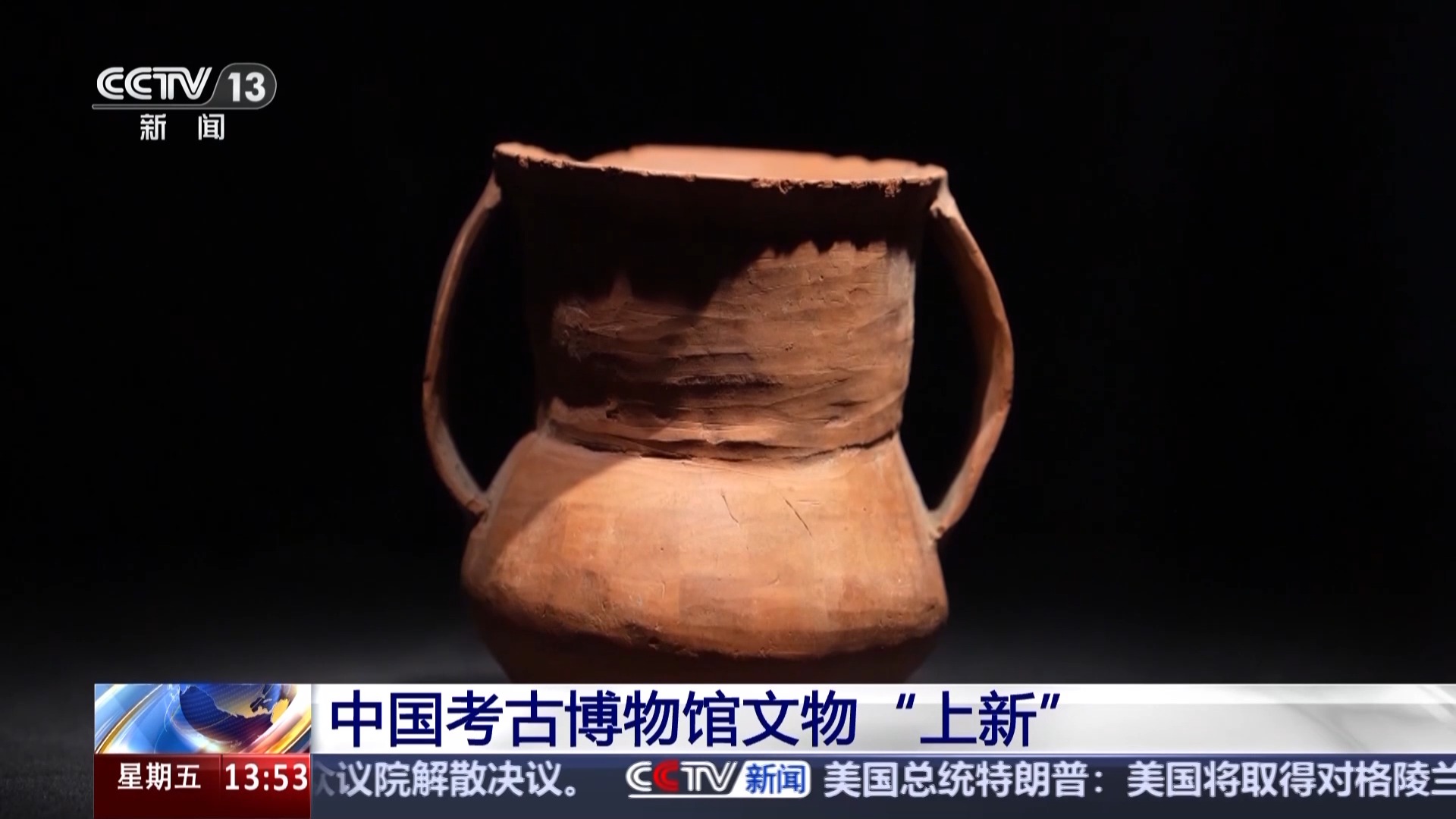
Core Insights - The article highlights the recent addition of new artifacts at the China Archaeological Museum, showcasing over 7,000 years of historical and cultural development through the colors and styles of the artifacts. Group 1: Artifact Highlights - A red circular-bottomed pottery bowl from the Dadiwan culture, dating back 7,000 years, was unearthed at the Baijia site in Lintong, Shaanxi [1] - A double-eared painted pottery jar from the Qijia culture, dating back 4,200 to 3,600 years, was found at the Liuwan site in Qinghai, featuring a black and red grid pattern [1] - A yellow stone axe from the Erlitou culture, dating back 3,800 to 3,500 years, symbolizes military power [3] Group 2: Notable Artifacts from Different Eras - A light green jade bear, approximately 3,000 years old from the Shang Dynasty, was discovered in the tomb of Fu Hao, reflecting the Shang people's reverence for jade [5] - A covered bronze vessel from the Western Zhou period, inscribed with 39 characters, was excavated from the Zhangjiapo Western Zhou cemetery in Shaanxi, providing significant historical value regarding Zhou rituals and social life [7] - A Han Dynasty bronze plaque depicting wrestlers and horses, along with a Tang Dynasty "Ji" character phoenix brick, exemplifies the artistic style of the Tang era [9] Group 3: Cultural Significance - The newly added artifacts, particularly the Hebei Wanzhang Northern Dynasties mural tomb figurines, reflect the cultural integration of the Northern and Southern Dynasties through their clothing and horse gear [11] - The exhibition of these artifacts is organized chronologically in the main hall of the China Archaeological Museum and is open to the public for free [11]
多个文艺作品在国家级专业奖项中斩获佳绩
Xin Lang Cai Jing· 2025-12-26 21:02
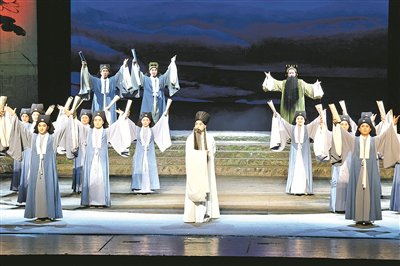
Core Viewpoint - Qinghai is promoting cultural development through five cultural pillars: ecological culture, historical culture, red culture, national culture, and highland culture, achieving notable success in national awards for artistic works [1][2]. Group 1: Ecological Culture - Qinghai is actively promoting its ecological civilization achievements and engaging in environmental protection activities, with initiatives like "Solar Sheep" and the popular snow leopard "Ling Xiaozhe" receiving widespread attention and praise [1]. Group 2: Historical Culture - The province is focusing on the research and excavation of Kunlun culture, conducting multidisciplinary scientific explorations, and implementing archaeological projects at sites like Dingdu Pubba and Xia'er Yama Kebu, with significant discoveries recognized in the "Top 100 Archaeological Discoveries of the Century" [1]. Group 3: Red Culture - Qinghai is commemorating significant historical events such as the 100th anniversary of the Communist Party and the 80th anniversary of the victory in the Anti-Japanese War, promoting the "Two Bombs, One Satellite" spirit, and establishing the Qinghai Atomic City Memorial Hall as a repository of red culture [1]. Group 4: National Culture - The province is enhancing the construction of national and provincial cultural protection zones for Gesar and Regong cultures, compiling the "Atlas of Chinese Minority Cultural Relics: Qinghai Volume," and organizing various events to revitalize traditional culture in the modern era [2]. Group 5: Highland Culture - Qinghai is hosting discussions on the "Two Roads" spirit and promoting exemplary figures like Gabulong and Wu Tianyi, aiming to inspire local communities to love and build Qinghai [2]. Group 6: Artistic Creation - The province's artistic creation is thriving, with works like the novel "On the Wilderness," Tibetan opera "Princess of Jincheng," and the film "Boy in the Moonlight" winning national awards, while upcoming productions include the TV series "Tree of Life" and the documentary "Yushu Rebirth" [2][3]. Group 7: Collaborative Projects - Qinghai is implementing over 70 cooperative projects in artistic creation, talent cultivation, and grassroots cultural development, with successful releases of various artistic works and events such as the China Wildlife Photography Exhibition and the National (Qinghai) Folk Song Performance [3].
以文铸魂 以文化人
Xin Lang Cai Jing· 2025-12-26 19:59
Core Viewpoint - Guiyang is focusing on cultural construction as a core element of its civilization development, integrating five cultural aspects to enhance the city's spirit and identity [2][3]. Group 1: Cultural Integration and Urban Development - Guiyang has achieved a "five consecutive crowns" as a national civilized city by embedding cultural construction at the heart of its civilization efforts [2]. - The city is transforming from old neighborhoods to livable homes and from chaotic markets to orderly "civilized markets," enhancing the living environment and promoting a "15-minute living circle" for convenience [2]. - The implementation of "one circle, two venues, three renovations" aims to improve urban functions and rural social civilization, positioning Guiyang as a modern, high-quality city [2]. Group 2: Cultural Soft Power and Citizen Engagement - The city emphasizes the importance of "human civilization," focusing on improving citizens' moral standards and cultural literacy as a fundamental challenge [3]. - Guiyang promotes the integration of red culture, Yangming culture, ethnic culture, mass culture, and historical culture as strategic pillars to enhance urban soft power [3]. - Cultural activities are designed to be accessible and engaging, allowing citizens to internalize civilized values in their daily lives [3]. Group 3: Systematic Cultural Practices - The five cultural aspects are interconnected, working together to create a unique and rich cultural ecosystem in Guiyang [4]. - Red culture utilizes digital technology to create immersive experiences, while Yangming culture promotes philosophical integration into daily life and governance [4]. - Ethnic culture fosters mutual understanding through festivals, and mass culture encourages community participation through accessible events [4]. Group 4: Impact on Social Dynamics and Governance - The deep practice of the five cultures has led to significant and lasting changes in Guiyang's civilization, reflected in the city's atmosphere and citizens' spirit [5]. - Citizens are increasingly engaged in cultural activities, leading to improved civic behavior and a stronger sense of belonging and pride in the city [5]. - Cultural values are becoming integral to social governance, enhancing community participation and social harmony [6]. Group 5: Future Vision and Goals - Guiyang aims to make cultural influence pervasive, nurturing every citizen and contributing to a modernized civilization [6]. - The ultimate goal is to ensure that cultural power becomes a fundamental aspect of urban life, enhancing the city's overall development and identity [6].
武威的马(我与一座城)
Ren Min Ri Bao· 2025-12-23 22:31
Core Viewpoint - Wuwei, a city with a rich historical background, is known for its cultural heritage and the significance of horses in its history, particularly the famous "Galloping Horse Treading on a Flying Swallow" which symbolizes the city's historical importance and artistic achievements [1][2][3]. Historical Significance - Wuwei, historically known as Liangzhou, has been the capital for several ancient states, showcasing its importance in Chinese history [1]. - The city is home to the "Galloping Horse Treading on a Flying Swallow," a significant artifact from the Eastern Han Dynasty, discovered in the Leitai Han Tomb, which reflects advanced engineering and artistic skills of the time [2]. Cultural Heritage - The Leitai Han Tomb, where the famous horse statue was found, features a burial chamber that is 19 meters deep, demonstrating the engineering prowess of the Eastern Han period [2]. - Wuwei's cultural sites, such as the Jiumoluoshi Temple and the Wuwei Confucian Temple, highlight the city's educational and spiritual heritage, with the Confucian Temple being a center for scholarly pursuits [1]. Equine Legacy - The region's horses, particularly during the Tang Dynasty, were renowned for their quality, with historical records indicating that up to 700,000 horses were raised in the area [3]. - The local folklore surrounding the "Horse King" reflects the deep-rooted cultural significance of horses in Wuwei, symbolizing prosperity and strength [3]. Modern Relevance - Although the connection between horses and warfare has diminished, equine culture remains vibrant in Wuwei, with local breeds like the Chakuo horse continuing a lineage that dates back over 2,000 years [3][4]. - The spirit of horses is embedded in the identity of Wuwei's residents, influencing the city's development and cultural expressions [4].
在洮州卫遥望南方(我与一座城)
Ren Min Ri Bao· 2025-12-19 22:10
Core Viewpoint - The article explores the historical significance and cultural heritage of the Taizhou Wei, a military establishment from the Ming Dynasty, and its evolution into the modern town of Xincheng, highlighting the blend of history and contemporary life in the region [3][4][7]. Historical Context - Taizhou Wei was established in the 12th year of the Hongwu era of the Ming Dynasty, with a city perimeter of approximately nine li, completed in less than ten days [4]. - The region has a rich historical background, with evidence of earlier settlements during the Three Kingdoms period and the establishment of the Honghe Prefecture during the Northern Wei [4]. Cultural Insights - The local population exhibits a blend of characteristics from both northern and southern China, reflecting historical migrations and cultural exchanges [5][6]. - The Taizhou Wei features a unique temple dedicated to 18 dragon gods, indicating the agricultural society's reliance on favorable weather and possibly the influence of southern migrants [5]. Modern Observations - The town of Xincheng, previously known as Taizhou Wei, is characterized by a vibrant marketplace and a diverse population, maintaining a connection to its historical roots [3][6]. - The remnants of the southern gate and the earthen city wall serve as historical witnesses to the region's past, symbolizing both protection and continuity of cultural identity [7].