城市发展

Search documents
新加坡国家发展部长徐芳达分析新加坡城市发展面临三大工程挑战
Shang Wu Bu Wang Zhan· 2026-03-27 16:17
Core Insights - Singapore faces three major engineering challenges in urban development: overcoming height and space limitations, improving construction efficiency, and creating more sustainable and inclusive infrastructure [1] Group 1: Engineering Challenges - Singapore is recognized as one of the most livable cities globally, with engineering technology playing a crucial role in supporting essential infrastructure [1] - The country must develop both "upwards" and "downwards" due to limited land availability, necessitating significant engineering innovation [1] Group 2: Construction Efficiency - Singapore is advancing several large-scale projects, including the fifth passenger terminal at Changi Airport, Tuas Port, and ongoing public housing construction [1] - To ensure projects are completed on time, within budget, and to high standards, innovative methods must be employed given the limited resources [1] Group 3: Technological Innovations - The government has actively introduced new technologies, such as using reclamation techniques on Tekong Island, which reduces sand usage by nearly half while increasing military land by approximately 800 hectares [1] - The Housing and Development Board is utilizing robots for plastering and painting in public housing projects to enhance productivity [1]

李春田调研高铁片区和重点城建项目建设情况
Xin Lang Cai Jing· 2026-02-27 15:22
Group 1 - The core viewpoint emphasizes the importance of optimizing construction plans and ensuring quality and safety in the development of the high-speed rail area and key urban construction projects [1][2] - The city aims to enhance the road network in the high-speed rail area, considering future traffic demands and ensuring connectivity with the main urban road network and expressways [1] - The construction of the high-speed rail area is seen as crucial for urban development, with a focus on creating a vibrant, youth-attractive city through high-quality planning and construction [2] Group 2 - The city is working on several key projects, including the comprehensive transportation hub, green low-carbon demonstration industrial park, and new energy digital economy innovation park, with an emphasis on coordinating construction timelines [2] - There is a strong emphasis on collaboration among various departments to support the construction efforts and ensure the development of a new urban gateway for Binzhou [2]
义乌春节后首宗土地交易圆满落幕
Jing Ji Guan Cha Wang· 2026-02-27 11:35
Core Insights - The land transaction in Yiwu marks the first activity post-Spring Festival, indicating a revival in the real estate market [1] - The competitive bidding resulted in a final price of 1.1585 billion yuan, reflecting a 22.14% increase over the starting price [1] - The project is strategically located near the core business district, highlighting the positive impact of Yiwu's small commodity industry on urban development [1] Group 1 - The land plot covers an area of 4,120.58 square meters with a planned total construction area of 10,301.45 square meters and a floor area ratio of 2.5 [1] - The winning bid by Yiwu Hanxiang Real Estate Development Co., Ltd. set a floor price of 11,246 yuan per square meter [1] - The project will feature a multi-layer structure with commercial facilities on the ground floor and residential spaces above [1] Group 2 - Yiwu's market monitoring data for 2024 indicates a total commodity transaction volume exceeding 279.8 billion yuan, representing a year-on-year growth of 20.02% [1] - The area within a 2-kilometer radius of the project has a well-established commercial network, including notable complexes like Wanda Plaza [1] - The land transaction reflects the active state of Yiwu's real estate market and underscores its significant role in regional economic development [1][2]
长沙城市定位提升为“长江中游地区中心城市”
Xin Lang Cai Jing· 2026-02-26 23:52
Core Insights - The article highlights the significant achievements of Changsha over the past decade, including surpassing a GDP of 1 trillion yuan, local public budget revenue exceeding 100 billion yuan, and a resident population exceeding 10 million, thus entering the ranks of mega cities [1] Economic Growth - The total economic output of Changsha increased from 851.01 billion yuan to 1,573.78 billion yuan, with an average annual growth rate of 6.35%, ranking 15th nationally and 2nd among central provincial capitals [2] - The resident population reached 10.6165 million in 2024, making it the only city in the province with a net inflow of population over the past four years [2] - The per capita disposable income of urban and rural residents decreased from 1.69 to 1.53, while the per capita GDP exceeded 20,000 USD [2] Urban Development - The urban framework of Changsha has expanded significantly, with the built-up area increasing from 363.69 square kilometers in 2015 to 1,057.97 square kilometers, a 2.9-fold increase, and the urbanization rate rising from 74.38% to 83.99% by 2024 [3] - A comprehensive transportation system has been established, including a highway network and modernized port facilities, with 15 river-crossing passages and a fully covered metro system [3] Urban Quality Improvement - The city has implemented a "six-step work method" for urban renewal, recognized by the UN-Habitat, and has been selected for various national pilot projects [4] - Over 2,336 old urban residential communities have been renovated, benefiting over 1 million residents, and the air quality has improved, with the good air quality rate rising from 74.2% in 2015 to 87.4% in 2025 [4] Urban Management - The city has adopted meticulous urban management practices, achieving nearly 90% coverage of parks and public squares within a 5-minute walk [5] - A multi-tiered housing security system has been established, with 3,946 public rental housing units and 115,000 affordable housing units constructed [5] Social Welfare - More than 75% of the municipal financial resources have been allocated to social welfare, with 362 key livelihood projects completed over the past decade [6] - The education system has seen a net increase of nearly 1 million students, reaching 2.7577 million, and the average life expectancy has risen to 80.9 years [6]
赋予故事情感内核和人文色彩
Xin Lang Cai Jing· 2026-02-26 22:50
Core Viewpoint - The novel "Flower Heavy in the City of Brocade" by Mo Ran explores the story of urban development and personal relationships against the backdrop of the comprehensive renovation project of the Funan River, highlighting the contributions and sacrifices of various characters involved in the project [1][2][3]. Group 1: Urban Development and Community Involvement - The Funan River renovation project was completed in three years with the participation of over one million people, transforming the living conditions of 100,000 residents in the area [1]. - The project exemplifies a successful model of urban governance, showcasing the collaboration between the government, enterprises, and the community [4][5]. - The novel emphasizes the importance of collective effort in urban development, illustrating how different groups contribute uniquely to the overall progress [5]. Group 2: Character Relationships and Emotional Depth - The relationship between the main characters, Zhang Sihong and her husband Du Shixiong, evolves through the challenges posed by the renovation project, leading to greater understanding and resilience in their marriage [2]. - The elder character Gu Songhuai represents the values of responsibility and dedication, influencing the younger generation's commitment to community development [2][3]. - The narrative intertwines personal stories with broader themes of social responsibility, showcasing how individuals and families navigate the complexities of urban change [3][4]. Group 3: Role of Enterprises and Government - Enterprises actively participated in the renovation project by providing financial support, technical assistance, and resources, demonstrating their social responsibility [4]. - Government officials played a crucial role in coordinating resources and addressing challenges, ensuring the project's successful execution [3][4]. - The collaboration between enterprises, government, and the community reflects a positive interaction that drives urban development forward [4][5].
广西“最失落”城市:曾比南宁、柳州还富裕,现如今却在四线挣扎?
Sou Hu Cai Jing· 2026-02-26 18:15
Economic Overview - Guangxi is located in South China and is bordered by several provinces and Vietnam, characterized by a subtropical monsoon climate that supports lush vegetation [1] - The region is classified as an autonomous region rather than a province, with Nanning as its capital [3] - Among its 14 prefecture-level cities, Nanning and Liuzhou are the most notable economically, while Guilin and Beihai are well-known for tourism [5] Historical Context of Wuzhou - Wuzhou was historically significant, once contributing over 60% of Guangxi's economic income during its peak, making it a major commercial hub [11] - The city was a prominent trading port in the Pearl River Delta, especially during the Ming and Qing dynasties, and was second only to Guangzhou in foreign trade during the Republic of China era [11] Recent Economic Developments - Wuzhou has been recovering from a period of stagnation and is now focusing on industrial development and quality improvement, with a GDP of 1490.97 billion yuan in 2023, projected to grow to 1634.06 billion yuan in 2024, reflecting a 7.2% increase [13] - The city is actively connecting with surrounding developed areas and enhancing its local industries, such as the production of Liubao tea, to extend its industrial chain [13] Tourism and Cultural Heritage - Wuzhou is home to historical sites and traditional architecture, including the "Eight Scenic Spots of Wuzhou" and a significant number of traditional arcade buildings, making it a potential tourist destination [14] - The city features the Longmu Temple scenic area, known for its 22 ancient arcade streets and 560 arcade buildings, highlighting its cultural significance [14] Future Prospects - Wuzhou is positioned to leverage its historical advantages and improve its business environment, attracting more enterprises and enhancing infrastructure for better living conditions [14] - With a strategic focus on its unique strengths and a commitment to steady progress, Wuzhou aims to reclaim its status as a prosperous city in Guangxi [14]


看好广州!“史诗级土拍”落槌,马场地块以超236亿元总价成功出让
Guang Zhou Ri Bao· 2026-02-25 11:22
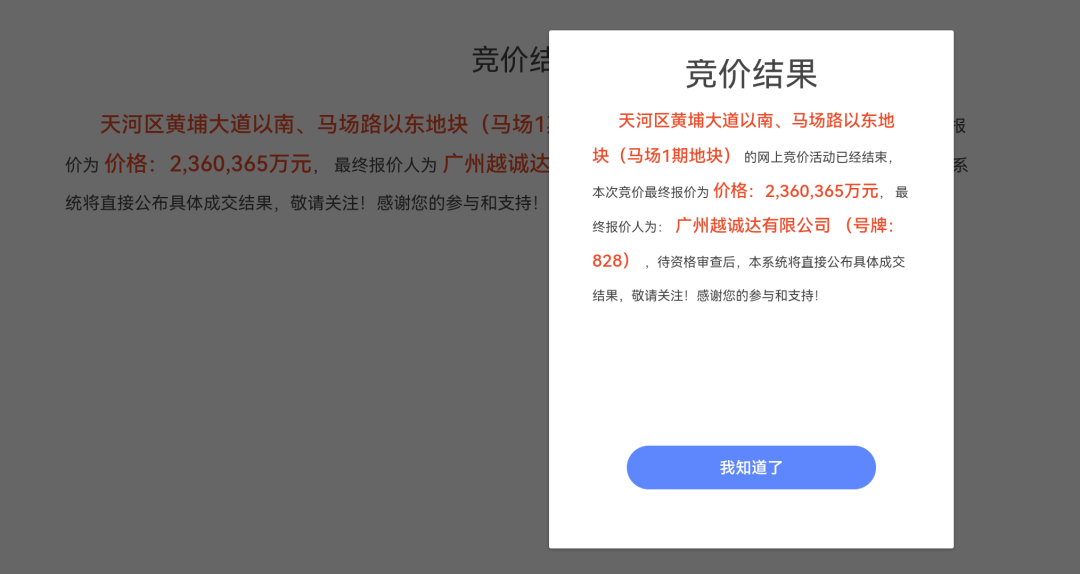
Core Insights - The Guangzhou land auction for the Zhujiang New Town racetrack site was highly competitive, with a total price of over 23.6 billion yuan, translating to approximately 85,000 yuan per square meter [1][3] - The site is considered the last prime piece of land in Zhujiang New Town, attracting major developers like Yuexiu, Poly, and China Resources, indicating strong demand in Guangzhou's real estate market [3][4] - The auction reflects Guangzhou's robust economic fundamentals, which are expected to positively influence the upcoming real estate market trends [3] Economic Context - Guangzhou's economy is projected to reach a total of 3.2 trillion yuan during the 14th Five-Year Plan, showcasing significant growth [3] - During the recent Spring Festival, Guangzhou recorded over 20 million tourists, with a 14.3% increase in out-of-province visitors, and tourism consumption exceeding 20 billion yuan, up 11.6% year-on-year [3] - The overall new housing launch absorption rate in Guangzhou is expected to rise to 21% by 2025, an increase of 8% compared to 2024 [3] Land Development Details - The racetrack site covers approximately 194,500 square meters with a total construction area of about 566,900 square meters, including commercial, residential, and educational facilities [4] - The winning developer is required to sign a project agreement with the local government and construct a five-star international hotel with a minimum area of 45,000 square meters, indicating high operational and financial demands [4][5] - The site aims to enhance connectivity between Zhujiang New Town CBD and the Financial City, transforming it into a vibrant area with improved public services and transportation [5] Commercial Potential - The redevelopment of the racetrack site is expected to create a new commercial hub, integrating luxury retail, high-end hotels, and unique experiences [6] - The area currently lacks significant commercial concentration, but the planned development aims to establish a diverse and dynamic business environment [6] - The project is positioned to become a leading center for luxury consumption, attracting high-end commercial resources and experiences [6]

春节后首个工作日,北京地铁19号线二期全面开工
Xin Lang Cai Jing· 2026-02-24 05:59
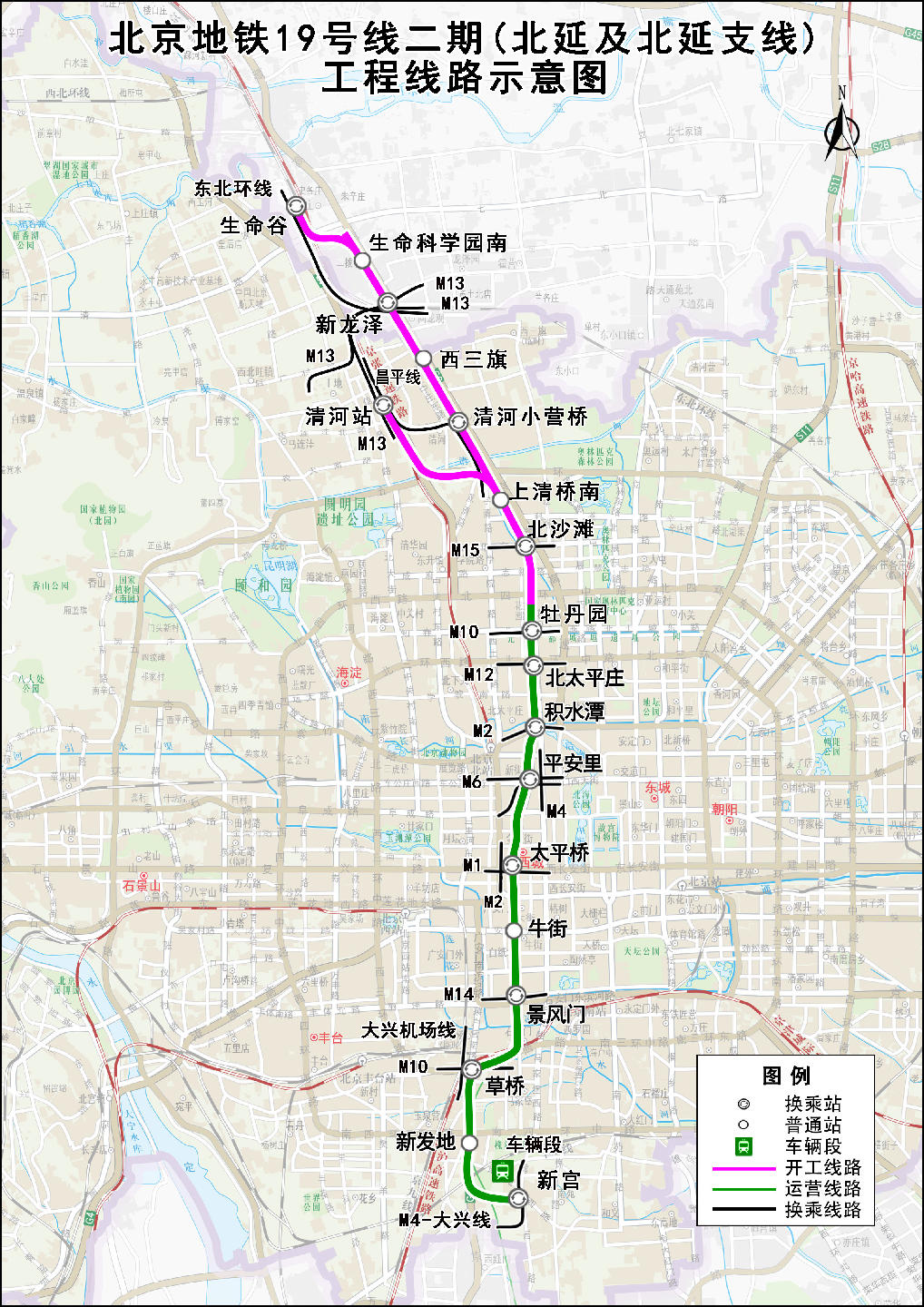
Core Viewpoint - The construction of the second phase of Beijing Metro Line 19, which includes the northern extension and branch line, has officially commenced, marking a significant step in enhancing the city's transportation infrastructure and supporting urban development [1][3]. Group 1: Project Overview - The second phase of Metro Line 19 will extend approximately 24.1 kilometers, passing through Haidian, Chaoyang, and Changping districts, and will include 8 stations, 5 of which will be transfer stations [1]. - The project aims to fill service gaps in the existing transportation network, significantly alleviating traffic pressure in the northwest region of Beijing [1][3]. Group 2: Economic and Urban Development Impact - The new line will connect key areas such as Zhongguancun Science City and the Future Science City West District, facilitating rapid transit and promoting the efficient flow of talent, technology, and capital [3]. - The project is expected to enhance the construction of Beijing as a technology innovation center by providing a solid transportation foundation [3]. Group 3: Construction and Technical Aspects - The construction involves complex geological conditions and requires advanced technology due to the dense urban environment and multiple crossings under existing infrastructure [3]. - The project plans to integrate energy-saving technologies and green construction practices, aiming to set a benchmark for sustainable development in the capital's rail transit sector [3].
地名里的丰台 | 右安门:三千年岁月沉淀
Xin Lang Cai Jing· 2026-02-23 03:12
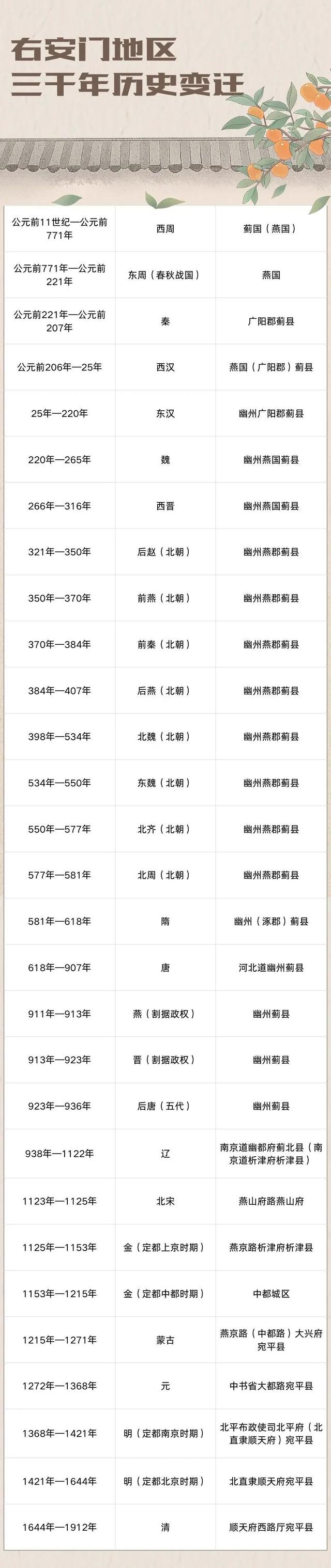
Core Viewpoint - The article explores the historical significance and evolution of the You'anmen area in Fengtai District, Beijing, highlighting its transformation from ancient civilization to a modern urban center [1]. Historical Development - The You'anmen area is located in the Beijing Plain, known for its favorable climate and abundant water resources, making it a habitat for early human civilization as far back as 25,000 years ago [1]. - Archaeological discoveries in the region include ancient human cultural sites and relics from the Xia and Shang dynasties, indicating a rich historical background [1]. Political and Administrative Changes - The area has undergone significant political changes, being part of various states and dynasties, including the ancient Ji state, the Yan state, and later the Jin dynasty, which marked a pivotal shift by establishing the city of Zhongdu [5][6]. - The construction of the outer city of Beijing during the Ming dynasty was influenced by historical events, such as the attack by Mongolian forces, leading to the establishment of the You'anmen gate as part of the city's defensive structure [9][10]. Modern Transformation - The administrative structure of the You'anmen area was formalized in 1957, establishing the You'anmen office, which later became part of Fengtai District, contributing to its development as a modern urban area [14]. - Today, You'anmen has transformed into a vibrant street that combines historical heritage with modern vitality, featuring significant infrastructure like the Beijing South Railway Station and ecological projects along the Liangshui River [16][18]. Cultural and Community Development - The area has seen improvements in community welfare, including the renovation of old residential buildings and the establishment of a comprehensive elderly care network, enhancing the quality of life for residents [18]. - The You'anmen area is now characterized by a blend of historical significance and contemporary urban living, making it a desirable place for both residents and businesses [21].
太原地标系列纪录片《桥见太原》|第六集:凝华
Xin Lang Cai Jing· 2026-02-22 03:30
Core Viewpoint - The bridge symbolizes the deep connection and historical significance of Taiyuan, serving as a witness to the city's evolution and future journey [2] Group 1 - The bridge has been a guardian of Taiyuan, supporting the city's history over time [2] - It reflects the passage of time and the development of the era, indicating its importance in the city's narrative [2] - The emotions and aspirations inscribed on the bridge will continue to flow through time, much like the Fen River [2]