可持续发展融资

Search documents
ING Groep(ING) - 2025 Q4 - Earnings Call Transcript
2026-01-29 15:02
Financial Data and Key Metrics Changes - The return on equity for 2025 was 13.2%, exceeding initial guidance [5] - Total sustainable volume mobilized reached EUR 166 billion, a 28% year-on-year increase [5] - Commercial net interest income (NII) remained strong at EUR 15.3 billion despite lower interest rates [5][6] - Total income reached a record level for the third consecutive year [6] Business Line Data and Key Metrics Changes - The loan book grew by 8.3% in 2025, primarily driven by residential mortgages [4] - The deposit book increased by 5.5%, mainly in retail banking from private individuals [4] - Fee income grew by 15% year-on-year, with investment products seeing a 21% increase in fee income [5][6] Market Data and Key Metrics Changes - Customer deposit growth was 4.5% in 2025, supported by customer acquisition and promotional campaigns [19] - The company maintained its number one position in five out of ten markets in retail banking [7] Company Strategy and Development Direction - The company aims for continued volume growth, projecting total income to reach around EUR 24 billion in 2026 [9] - A focus on cost discipline and operational efficiency is emphasized, with operating expenses projected to be around EUR 12.6 billion to EUR 12.8 billion [9] - The company plans to issue between EUR 6 billion and EUR 8 billion of Holdco Senior in 2026 [16] Management's Comments on Operating Environment and Future Outlook - Management expressed confidence in the strength and quality of the loan book despite a slight increase in the Stage Three ratio [11] - The company anticipates a 5%-10% increase in fee income for 2026, building on strong performance in 2025 [10] - Management highlighted the importance of being self-sufficient and not relying on central bank operations, although they remain open to utilizing MROs or LTROs if necessary [25] Other Important Information - The CET1 ratio decreased to 13.1% due to an additional distribution of EUR 1.6 billion [14] - The company has a stable liquidity profile, with over two-thirds of the balance sheet funded by customer deposits [19] Q&A Session Summary Question: Plans for tapping the ECB, MROs, and LTROs - Management stated that they prefer to be self-sufficient but may consider drawing on MROs or LTROs if necessary, particularly for economic reasons [25][26]

理论热点丨林伯强:更好推进“一带一路”绿色投资快速发展
Sou Hu Cai Jing· 2025-09-18 01:17
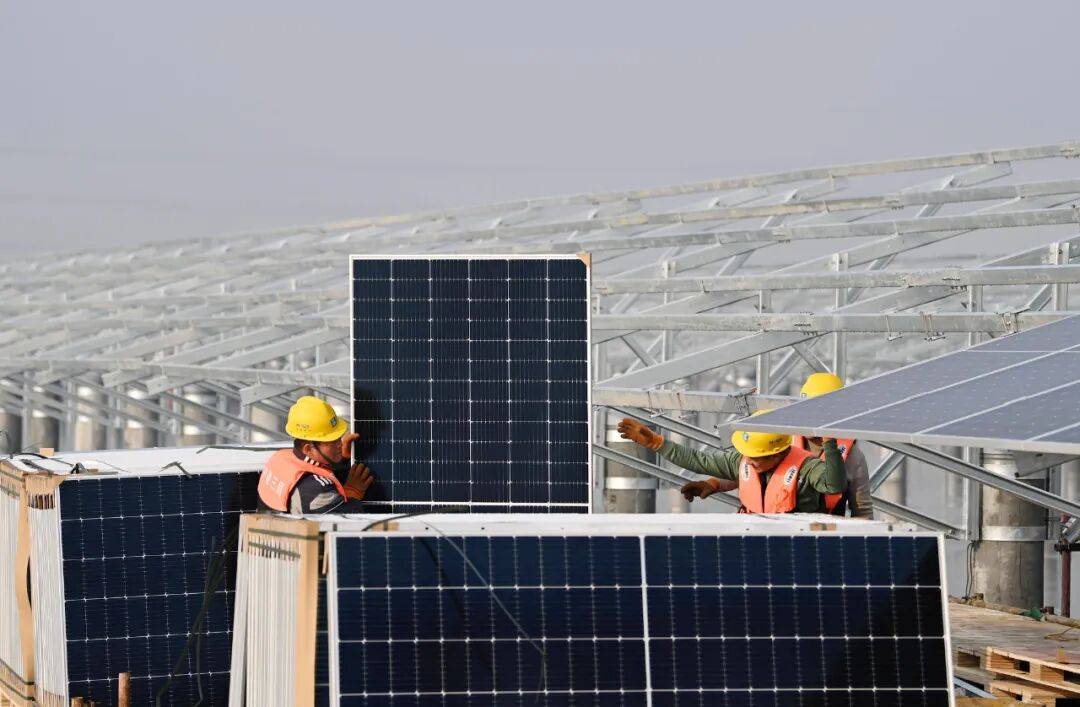
Core Viewpoint - China's green investment in Belt and Road Initiative (BRI) countries is expected to lead to a large number of projects, providing rich development scenarios for China's green investment on the international stage and contributing to global green low-carbon transformation [2][3]. Group 1: Investment Opportunities - Many BRI countries have submitted carbon reduction action plans and ambitious energy transition strategies to the United Nations, but these climate actions require substantial financial support [3]. - Developing countries face an annual sustainable development financing gap of approximately $4 trillion, necessitating more financing and grants to address climate change impacts [3]. - China's green investment in BRI countries can alleviate financing constraints for enterprises, providing support for projects and easing financial pressures [5][7]. Group 2: Growth Potential - BRI countries possess abundant natural resources for developing clean energy, with renewable energy consumption in these countries increasing by 868% over the past 30 years, surpassing the global average growth rate [4]. - Future investments in BRI countries are expected to see significant growth in wind and solar energy projects, driven by continuous innovation in photovoltaic technology and decreasing costs [4]. - Emerging sectors such as hydrogen energy, energy storage, and new energy vehicles present important development opportunities for Chinese enterprises [4]. Group 3: Challenges - There is a lack of unified green standards, which complicates cross-border investment activities and may hinder the development of green finance in BRI countries [9]. - Many BRI countries have insufficient sustainable development concepts and face challenges in economic green transformation due to underdeveloped economies and reliance on polluting industries [10]. - Political instability in some BRI countries poses risks to green investments, as stable political environments are necessary for project preparation and construction [10][11]. - The diverse national conditions and development needs among BRI countries create challenges for coordinated development and increase the difficulty of China's green investments abroad [11]. Group 4: Policy Recommendations - China should participate in the formulation of international green standards and improve the institutional support for BRI green investments, enhancing risk assessment levels for projects [12]. - Optimizing project and location decisions for BRI green investments is essential to reduce investment risks, considering both economic viability and the political and social environment of host countries [13]. - Chinese enterprises should enhance innovation input and cultivate green new productive forces to improve competitiveness and productivity [13]. - Promoting the establishment of technology demonstration zones under the BRI can facilitate the output of new productive forces and create markets for green technology [13].

Mowi ASA (OSE:MOWI): Signed EUR 2,600 million sustainability-linked credit facility agreement
Globenewswire· 2025-06-12 09:47
Core Viewpoint - Mowi has secured a EUR 2,600 million sustainability-linked revolving credit facility to refinance existing debt and support corporate purposes [1][2]. Group 1: Financial Details - The facility has a principal financial covenant requiring a minimum equity ratio of 35% [2]. - An accordion increase option allows for an additional EUR 400 million to be added to the facility during its term [2]. - The refinancing is subject to customary closing conditions [3]. Group 2: Sustainability and ESG Strategy - The facility aligns with Mowi's goal of achieving 100% green or sustainable financing [2]. - Interest rates on the facility are tied to Mowi's performance against sustainability KPIs, reflecting the company's overall ESG strategy [2].
2025清华五道口全球金融论坛主题讨论六丨新兴市场债务危机与金融治理
清华金融评论· 2025-05-20 10:30
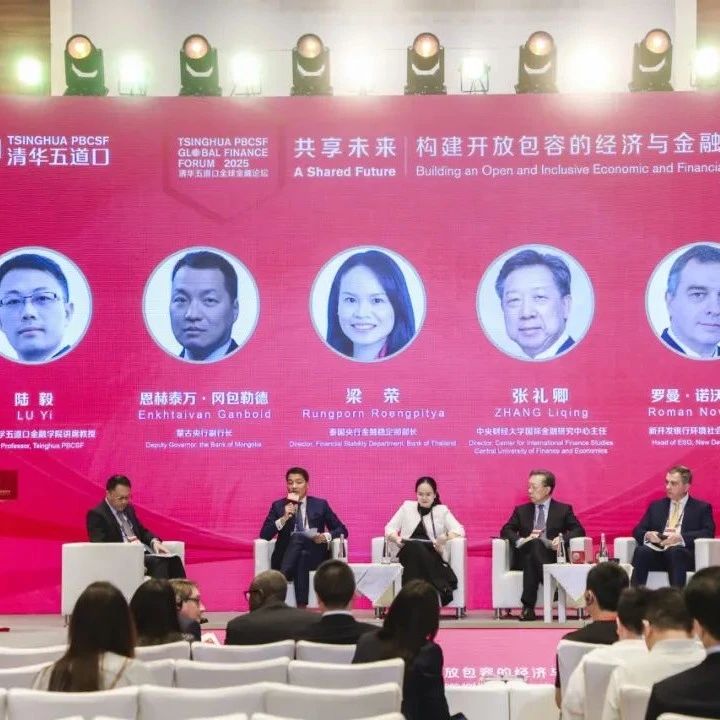
Core Viewpoint - The article discusses the emerging market debt crisis and financial governance, highlighting various countries' approaches and policies to address the issue, as presented during the Tsinghua Wudaokou Global Financial Forum held in Shenzhen [1]. Group 1: Mongolia's Experience - Mongolia's central bank vice governor shared the country's experience in managing its debt crisis, noting that government debt reached 90% of GDP in 2016, prompting international concern [6]. - The Mongolian government implemented measures such as a legal cap on external debt at 88% of GDP and established a transparent debt disclosure mechanism, enhancing market confidence [6]. - These actions reduced government debt to 60% of GDP and improved Mongolia's sovereign credit rating to B+, serving as a model for other emerging markets [6]. Group 2: Thailand's Debt Situation - Thailand's central bank official pointed out that debt levels had been rising even before the pandemic, exacerbated by COVID-19 and inflation, leading to increased debt among households and businesses [9]. - The country has initiated measures like a "prudent borrowing plan" and debt consolidation schemes to manage household debt, which is notably higher than in comparable countries [9]. - The official emphasized the challenges of achieving "healthy deleveraging" in a highly uncertain environment, complicating policy coordination and assessment [9]. Group 3: Global Debt Landscape - The director of the International Finance Research Center highlighted the severe global debt situation, with total debt expected to reach a record $318 trillion by 2024, and emerging market debt exceeding $105 trillion [12]. - Factors such as trade tensions, economic slowdown, and reduced international aid have significantly increased debt risks in emerging markets, with 15% of low-income countries already in debt distress [12]. - Recommendations include restoring international trade, enhancing G20 dialogue, and improving sovereign debt restructuring mechanisms to alleviate the debt burden on low-income countries [13]. Group 4: New Development Bank's Role - The New Development Bank, established by emerging market countries, focuses on sustainable development financing, emphasizing innovative financing models and project selection [15]. - The bank has increased the proportion of loans in local currencies to mitigate exchange rate risks and supports projects that promote both economic growth and environmental sustainability [15]. - Future plans include expanding local currency financing and directing resources towards climate adaptation and energy transition, aiming for a fair and inclusive international financial system [15].