
可转债定价逻辑

Search documents
“破面”可转债再现 市场系统性风险可控
Zheng Quan Shi Bao· 2025-12-17 19:31
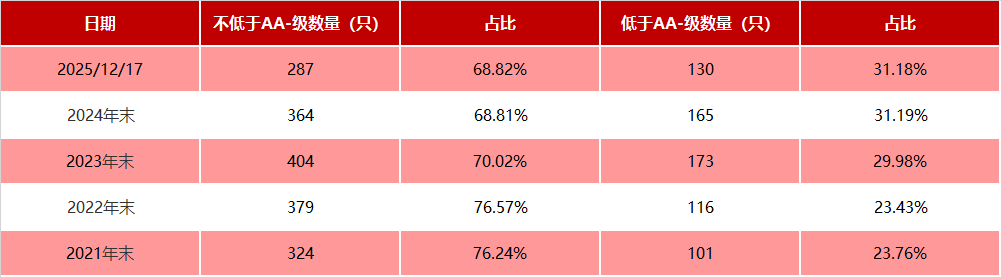
Core Viewpoint - The recent decline in convertible bonds, particularly those falling below par value, reflects a reassessment of credit risk and pricing logic in the market, driven by continuous declines in underlying stock prices and concerns over issuer creditworthiness [2][3][4] Group 1: Market Trends - The convertible bond market has seen over a hundred bonds drop below par value, indicating a shift in market consensus regarding credit risk [2] - Specific bonds like Sanfang Convertible Bond have recently fallen below par, with a cumulative decline exceeding 10% in December [1] - The trading volume of convertible bonds has significantly decreased, with some trading days in December seeing volumes below 50 billion yuan, compared to over 100 billion yuan in August [4] Group 2: Credit Risk and Valuation - The decline in convertible bond prices is primarily driven by the continuous drop in underlying stock prices, alongside year-end liquidity constraints and fluctuations in risk-free interest rates [2][3] - A significant portion of convertible bonds, particularly those rated below AA-, has increased, with 130 bonds representing 31.18% of the total as of December 17, compared to lower percentages in previous years [3] - The market is witnessing a concentration of credit risk and valuation reassessment, particularly for low-rated and near-default bonds, which may lead to a more pronounced credit tiering and valuation re-evaluation [4] Group 3: Future Outlook - Despite the recent declines, experts believe that systemic risks in the market remain controllable, and the current situation reflects individual risk pricing rather than a widespread credit crisis [3] - The frequency of credit events in the convertible bond market is expected to decrease following the concentration of risks in 2024, with some bonds successfully converting or triggering strong redemptions [4]


破面值可转债再现!什么信号?
Zheng Quan Shi Bao Wang· 2025-12-17 12:23
Core Viewpoint - The recent decline in the convertible bond market, particularly the breach of par value by Sanfang Convertible Bond, reflects growing concerns over credit risk and indicates a structural adjustment within the market [1][2][4]. Group 1: Market Performance - On December 16, Sanfang's stock price fell by 3.24%, leading to a 2.75% drop in the price of Sanfang Convertible Bond, which fell below the par value of 100 yuan, marking it as the first convertible bond to do so in recent times [1][2]. - The cumulative decline of Sanfang Convertible Bond exceeded 10% in December, despite a 1.44% rebound in the stock price on December 17, indicating persistent downward pressure on the bond [2]. - Other low-rated convertible bonds, such as Hongtu and Lanfan, have also seen significant declines, with Lanfan Convertible Bond dropping to 100.33 yuan and Hongtu Convertible Bond reaching a new low of 102.317 yuan [2]. Group 2: Credit Risk and Market Dynamics - The decline in low-rated convertible bonds is attributed to uncertainties regarding the underlying stocks' conversion capabilities and renewed concerns over credit risks, exacerbated by previous downward trends [2][3]. - The market consensus that convertible bonds serve as a safe investment has been challenged, with over a hundred convertible bonds breaching par value, prompting a reevaluation of credit risks and pricing logic [3][4]. - The overall credit rating of convertible bonds has weakened, with 130 bonds rated below AA- as of December 17, accounting for 31.18% of the total, compared to lower percentages in previous years [4][5]. Group 3: Future Outlook - Despite the recent breaches of par value, experts believe that systemic risks remain controllable, and the impact is limited to individual bonds rather than a widespread credit crisis [4][6]. - The market is expected to see a concentration of credit risk and valuation reassessment for low-rated bonds, which may lead to increased pressure on issuers to improve bond terms and cash flow management [6][7]. - Investors are advised to monitor key thresholds for underlying stocks and be vigilant about potential delisting risks as annual reports are released, particularly for bonds nearing default or facing regulatory scrutiny [8].
破面值可转债再现!什么信号?
证券时报· 2025-12-17 12:07
Core Viewpoint - The recent decline in the convertible bond market, highlighted by the first bond falling below par value, reflects concerns over credit risk and indicates a structural adjustment within the market [1][3]. Group 1: Market Dynamics - On December 16, the stock price of Sanfangxiang fell by 3.24%, leading to its convertible bond price dropping by 2.75% and falling below the par value of 100 yuan, marking it as the first convertible bond to do so in recent times [1][3]. - The decline in Sanfangxiang's convertible bond is part of a broader trend where several low-rated convertible bonds, such as Hongtu and Lanfan, have also seen significant price drops, with Lanfan's bond nearing par value [3][4]. - The market is currently experiencing a phase of adjustment, with weak credit quality bonds facing liquidity risks and a potential for further differentiation among bonds based on credit quality [3][6]. Group 2: Credit Risk and Valuation - The recent phenomenon of convertible bonds falling below par value is attributed to a combination of issuer credit risk pricing, equity market adjustments, and the failure of bond floor support [4][8]. - As of December 17, 130 convertible bonds rated below AA- accounted for 31.18% of the total, indicating a weakening trend in credit ratings compared to previous years [6][7]. - The decline in credit quality is linked to multiple factors, including industry-specific risks, policy adjustments, and the overall market environment, leading to a significant increase in rating downgrades since 2019 [7][8]. Group 3: Investor Considerations - Investors are advised to monitor the financial health of issuers, especially those nearing delisting thresholds, and to pay attention to bond terms such as conversion and redemption rights [10][11]. - The market is expected to see a decrease in the frequency of credit events following a concentrated risk clearing in 2024, with some bonds managing to convert or trigger strong redemptions [11].

博时基金高晖:解析当前转债市场行情的三大因素
Xin Lang Ji Jin· 2025-07-25 11:05
Group 1 - The core viewpoint of the article highlights that the recent surge in the convertible bond market is driven by three main factors: strong performance in the equity market, historically low bond yields, and tight supply due to refinancing regulations [1] - The convertible bond market can be viewed as a combination of ordinary bonds and stock call options, providing investors with both fixed income and potential capital appreciation [1][2] - The current support for the convertible bond market is heavily reliant on the equity market's performance, suggesting that if the equity market continues to perform well, convertible bonds may also exhibit upward momentum [1][2] Group 2 - Investors are cautioned against the misconception that high-priced convertible bonds always have downside protection, as their price movements may closely follow the underlying stocks [2] - For high-risk investors, low premium, high elasticity convertible bonds are recommended to construct a balanced investment portfolio aimed at capturing excess returns [2] - The index for convertible bonds and exchangeable bonds is based on a large sample size from the Shanghai and Shenzhen stock exchanges, using a market capitalization-weighted method to balance index volatility [3]