
合成致死

Search documents
南京英派药业股份有限公司 - B(H0031) - 申请版本(第一次呈交)
2026-03-26 16:00
香港聯合交易所有限公司與證券及期貨事務監察委員會對本申請版本的內容概不負責,對其準確性或完整 性亦不發表任何意見,並明確表示概不就因本申請版本全部或任何部分內容而產生或因倚賴該等內容而引 致的任何損失承擔任何責任。 IMPACT Therapeutics, Inc 南京英派藥業股份有限公司 (於中華人民共和國成立的股份有限公司) 的申請版本 警告 本申請版本乃根據香港聯合交易所有限公司(「聯交所」)及證券及期貨事務監察委員會(「證監會」)的要求 而刊發,僅用作提供資料予香港公眾人士。 本申請版本為草擬本,其內所載資料並不完整,亦可能會作出重大變動。 閣下閱覽本文件,即代表 閣 下知悉、接納並向南京英派藥業股份有限公司(「本公司」)、其聯席保薦人、整體協調人、顧問或包銷團 成員表示同意: 本公司招股章程根據香港法例第32章公司(清盤及雜項條文)條例送呈香港公司註冊處處長登記前,本公司 不會向香港公眾人士提出要約或邀請。倘於適當時候向香港公眾人士提出要約或邀請,有意投資者務請僅依 據呈交香港公司註冊處註冊的本公司招股章程作出投資決定;該招股章程的副本將於發售期內向公眾刊發。 (a) 本文件僅為向香港公眾人士提供有 ...
同行致远 | 靶向“不可成药”靶点!创新疗法正在重新定义癌症治疗边界
Xin Lang Cai Jing· 2026-02-26 10:21
Core Insights - The focus of cancer drug development is shifting towards targeting "undruggable" targets, moving from traditional optimization of mature targets to innovative strategies that aim to overcome long-standing challenges in drug development [1][16][29] Target: MYC - MYC has been considered a classic "undruggable" target due to its dynamic protein structure and lack of stable binding pockets, making traditional small molecules ineffective [1][16] - The mini-protein therapy OMO-103 has shown promising early activity signals in human studies, with manageable safety profiles and no dose-limiting toxicities observed, particularly in advanced solid tumors [2][17] - A targeted degradation approach using VHL E3 ligase recruitment has demonstrated the ability to dose-dependently clear endogenous MYC protein, showing biological activity in breast and prostate cancer models [2][17] Target: KRAS - KRAS is recognized as one of the most representative "undruggable" targets in oncology, with drug development hindered by its unique molecular biology [3][18] - The KRAS G12C inhibitors sotorasib and adagrasib have received FDA approval, marking a shift towards broader precision interventions [3][18] - The RAS(ON) tri-complex inhibitor zoldonrasib has shown a 61% objective response rate in previously treated non-small cell lung cancer patients, indicating effective pharmacological control over the KRAS G12D mutation [3][18][20] Target: MTAP - MTAP deficiency presents a unique challenge, as it is not a traditional oncogenic driver but is prevalent in various tumors, leading to a lack of clear drug development pathways [6][21] - The PRMT5 inhibitor AMG193 has shown selective inhibition of tumor cells with MTAP deficiency, demonstrating initial anti-tumor activity in late-stage solid tumor patients [6][21][22] - Other candidates like MRTX1719 and TNG462 are in early clinical studies to further validate the synthetic lethality strategy associated with MTAP deficiency [6][22] Target: TP53 - TP53 mutations are widespread in human cancers, complicating traditional inhibitor strategies due to the loss of tumor suppressor function [7][23] - MDM2 inhibitors aim to restore p53 function by relieving its inhibition, with early studies confirming the activation of the p53 pathway and tumor growth suppression [7][23][25] - Small molecule correction strategies targeting mutant TP53 have shown preliminary clinical response signals, indicating potential for restoring p53 function [7][25] Target: WNT/β-catenin Pathway - The WNT/β-catenin pathway is essential for physiological processes but poses safety challenges in therapeutic development due to its role in embryonic development and tissue homeostasis [8][11][26] - The PORCN inhibitor zamaporvint has shown clinical benefit in combination with PD-1 inhibitors in specific colorectal cancer patients, achieving a disease control rate of 57.1% [8][11][26] - Downstream regulatory strategies, such as β-catenin–TBL1 complex inhibitors, are being explored for their potential to selectively modulate tumor activity while maintaining normal physiological functions [8][11][27]


益方生物科技(上海)股份有限公司第二届董事会2026年第一次会议决议公告
Shang Hai Zheng Quan Bao· 2026-02-10 19:02
Group 1 - The company held its second board meeting on February 10, 2026, where it approved several key proposals, including adjustments to its fundraising investment structure [1][2][4] - The board approved the addition of a new sub-project "YF550" under the "New Drug Research and Development Project" while maintaining the total investment amount unchanged [2][12] - The board also approved the establishment of a "Market Value Management System" to enhance investor returns and protect investor interests [5][6] Group 2 - The company plans to increase funding for the D-2570 project, a TYK2 inhibitor for treating autoimmune diseases, by approximately 23,210.95 million RMB to support ongoing clinical trials [16][24] - Additional funding of 4,720.00 million RMB will be allocated for the clinical research of YF087, a candidate drug in the preclinical stage [18][25] - The company will also invest 4,290.00 million RMB in YF550, another candidate drug, to prepare for its Phase I clinical trial [19][25] Group 3 - The adjustments in funding are aimed at optimizing resource allocation and ensuring that the investment aligns with the company's research and development strategy [23][26] - The market for autoimmune disease treatments is projected to grow significantly, with the global market expected to reach approximately 194.8 billion USD by 2030, indicating a strong demand for innovative therapies [27][28] - The company is focusing on developing drugs that target unmet clinical needs, particularly in the areas of autoimmune diseases and gout, which are seeing rising patient numbers [29][30]

打开癌细胞的“死亡开关”!这类疗法正打破“不可成药”困局
Xin Lang Cai Jing· 2026-02-04 12:20
Core Insights - The article discusses the growing attention on synthetic lethality as a precise treatment strategy in cancer therapy, targeting tumor-specific gene dependencies to overcome treatment resistance and "undruggable" targets [1][2]. Group 1: Synthetic Lethality Mechanism - Synthetic lethality is based on specific gene combinations where the inactivation of either gene alone does not affect cell viability, but simultaneous inactivation leads to cell death [2][16]. - A classic example of synthetic lethality is the use of PARP inhibitors, which target cancer cells with BRCA1 or BRCA2 mutations, leading to cell death due to the inability to repair DNA damage [3][18]. - Since the approval of the first PARP inhibitor, olaparib, in 2014, several others have emerged, showing efficacy in ovarian, breast, prostate, and pancreatic cancers [19]. Group 2: New Combinations and Research - The success of PARP inhibitors has encouraged further exploration of other "golden combinations" in synthetic lethality, such as MSI-WRN in colorectal and endometrial cancers, where inhibiting WRN can selectively kill cancer cells [4][20]. - Another promising combination is MTAP-PRMT5, where the loss of MTAP in melanoma and mesothelioma leads to a dependency on PRMT5, with inhibitors currently in clinical trials [6][22]. - Over 30 candidate drugs based on synthetic lethality mechanisms are currently in clinical development, focusing on key pathways like DNA damage repair, RNA splicing, and cell cycle regulation [6][22]. Group 3: Challenges in Development - Despite the potential of synthetic lethality, challenges remain in translating laboratory findings into effective drugs for patients, particularly due to the complexity of gene interactions [7][23]. - Many synthetic lethality combinations involve homologous genes, which can lead to toxicity when targeting similar genes, necessitating precise drug design [10][25]. - The applicability of identified synthetic lethality combinations can vary across different cancer types, requiring ongoing research to validate and assess their effectiveness [10][25]. Group 4: WuXi Biology's Role - WuXi Biology provides comprehensive biological services and solutions to support the early development of synthetic lethality drugs, from target discovery to candidate screening and clinical trials [11][26]. - The platform offers various in vitro testing tools and has established nearly 40 animal models related to BRCA deficiencies, covering multiple cancer types for in vivo research [12][27]. - WuXi Biology has developed around 50 animal models for PRMT5 and WRN pathways, supporting the development and evaluation of new synthetic lethality therapies [14][29].


2026年中国合成致死药物行业市场全景评估及投资趋势预测报告
Sou Hu Cai Jing· 2025-12-26 03:12
Core Insights - Synthetic lethality drugs specifically target cancer cells while sparing normal cells, showing remarkable potential in cancer treatment and gaining importance in precision oncology [1][4][13] - The global synthetic lethality drug market is projected to reach $4.3 billion in 2024 and $4.8 billion in 2025, with the Chinese market expected to grow from 3.6 billion yuan in 2024 to 4.6 billion yuan in 2025 [1][4][13] - PARP inhibitors, a successful example of synthetic lethality, have seen global sales reach $3.072 billion in 2024, with an expected increase to $3.4 billion in 2025 [1][4][13] Market Overview - The global synthetic lethality drug market is expected to grow significantly, with a forecasted size of $4.3 billion in 2024 and $4.8 billion in 2025 [4][13] - The Chinese synthetic lethality drug market is also on the rise, projected to reach 3.6 billion yuan in 2024 and 4.6 billion yuan in 2025 [4][13] PARP Inhibitors - The first PARP inhibitor, Olaparib, has become a blockbuster drug in oncology, achieving nearly 9.3% growth in sales after 10 years on the market [1][4][13] - Global sales of PARP inhibitors are expected to reach $3.072 billion in 2024 and $3.4 billion in 2025 [1][4][13] Industry Definition and Mechanism - Synthetic lethality refers to a situation where mutations in two non-lethal genes do not affect cell survival, but simultaneous mutations lead to cell death [3][7] - The concept of synthetic lethality has been recognized in cancer cells, allowing for targeted therapies that selectively eliminate cancer cells while protecting normal tissues [3][7] Policy and Industry Chain - The industry is supported by various national policies aimed at enhancing cancer precision treatment and synthetic lethality drug development, including guidelines and reform measures [3][9] - The industry chain includes upstream biological raw materials, midstream drug development, and downstream clinical applications in hospitals and research institutions [3][9] Competitive Landscape - Since the approval of Olaparib in 2014, several other PARP inhibitors have entered the market, including Niraparib, Rucaparib, and Talazoparib, expanding treatment options for cancer patients [5][15] - The competitive landscape is evolving, with major pharmaceutical companies exploring new synthetic lethality targets, indicating a growing interest in this therapeutic approach [5][15]
2025年中国合成致死药物行业政策、产业链、市场规模、竞争格局、重点企业及未来前景研判:抗癌药开发中的新策略,需求持续增加,知名药企已竞相布局PRMT5赛道[图]
Chan Ye Xin Xi Wang· 2025-12-23 01:22
Core Viewpoint - Synthetic lethality drugs are emerging as a promising treatment strategy in oncology, allowing for the selective killing of cancer cells while sparing normal cells, with PARP inhibitors being a notable success in this field [1][6][7]. Industry Definition and Principles - Synthetic lethality refers to a biological phenomenon where mutations in two non-lethal genes do not affect cell survival individually, but simultaneous mutations lead to cell death. This principle is leveraged in cancer treatment to target specific pathways that cancer cells depend on [2][6]. - The concept of synthetic lethality has gained traction, particularly with the success of PARP inhibitors, which target DNA damage repair mechanisms [6][7]. Current Development Status - The global synthetic lethality drug market is projected to reach $4.3 billion in 2024, with China's market expected to grow to 3.6 billion yuan. By 2025, these figures are anticipated to rise to $4.8 billion globally and 4.6 billion yuan in China [1][7]. - The sales of PARP inhibitors reached $3.072 billion globally in 2024, showing a growth of approximately 9.3% after ten years on the market. Sales are expected to reach $3.4 billion by 2025 [1][7]. Industry Chain - The synthetic lethality drug industry chain includes upstream components such as biological raw materials, animal models, and chemical reagents; midstream focuses on drug research and production; and downstream applications are primarily in clinical settings, including hospitals and research institutions [8]. Competitive Landscape - Major companies in the synthetic lethality space include Hengrui Medicine and BeiGene, with several others like Clovis Oncology and AstraZeneca also involved. The market features a variety of PARP inhibitors, with ongoing research into additional synthetic lethality targets [2][9][10]. - The success of PARP inhibitors has led to increased interest in synthetic lethality as a viable strategy for cancer treatment, with multiple companies exploring this avenue [9][10]. Future Development - The role of synthetic lethality in modern cancer precision therapy is becoming increasingly significant, with ongoing research paving the way for new treatment avenues. Despite progress, challenges remain in the application of synthetic lethality in clinical settings [13][14].



英派药业IPO:核心产品商业化表现欠佳亏损加剧 普通股赎回权被提前触发原因成谜
Xin Lang Zheng Quan· 2025-10-17 06:52
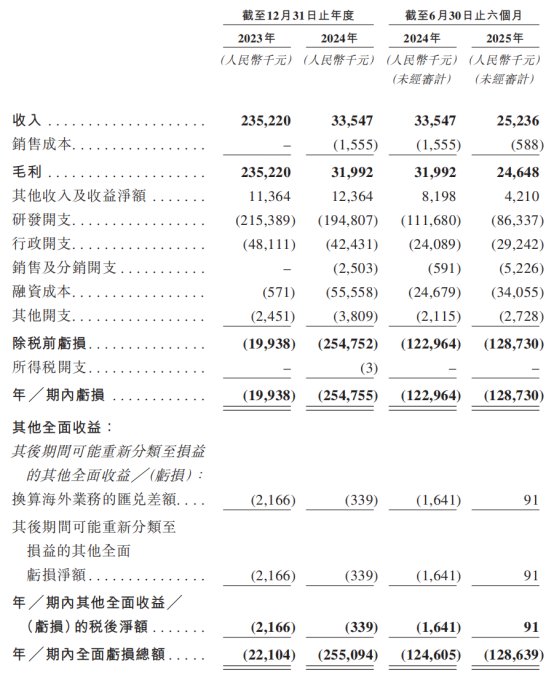
Core Viewpoint - Nanjing Inpai Pharmaceutical Co., Ltd. has submitted its application for a mainboard listing on the Hong Kong Stock Exchange, with Goldman Sachs and CICC as joint sponsors. The company focuses on precision cancer therapies based on synthetic lethality, with its only commercial product being the PARP1/2 inhibitor, Senaparib, for first-line maintenance therapy in ovarian cancer [1][2]. Financial Performance - The financial data of Inpai Pharmaceutical reflects the typical characteristics of innovative drug companies, showing high investment and slow output. The projected revenues for 2023, 2024, and the first half of 2025 are 235 million, 34 million, and 25 million yuan respectively, with a significant year-on-year decline of 85.47% in 2024 due to reliance on technology licensing rather than direct product sales [2][3]. - The net losses for the same periods are 20 million, 255 million, and 129 million yuan, indicating that losses have not narrowed post-approval of Senaparib, but rather expanded. As of June 30, 2025, the company has only 210 million yuan in cash and cash equivalents, which is insufficient to sustain operations for more than a year given its annual R&D expenditure of approximately 200 million yuan [2][3]. Product Overview - Senaparib is the only commercialized product of Inpai Pharmaceutical, approved in January 2025 for first-line maintenance treatment in ovarian cancer. Clinical data shows it has a competitive edge, with a risk ratio of 0.43, indicating a 57% reduction in the risk of disease progression or death [3][4]. - Despite promising clinical data, market performance has been underwhelming, with Senaparib only available in 27 provinces and around 200 pharmacies as of June 30, 2025. The competitive landscape includes established PARP inhibitors like Olaparib and Niraparib, which have already gained market traction [3][4]. Market Competition - The PARP inhibitor market is becoming increasingly competitive, with nearly 40 PARP inhibitors in clinical development and four in Phase III trials. The company faces challenges in converting its product advantages into market share due to established clinical practices and hospital access barriers [4][5]. Future Prospects - Senaparib has been recommended for inclusion in the National Medical Insurance Drug List, with negotiations expected in the fourth quarter. Successful inclusion could boost sales but may compress profit margins, raising questions about the company's ability to achieve breakeven [4][5]. - Other products in Inpai's pipeline are in early stages, with a new generation PARP1 selective inhibitor currently in Phase I/II trials, unlikely to reach the market before 2030. The company will continue to rely heavily on Senaparib for revenue in the near term [5][6]. Funding and Valuation - Inpai Pharmaceutical has completed seven rounds of financing since its establishment in 2009, attracting notable investors. However, post-D+ round, the company's diluted valuation decreased from approximately 3.138 billion yuan to 2.823 billion yuan [7][8]. - A redemption right was triggered for 24,089,597 shares, indicating potential issues related to the company's IPO timeline or other significant operational challenges, although specific reasons were not disclosed in the prospectus [7][8].
新股前瞻|布局稀缺抗癌赛道,英派药业IPO故事有多少看点?
智通财经网· 2025-10-06 08:33
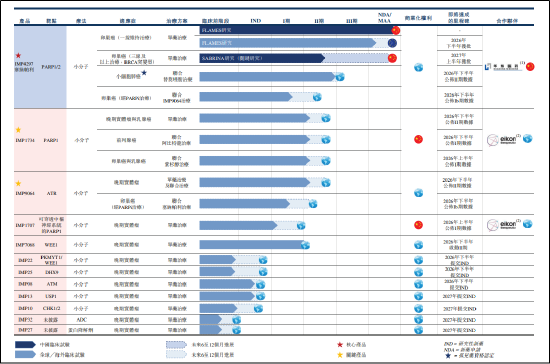
Core Viewpoint - Nanjing Inpai Pharmaceutical Co., Ltd. has submitted an application for listing on the Hong Kong Stock Exchange, marking its entry into the innovative drug sector focused on synthetic lethality mechanisms for cancer treatment [1] Company Overview - Established in 2009, Inpai Pharmaceutical is a commercial-stage biotechnology company specializing in precision cancer therapies based on synthetic lethality [1] - The company is one of only three globally that possesses both commercial-stage PARP1/2 inhibitors and clinical-stage next-generation PARP1 selective inhibitors [1][7] Financial Performance - In 2023, 2024, and the first half of 2025, the company recorded losses of approximately RMB 199 million, RMB 255 million, and RMB 129 million, respectively, primarily due to high R&D expenditures [2][3] - As of June 30, 2025, the company had cash and cash equivalents of RMB 21 million, indicating a tightening cash flow situation [2] Product Development and Commercialization - The core product, Senaparib, received approval in January 2025 for first-line maintenance treatment of ovarian cancer in China, showing the largest progression-free survival benefit among its peers [3][4] - As of June 30, 2025, Senaparib has been launched in 27 provinces in China and is available in over 200 direct-to-patient pharmacies and more than 600 medical institutions [4] - The product is expected to be included in the National Medical Insurance Drug List in early 2026, enhancing its market penetration [4] Market Potential and Competitive Landscape - The synthetic lethality mechanism is gaining recognition in clinical settings, with significant potential for market expansion due to its targeted approach and ability to overcome drug resistance [6][9] - The global market for synthetic lethality drugs is projected to reach USD 8.7 billion by 2029, while the small molecule targeted tumor drug market is expected to reach USD 105.8 billion in the same period [9] - Inpai Pharmaceutical has established a leading position in the synthetic lethality space, with a diverse pipeline that includes one commercial-stage drug, four clinical-stage drugs, and seven pre-IND drugs [7][9] Challenges and Future Outlook - The competitive landscape is intensifying, with nearly 40 PARP inhibitors in clinical development, highlighting the need for Inpai to maintain its competitive edge [7][9] - Despite the challenges, the rapid commercialization of Senaparib and its clinical advantages position the company for potential revenue growth and market success [10]
映恩生物-B大幅回撤,ADC有“泡沫”?英派药业递表港交所,今年上半年净亏损1.29亿元 | 掘金创新药
Mei Ri Jing Ji Xin Wen· 2025-09-30 00:24
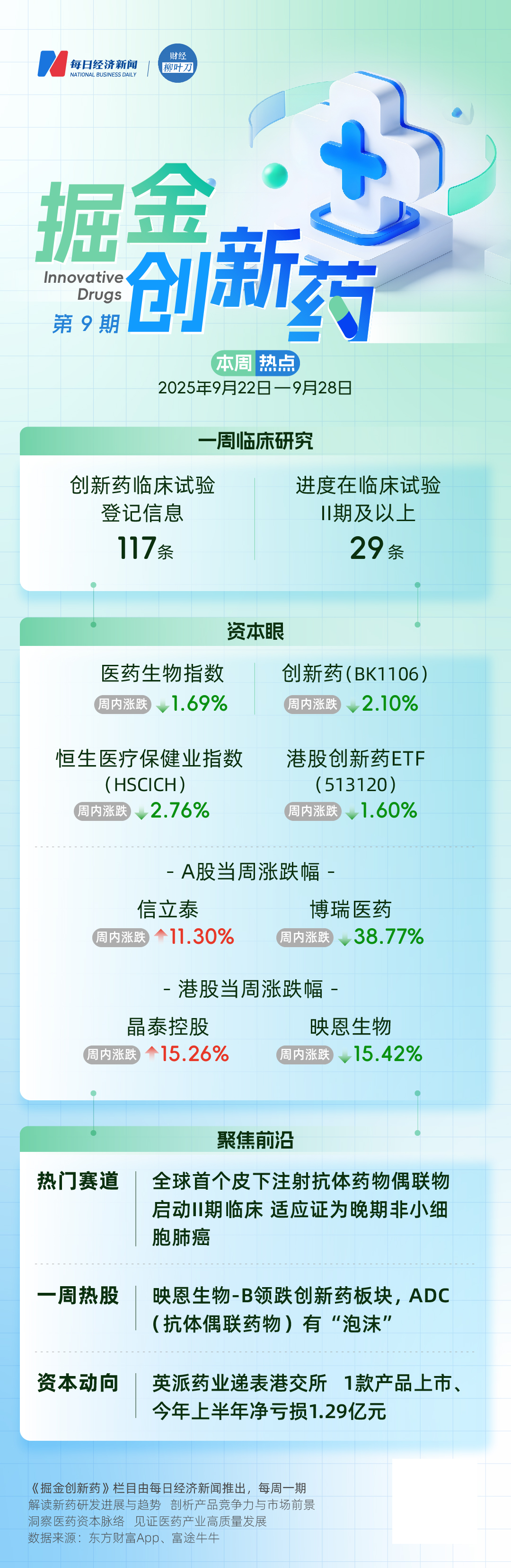
Group 1: Market Overview - The Hang Seng Healthcare Index (HSCICH) decreased by 2.76% during the week, while the Hong Kong Innovation Drug ETF (513120) fell by 1.60% [4] - The pharmaceutical and biotechnology index dropped by 1.69%, underperforming the Shanghai Composite Index by 1.04 percentage points [4] Group 2: Company Developments - Nanjing Inpai Pharmaceutical Co., Ltd. submitted a listing application to the Hong Kong Stock Exchange, reporting a net loss of 129 million yuan in the first half of the year [5][6] - Inpai's core product, Senapali, was approved for marketing in China as a first-line maintenance therapy for ovarian cancer, applicable to all populations [6] - Inpai's revenue projections for 2023, 2024, and the first half of 2025 are 235 million yuan, 34 million yuan, and 25 million yuan respectively, with net losses of 20 million yuan, 255 million yuan, and 129 million yuan [6][7] Group 3: Clinical Trials and Innovations - The first subcutaneous antibody-drug conjugate (ADC) for advanced non-small cell lung cancer has entered Phase II clinical trials [8][16] - JSKN033, a subcutaneous ADC, aims to simplify administration time and reduce risks associated with intravenous delivery [18] - The National Medical Products Administration disclosed 117 new clinical trial registrations, with 29 in Phase II or higher, focusing on oncology and autoimmune diseases [8] Group 4: Stock Performance and Market Sentiment - Yimeng Bio-B experienced a significant decline, attributed to overall adjustments in the innovation drug sector and the upcoming lock-up expiration for cornerstone investors [12][13] - Yimeng Bio-B's stock price has seen a 30% drop from its peak, despite being up approximately 279% since its IPO [13] - Analysts from GF Securities and Morgan Stanley have set target prices for Yimeng Bio-B at 574.28 HKD and 766 HKD per share, respectively, citing its leading ADC platform and partnerships with global firms [13][15]
南京英派药业股份有限公司 - B(H0031) - 申请版本(第一次呈交)
2025-09-25 16:00
IMPACT Therapeutics, Inc. 南京英派藥業股份有限公司 (於中華人民共和國成立的股份有限公司) 的申請版本 香港聯合交易所有限公司與證券及期貨事務監察委員會對本申請版本的內容概不負責,對其準確性或完整 性亦不發表任何意見,並明確表示概不就因本申請版本全部或任何部分內容而產生或因倚賴該等內容而引 致的任何損失承擔任何責任。 警告 本申請版本乃根據香港聯合交易所有限公司(「聯交所」)及證券及期貨事務監察委員會(「證監會」)的要求 而刊發,僅用作提供資料予香港公眾人士。 本申請版本為草擬本,其內所載資料並不完整,亦可能會作出重大變動。 閣下閱覽本文件,即代表 閣 下知悉、接納並向南京英派藥業股份有限公司(「本公司」)、其聯席保薦人、整體協調人、顧問或包銷團 成員表示同意: 本公司招股章程根據香港法例第32章公司(清盤及雜項條文)條例送呈香港公司註冊處處長登記前,本公司 不會向香港公眾人士提出要約或邀請。倘於適當時候向香港公眾人士提出要約或邀請,有意投資者務請僅依 據呈交香港公司註冊處註冊的本公司招股章程作出投資決定;該招股章程的副本將於發售期內向公眾刊發。 (a) 本文件僅為向香港公眾人士提供 ...