合规内控

Search documents
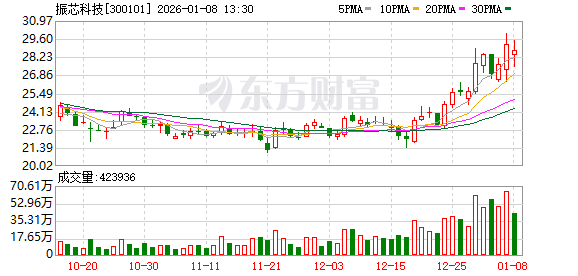
300101 子公司涉串通投标 遭禁采3年
Shang Hai Zheng Quan Bao· 2026-01-08 05:30
Group 1 - The company has been penalized for procurement violations in military activities, specifically for collusion in bidding, resulting in a three-year ban from participating in procurement activities in the Western Theater starting January 6, 2026 [4]. - Internal governance challenges are highlighted, with the company's chairman and other board members publicly criticizing the actual controller for hindering the company's development and potentially violating industry entry regulations [3]. - The company's financial performance has shown fluctuations, with revenues of 1.182 billion, 852 million, and 797 million yuan from 2022 to 2024, and a decline in net profit from 300 million to 40 million yuan during the same period. However, there is a recovery in 2025, with a 30.56% year-on-year increase in revenue for the first three quarters, reaching 736 million yuan [3][5]. Group 2 - The company’s products primarily consist of mixed-signal integrated circuits, with over 300 types of chips used in critical applications such as communication, display control, and industrial sectors [3]. - The company reported a net profit of 92.78 million yuan for the latest period, reflecting a year-on-year growth of 30.79%, driven by rapid growth in its Beidou navigation and machine perception businesses [5]. - Company directors plan to increase their holdings in the company within the next six months, with a total investment between 5.1 million and 10.2 million yuan, without a price cap on the shares [5].



非银机构差异化发展稳健前行
Jin Rong Shi Bao· 2025-12-26 02:37
Core Insights - The non-banking financial institutions (NBFIs) have achieved a record asset scale of 32.43 trillion yuan, contributing long-term funds to industrial chain finance and pension security as the "14th Five-Year Plan" approaches its conclusion [1] - The consumer finance sector has surpassed 1 trillion yuan in loan balances, providing inclusive financial services to over 80 million rural customers [1] - The financing leasing market for high-end equipment manufacturing has exceeded 20 trillion yuan, indicating steady growth in emerging leasing business scenarios [1] Group 1: Industry Development - NBFIs are focusing on their core businesses during the "14th Five-Year Plan" period, with financial companies targeting internal capital flow for enterprises, consumer finance stimulating domestic consumption, and leasing companies addressing equipment financing challenges [2] - Financial leasing companies are introducing flexible financing solutions for manufacturing equipment, while financial companies are providing precise funding for key projects through centralized capital management [2] Group 2: Consumer and Social Impact - Consumer finance companies are embedding services in various consumption scenarios, offering small loans with low interest rates to activate consumer potential [3] - Trust companies are innovating in areas such as pension security and charitable trusts, with the number of registered charitable trusts reaching 2,676 and total assets surpassing 10.632 billion yuan [3] Group 3: Risk Management and Compliance - Compliance and risk management are emphasized as key components of NBFIs' development, with a focus on establishing comprehensive mechanisms for credit issuance, related transactions, and liquidity management [4] - NBFIs are leveraging technology to enhance risk control, with various systems developed to predict and identify fraud and other risks [4] Group 4: Future Directions - NBFIs are aligning with national strategies and trends to better serve the real economy, focusing on optimizing traditional industries and fostering new and future industries [6] - The consumer finance sector is adapting to new consumer demands, while financial leasing is deepening its involvement in sectors like aviation and renewable energy [6] Group 5: Policy Support - Recent policies have been introduced to strengthen business development and risk control, including fiscal subsidies for consumer finance and revised regulations for trust companies [7] - The new management measures for financial leasing companies outline specific requirements for due diligence and risk assessment [7]

官方首次披露:华夏银行原董事长被审查!年初曾闪电辞职
Nan Fang Du Shi Bao· 2025-12-23 12:09
Core Viewpoint - The resignation of Li Minji, former chairman of Huaxia Bank, has been officially linked to serious disciplinary violations, marking a significant development in the bank's leadership changes and governance issues [2][3]. Group 1: Leadership Changes - Li Minji resigned from his position as chairman of Huaxia Bank on January 27, 2025, just over a month after being appointed, leading to speculation about his abrupt departure [2]. - Following Li's resignation, the bank has seen a significant turnover in its executive team, with multiple high-level positions changing hands, indicating a need for restructuring [2][5]. - Yang Shujian, former president of Beijing Bank, was appointed as the new party secretary and chairman of Huaxia Bank, while Qu Gang became the youngest president among national joint-stock banks [5]. Group 2: Financial Performance - Huaxia Bank's revenue has struggled to surpass the 100 billion yuan mark, with reported revenues of 958.70 billion yuan, 938.08 billion yuan, 932.07 billion yuan, and 971.46 billion yuan from 2021 to 2024, showing minimal growth [3]. - In the first three quarters of 2025, the bank's revenue was 648.81 billion yuan, a decrease of 8.79% year-on-year, while net profit fell by 2.86% to 179.82 billion yuan [4]. - The bank's total assets reached 4.59 trillion yuan, with a non-performing loan ratio of 1.58%, the lowest in nine years but still high among A-share listed joint-stock banks [4]. Group 3: Governance and Risk Management - Huaxia Bank's corporate governance score was 87.46, ranking 13th among 15 national commercial banks, while its risk management score was 85.43, placing it last [5]. - The bank is undergoing significant organizational changes, with new appointments in key risk and operational roles, indicating a focus on improving governance and risk management [5].


康得新百亿财务造假案余波未了,北京银行两度卷入相关诉讼
Nan Fang Du Shi Bao· 2025-12-08 08:48
Core Viewpoint - Beijing Bank is facing significant legal challenges, including a recent lawsuit related to false statements by Kangde Xin, with potential claims exceeding 4.139 billion yuan, while also dealing with regulatory fines totaling over 36 million yuan this year [2][4][5]. Legal Issues - On December 4, Beijing Bank received a lawsuit notification from the Suzhou Intermediate People's Court, making it a defendant in a case involving Kangde Xin's false statements [2][5]. - The lawsuit includes 40 defendants, with Kangde Xin as the primary defendant, and seeks compensation for investment losses due to false statements [4]. - This is not the first time Beijing Bank has been involved in litigation related to Kangde Xin, as it was previously named in a lawsuit seeking over 5.1 billion yuan in damages [4]. Financial Impact - Beijing Bank has stated that it is not the primary responsible party in the current lawsuit and has assessed that the case will not materially impact its profits [5]. - The bank's financial performance has shown a decline, with a 1.08% year-on-year decrease in revenue for the first three quarters of 2025, while net profit saw a slight increase of 0.26% [6][7]. Regulatory Challenges - The bank has faced multiple regulatory penalties this year, totaling over 36 million yuan, due to various compliance failures [5][6]. - Specific violations include issues with account management and transactions with unidentified clients, leading to significant fines from regulatory authorities [6]. Market Position - As of mid-2025, Beijing Bank's asset size has been surpassed by Jiangsu Bank, marking a shift in the competitive landscape among city commercial banks [7]. - The bank is focusing on strategic areas such as pension finance and green finance, aiming to enhance its market position despite current challenges [7].


从1700元到35亿:新华基金“E份额”的狂飙之路
Sou Hu Cai Jing· 2025-12-02 09:59
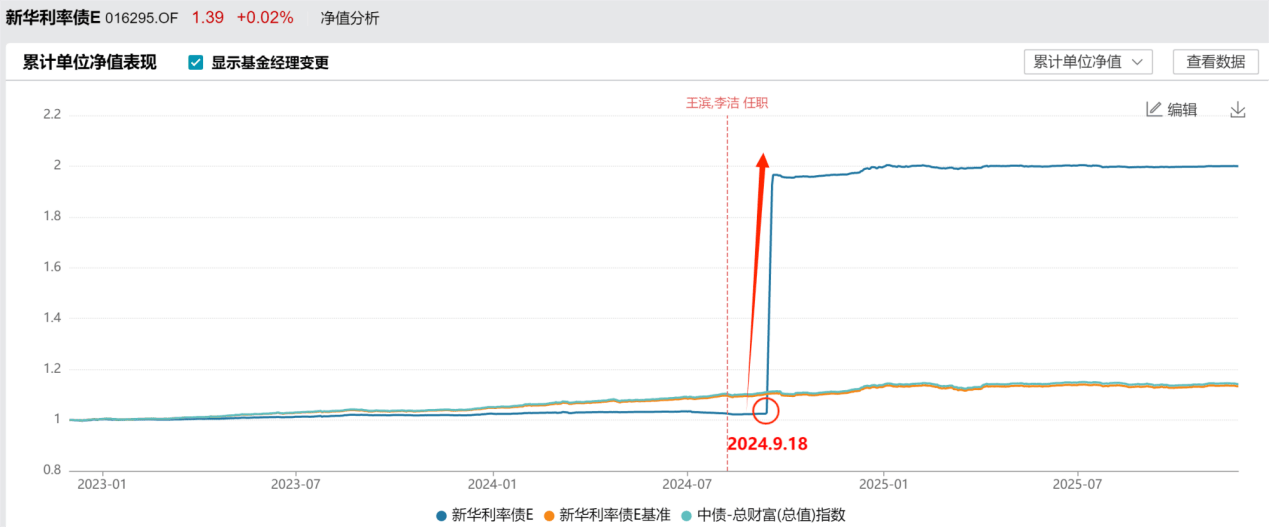
Core Viewpoint - The news highlights the legal troubles faced by Tianfeng Securities, which is under investigation by the China Securities Regulatory Commission (CSRC) for allegedly providing illegal financing, raising concerns about potential liabilities linked to its former major shareholder, Dandai Group [1] Group 1: Key Individuals and Historical Context - The article brings attention to "Bond Queen" Zhai Chenxi, who previously led Xinhua Fund and played a significant role in Tianfeng Securities' growth [2] - Zhai Chenxi was appointed as the General Manager of Fixed Income at Tianfeng Securities in 2014 and later became Vice President, overseeing fixed income and international business [2] - Xinhua Fund experienced management upheaval and talent loss, with Zhai Chenxi resigning as chairman in March 2023, leading to concerns about the fund's research capabilities [2] Group 2: Fund Performance and Operations - Xinhua Rate Bond Fund E (Fund Code: 016295) was launched in August 2022, designed to cater to institutional investors with low fees and flexible redemption terms [4] - The fund's scale dramatically increased from approximately 1,700 yuan in March 2024 to about 40 million yuan by June 2024, marking a growth of over 24,400% [5] - The fund experienced significant fluctuations, including a notable redemption event on September 18, 2024, where its net value surged by 87.13% in a single day [5] Group 3: Controversial Practices and Industry Implications - The fund's rapid growth is attributed to high-frequency dividend distributions, which are perceived as a method for institutions to avoid taxes, raising ethical concerns within the industry [8][16] - The management of Xinhua Fund is under pressure to maintain growth amidst regulatory scrutiny, leading to controversial practices that may challenge the integrity of the financial industry [16] - The narrative suggests that while growth in fund size is desirable, it should not come at the expense of compliance and long-term sustainability [16]
罕见!4名券商从业人员,被罚5年内禁止开发客户!
券商中国· 2025-11-30 12:47
Core Viewpoint - The article highlights the increasing regulatory scrutiny on brokerage firms in November, with multiple penalties issued for violations related to compliance and ethical conduct [2][3][6]. Group 1: Regulatory Actions - On November 28, four brokerage employees were banned for five years from client development roles due to serious violations of professional conduct and lack of compliance awareness [4][6]. - The Zhejiang Securities Regulatory Bureau identified these individuals as inappropriate candidates, citing breaches of the "Regulations on the Integrity of Securities and Futures Practitioners" and the "Compliance Management Measures for Securities Companies" [4][6]. - Just ten days prior, another employee was banned for similar misconduct, indicating a pattern of regulatory enforcement [4]. Group 2: Compliance Failures - Many brokerage branches faced penalties for weak internal controls, inadequate compliance management, and improper performance evaluation mechanisms [6][7]. - Specific issues included lack of compliance review processes, unmonitored computer systems, and performance metrics tied solely to transaction volumes, as seen in cases involving Dongfang Securities [6][7]. - Other firms, such as Guotai Junan and Shanghai Securities, also received warnings for failing to maintain proper compliance and ethical standards [7]. Group 3: Ethical Violations - Numerous employees were found to have crossed compliance boundaries for personal gain, such as promoting non-affiliated financial products for improper benefits [7]. - Instances of improper commission returns to clients were reported, highlighting a systemic issue of ethical breaches within the industry [7].