
呼吸道传染病防控

Search documents
多位专家为市民送上全方位冬季健康防护手册
Xin Lang Cai Jing· 2026-01-23 19:55
Core Insights - The article emphasizes the importance of comprehensive health protection strategies for winter, focusing on prevention, diagnosis, and emergency response for respiratory and cardiovascular diseases [1][2][4][7]. Group 1: Respiratory Disease Prevention - The cold weather significantly increases the risk of respiratory infections due to the stimulation of the respiratory tract and reduced air circulation indoors, which facilitates the spread of viruses like influenza and COVID-19 [2]. - Public health officials stress the need for individuals to take personal responsibility for their health by adopting good hygiene practices, such as wearing masks and frequent handwashing, and ensuring proper ventilation in indoor spaces [2]. Group 2: Traditional Chinese Medicine (TCM) Practices - TCM experts recommend practical tips for staying warm during winter, such as wearing appropriate clothing and using warming patches on specific acupuncture points to maintain body warmth [3]. - It is advised to choose suitable exercise routines based on individual health conditions and to gradually adapt to colder temperatures while exercising [3]. Group 3: Stroke Prevention and Management - Key risk factors for stroke include hypertension, hyperglycemia, hyperlipidemia, and atrial fibrillation, with hypertension being the most critical [4][6]. - Effective management of these risk factors involves regular monitoring and adherence to medical advice, including medication and lifestyle changes [4]. Group 4: Emergency Response for Cardiovascular Events - The article highlights the urgency of timely intervention in cases of acute myocardial infarction, with the first 120 minutes post-symptom onset being crucial for effective treatment [7]. - Hospitals have established integrated emergency response systems to ensure rapid diagnosis and treatment, significantly reducing mortality and disability rates associated with heart attacks [7][8]. Group 5: Recognizing Emergency Symptoms - The article provides guidelines for recognizing symptoms of heart and brain emergencies, emphasizing the importance of immediate action by calling emergency services when symptoms arise [8]. - Specific symptoms to watch for include severe chest pain, sudden weakness, and speech difficulties, which may indicate serious conditions like heart attacks or strokes [8].
市卫健委:呼吸道感染较12月初有所下降
Xin Lang Cai Jing· 2025-12-29 08:55
Group 1 - The core message from the Shanghai Municipal Health Commission indicates a decrease in the number of visits to emergency and fever clinics in public medical institutions since early December, with pediatric medical services being adequately supplied and average waiting times controlled within 30 minutes [1] - The city is currently in the influenza season, with the overall epidemic situation remaining stable, although the activity level of influenza viruses is still high, particularly the H3N2 strain [1] Group 2 - Recommendations for personal and family protection during the winter season include wearing masks in crowded and poorly ventilated public places, especially during the New Year and Spring Festival [2] - Maintaining hand hygiene is emphasized as a crucial step in preventing virus transmission, with suggestions to wash hands with soap and water or use alcohol-based sanitizers [4] - Regular ventilation of indoor spaces is advised, with a recommendation to open windows 2-3 times a day for at least 30 minutes each time [5] Group 3 - Good hygiene practices are encouraged, such as covering the mouth and nose when coughing or sneezing, washing hands after contact with pets or food, and avoiding touching the face with unclean hands [6] - Special reminders for families with elderly and children include seeking medical attention for symptoms like fever and cough, and ensuring caregivers practice personal protection and disinfect common items to reduce transmission risk [7] - It is recommended that vulnerable groups, including the elderly, chronic disease patients, and caregivers of infants, receive flu vaccinations to enhance immunity [8]
科普·呼吸道传染病如何防控?选择对症药物要注意什么?一文梳理
Yang Shi Wang· 2025-12-06 03:27
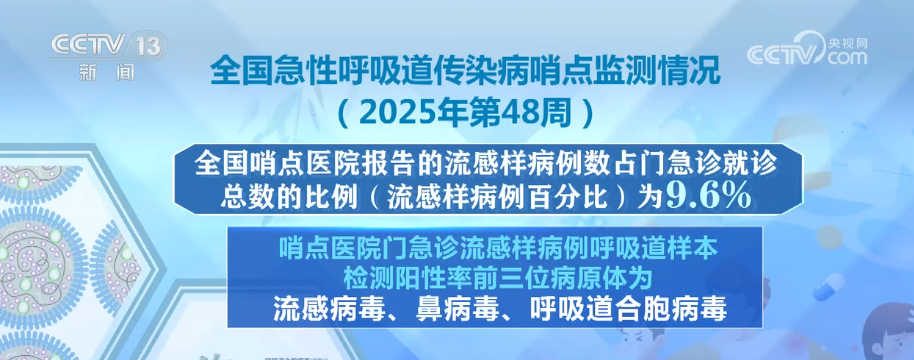
Core Insights - The article highlights the current situation of respiratory infectious diseases in China, particularly focusing on influenza activity and the response from health authorities [1][3][4]. Group 1: Influenza Activity - The percentage of influenza-like cases reported by sentinel hospitals across the country is 9.6% of total emergency visits [1] - Influenza activity is at a moderate to high level in various provinces, with a notable increase in reported cases among school-aged children (ages 5 to 14) [3] - The positive detection rate for respiratory syncytial virus (RSV) is declining, while the detection rate in the 0 to 4 age group remains significantly higher than in other age groups [3] Group 2: Health Authorities' Response - The National Health Commission and the CDC have deployed measures to enhance monitoring and increase medical service supply, optimizing the medical service process [4] - Various regions are actively responding by increasing healthcare capacity, implementing strict triage protocols, and separating suspected and confirmed flu cases to prevent cross-infection [6][8] - Medical institutions are ensuring 24-hour service in fever clinics and respiratory departments, while also maintaining adequate supplies of medications and vaccines [8] Group 3: Patient Care and Treatment - The article discusses the importance of antiviral medications in treating influenza, emphasizing that they should be taken within 48 hours of symptom onset to reduce complications and shorten the illness duration [18][20] - It is advised that patients should consult healthcare professionals before using antiviral drugs and consider having them on hand for quick access if needed [20] - The article also mentions the use of symptomatic treatments, such as antipyretics and pain relievers, to alleviate flu symptoms [11][13][25]

科普·呼吸道传染病如何防控?选择对症药物要注意什么?一文梳理↓
Yang Shi Wang· 2025-12-05 12:50
Core Viewpoint - The current situation of respiratory infectious diseases in China indicates a significant prevalence of influenza, with a reported percentage of influenza-like cases at 9.6% of total emergency visits, and the main pathogens identified are known common viruses [1][3][4] Group 1: Current Situation and Trends - The influenza activity across provinces is at a moderate to high epidemic level, with a notable increase in reported cases among school-aged children (5 to 14 years), whose positive detection rate is significantly higher than other age groups [3] - The positive detection rate of respiratory syncytial virus (RSV) is on a downward trend, while the detection rate in the 0 to 4 years age group remains notably high [3] Group 2: Government Response and Healthcare Measures - The National Health Commission and the CDC have deployed measures to enhance monitoring and increase healthcare service supply, optimizing medical service processes [4] - Various regions are implementing strategies to reduce cross-infection risks, such as using internet hospitals for follow-up consultations and strict triage protocols in emergency departments [6][8] Group 3: Treatment and Medication Guidance - Antiviral medications should be taken as soon as possible after flu symptoms appear to reduce complications and shorten the duration of the illness [9][16] - It is advised to use symptomatic medications, such as antipyretics and analgesics, to alleviate symptoms like fever and body aches, while ensuring proper hydration [11][12][24] - Caution is advised against using multiple combination cold medications simultaneously to avoid overlapping ingredients that could increase the body's burden [14] Group 4: Public Awareness and Education - Healthcare institutions are utilizing various channels, including social media, to educate patients and their families about respiratory infectious diseases and preventive measures [8]
全国流感疫情整体处于高流行水平
第一财经· 2025-12-04 14:16
Core Viewpoint - The article highlights the rising trend of respiratory infectious diseases in China, particularly influenza, with a significant increase in reported cases and the need for preventive measures in key institutions and among the public [1][2]. Group 1: Monitoring Results - In week 48 of 2025, the proportion of influenza-like cases reported by sentinel hospitals was 9.6% of total emergency visits [1] - The top three pathogens detected in respiratory samples from sentinel hospitals were influenza virus (51.1%), rhinovirus (5.3%), and respiratory syncytial virus (3.5%) [1] - Among hospitalized severe acute respiratory infection cases, the positive detection rates for the top three pathogens were influenza virus (19.0%), respiratory syncytial virus (7.8%), and rhinovirus (7.0%) [1] Group 2: Analysis of Trends - The analysis indicates that known common pathogens were detected, with no new infectious diseases identified [2] - Influenza virus is the primary pathogen detected, with overall influenza activity in China at a high epidemic level, and school outbreaks increasing, particularly in the 5-14 age group [2] - The positive detection rate for respiratory syncytial virus is declining, while the rate for rhinovirus continues to decrease [2] Group 3: Recommendations for Prevention - It is recommended that key institutions such as kindergartens, schools, and nursing homes implement health monitoring to quickly identify and manage outbreaks [2] - Public health measures include vaccination against influenza for individuals aged 6 months and older, especially high-risk groups [2] - Additional personal protective measures include wearing masks in crowded places, maintaining good hygiene practices, and promoting a healthy lifestyle to enhance immunity [3]

中国疾控中心:全国流感疫情整体处于高流行水平
Yang Shi Xin Wen· 2025-12-04 12:57
Group 1 - The core viewpoint of the articles indicates that influenza activity in China is on the rise, with the overall flu epidemic at a high level, particularly affecting school-aged children [2][3] - The monitoring results show that the percentage of influenza-like cases reported in emergency departments is 9.6%, with influenza virus being the predominant pathogen detected at 51.1% [1] - There are regional differences in respiratory infectious diseases, with a notable increase in flu cases among the 5-14 age group compared to other age groups [2] Group 2 - The detection of known common pathogens indicates no new infectious diseases have emerged, and the current flu epidemic is characterized by a high prevalence across various provinces [2] - Recommendations for public health measures include health monitoring in key institutions such as schools and nursing homes, and vaccination against influenza for high-risk groups [2][3] - Personal protective measures suggested include wearing masks in crowded places, maintaining good hygiene practices, and promoting a healthy lifestyle to enhance immunity [3]
我国流感活动进入快速上升阶段
Xin Jing Bao· 2025-11-21 09:01
Core Insights - The overall trend of respiratory infectious diseases in China is on the rise, with influenza activity entering a rapid increase phase and expected to continue for some time [1] - The detection rates of rhinovirus and enterovirus are declining, while the positivity rates for known common pathogens remain low, with no new infectious diseases detected [2] Group 1: Influenza Activity - The percentage of influenza-like cases reported by sentinel hospitals during the week of November 10-16, 2025, was 6.5% of total emergency visits [1] - The top three pathogens detected in respiratory samples from influenza-like cases were influenza virus (38.1%), rhinovirus (8.8%), and respiratory syncytial virus (5.0%) [1] - Hospitalized severe acute respiratory infection cases showed a positivity rate for influenza virus at 11.4%, rhinovirus at 10.9%, and respiratory syncytial virus at 9.5% [1] Group 2: Regional Trends - Most provinces in China are experiencing medium to high levels of influenza activity, with the exception of a few provinces in East China at low levels [1] - There has been a significant increase in reported outbreaks in schools, particularly among the 5-14 age group, which has a higher positivity rate compared to other age groups [1] Group 3: Recommendations for Prevention - It is recommended that key institutions such as kindergartens, schools, and nursing homes implement health monitoring to promptly identify and manage outbreaks [2] - Public health measures include encouraging flu vaccinations for individuals aged six months and older, especially high-risk groups [2] - Individuals are advised to wear masks in crowded places and maintain good hygiene practices to reduce the risk of pathogen transmission [2][3]
国家疾控局发布呼吸道传染病防控健康提示
Ren Min Wang· 2025-10-21 01:21
Core Viewpoint - The overall level of respiratory infectious diseases in China is currently low, with certain viruses such as COVID-19, respiratory syncytial virus, common cold coronavirus, and rhinovirus showing some activity [1] Group 1: Health Recommendations - Maintain good hygiene practices, such as covering the mouth and nose when coughing or sneezing, and frequent handwashing [1] - Advocate for a healthy lifestyle, including a balanced diet, moderate exercise, and adequate rest, while wearing masks in crowded places and ensuring good indoor ventilation [1] - Wear masks scientifically, especially for the elderly and those with chronic diseases in crowded areas or on public transport [1] - Actively seek vaccination, particularly for vulnerable populations, following vaccination guidelines for respiratory infectious diseases [1] - Seek medical attention promptly if experiencing symptoms like fever or cough, with recommendations for home rest and timely medical consultation for severe symptoms [1]