
流感防治

Search documents
磷酸奥司他韦颗粒(慧泽)在京东健康线上首发
Sou Hu Wang· 2026-02-27 13:27
Core Viewpoint - The launch of Oseltamivir Phosphate Granules by Huize Pharmaceutical on JD Health marks a significant step in providing effective antiviral treatment for influenza, especially for vulnerable populations such as children and the elderly [1][4]. Group 1: Product Overview - Oseltamivir Phosphate Granules are designed for the treatment of influenza, with a broad antiviral activity against both type A and B influenza viruses [1]. - The product is suitable for individuals aged one year and older, offering a convenient oral administration method that reduces the risk of missed doses and resistance [1][2]. - The granule form is particularly child-friendly, making it easier for children to take the medication [1]. Group 2: Efficacy and Safety - The medication has shown significant efficacy in benefiting influenza patients, with sufficient evidence supporting its use for COVID-19 and hand-foot-mouth disease patients as well [2]. - It is deemed safe for use in infants over 14 days old, pregnant women, and the elderly [3]. Group 3: Quality Assurance and Company Background - The product has passed the national consistency evaluation and is classified under the national medical insurance category B [4]. - Huize Pharmaceutical, established in 2014, is recognized as one of the top 20 CRO companies in China and has received various accolades, including being a national high-tech enterprise [4]. Group 4: Strategic Collaboration - The online launch is a starting point for deeper collaboration between Huize Pharmaceutical and JD Health, leveraging JD Health's marketing resources and supply chain to enhance patient access to the medication [4]. - Future cooperation will focus on the entire cycle of influenza prevention and treatment, including drug accessibility, patient education, and influenza warning systems [4].

流感季叠加产品矩阵发力 康缘药业中成药业务迎需求窗口期
Zheng Quan Ri Bao Zhi Sheng· 2025-12-29 10:36
Core Insights - The article highlights the surge in demand for traditional Chinese medicine, particularly in the context of the ongoing H3N2 influenza outbreak in China, with a positive detection rate exceeding 30% and H3N2 subtype accounting for over 95% of cases [1][2] Industry Overview - The flu season has officially begun in China, with activity levels expected to peak between mid-December and early January [1] - The demand for flu medications has skyrocketed, with JD Health reporting a more than 13-fold year-on-year increase in sales of flu-related drugs since November [1] Company Performance - Kangyuan Pharmaceutical (600557.SH) is responding to the increased market demand by ramping up production of its products, including Jin Zhen Oral Liquid, which is expected to see a market demand rebound in Q4 [1][3] - The company has established a comprehensive product portfolio covering prevention, treatment, and rehabilitation, with key products like Heat Toxicity Ning Injection and Jin Zhen Oral Liquid effectively addressing core flu symptoms [2][3] - Oral liquid products have become the company's largest revenue source, generating 1.359 billion yuan in revenue in the first three quarters of 2025, accounting for 58% of total revenue, a significant increase from 20% in 2024 [2] Market Dynamics - The sales of traditional Chinese medicines such as Ganmao Ling Granules and Xiao Chai Hu Granules have seen over 100% month-on-month growth, indicating strong consumer preference [2] - The company is well-positioned to capitalize on the current market environment, which is seen as a critical opportunity for performance recovery, particularly with the ongoing flu season [3]

守护双重脆弱,"流感季SMA罕见病关爱行动"在京举办
Huan Qiu Wang· 2025-12-25 06:23
Core Viewpoint - The "Flu Season SMA Rare Disease Care Action" initiated by Roche China, Alibaba Health, and the Beijing SMA Care Center aims to raise awareness about the risks faced by SMA patients during the flu season and promote scientific prevention and standardized treatment [1][3]. Group 1: Flu Season Challenges for SMA Patients - The flu virus detection positivity rate is significantly high, with southern provinces at 53.7% and northern provinces at 37.6%, posing a serious health challenge [3]. - SMA patients are at a higher risk of severe respiratory complications due to respiratory muscle weakness, making prevention and early intervention crucial [3][4]. - Experts emphasize the need for timely antiviral treatment within 48 hours of symptom onset to mitigate severe outcomes and complications [4][5]. Group 2: Support and Resources for Families - Parents of SMA patients express feelings of fear and confusion during the flu season, highlighting the psychological burden on families [6]. - The SMA Care Center aims to bridge information gaps and provide actionable support to families through cross-sector collaboration [6]. - Roche's commitment to addressing the needs of patients includes innovative treatments like Baloxavir Marboxil, which can rapidly reduce viral load and improve outcomes for high-risk patients [6][7]. Group 3: Community and Collaborative Efforts - Alibaba Health is providing home testing support for SMA patients during the flu season, aiming to facilitate early diagnosis and treatment while minimizing hospital visits [7]. - The initiative seeks to leverage platform capabilities and collaborate with patient organizations and professional institutions to enhance public health responses for rare disease patients [7].


流感特效药怎么吃才有效
Xin Lang Cai Jing· 2025-12-21 22:46
Group 1 - The flu season is currently at a high epidemic level in China, with a significant increase in the purchase of cold and flu medications across various regions, particularly in East China where orders for antiviral drugs have surged over 80% [1] - In central regions like Wuhan, the order volume for flu medications has increased by over 95%, with the specific antiviral drug, Marbofloxacin, seeing a 120% increase in orders [1] - The Chinese Center for Disease Control and Prevention has reported that the current flu epidemic is at a high level, prompting discussions on the appropriate use of medications to avoid excessive or inappropriate use [1] Group 2 - Common antiviral medications for flu include neuraminidase inhibitors such as Oseltamivir and Peramivir, as well as RNA polymerase inhibitors like Marbofloxacin, with different drugs having varying indications and treatment durations [2] - Oseltamivir is suitable for a wide range of patients, including those over 2 weeks old, with a standard treatment course of 5 days, extendable for severe or immunocompromised patients [2] - Marbofloxacin is indicated for patients aged 5 and above, requiring only a single dose for treatment [2] Group 3 - Specific groups of children may be considered for preventive antiviral treatment during flu outbreaks, including those with compromised immune systems or those who have not developed sufficient immunity after vaccination [3] - It is recommended that preventive medication be administered within 48 hours of exposure and continued for 7 days after the last exposure, although treatment is still advised even if started later [3] - Light symptom patients are advised to stay home and manage symptoms, while severe cases should receive early empirical antiviral treatment [3]
国家卫健委:流感不要硬抗 出现这些情况要及时就诊
Yang Shi Xin Wen Ke Hu Duan· 2025-12-19 07:54
Group 1 - The current respiratory infectious disease epidemic in China is still at a high incidence level, with influenza virus being the main pathogen, alongside respiratory syncytial virus and rhinovirus [1] - Recent reports indicate a decline in influenza activity this week, but it remains at a high epidemic level, with the H3N2 subtype being the predominant strain [1] - The peak time for influenza outbreaks in southern provinces is slightly later than in northern provinces, influenced by factors such as temperature drops and cold air, which can damage respiratory mucosa and reduce its defense capabilities [1] Group 2 - Influenza should not be regarded as a common cold; it can lead to severe complications if untreated, such as pneumonia and myocarditis [2] - Symptoms of pneumonia include persistent high fever, worsening cough, and shortness of breath, which are critical indicators for seeking medical attention [3] - High-risk groups for severe influenza include individuals over 65, children under 3, pregnant women, obese individuals, and those with chronic conditions, who should seek medical care promptly if symptoms arise [3]
一觉醒来声音嘶哑 这波流感多从嗓子“下手”
Chang Sha Wan Bao· 2025-12-09 06:27
Core Viewpoint - The current flu season has seen an increase in patients experiencing hoarseness and throat pain as initial symptoms, which is a shift from the typical flu symptoms of fever and cough. This change is attributed to the circulating H3N2 strain of the flu virus, which has a higher affinity for the upper respiratory tract [2][3]. Group 1: Symptoms and Virus Characteristics - Many patients report that their voices become hoarse before developing fever and cough, indicating a notable change in flu symptoms this year [2]. - The H3N2 strain is more likely to invade the upper respiratory tract, leading to more severe local inflammation and vocal cord issues [3]. - Hoarseness is a clinical manifestation of upper respiratory infections and can vary in severity based on individual immune status and infection intensity [2][3]. Group 2: Contributing Factors - Environmental factors such as dry winter air, cold air irritation, and poor ventilation can exacerbate throat inflammation [4]. - Individuals with pre-existing allergic conditions are at a higher risk of experiencing voice issues following viral infections [4]. Group 3: Recommendations for Management - Patients experiencing throat discomfort are advised to rest, stay hydrated, and use warm saltwater gargles to alleviate symptoms [5][6]. - It is recommended to avoid antibiotics unless a bacterial infection is confirmed, as they are ineffective against viral infections [6][10]. - In cases of severe symptoms like difficulty breathing or persistent high fever, immediate medical attention is necessary [7][10]. Group 4: Preventive Measures - Vaccination against the flu is highlighted as an effective preventive measure, particularly for high-risk groups [10]. - Maintaining good hygiene practices, such as frequent handwashing and wearing masks in crowded places, is recommended to reduce the risk of infection [8][9].
流感不可怕,这份“知—防—治”手册帮你科学应对
Ren Min Wang· 2025-12-08 07:41
Group 1 - Influenza is an acute respiratory disease caused by the influenza virus, and understanding its transmission routes, symptoms, and prevention methods is crucial for public awareness and effective control measures [1] - After a child is diagnosed with influenza, parents should monitor for symptoms such as persistent high fever, difficulty in feeding, vomiting, diarrhea, lethargy, and signs of severe illness that require urgent medical attention [2][6] - Treatment for influenza includes antiviral medications, which should be administered within 48 hours of symptom onset, and symptomatic treatments such as antipyretics to alleviate fever and body aches [3] Group 2 - To prevent the spread of respiratory infections, it is recommended that institutions like schools and nursing homes implement health monitoring and manage outbreaks effectively [11] - Public health measures include wearing masks, receiving influenza vaccinations, maintaining good hygiene practices, and promoting a healthy lifestyle to enhance immunity and reduce the risk of pathogen transmission [11]
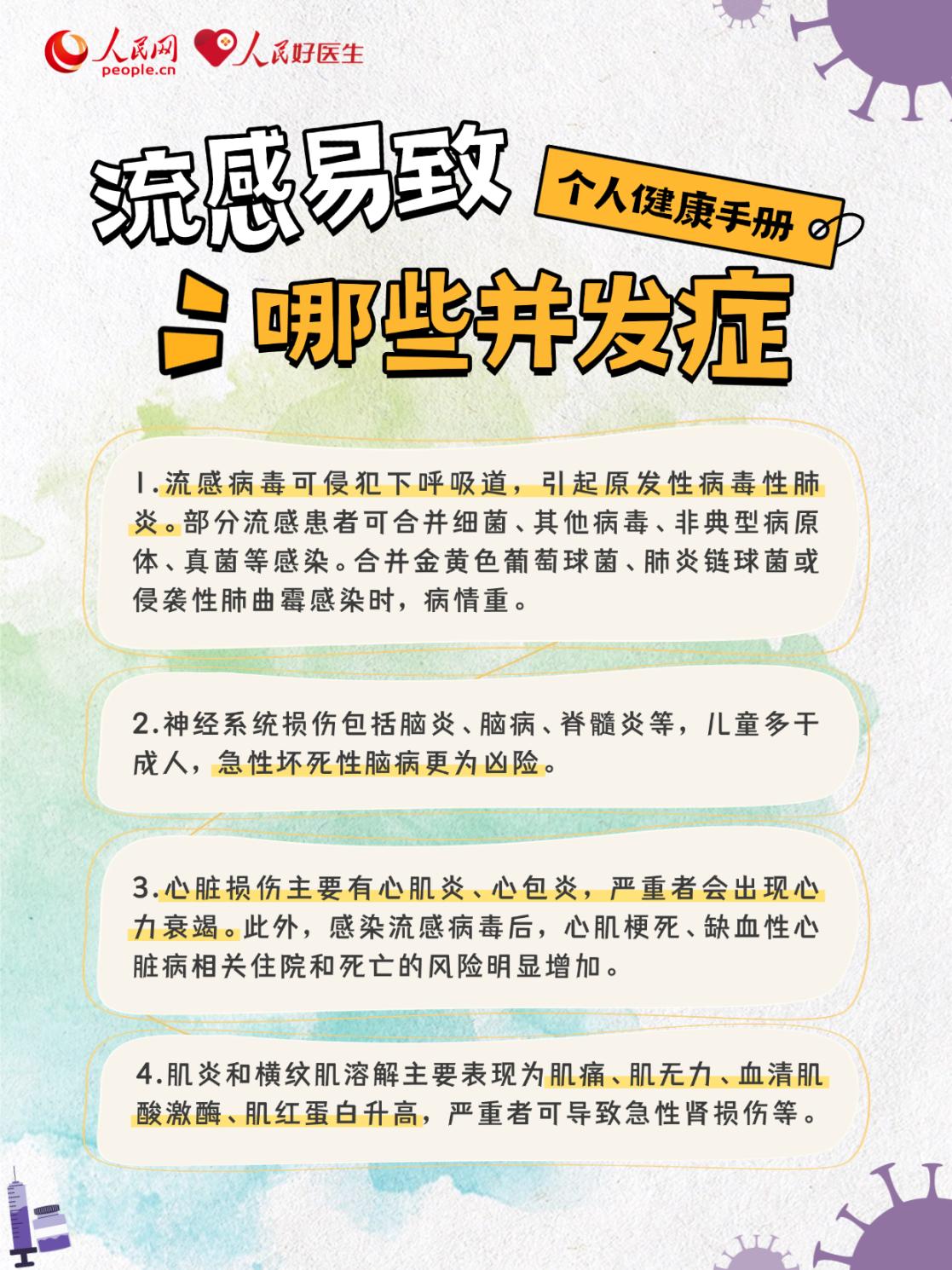
“中招”流感该如何应对?专家提醒
Yang Shi Xin Wen Ke Hu Duan· 2025-12-06 12:03
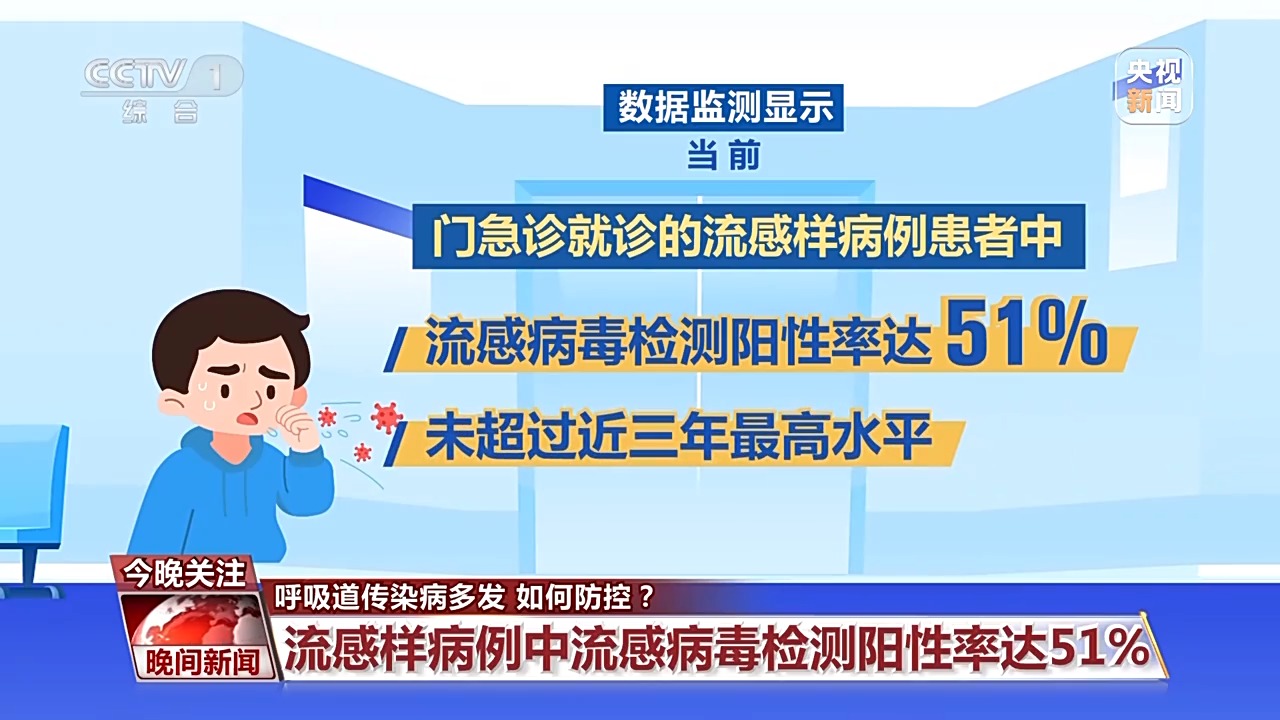
Group 1 - The core viewpoint of the articles highlights the current high prevalence of influenza across China, with 17 provinces experiencing high levels of flu activity and the expectation of peak cases in mid-December [1] - Data monitoring indicates that the positive rate of influenza virus detection among outpatient cases has reached 51%, which is not exceeding the highest levels seen in the past three years [3] - Experts recommend the use of antiviral medications to inhibit virus replication and shorten the duration of illness, although these medications do not directly alleviate symptoms such as fever and sore throat [3] Group 2 - Medical professionals suggest using antipyretic and analgesic medications like ibuprofen and acetaminophen to relieve symptoms such as high fever and body aches [5] - There are risks associated with the practice of sweating out a cold, as it may lead to increased body temperature and potentially life-threatening situations [7] - Criteria for determining when a flu patient is no longer contagious include having a normal temperature for over 24 hours and significant symptom improvement for more than 48 hours [9]
科普·呼吸道传染病如何防控?选择对症药物要注意什么?一文梳理
Yang Shi Wang· 2025-12-06 03:27
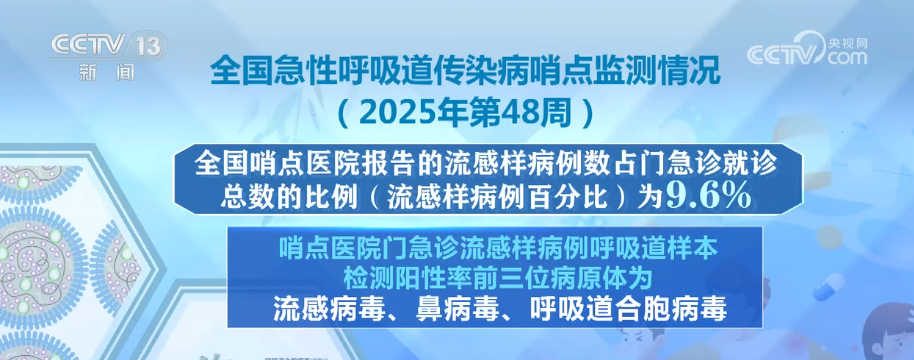
Core Insights - The article highlights the current situation of respiratory infectious diseases in China, particularly focusing on influenza activity and the response from health authorities [1][3][4]. Group 1: Influenza Activity - The percentage of influenza-like cases reported by sentinel hospitals across the country is 9.6% of total emergency visits [1] - Influenza activity is at a moderate to high level in various provinces, with a notable increase in reported cases among school-aged children (ages 5 to 14) [3] - The positive detection rate for respiratory syncytial virus (RSV) is declining, while the detection rate in the 0 to 4 age group remains significantly higher than in other age groups [3] Group 2: Health Authorities' Response - The National Health Commission and the CDC have deployed measures to enhance monitoring and increase medical service supply, optimizing the medical service process [4] - Various regions are actively responding by increasing healthcare capacity, implementing strict triage protocols, and separating suspected and confirmed flu cases to prevent cross-infection [6][8] - Medical institutions are ensuring 24-hour service in fever clinics and respiratory departments, while also maintaining adequate supplies of medications and vaccines [8] Group 3: Patient Care and Treatment - The article discusses the importance of antiviral medications in treating influenza, emphasizing that they should be taken within 48 hours of symptom onset to reduce complications and shorten the illness duration [18][20] - It is advised that patients should consult healthcare professionals before using antiviral drugs and consider having them on hand for quick access if needed [20] - The article also mentions the use of symptomatic treatments, such as antipyretics and pain relievers, to alleviate flu symptoms [11][13][25]
科普·呼吸道传染病如何防控?选择对症药物要注意什么?一文梳理↓
Yang Shi Wang· 2025-12-05 12:50
Core Viewpoint - The current situation of respiratory infectious diseases in China indicates a significant prevalence of influenza, with a reported percentage of influenza-like cases at 9.6% of total emergency visits, and the main pathogens identified are known common viruses [1][3][4] Group 1: Current Situation and Trends - The influenza activity across provinces is at a moderate to high epidemic level, with a notable increase in reported cases among school-aged children (5 to 14 years), whose positive detection rate is significantly higher than other age groups [3] - The positive detection rate of respiratory syncytial virus (RSV) is on a downward trend, while the detection rate in the 0 to 4 years age group remains notably high [3] Group 2: Government Response and Healthcare Measures - The National Health Commission and the CDC have deployed measures to enhance monitoring and increase healthcare service supply, optimizing medical service processes [4] - Various regions are implementing strategies to reduce cross-infection risks, such as using internet hospitals for follow-up consultations and strict triage protocols in emergency departments [6][8] Group 3: Treatment and Medication Guidance - Antiviral medications should be taken as soon as possible after flu symptoms appear to reduce complications and shorten the duration of the illness [9][16] - It is advised to use symptomatic medications, such as antipyretics and analgesics, to alleviate symptoms like fever and body aches, while ensuring proper hydration [11][12][24] - Caution is advised against using multiple combination cold medications simultaneously to avoid overlapping ingredients that could increase the body's burden [14] Group 4: Public Awareness and Education - Healthcare institutions are utilizing various channels, including social media, to educate patients and their families about respiratory infectious diseases and preventive measures [8]