
售后服务体系

Search documents
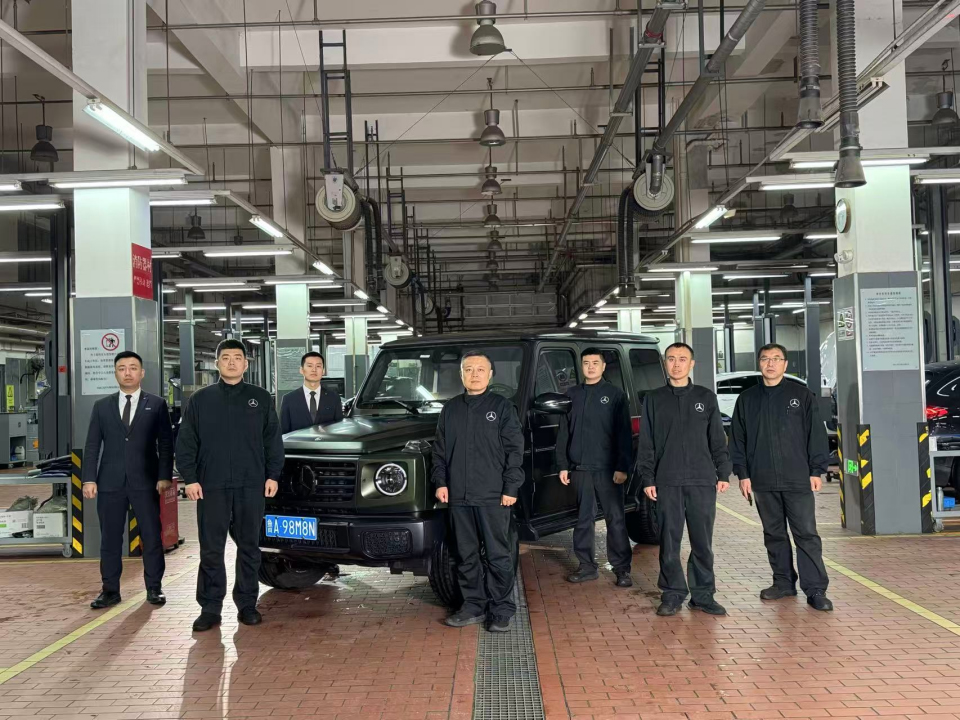
匠心守护 技以载道——探秘奔驰售后服务体系的技术密码
Zhong Guo Zhi Liang Xin Wen Wang· 2025-12-24 06:15
Core Insights - The Mercedes-Benz Service Skills Master Competition in 2025 highlighted the excellence of Anhui Penglong Rongfu Automotive Sales Service Co., Ltd. and Jinan Star Automotive Service Co., Ltd., with the former winning the runner-up for Best Team Award and the latter securing third place and Best Commercial Vehicle Team Award [1] Group 1: Service Standards - Mercedes-Benz has established over 900 detailed service standards that cover the entire customer service process, ensuring transparency and quality assurance for consumers [3][6] - The pre-inspection phase involves certified technicians conducting 28 checks across 8 vehicle areas, ensuring comprehensive identification of potential issues [6] Group 2: Tools and Equipment - The service teams utilize over 500 specialized tools, adhering to strict management and usage protocols to ensure vehicle safety [8] - High-precision instruments are essential for accurate diagnostics, directly impacting vehicle safety and reliability [9] Group 3: Talent Development - Mercedes-Benz has a three-tier certification system for technicians, requiring an average of five years of training and practical experience to achieve diagnostic technician status [12][14] - Continuous training and knowledge sharing are emphasized, with monthly meetings and an online technical forum for technicians to exchange expertise [14] Group 4: Problem Solving - The service teams frequently address complex issues, often arising from substandard repairs at external workshops, which can lead to severe vehicle problems [15][17] - The use of non-original parts is a common issue that can compromise vehicle performance and safety, with technicians educating customers on the risks associated with such parts [17] Group 5: Electric Vehicle Preparedness - Mercedes-Benz is prepared for the electric vehicle era, equipping technicians with dual certifications for both traditional and electric vehicles [18] - The company has accumulated extensive knowledge and experience in high-voltage technology maintenance, ensuring that all vehicles meet factory standards [18] Group 6: Overall Value Proposition - The Mercedes-Benz after-sales service system transforms standards into actions, integrating technology into service to build trust with customers [20] - The emphasis on detail, adherence to standards, and a craftsman spirit are seen as key elements in providing safe travel assurance for customers [20]

“都坏了” 索尼大法,突然在中国失灵了?
Xin Lang Ke Ji· 2025-12-02 02:23
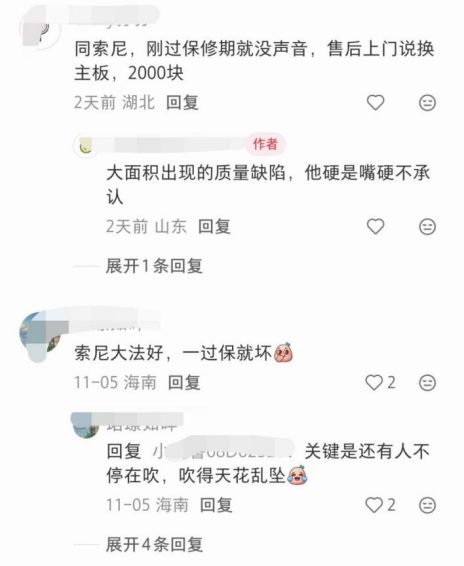
Core Viewpoint - Sony's television and mobile phone businesses are facing significant challenges in the Chinese market, with declining market share and increasing customer complaints regarding product quality and service issues [1][9][10]. Television Business - Sony's market share in the Chinese television market has dropped to below 5% in 2024, with each of the four major foreign brands averaging around 1.25% [1][7]. - Customers have reported quality issues with several popular Sony TV models, including sound output failures shortly after the warranty period, leading to repair costs of several thousand yuan [2][4][6]. - The decline in Sony's television sales is attributed to the rise of domestic brands like Hisense and TCL, which offer better technology, features, and price-performance ratios [9][10]. - Sony's reputation has been further damaged by customer dissatisfaction with after-sales service and the perceived lack of responsiveness to quality complaints [6][9]. Mobile Phone Business - Sony has officially exited the Chinese mobile phone market, with the cancellation of its official WeChat account and the discontinuation of its website [10][12]. - The Xperia brand, once popular in China, has seen a significant decline in market presence due to competition from domestic brands like Huawei and Xiaomi [10][12]. - Sony's mobile phone business had been struggling for years, with no new models launched in China since the Xperia 5V in September 2023 [10][12]. Financial Performance - Sony's financial report for Q2 FY25 indicates that while other segments like music and gaming are performing well, the television and mobile phone divisions are in decline, contributing to a drop in overall profitability [13][14]. - The television and mobile phone businesses are categorized under "other businesses" in the financial report, reflecting their diminishing importance to the company's overall performance [14].

“都坏了” 索尼大法,突然在中国失灵了? | BUG
Xin Lang Ke Ji· 2025-12-02 00:42
Core Viewpoint - Sony's television and mobile phone businesses are experiencing significant declines in the Chinese market, with quality issues and competition from domestic brands contributing to a loss of consumer trust and market share [2][10][11]. Group 1: Television Business - Sony's market share in the Chinese television market has dropped to below 5% in 2024, with each of the four major foreign brands averaging around 1.25% [2][8]. - Users have reported quality issues with Sony televisions, particularly models like XR-65X90J, which have experienced sound output failures shortly after the warranty period [3][6]. - Complaints about Sony televisions have surged on social media and consumer complaint platforms, indicating widespread dissatisfaction with product quality [4][6]. - Industry experts suggest that Sony needs to acknowledge these quality issues and improve customer service to regain consumer trust [6][10]. Group 2: Mobile Phone Business - Sony's mobile phone brand, Xperia, has officially exited the Chinese market, with the cancellation of its official WeChat account and the cessation of new product launches since September 2023 [11][14]. - The decline of Sony's mobile phone business mirrors that of its television segment, as it has struggled to compete with domestic brands like Huawei and Xiaomi [11][14]. - Sony's previous strong position in the mobile market has diminished significantly, leading to its classification as a niche brand [11][14]. Group 3: Financial Performance - Sony's financial report for Q2 FY2025 indicates that while other business segments like music and gaming are performing well, the television and mobile phone sectors are in decline, contributing to overall revenue drops in the "other businesses" category [15][16]. - The television and mobile phone businesses are not separately reported, but their poor performance is evident in the overall financial results, suggesting a need for strategic reevaluation [16].
美的被曝“卷”售后 有合作商已结束与小米合作
Jing Ji Guan Cha Wang· 2025-11-21 10:17
Core Viewpoint - Midea Group has reportedly instructed its after-sales service providers to stop accepting service contracts for air conditioning installations and repairs from Xiaomi and Gree, reflecting the intensifying competition in the home appliance industry [1][5]. Group 1: Industry Competition - The home appliance industry is experiencing fierce competition, with brands like Midea, Xiaomi, and Gree vying for market share and after-sales service dominance [1][5]. - Midea's actions may be aimed at protecting its market share against Xiaomi's rapid growth in the air conditioning sector, which has seen Xiaomi achieve a year-on-year sales growth of 53.9% [3][6]. - The competitive landscape has shifted, with Xiaomi's market share in air conditioning surpassing Gree, positioning it as a significant threat to traditional manufacturers [6][7]. Group 2: After-Sales Service Dynamics - After-sales service has become a critical battleground for user acquisition among major brands, with Midea's policy potentially limiting Xiaomi's access to service networks [2][4]. - Midea has denied enforcing exclusive partnerships with service providers, emphasizing its commitment to user experience [2][5]. - The establishment of a professional after-sales service network is challenging, particularly for Xiaomi, which relies heavily on third-party service providers [4][7]. Group 3: Market Share Insights - As of July 2025, Midea holds a 29% market share, followed by Gree at 17%, Haier at 15%, Xiaomi at 10%, and Aux at 8% [6]. - The competitive dynamics have led to a shift from capital cooperation between Midea and Xiaomi to direct competition, with Midea planning to divest its shares in Xiaomi [6][7]. - The ongoing price wars and resource competition between Midea and Xiaomi highlight the escalating rivalry in the home appliance sector [6][7].

