四个服务

Search documents
北京市推荐的全国政协委员情况通报会召开
Xin Jing Bao· 2026-02-26 03:16
新京报讯(记者张璐)2月25日下午,北京市政协、市委统战部联合召开北京市推荐的全国政协委员情况 通报会,并组织委员在海淀区视察考察。 情况通报会上,北京市委常委、常务副市长夏林茂介绍了北京市经济社会发展情况。会议指出,2025 年,北京市委市政府全面贯彻中共二十大和二十届历次全会精神,深入贯彻习近平总书记对北京重要讲 话精神,牢牢把握首都城市战略定位,持续加强"四个中心"功能建设,全面提高"四个服务"水平,深 化"五子"联动服务和融入新发展格局,统筹发展和安全,经济顶压前行、向新向优发展,社会大局保持 和谐稳定,实现了"十四五"圆满收官。 会议强调,今年是"十五五"开局之年,希望各位委员在全国政协十四届四次会议期间,自觉站在党和国 家事业发展全局的高度,紧紧围绕服务首都高质量发展这一主线,聚焦"十五五"规划实施的目标任务, 提出更多具有前瞻性、全局性、可操作性的意见建议,主动宣传北京发展成就和良好态势,传播北京声 音、讲述北京故事,为"十五五"开好局起好步发挥积极作用。在日常履职中,继续关心支持北京发展, 聚焦首都重点任务和人民群众关切的热点难点问题,建睿智之言、献务实之策。北京市政协和市委统战 部将继续做好 ...
大国首都 腾跃起势
Bei Jing Ri Bao Ke Hu Duan· 2026-02-11 22:42
Core Perspective - The article emphasizes the strategic positioning of Beijing as a capital city, focusing on the development of its "Four Centers" and the need for a coordinated approach to urban growth and functionality [5][6][11]. Group 1: Capital Development Strategy - The core strategy for Beijing's development is centered around its role as a national political, cultural, international exchange, and technological innovation center [5][6]. - The transition from "Beijing development" to "capital development" aims to enhance the functionality of the city while ensuring sustainable growth [6][12]. - The city is undergoing a historical transformation by optimizing its functions and addressing urban challenges through a dual approach of external relocation and internal restructuring [6][13]. Group 2: Economic and Cultural Growth - Beijing's cultural and economic sectors are thriving, with cultural industry revenues exceeding 2.6 trillion yuan, and the city hosting over 60,000 performances annually [12][19]. - The city has seen a 39% increase in inbound tourists, reflecting its growing international exchange capabilities [19]. - The technology sector is a key driver of economic growth, with significant advancements in core technologies and a high number of national high-tech enterprises [19]. Group 3: Urban Planning and Infrastructure - The construction of the urban sub-center is crucial for alleviating pressure on the main city and enhancing the overall functionality of the capital [15][16]. - The sub-center is designed to support the relocation of non-capital functions and improve the quality of urban life through better infrastructure and services [16][17]. - The integration of digital technologies and smart governance is enhancing urban management efficiency and responsiveness to citizen needs [13][14].

中共中央、国务院:构建“一核两翼、双城多点、双廊多圈”的首都都市圈空间格局
Xin Lang Cai Jing· 2026-02-02 09:41
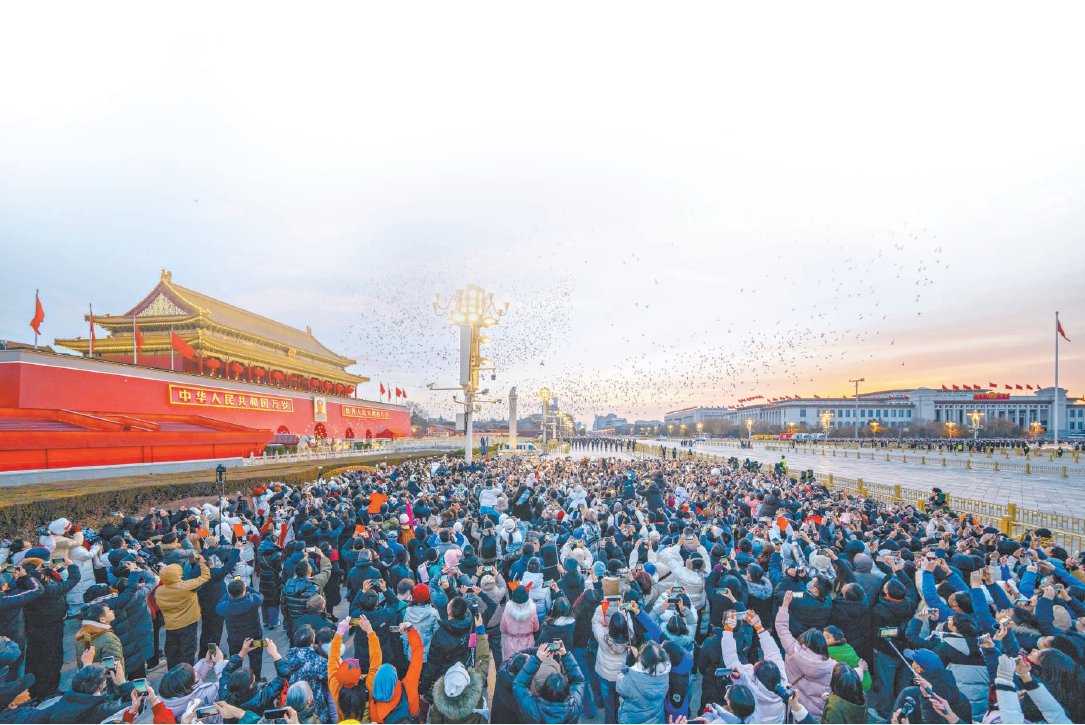
中共中央国务院发布关于《现代化首都都市圈空间协同规划(2023-2035年)》的批复。其中指出,构 建"一核两翼、双城多点、双廊多圈"的首都都市圈空间格局。要充分发挥北京"一核"的辐射带动作用, 加强"四个中心"功能建设,提升"四个服务"水平,营造一流的中央政务环境。高标准高质量建设河北雄 安新区,把北京城市副中心建设成为首都发展新的增长极,推动"两翼"比翼齐飞。高质量谱写京津"双 城记",天津加强北方国际航运核心区建设,共同打造区域发展高地。发挥河北节点城市支撑作用,形 成优势互促、联动发展的功能格局。 ...
一组海报“数读”北京2025年“成绩单”
Xin Lang Cai Jing· 2026-01-25 04:52
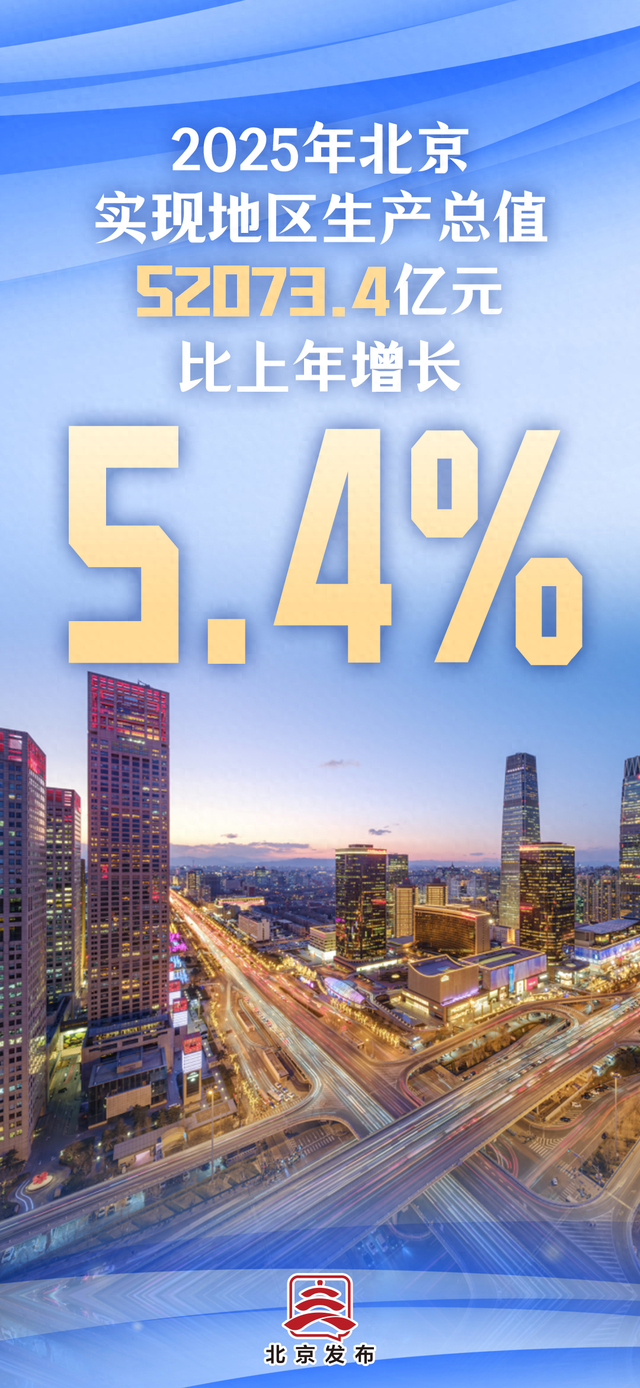
Core Insights - The report presented by Beijing's Mayor Yin Yong at the Fourth Session of the Sixteenth People's Congress outlines the city's economic and social development goals for 2025, emphasizing adherence to Xi Jinping's thoughts and the spirit of the 20th National Congress of the Communist Party of China [1] Economic Performance - The total GDP of Beijing is projected to reach 5.2 trillion yuan, with a growth rate of 5.4%, which is 0.4 percentage points higher than the national average [1] - General public budget revenue is expected to grow by 4.8% [1] - The urban unemployment rate is targeted to be 4.1% [1] - The actual growth of per capita disposable income for residents is projected at 4.4% [1] Stability and Quality of Life - The report indicates that consumer prices for residents will remain stable [1] - Multiple indicators, including per capita GDP, overall labor productivity, and energy, water, and carbon emissions per ten thousand yuan of GDP, are expected to maintain the best levels among provincial regions in the country [1]
市委城市工作会议召开,尹力就做好北京城市工作提要求、作部署
Xin Lang Cai Jing· 2025-12-23 10:48
Core Viewpoint - The Beijing Municipal Urban Work Conference emphasizes the importance of implementing the spirit of the 20th National Congress and the Central Urban Work Conference, aiming to enhance the capital's awareness and standards in urban development, striving to build a modern people-oriented city and achieve first-class status [1][2]. Group 1: Urban Development Strategy - The conference highlights the need to understand and implement the "two shifts" in urban work, focusing on the goal of building a modern people-oriented city and adhering to the main line of intrinsic urban development [2][3]. - It is crucial to strengthen the functions of the "four centers" (political, cultural, international exchange, and technological innovation) and improve the "four services" levels [2][3]. Group 2: Enhancing Urban Vitality - The strategy includes enhancing internal driving forces and stimulating urban development vitality through technological innovation and industry innovation [3][4]. - There is a focus on integrating into the national unified market and revitalizing resources, including the renovation of old factories and inefficient industrial parks [3][4]. Group 3: Cultural and Social Development - The conference aims to enhance the cultural leadership of the city by protecting cultural heritage and promoting cultural prosperity [4][5]. - It emphasizes the need to improve public services, optimize educational resources, and implement health development strategies to meet the needs of the population [4][5]. Group 4: Urban Governance and Safety - The importance of improving urban governance capabilities through technology and enhancing the resilience of the city against various risks is highlighted [5][6]. - The conference calls for a comprehensive approach to ensure political security and prevent major accidents, alongside improving disaster response capabilities [6][7]. Group 5: Sustainable Development - The strategy includes deepening green and low-carbon transformation efforts, focusing on pollution prevention and promoting a "zero waste city" initiative [5][6]. - There is a commitment to enhancing urban safety and stability through effective governance and community engagement [6][7].
李云鹏:聚焦“四个服务” 践行自律自强 在石化强国建设中塑造中国石化联新形象
Zhong Guo Hua Gong Bao· 2025-04-29 02:35
Core Viewpoint - The new leadership of the China Petroleum and Chemical Industry Federation emphasizes the importance of the petroleum and chemical industry as a pillar of the national economy and its critical role in achieving China's modernization goals [5][6]. Group 1: Industry Importance - The petroleum and chemical industry is recognized as a vital support for national economic development, social stability, and national defense security [5]. - The industry has been highlighted by President Xi Jinping as essential for energy security and economic stability, with calls for high-quality development and contributions to national goals [5][6]. Group 2: Four Services - The Federation's mission includes serving the country, society, the public, and the industry, which are seen as fundamental responsibilities and the foundation of its existence [6][7][8]. - The focus on "Four Services" aims to align the Federation's work with national strategies and enhance its role in promoting high-quality development within the industry [6][7]. Group 3: Strategic Initiatives - The Federation plans to enhance its role as a strategic think tank, innovation platform, and service hub, focusing on seven key areas to support industry growth [10]. - Initiatives include improving industry monitoring, promoting modern industrial systems, fostering technological innovation, and advancing digital transformation [11][12][13][14][15][16][17]. Group 4: Governance and Compliance - Strengthening governance and compliance is deemed essential for the Federation's sustainable development, with a focus on establishing effective systems and enhancing operational transparency [19][20]. - The Federation aims to create a fair competitive environment through self-regulation and adherence to industry standards [19][20]. Group 5: Talent and Cultural Development - Emphasis is placed on talent development and cultural building within the industry to ensure a robust workforce capable of meeting future challenges [22][23]. - The Federation seeks to cultivate a culture of innovation and respect, drawing on historical industry values to enhance its brand and public image [23].