四个中心

Search documents
大国首都 腾跃起势
Bei Jing Ri Bao Ke Hu Duan· 2026-02-11 22:42
Core Perspective - The article emphasizes the strategic positioning of Beijing as a capital city, focusing on the development of its "Four Centers" and the need for a coordinated approach to urban growth and functionality [5][6][11]. Group 1: Capital Development Strategy - The core strategy for Beijing's development is centered around its role as a national political, cultural, international exchange, and technological innovation center [5][6]. - The transition from "Beijing development" to "capital development" aims to enhance the functionality of the city while ensuring sustainable growth [6][12]. - The city is undergoing a historical transformation by optimizing its functions and addressing urban challenges through a dual approach of external relocation and internal restructuring [6][13]. Group 2: Economic and Cultural Growth - Beijing's cultural and economic sectors are thriving, with cultural industry revenues exceeding 2.6 trillion yuan, and the city hosting over 60,000 performances annually [12][19]. - The city has seen a 39% increase in inbound tourists, reflecting its growing international exchange capabilities [19]. - The technology sector is a key driver of economic growth, with significant advancements in core technologies and a high number of national high-tech enterprises [19]. Group 3: Urban Planning and Infrastructure - The construction of the urban sub-center is crucial for alleviating pressure on the main city and enhancing the overall functionality of the capital [15][16]. - The sub-center is designed to support the relocation of non-capital functions and improve the quality of urban life through better infrastructure and services [16][17]. - The integration of digital technologies and smart governance is enhancing urban management efficiency and responsiveness to citizen needs [13][14].

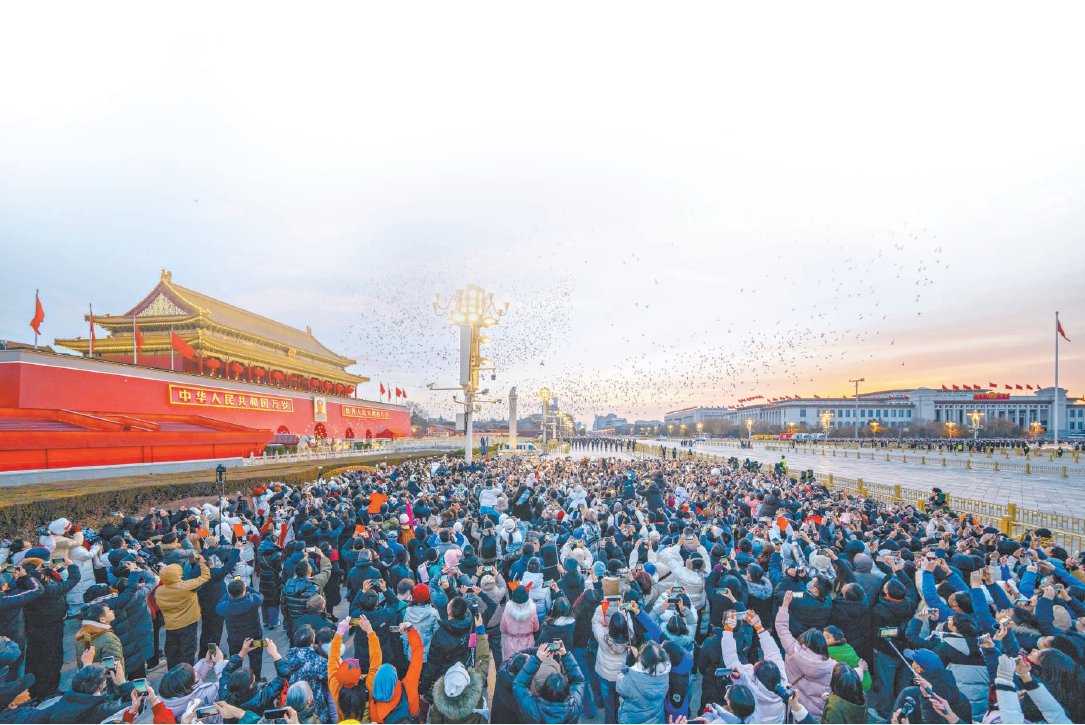
中共中央、国务院:构建“一核两翼、双城多点、双廊多圈”的首都都市圈空间格局
Xin Lang Cai Jing· 2026-02-02 09:41
Core Viewpoint - The approval of the "Modern Capital Urban Circle Spatial Collaborative Planning (2023-2035)" emphasizes the construction of a spatial pattern characterized by "one core, two wings, dual cities, multiple points, and dual corridors" for the capital urban area [1] Group 1 - The plan aims to leverage Beijing as the "one core" to enhance its radiating and driving role [1] - It highlights the importance of strengthening the "four centers" functions and improving the "four services" levels to create a top-tier central government environment [1] - The high-standard and high-quality development of the Xiong'an New Area in Hebei is prioritized, with the goal of establishing Beijing's urban sub-center as a new growth pole for capital development [1] Group 2 - The plan promotes the coordinated development of the "two wings," encouraging Tianjin to enhance its role as a core area for northern international shipping [1] - It aims to jointly create a regional development highland through the collaboration of Beijing, Tianjin, and Hebei [1] - The plan emphasizes the supportive role of Hebei's node cities to form a functional pattern of mutual advantages and coordinated development [1]
“四个中心”彰显大国首都风范
Xin Lang Cai Jing· 2026-01-26 00:26
Group 1: Core Functions of Beijing - The "14th Five-Year Plan" emphasizes the enhancement of Beijing's core functions, aiming for improved governance, cultural charm, and living environment by 2030 [1] - The plan includes maintaining the cultural industry's contribution to GDP at over 10% and strengthening international communication capabilities [1] Group 2: Urban Development and Environment - Beijing will implement urban renewal actions within the Second Ring Road, enhancing the quality of life and creating a harmonious living environment [2] - The city will focus on preserving historical architecture and improving public spaces, including the addition of pocket parks and seating areas [2][3] Group 3: Cultural Heritage and Promotion - The successful application for UNESCO World Heritage status for the Central Axis will be consolidated, with all heritage sites along the axis to be opened to the public [4] - The plan includes the development of cultural belts and significant projects to enhance the cultural landscape of Beijing [4] Group 4: Public Cultural Facilities - New cultural facilities such as the China Acrobatic Arts Center and Beijing Dance Drama Theater will be established, along with extended hours for museums [5] Group 5: International Communication and Services - Beijing aims to enhance its international communication capabilities by creating a one-stop service center for foreign talent and improving international payment services [6] - The city will focus on optimizing services for foreign visitors, including transportation and accommodation [6] Group 6: Innovation and Technology - The "15th Five-Year Plan" aims to elevate Beijing as a global technology innovation hub, focusing on building world-class universities and research institutions [7] - The plan emphasizes the importance of artificial intelligence in driving original innovation and enhancing strategic technological capabilities [7][8] Group 7: Development Zones - The "Three Cities and One District" initiative will continue to upgrade, with a focus on creating globally competitive innovation zones [8]
一组海报“数读”北京2025年“成绩单”
Xin Lang Cai Jing· 2026-01-25 04:52
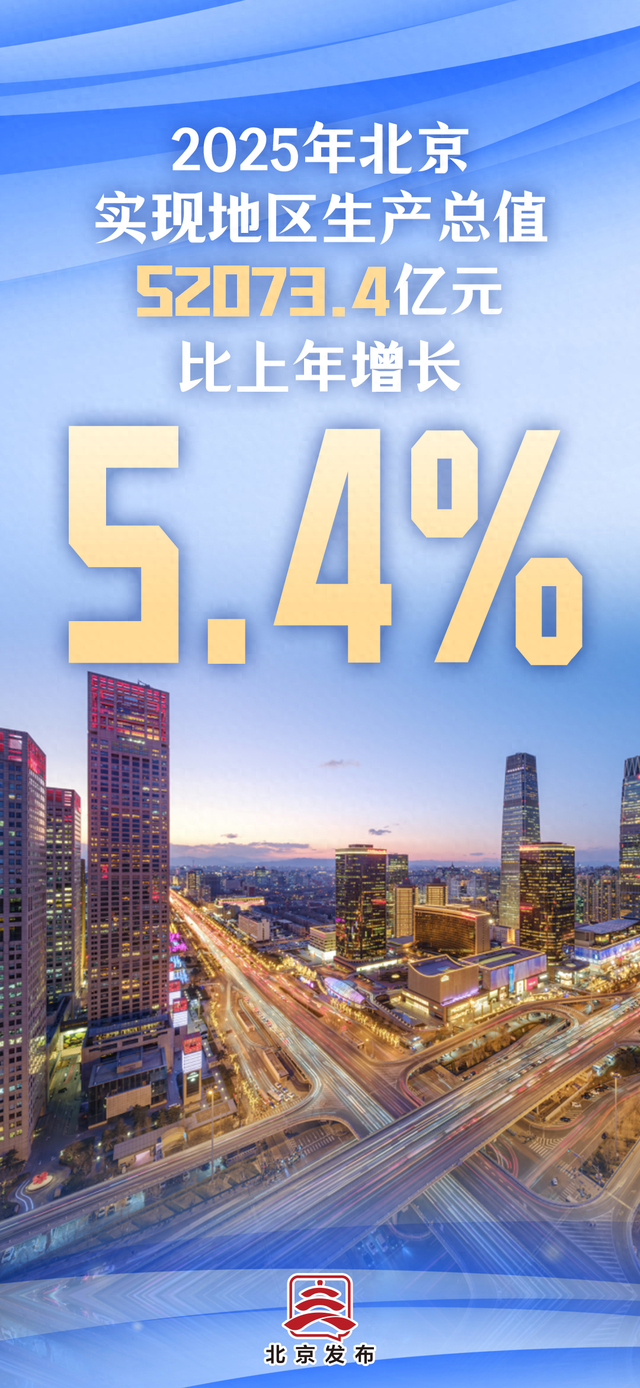
Core Insights - The report presented by Beijing's Mayor Yin Yong at the Fourth Session of the Sixteenth People's Congress outlines the city's economic and social development goals for 2025, emphasizing adherence to Xi Jinping's thoughts and the spirit of the 20th National Congress of the Communist Party of China [1] Economic Performance - The total GDP of Beijing is projected to reach 5.2 trillion yuan, with a growth rate of 5.4%, which is 0.4 percentage points higher than the national average [1] - General public budget revenue is expected to grow by 4.8% [1] - The urban unemployment rate is targeted to be 4.1% [1] - The actual growth of per capita disposable income for residents is projected at 4.4% [1] Stability and Quality of Life - The report indicates that consumer prices for residents will remain stable [1] - Multiple indicators, including per capita GDP, overall labor productivity, and energy, water, and carbon emissions per ten thousand yuan of GDP, are expected to maintain the best levels among provincial regions in the country [1]
市委城市工作会议召开,尹力就做好北京城市工作提要求、作部署
Xin Lang Cai Jing· 2025-12-23 10:48
Core Viewpoint - The Beijing Municipal Urban Work Conference emphasizes the importance of implementing the spirit of the 20th National Congress and the Central Urban Work Conference, aiming to enhance the capital's awareness and standards in urban development, striving to build a modern people-oriented city and achieve first-class status [1][2]. Group 1: Urban Development Strategy - The conference highlights the need to understand and implement the "two shifts" in urban work, focusing on the goal of building a modern people-oriented city and adhering to the main line of intrinsic urban development [2][3]. - It is crucial to strengthen the functions of the "four centers" (political, cultural, international exchange, and technological innovation) and improve the "four services" levels [2][3]. Group 2: Enhancing Urban Vitality - The strategy includes enhancing internal driving forces and stimulating urban development vitality through technological innovation and industry innovation [3][4]. - There is a focus on integrating into the national unified market and revitalizing resources, including the renovation of old factories and inefficient industrial parks [3][4]. Group 3: Cultural and Social Development - The conference aims to enhance the cultural leadership of the city by protecting cultural heritage and promoting cultural prosperity [4][5]. - It emphasizes the need to improve public services, optimize educational resources, and implement health development strategies to meet the needs of the population [4][5]. Group 4: Urban Governance and Safety - The importance of improving urban governance capabilities through technology and enhancing the resilience of the city against various risks is highlighted [5][6]. - The conference calls for a comprehensive approach to ensure political security and prevent major accidents, alongside improving disaster response capabilities [6][7]. Group 5: Sustainable Development - The strategy includes deepening green and low-carbon transformation efforts, focusing on pollution prevention and promoting a "zero waste city" initiative [5][6]. - There is a commitment to enhancing urban safety and stability through effective governance and community engagement [6][7].
在“舍”中得活力 在“疏”中提质量
Xin Lang Cai Jing· 2025-12-20 22:07
Group 1 - The report highlights the establishment of a dynamic mechanism for urban planning in Beijing, featuring an annual assessment and a five-year evaluation, which serves as a practical model for achieving long-term urban development goals [1] - Beijing's "Four Centers" development strategy focuses on enhancing its political, cultural, international exchange, and technological innovation capabilities, with significant events and infrastructure projects supporting this initiative [2] - The city has successfully implemented measures to improve urban quality and governance, addressing challenges associated with large urban populations through targeted interventions and urban renewal projects [3] Group 2 - The Beijing-Tianjin-Hebei region is experiencing significant economic growth, with a reported GDP of 11.5 trillion yuan in 2024, which is 2.1 times that of 2013, indicating a robust regional development trajectory [4] - The development of the Xiong'an New Area has progressed, with over 200 square kilometers developed and investments exceeding 830 billion yuan, showcasing the region's commitment to modernization [4] - The integration of social services across the Beijing-Tianjin-Hebei region has improved, with a unified social security card system facilitating access to healthcare and transportation for residents [5]
北京亮出七大领域年度成绩单
Xin Lang Cai Jing· 2025-12-20 06:42
Group 1 - The report highlights the annual achievements in the construction and development of Beijing, focusing on seven key areas including capital functions, urban scale, spatial layout, ecological baseline, urban governance, safety resilience, and regional collaboration [1] - Beijing has established a dynamic mechanism of "annual health check and five-year assessment," making it the first super-large city in the country to implement such a system, providing a practical example for achieving long-term urban planning [1] - The inclusion of "Beijing Central Axis" in the UNESCO World Heritage List marks a significant cultural achievement, bringing the total number of World Heritage sites in China to 59 and enhancing Beijing's status as a global cultural heritage city [2] Group 2 - The report emphasizes the importance of the "Four Centers" as the driving force for the capital's development, with significant improvements in political, cultural, international exchange, and technological innovation centers [2] - Beijing has focused on enhancing its political center role by successfully organizing major events, while also promoting cultural heritage through public access to historical sites and the development of cultural centers [2] - The construction of the second phase of the National Conference Center and the official operation of the Capital International Exhibition Center are key steps in advancing international exchange capabilities [2] Group 3 - The report outlines innovative practices in urban governance, addressing challenges of large city management through targeted solutions rather than expansive growth [3] - Significant upgrades and new constructions of parks and green spaces are planned, including the development of 20 parks in the first green isolation area and the construction of the second phase of the city's largest park, the Wenyu River Park [3] - The report indicates that urban renewal efforts are systematically optimizing spatial layouts and achieving historical results in managing urban challenges [3] Group 4 - The overall strength of the Beijing-Tianjin-Hebei region is improving, with the development of the Xiong'an New Area and the relocation of government agencies to the city sub-center contributing to regional collaboration [4] - The report states that the GDP of the Beijing-Tianjin-Hebei region is projected to reach 11.5 trillion yuan in 2024, which is 2.1 times that of 2013, indicating robust economic growth [4] - The expansion of high-speed rail coverage and the implementation of a unified social security card system across the region are enhancing connectivity and convenience for residents [4]
上证上海改革发展主题指数上涨0.51%,前十大权重包含上海电气等
Jin Rong Jie· 2025-07-14 14:11
Group 1 - The Shanghai Reform and Development Theme Index closed at 2523.18 points, with a trading volume of 29.016 billion yuan, reflecting a 0.51% increase [1] - Over the past month, the index has risen by 3.32%, and by 8.67% over the last three months, while it has decreased by 0.07% year-to-date [1] - The index primarily selects stocks from companies listed on the Shanghai Stock Exchange, focusing on themes such as the "Belt and Road" initiative, "Four Centers," and Free Trade Zone development [1] Group 2 - The top ten weighted stocks in the index include SAIC Motor (8.68%), Shanghai Port Group (7.73%), and Pudong Development Bank (7.62%) [1] - The index's holdings are entirely composed of stocks from the Shanghai Stock Exchange, with the industrial sector representing 29.98%, financial sector 22.30%, and consumer discretionary 18.22% [2] - The index samples are adjusted quarterly, with changes implemented on the next trading day following the second Friday of March, June, September, and December [2]