四巫日

Search documents
美股全线低开,超4100股下跌!英伟达跌1.6%,特斯拉跌超2%,超微电脑跌超27%!中概股普跌,金价、银价再跳水|美股开盘
Mei Ri Jing Ji Xin Wen· 2026-03-20 15:05AI Processing
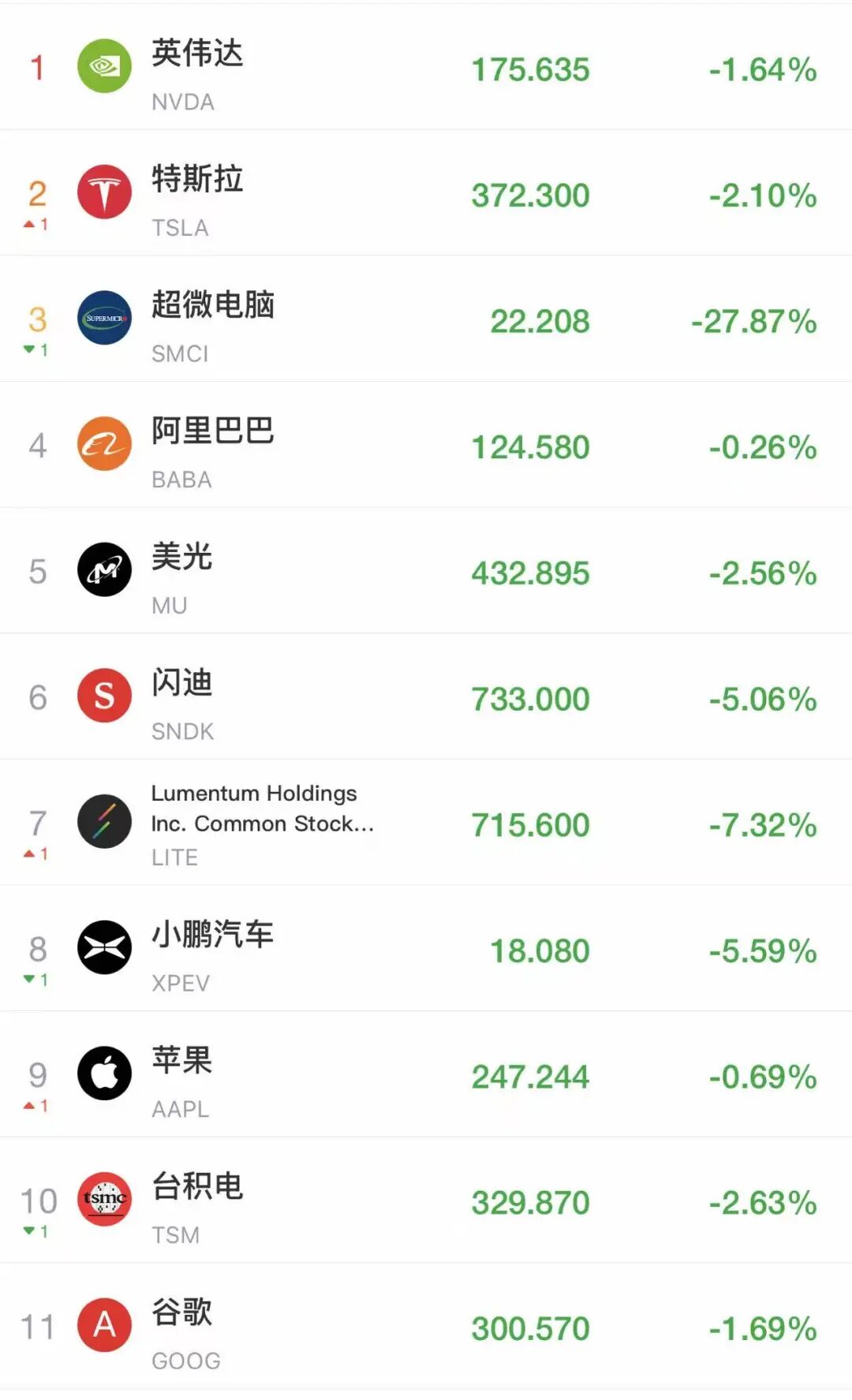
每经记者|杜波 每经编辑|段炼 记者|杜波 编辑|段炼 易启江 校对|张益铭 当地时间3月20日,美股全线低开,截至发稿,道指跌1.13%,纳指跌0.53%,标普500指数跌0.8%。全市超4100股下跌。 科技股普跌,英伟达跌1.64%,特斯拉跌2.1%,谷歌跌1.69%,苹果跌0.69%,超微电脑跌27.87%。存储股也跳水,闪迪跌超5%,美光科技跌2.56%。 中概股普跌,纳斯达克中国金龙指数跌超1.6%。小鹏汽车、蔚来跌超5%,搜狐、哔哩哔哩跌超2%,金山云跌超10%。 国际金银价格再次跳水,截至发稿,现货黄金再次跌破4600美元,日内跌超1.5%。现货白银再次跌破70美元大关,日内跌超4.5%。 根据花旗集团可追溯至1996年的数据,当地时间3月20日,将有大约5.7万亿美元名义价值、与美国个股、指数和交易所交易基金挂钩的期权到期,这也将 是历年来规模最庞大的3月到期价值,这一季度性事件长期以来被交易员们称为"四巫日"。 (免责声明:本文内容与数据仅供参考,不构成投资建议,使用前请核实。据此操作,风险自担。) 封面图片:视觉中国(图文无关) | 1 | | 英伟达 | 175.635 | -1.64 ...





就在今晚!史上最大规模期权到期,美股将迎来“疯狂一日”?
华尔街见闻· 2025-12-19 10:56
Core Insights - The article discusses an unprecedented options expiration event on Wall Street, with over $7.1 trillion in notional value set to expire, marking a historical record [2] - This event, known as "quadruple witching," occurs when four types of derivative contracts expire simultaneously, leading to increased market activity and volatility [4] Group 1: Options Expiration Details - The expiration event includes approximately $5 trillion linked to the S&P 500 index and $880 billion related to individual stocks, representing about 10.2% of the total market capitalization of the Russell 3000 index [2] - The S&P 500 index has risen about 15% this year, trading around 6770 points, which adds to the significance of this record options expiration [2] Group 2: Market Impact and Volatility - The massive options expiration could lead to two contrasting effects: increased market volatility or a "pin" effect that stabilizes prices around key strike prices [5] - High trading volumes are expected as options traders close out positions, particularly around the critical level of 6800 points for the S&P 500 index [5] Group 3: Technical Analysis and Market Sentiment - The S&P 500 index is currently in a "negative gamma" zone between 6700 and 6900 points, indicating a tendency for amplified volatility [6] - SpotGamma identifies 6800 points as a critical "risk pivot," suggesting that maintaining above this level could signal the start of a bullish trend, while staying below may lead to downward pressure [6]


欧美资本魔咒破灭?106万亿市场遇危机,中国市场趁机获利
Sou Hu Cai Jing· 2025-11-21 12:53
Core Viewpoint - The article argues that the notion of "stock index futures settlement day must decline" is a baseless myth in the capital market, akin to historical witch hunts, aimed at misleading retail investors into selling their stocks prematurely [1][3][5]. Group 1: Market Analysis - Historical data from the S&P 500 index shows that on "Quadruple Witching Days," the index has risen 65% of the time over the past 30 years, with an average fluctuation of only 0.23%, contradicting the idea of a "must decline" phenomenon [7]. - In the A-share market, from 2015 to 2025, the Shanghai Composite Index rose on 58 out of 120 settlement days, with an average fluctuation of ±0.52%, indicating no significant downward trend [7][9]. - The probability of the CSI 300 index rising on settlement days is only 46%, with extreme fluctuations exceeding 2% occurring only 5 times, representing 4.2% of the total [7]. Group 2: Market Mechanisms - The trading volume of stock index futures on settlement days is minimal compared to the total market capitalization of 106 trillion yuan, making it unlikely to significantly impact the market [9][11]. - The settlement price for A-share stock index futures is based on the arithmetic average of the last two hours of the cash index, making manipulation nearly impossible due to the required capital and regulatory oversight [11][13]. - The monthly settlement system in the A-share market is designed to avoid conflicts with major financial reports and macroeconomic data releases, which is a strategic choice rather than a disadvantage [11][13]. Group 3: Investor Behavior - A survey by the China Financial Futures Exchange in 2024 indicated that over 70% of investors support maintaining the current settlement model, with less than 7% advocating for a shift to quarterly settlements [13]. - The article emphasizes that the so-called "witch hunt" in the capital market exploits retail investors' fears, leading them to make irrational decisions based on misinformation [15].