国家安全威胁

Search documents
全面禁售,还污蔑“中方会测绘美国每一寸土地”
Guan Cha Zhe Wang· 2025-12-23 04:08
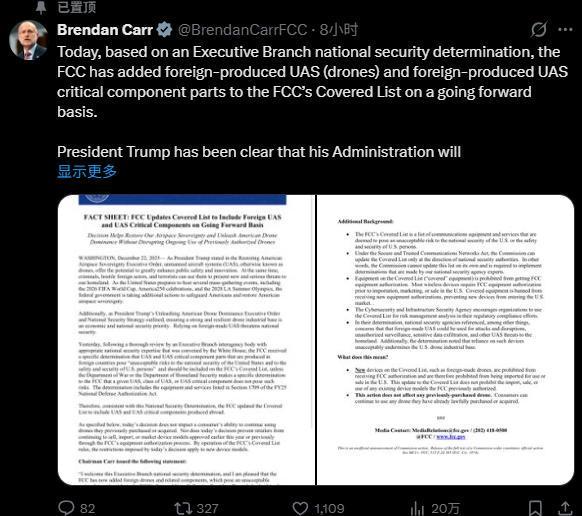
Core Viewpoint - The U.S. government has officially blacklisted all foreign-manufactured drones and their components, citing "unacceptable national security threats," which significantly escalates efforts to curb Chinese drone manufacturers like DJI and Daotong [1][2]. Group 1: Regulatory Actions - The Federal Communications Commission (FCC) has placed all foreign-made drones, including those from DJI, on a regulated "blacklist," prohibiting the approval of new drone models for import and sale in the U.S. [2] - This decision does not affect previously authorized drone models, meaning existing drones in the U.S. will not be grounded [2]. Group 2: Industry Impact - DJI and other Chinese drone manufacturers will face significant restrictions, limiting U.S. consumer choices and undermining principles of open and fair competition [6]. - The U.S. currently relies heavily on Chinese drones, with DJI holding a 90% market share in the commercial drone sector in the U.S. [9]. Group 3: Political Reactions - U.S. lawmakers, particularly from the Republican Party, have expressed support for the ban, framing it as a measure to protect national security and bolster American drone manufacturing [5]. - The Chinese government has condemned the U.S. actions as an abuse of the "national security" concept, arguing that it disrupts normal economic trade and harms global supply chain stability [5]. Group 4: Market Dynamics - China dominates the commercial drone market, producing 70% to 80% of global commercial drones, with significant implications for U.S. manufacturers who may struggle to match this production level [9][10]. - The ongoing demand for drones in agriculture, construction, maritime, and industrial sectors is expected to sustain DJI's market presence despite regulatory challenges [9].

特朗普升级禁毒战 将芬太尼列为"大规模杀伤性武器"
Xin Lang Cai Jing· 2025-12-15 23:29
Core Viewpoint - The article discusses President Trump's executive order classifying fentanyl as a "weapon of mass destruction," significantly expanding the U.S. government's authority to combat the illegal trafficking of this synthetic opioid, which causes tens of thousands of overdose deaths annually in the U.S. [1][2] Group 1 - The classification of fentanyl as a weapon of mass destruction indicates a shift in perception, treating it as a national security threat akin to chemical warfare rather than merely a public health crisis [1][2] - The executive order empowers the Pentagon to assist in law enforcement efforts against drug trafficking organizations that are perceived to be flooding the U.S. with drugs [1][2] - Intelligence agencies are authorized to employ methods typically used to prevent the proliferation of weapons to combat drug trafficking [1][2]
美媒:美拟要求外国游客交社媒记录是荒谬之举
Huan Qiu Shi Bao· 2025-12-15 23:08
Core Viewpoint - The proposal by the U.S. Customs and Border Protection to require visitors from 42 visa-waiver countries to provide social media history and personal information raises concerns about privacy and the definition of "hostility" towards the U.S. government [1][2][3][4]. Group 1: Proposal Details - The U.S. Customs and Border Protection plans to make social media information a mandatory part of the travel authorization application, requiring data from the past five years [1]. - Additional requirements may include biometric data, phone numbers used in the past five years, email addresses from the past ten years, and information about family members [1]. Group 2: Privacy Concerns - The proposal could significantly impact personal privacy, as it may lead to indefinite social media monitoring of nearly all non-U.S. citizens attempting to enter or stay in the U.S. [3]. - Concerns are raised about the loss of online anonymity for travelers, especially those using pseudonymous accounts [3]. Group 3: Constitutional and Ethical Implications - The requirement for social media history may not directly violate constitutional rights but contradicts the spirit of the U.S. Constitution, particularly regarding the treatment of close allies from visa-waiver countries [4]. - The tourism industry expresses dissatisfaction, noting that the proposal was not discussed with stakeholders prior to its announcement [4]. Group 4: Public Sentiment - There is a growing concern among the global public regarding the implications of past social media posts on their ability to travel, highlighting a potential backlash against such measures [5].
FCC泛化国家安全威胁中美用户正常通信
Ge Long Hui· 2025-12-11 23:24
Core Viewpoint - The FCC has mandated Chinese telecom operators to resolve certification issues within 14 days, threatening to cut them off from the U.S. telecom network if they fail to comply, which could disrupt communication between users in China and the U.S. [1] Group 1: Regulatory Actions - The FCC has issued an order requiring China Mobile, China Telecom, and China Unicom to address certification issues in the U.S. Robocall Mitigation Database (RMD) within a 14-day timeframe [1] - The Chinese operators must demonstrate that their operations do not pose a threat to U.S. national security and align with public interest [1] Group 2: Consequences of Non-Compliance - Failure to respond adequately will result in the removal of Chinese operators from the RMD, leading to U.S. operators ceasing to receive direct calls from these Chinese companies [1] - This action would effectively block voice calls routed from China to the U.S. through these operators, severely disrupting normal communication between users in both countries [1]



以色列外交部:最近几个小时,外交部长与印度、德国、法国、意大利、匈牙利、巴拉圭、巴拿马、塞浦路斯和欧盟等世界各地的同行进行了一系列通话。以色列向他们通报了内阁的决定及消除伊朗对以色列构成的生存威胁的重要目标。
news flash· 2025-06-13 16:43
Group 1 - The Israeli Foreign Ministry has engaged in a series of calls with counterparts from various countries including India, Germany, France, Italy, Hungary, Paraguay, Panama, Cyprus, and the European Union [1] - The discussions focused on informing these nations about the Israeli cabinet's decisions and the significant objective of mitigating the existential threat posed by Iran to Israel [1]
美国参众两院呼吁对宇树科技实施限制
制裁名单· 2025-05-09 02:55
Core Viewpoint - The bipartisan letter from the U.S. House of Representatives Special Committee on China warns that Unitree, a Chinese robotics company, poses an increasing national security threat due to its deployment of quadruped robots in sensitive U.S. institutions [1] Group 1 - The letter highlights that Unitree's quadruped robots, equipped with cameras, sensors, and embedded software, have been deployed in sensitive locations, including state prison systems and military sites [1] - The committee calls for the inclusion of Unitree in the Department of Commerce's Entity List to restrict exports and partnerships [1] - The letter also urges the Federal Communications Commission (FCC) to add Unitree to its list, prohibiting the company's participation in U.S. telecommunications infrastructure [1]
特朗普拟对在外国制作的电影征收100%关税,澳大利亚和新西兰政府表态
Huan Qiu Wang· 2025-05-05 05:50
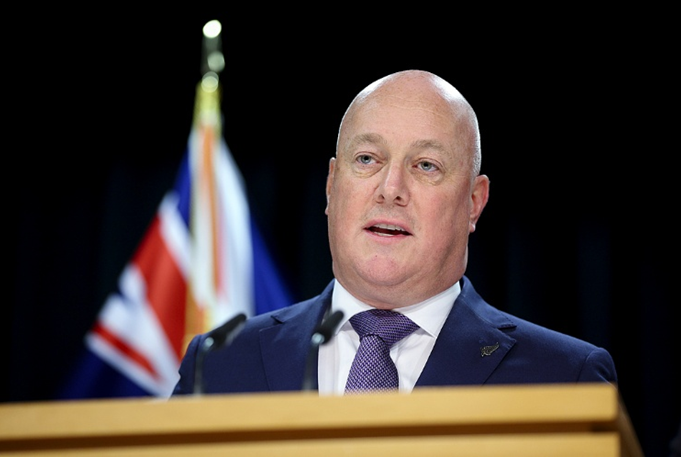
Core Viewpoint - The proposed 100% tariff on foreign-made films by the Trump administration has sparked strong reactions from international communities, particularly from Australia and New Zealand, who are committed to protecting their film industries [1][3]. Group 1: Government Reactions - The Australian Minister for Home Affairs, Tony Burke, stated that discussions have taken place regarding the U.S. tariff measures, emphasizing the commitment to protect Australia's film industry [1]. - New Zealand Prime Minister Chris Hipkins expressed that the government is closely monitoring the details of the proposed tariffs and will advocate for the film industry [3]. Group 2: Industry Impact - Analysts warn that the tariff could severely damage the U.S. film and cultural industry, with William Reinsch, a senior fellow at the Center for Strategic and International Studies, stating that the disadvantages of such tariffs outweigh the benefits [3]. - Trump claims that the U.S. film industry is in rapid decline due to foreign incentives attracting American filmmakers abroad, which he argues poses a national security threat [3]. - Reports indicate that many U.S. film companies have been producing films in countries like the UK, Australia, Canada, Ireland, and Spain to reduce costs, suggesting that the tariff could have significant repercussions for the U.S. entertainment industry [3].