
国际商事仲裁

Search documents
省十四届人大五次会议收到代表议案20件、建议800余件
Xin Lang Cai Jing· 2026-02-06 22:00
Group 1: Legislative Proposals for High-Quality Development - Representatives proposed the formulation of regulations to promote the artificial intelligence industry, aiming to establish a robust technological innovation system and support the "Artificial Intelligence+" initiative [2] - A proposal was made to create regulations for the new materials industry, focusing on a development promotion mechanism and a green low-carbon development orientation [2] - The introduction of local financial regulations was suggested to innovate financial service models and enhance risk prevention systems, ensuring the healthy development of finance in the province [2] Group 2: Enhancing Quality of Life - A proposal for a social assistance regulation was made to build a tiered social assistance system, improving management and accountability mechanisms [3] - Representatives suggested the establishment of a student mental health promotion regulation to support educational and health initiatives in the province [3] - The need for a revised infectious disease prevention regulation was highlighted to improve pandemic response capabilities and safeguard public health [3] Group 3: Efficient Governance - A proposal for urban renewal regulations was introduced, emphasizing public interest and collaborative governance in managing existing urban spaces [4] - The establishment of administrative law enforcement supervision regulations was suggested to standardize and enhance the efficiency of administrative enforcement [4] - Representatives proposed regulations for social organizations to foster professional development and improve service effectiveness [4] Group 4: Overall Legislative Activity - The provincial congress received 20 legislative proposals and over 800 suggestions from representatives, covering various sectors including economy, education, public health, and social governance [1][4] - The proposals will be analyzed and reviewed by the provincial standing committee after the conference, with no immediate proposals selected for discussion during the meeting [4]
范凯杰:把海南打造成为国际商事仲裁的优选地
Xin Lang Cai Jing· 2026-01-28 16:48
Core Viewpoint - The establishment of Hainan as a preferred location for international commercial arbitration is crucial for enhancing the legal competitiveness of the free trade port and creating a world-class business environment in Hainan [1] Group 1: Arbitration and Mediation Statistics - In 2025, Hainan International Arbitration Court is expected to receive over 2,000 new cases, achieving a settlement rate of 83% [1] - The annual commercial mediation cases are projected to exceed 80, involving amounts over 1.5 billion yuan [1] - There will be more than 30 foreign-related arbitration and mediation cases, with the total amount involved exceeding 500 million yuan [1] Group 2: Strategic Initiatives - The strategy includes implementing "arbitration location" rules to align with international standards [1] - A three-in-one dispute resolution ecosystem comprising arbitration, litigation, and mediation will be developed [1] - There is a focus on accelerating the training and introduction of foreign-related legal talents [1] - Utilizing "judicial wisdom and brand promotion" to enhance Hainan's credibility and international influence is emphasized [1] Group 3: Long-term Vision - The initiative to make Hainan a preferred site for international commercial arbitration is described as a "marathon" requiring collaboration among legislative, judicial, administrative, and professional sectors [1] - Maintaining an open and innovative mindset is essential for transforming geographical advantages into institutional strengths [1] - The goal is to turn the governance of Hainan's free trade port into a prominent global business card [1]
最高法:去年全国法院审结商事仲裁司法审查案件1.8万余件
Yang Shi Xin Wen· 2025-12-28 02:15
Core Viewpoint - The Supreme People's Court released the "Commercial Arbitration Judicial Review Annual Report (2024)", highlighting the importance of arbitration in resolving commercial disputes and promoting international economic cooperation, while emphasizing the need for judicial support and supervision for the healthy development of arbitration [1]. Group 1: Judicial Review of Arbitration Cases - In 2024, national courts adjudicated 18,566 commercial arbitration judicial review cases, including 5,475 cases for confirming the validity of arbitration agreements and 11,016 cases for revoking arbitration awards [1]. - The revocation rate for arbitration awards was only 2.22%, with 245 cases being revoked or partially revoked, indicating a "pro-arbitration" judicial environment [1]. - The court supported 26,770 out of 27,069 cases related to arbitration preservation, achieving a high preservation rate of 98.90% [1]. Group 2: Cross-Strait and International Cooperation - National courts adjudicated 62 cases related to the recognition and enforcement of arbitration awards from Hong Kong, Macau, and Taiwan, with 53 cases being recognized and enforced, demonstrating support for cross-border commercial dispute resolution [2]. - In 2024, 42 cases concerning the recognition and enforcement of foreign arbitration awards were reviewed, with no cases rejected, reflecting a commitment to multilateralism and adherence to the New York Convention [2][3]. Group 3: Principles of Judicial Review - The report outlines principles for judicial review, including a pro-arbitration interpretation of arbitration agreement validity, encouraging parties to resolve disputes through arbitration [2]. - Courts strictly apply grounds for revocation and non-enforcement of arbitration awards, respecting the finality of arbitration decisions while ensuring fair procedures [3]. - The principle of good faith in treaty performance is emphasized, with courts favoring the recognition and enforcement of foreign arbitration awards to create a supportive judicial environment for international commercial arbitration [3].
海南这五年:构建与自贸港建设相契合的法规体系
Xin Lang Cai Jing· 2025-12-24 14:46
Core Insights - During the "14th Five-Year Plan" period, Hainan has focused on establishing a regulatory framework that aligns with national legal systems, international practices, and the construction of a free trade port [1][2] Legislative Achievements - A total of 150 provincial-level local regulations and regulatory decisions, along with 44 provincial government regulations, have been enacted, including 55 regulations specifically for the free trade port [1] - Key regulations include the "Hainan Free Trade Port Foreign Investment Regulations" and the "Hainan Free Trade Port Digital Economy Promotion Regulations" [1] Market Environment Improvement - Legislative efforts have been made to enhance the business environment, such as the introduction of the "Optimizing Business Environment Regulations" and the establishment of a government compliance mechanism [2] - A social credit regulation has been introduced to create a public credit information directory and establish a credit system for the Hainan Free Trade Port [2] Industry Development Legislation - Hainan has enacted the first national "Yacht Industry Promotion Regulations" and regulations for international data centers and biomedical technology in the Boao Lecheng International Medical Tourism Pilot Zone [2] - Additional regulations have been introduced for key economic zones, including the Haikou National High-tech Industrial Development Zone and the Sanya Central Business District [2] Ecological Legislation - Hainan has implemented the first national regulations for ecological environment protection assessment and accountability, creating a new target indicator system [3] - The introduction of ecological environment zoning control regulations aims to scientifically delineate environmental management units [3] International Legal Framework - Hainan has accelerated the development of its foreign-related legal system, including the introduction of international commercial arbitration regulations and the establishment of temporary arbitration cases [3] - The province has received 25,980 commercial dispute cases, successfully mediating 7,089, with a total dispute amount of approximately 18.7 billion [3] Future Directions - The Hainan Provincial Justice Department aims to proactively adapt to the new requirements of comprehensive reform and high-quality development, leveraging legislative powers to support the construction of the Hainan Free Trade Port [3]
中国仲裁国际化发展迎来新机遇
Xin Lang Cai Jing· 2025-12-21 21:43
Core Insights - The article highlights the increasing internationalization of China's arbitration system, showcasing its growing appeal as a dispute resolution venue for international commercial disputes [4][7]. Group 1: Arbitration Case Study - A case involving oat shipments from Denmark to Chongqing faced customs issues in Poland, leading to a costly dispute that was resolved through arbitration in less than two months, demonstrating the efficiency of arbitration in complex international commercial disputes [3]. - The successful mediation allowed the involved parties to maintain long-term business cooperation, underscoring the effectiveness of arbitration in fostering ongoing commercial relationships [3]. Group 2: Internationalization of Chinese Arbitration - Beijing, Shanghai, and Shenzhen have emerged as top ten global arbitration destinations, with Beijing ranking fourth for the first time, reflecting the strong momentum behind China's arbitration internationalization [4]. - The international credibility of cases, competitive talent, modernized systems, supportive policies, and openness to the industry are key factors driving this trend [4]. - The establishment of the Chongqing International Commercial Arbitration Court has led to 214 contracts worth approximately 9.5 billion yuan being signed for overseas projects, indicating a significant reliance on arbitration for international contracts [4]. Group 3: Development of International Partnerships - Experts advocate for a collaborative approach to build a new high ground for international commercial arbitration services, emphasizing the need for open arbitration rules and cooperation between institutions [5][6]. - Suggestions include creating a "China-ASEAN Arbitration Agreement" and enhancing cooperation through joint training and seminars to improve dispute resolution mechanisms [5][6]. Group 4: New Arbitration Law - The revised Arbitration Law, effective from March 1, 2026, is seen as a pivotal development for China's arbitration landscape, enhancing its international adaptability and attractiveness [7]. - The law introduces significant reforms, including the definition of arbitration venues and the legality of online arbitration, which align with international standards and improve the business environment [7]. - The supportive judicial environment in China, evidenced by a low annulment rate of arbitration awards, further boosts confidence in choosing China as an arbitration venue [7].

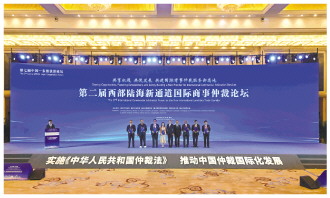
北京仲裁委员会将在香港设立分支机构
Xin Jing Bao· 2025-11-03 11:52
Core Points - The 28th Beijing-Hong Kong Economic Cooperation Symposium will be held next week in Hong Kong, marking a new phase in legal cooperation between Beijing and Hong Kong [1] - The Beijing International Commercial Arbitration Center will officially release the "Regulations on the Construction of the Beijing International Commercial Arbitration Center," which consists of 34 articles and will take effect on December 1 this year [1] - The regulations aim to establish an international commercial arbitration center with international standards, quality resources, and top-tier institutions, introducing three core innovations: establishing arbitration rules, improving temporary measures, and supporting foreign arbitration institutions to set up operations in Beijing [1] - The Beijing Arbitration Commission will establish its first overseas branch, the Beijing International Arbitration Court Hong Kong Center, signifying a key step in the internationalization of Beijing arbitration [1] Industry Developments - The new center will leverage Hong Kong's mature common law system, arbitration-friendly legal framework, and high-quality international talent to provide efficient arbitration services for cross-border commercial entities [2] - The Beijing Arbitration Commission, as the only arbitration institution established by the Beijing municipal government, has unique advantages in aligning with national strategies and serving macro policies [2] - During the event, Beijing will promote high-level exchanges and cooperation with international mediation institutions, focusing on innovative practices in alternative dispute resolution mechanisms [2] - This interaction will enhance Beijing's integration into the international dispute resolution system and elevate its status and influence as a preferred location for international commercial dispute resolution [2]
从“上海实践”到国际规则,上仲欧洲中心正式启航
Xin Hua Cai Jing· 2025-10-23 14:09
Core Viewpoint - The establishment of the Shanghai Arbitration Commission European Hub marks a significant step in the internationalization of the Shanghai Arbitration Commission, providing a new comprehensive professional service platform for global cross-border trade and investment [1][3]. Group 1: Internationalization and Service Expansion - The Shanghai Arbitration Commission (SHAC) has become a key player in international arbitration, evolving from a domestic institution to a global service provider, facilitating international commercial dispute resolution [3][4]. - The European Hub aims to enhance SHAC's service capabilities in foreign-related arbitration, supporting the Belt and Road Initiative and contributing to the development of an Asia-Pacific arbitration center [3][4]. - The Hub will offer administrative support for temporary arbitration and provide convenient overseas hearing venues for parties involved in SHAC cases, integrating various legal and commercial services [3][4]. Group 2: Legal Framework and Innovation - SHAC has developed unique procedural mechanisms by learning from international best practices, enhancing dispute resolution efficiency while reducing time and economic costs for parties involved [4]. - The integration of civil law and common law characteristics in SHAC's procedural rules aims to balance efficient fact-finding with procedural fairness, while the combination of arbitration and mediation has become a notable advantage [4]. - The establishment of the European Hub is seen as a crucial step for China to further integrate into the international commercial dispute resolution system, enhancing its voice in the construction of international arbitration rules [4][5]. Group 3: Business Environment and Challenges - As Chinese enterprises accelerate their overseas expansion, they face increasing commercial disputes, with SHAC reporting a 9.51% year-on-year increase in cases accepted, reaching 8,047, and a 7.97% increase in dispute amounts, totaling 47.71 billion yuan [7]. - The European Hub is expected to serve as a window for SHAC and Shanghai to connect with international practices, promoting legal and cultural exchanges [7][8]. - The Hub aims to enhance SHAC's global visibility and act as a facilitator for Sino-European business cooperation, positioning itself as a comprehensive service port for cross-border trade and investment [9].

截至今年八月底 全国依法设立二百八十五家仲裁委员会
Ren Min Ri Bao· 2025-09-29 22:05
Core Points - The Ministry of Justice held a press conference on the newly revised Arbitration Law, highlighting the establishment of 285 arbitration committees by August 2025, handling over 5 million arbitration cases with a total amount involved exceeding 9 trillion yuan, and involving parties from over 100 countries and regions [1] - The revised Arbitration Law, passed on September 12, 2023, will take effect on March 1, 2026, consisting of 96 articles, an increase of 16 articles from the previous version, aimed at improving international arbitration systems and enhancing the credibility of arbitration [1] - In the past five years, approximately 16,000 foreign-related arbitration cases were handled by Chinese arbitration institutions, with a total amount of about 730 billion yuan, and arbitration awards are increasingly recognized and enforced globally, positioning China as a preferred destination for international commercial arbitration [1] Industry Developments - The revised Arbitration Law explicitly supports Chinese arbitration institutions in establishing business entities abroad to conduct arbitration activities [2] - It also allows foreign arbitration institutions to set up business entities in designated areas such as free trade pilot zones and Hainan Free Trade Port, in accordance with national regulations, to carry out foreign-related arbitration activities [2]
中企不能再任由美西方宰割,中国高瞻远瞩,成立国际商事仲裁中心
Sou Hu Cai Jing· 2025-09-29 16:57
Core Viewpoint - Chinese enterprises face challenges when investing abroad, particularly in disputes with Western companies, often feeling disadvantaged in arbitration processes [2][4][9] Group 1: Establishment of the Arbitration Center - The Chinese government has initiated the establishment of an international commercial arbitration center in Beijing to create a fair mechanism for Chinese enterprises [3][4] - The center aims to reduce reliance on Western arbitration institutions, which are perceived as biased against Chinese companies [4][9] - The center is set to officially open on May 7, 2025, and will provide a neutral platform for dispute resolution based on international rules tailored to Chinese conditions [4][6] Group 2: Legislative Support and Implementation - The Beijing International Commercial Arbitration Center Construction Regulations were passed on September 26, 2025, to support the establishment of the center [6] - The regulations include provisions for temporary arbitration and allow foreign arbitration institutions to set up operations in Beijing, enhancing the arbitration environment [6][9] - The Beijing Arbitration Commission has adjusted its rules to include more foreign arbitrators, increasing the center's capacity to handle international cases [6][9] Group 3: Strategic Importance and Global Influence - The center is not only designed to serve Chinese enterprises but also aims to enhance China's global influence in dispute resolution [7][9] - As China's economic power grows, the center is positioned to play a significant role in resolving international disputes and promoting fair trade [7][10] - The establishment of the center reflects a strategic vision to actively participate in global rule-making and reduce vulnerability to Western biases in arbitration [7][10]
国际商事仲裁中心实体平台落地朝阳CBD
Xin Jing Bao· 2025-09-26 07:37
Core Points - The "Beijing International Commercial Arbitration Center Construction Regulations" was approved on September 26 and will take effect on December 1, 2025 [1] - The regulations establish an international commercial arbitration center in Beijing, which includes a circuit court for international commercial disputes [1] - The physical platform for the arbitration center was inaugurated in May this year, located in the CBD of Chaoyang District [1]