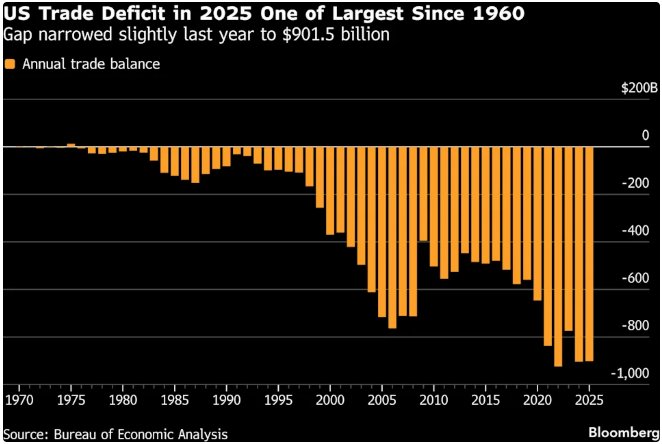
国际收支危机

Search documents
刚确定正式访问访华时间,不到24小时,美王牌被废,英媒:中方发现了美国弱点
Sou Hu Cai Jing· 2026-02-26 16:32
Core Viewpoint - The U.S. Supreme Court ruled that President Trump's tariffs imposed under the International Emergency Economic Powers Act were illegal, undermining his negotiation leverage with China ahead of his planned visit [3][4][7]. Group 1: Tariff Changes and Legal Implications - The Supreme Court's decision overturned tariffs exceeding $175 billion, including "reciprocal tariffs" and "fentanyl tariffs" against Chinese goods, stating that the power to impose tariffs lies with Congress, not the President [3][4]. - Following the ruling, Trump announced a new 10% import tariff on all goods entering the U.S., which he later proposed to increase to 15%, under the Trade Act of 1974, but this is limited to 150 days without Congressional approval [4][6]. - Trump's use of the Trade Act of 1974 marks him as the first U.S. president to impose tariffs under this law, but the new tariffs are significantly lower than previous rates, which were as high as 25% [4][10]. Group 2: International Reactions and Trade Dynamics - China's Ministry of Commerce expressed opposition to unilateral tariffs and emphasized that trade wars yield no winners, urging the U.S. to cancel such measures [6][10]. - European leaders are increasing their engagement with China, contrasting with the U.S.'s chaotic tariff policies, as seen in the visits from the UK and Germany, which focus on strengthening economic ties [6][10]. - The U.S. tariff policy's unpredictability is damaging international trade order and trust among allies, with potential refund claims from U.S. companies reaching up to $175 billion [7][11]. Group 3: Broader Economic Context - The turmoil in U.S. tariff policy reflects internal contradictions within the American political system, highlighting the checks and balances that limit presidential power [7][11]. - The upcoming midterm elections may influence tariff policies, as inflation pressures could affect voter sentiment, prompting Trump to exempt certain consumer goods from tariffs [11][12]. - The situation illustrates a shift in global economic relations, with countries like Germany and the UK opting for pragmatic cooperation with China, contrasting with U.S. protectionist measures [10][11].

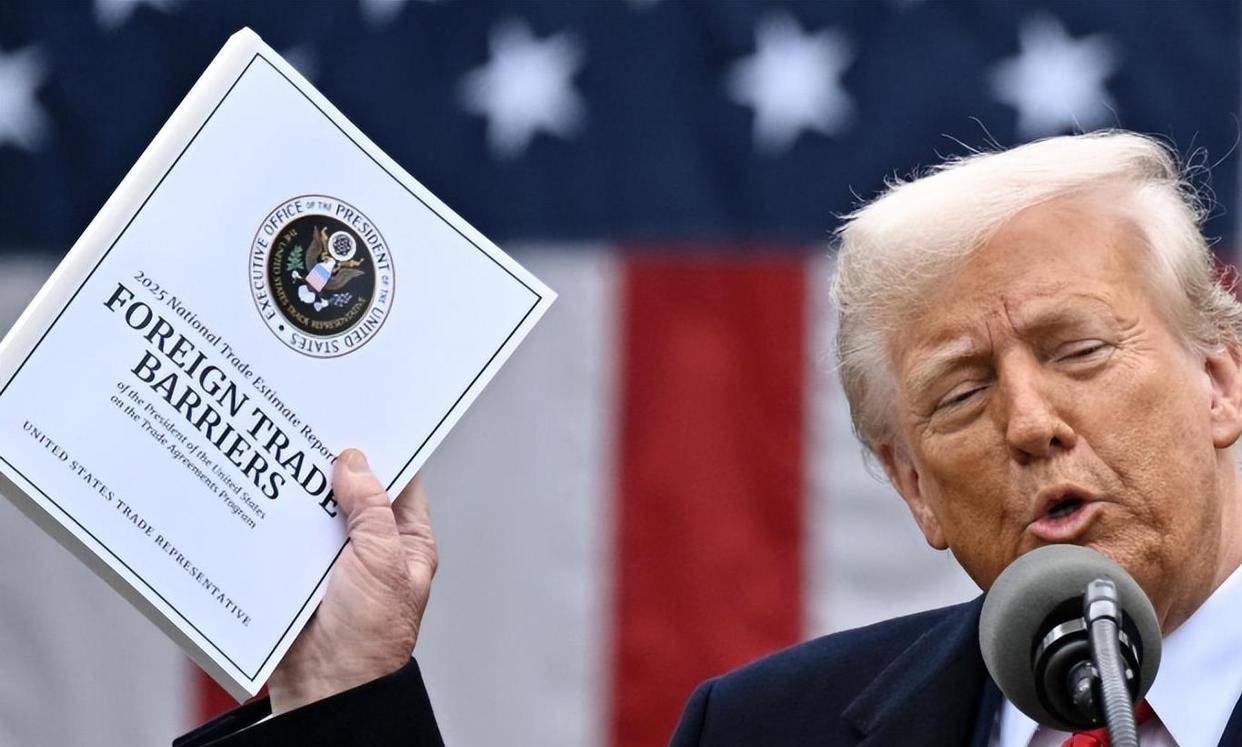
最高法院否决后特朗普火速启用15%新关税,经济学家质疑理由牵强
Jin Shi Shu Ju· 2026-02-24 09:56
Core Viewpoint - The new 15% tariff introduced by President Trump aims to address a perceived international balance of payments crisis, which many economists argue does not exist [2][3] Group 1: Tariff Implementation - The new 15% tariff began at midnight on Tuesday, replacing previously imposed tariffs of 10% to 50% under the IEEPA [2] - The legal basis for the new tariff is Section 122 of the Trade Act of 1974, which allows the President to impose tariffs for up to 150 days to address significant international payment issues [2] Group 2: Economic Perspectives - Economists, including former IMF Deputy Managing Director Gita Gopinath, dispute the existence of a balance of payments crisis, stating that the U.S. is not facing a crisis characterized by soaring international borrowing costs [3] - Gopinath attributes the recent negative balance in primary income to foreign investments in U.S. stocks and risk assets, which have outperformed foreign assets [3] - Mark Sobel, a former U.S. Treasury and IMF official, emphasizes that balance of payments crises are typically associated with fixed exchange rate regimes, while the U.S. dollar has remained stable under a floating exchange rate [3] Group 3: Legal Challenges - The Department of Justice previously argued that Section 122 is not applicable for addressing trade deficits, indicating potential legal vulnerabilities for the new tariffs [5] - Neal Katyal, representing plaintiffs challenging the IEEPA tariffs, suggests that the use of Section 122 could lead to lawsuits, as the administration's own legal team has stated it is not suitable for trade deficit concerns [6] - The Freedom and Justice Center, representing small businesses challenging the IEEPA tariffs, is monitoring the situation closely for any new legal actions related to the tariffs [7]
特朗普换“马甲”重启15%关税,硬指美国爆发“收支危机”遭经济学界反驳
智通财经网· 2026-02-24 08:52
Group 1 - The Trump administration has imposed a 15% tariff on imported goods under the guise of a "temporary substitute measure" to address a non-existent "U.S. international balance of payments crisis" following a Supreme Court ruling that invalidated previous tariffs [1][2] - The new tariff policy, effective immediately, replaces a previous range of tariffs of 10%-50% and is based on the Trade Act of 1974, which has never been used before [1][5] - Economists, including former IMF officials, argue that the claimed "balance of payments crisis" does not exist, as the U.S. current account deficit remains manageable and does not meet the legal criteria for such a crisis [2][3] Group 2 - Legal experts indicate that the use of Section 122 of the Trade Act may face challenges, as the Department of Justice previously stated that this section is not appropriate for addressing trade deficits [5][6] - The legal basis for the tariffs is questioned, with concerns that the Trump administration's interpretation of the law could lead to lawsuits [6] - The Liberty Justice Center, which has previously challenged tariffs, is monitoring the situation closely for potential legal actions regarding the new tariffs [6]
特朗普关税“B计划”遭质疑,专家:美国经济现状并不符合“122条款”
Hua Er Jie Jian Wen· 2026-02-24 06:44
Core Viewpoint - The Trump administration has initiated a "Plan B" to impose tariffs of up to 15% on global imports after the U.S. Supreme Court rejected the use of the International Emergency Economic Powers Act (IEEPA) for this purpose, raising legal and economic concerns regarding the legitimacy of this action [1][2] Group 1: Legal and Economic Context - The new tariff measure allows the president to bypass investigation procedures but is constrained by a 15% tax rate cap and a 150-day validity period, leading to anticipated legal challenges from businesses seeking refunds for tariffs already paid [2] - The Trump administration's invocation of Section 122 of the Trade Act of 1974 is based on claims of a "huge and serious" trade and international balance of payments deficit, including a net international investment position (NIIP) of negative $26 trillion [1][3] - Legal experts argue that the current economic conditions do not exhibit typical symptoms of a balance of payments crisis, such as currency collapse or capital flight, which raises questions about the applicability of Section 122 [1][4] Group 2: Historical and Regulatory Framework - Section 122 of the Trade Act of 1974 was designed to allow the president to act without waiting for federal agency investigations in response to significant balance of payments deficits or imminent currency devaluation, with a historical context dating back to the Nixon Shock [6] - The limitations of this section include a maximum tariff rate of 15% and a maximum implementation period of 150 days, requiring congressional approval for any extension, which poses challenges for the sustainability of the new tariffs [6] Group 3: Economic Implications - Economists challenge the rationale behind the tariffs, arguing that the negative NIIP is largely due to foreign holdings of U.S. assets being significantly higher than U.S. holdings of foreign assets, and that a successful tariff implementation could paradoxically worsen the NIIP [4] - The absence of evidence indicating that the U.S. cannot meet its international obligations suggests that there is no actual "crisis," as a genuine crisis would typically lead to a sell-off of U.S. assets and a significant depreciation of the dollar [4]
Are President Trump's new 15% global tariffs even legal? Former U.S. Trade Rep weighs in.
Youtube· 2026-02-23 04:13
Trade Tariffs and Economic Impact - Countries with lower tariffs under AIPA, such as Australia and the UK, may face disadvantages under section 122, while countries like Brazil and India with higher tariffs may benefit from reduced tariffs from 20% to 15% [1][2] - US manufacturers are experiencing challenges due to difficulties in sourcing inputs, contributing to a decline in manufacturing employment [2][3] - US farmers are facing retaliation on exports, and consumers are experiencing higher prices, which may be influenced by inflation as well as tariffs [3][4] Legal and Political Considerations - There is potential for legal challenges to the president's use of section 122, similar to past challenges with AIPA, and its validity may be questioned domestically and internationally [5][9] - The determination of a balance of payments crisis, which is necessary for invoking section 122, is complex and typically requires IMF involvement [6][8] - The timing of the new tariffs, set to take effect on February 24th for 150 days, coincides with the midterm election season, which may influence congressional responses [11][12] Congressional Dynamics - Congress has not significantly intervened in section 232 or section 301 tariffs, but there is a growing desire among some members to reclaim tariff authority [16][18] - The Supreme Court's decisions reflect an intent to ensure that tariff authority remains with Congress, which may lead to increased scrutiny of executive actions regarding tariffs [19]
特朗普援引“支付危机”推15%全球税,经济学家:危机不存在,法律挑战已在路上
智通财经网· 2026-02-23 03:41
Group 1 - The core argument of the article is that President Trump's new global tariffs are an attempt to address a perceived international payment crisis, despite many economists and financial markets not recognizing such a crisis exists [1][3][5] - The new tariffs, initially set at 10% and later increased to 15%, are justified under Section 122 of the Trade Act of 1974, which allows for tariffs in cases of significant international payment issues [1][2] - Treasury Secretary Scott Bessenet described the new tariffs as temporary, intended to ensure continued revenue flow to the Treasury, and suggested they would be replaced by other authorized tariffs [2][5] Group 2 - Trump's administration views the U.S. trade deficit and capital flows as evidence of a "large and serious" international payment deficit, with the net international investment position currently at a $26 trillion deficit [2][6] - Economists argue that there is no evidence of the U.S. being unable to meet its international obligations, and that the financial markets would react negatively if such a crisis were imminent [3][5] - The invocation of Section 122 has been criticized as based on outdated economic views, with some experts suggesting that the focus should be on fiscal outlook rather than tariffs [5][6] Group 3 - The potential legal challenges to the new tariffs may arise, as there are questions about whether the conditions for invoking Section 122 are met, especially given the abandonment of the gold standard [7][8] - There is speculation that the tariffs could lead to disputes at the World Trade Organization, which may require intervention from the International Monetary Fund to assess the legitimacy of the crisis [6][8] - The likelihood of the tariffs being challenged in court is high, but the resolution of such legal matters may not occur within the 150-day timeframe of the tariffs [8]