垂直智能体

Search documents
刘曦卉:离火AI垂直智能体赋能文博文旅IP品牌体系
Xin Lang Cai Jing· 2025-12-31 13:19
Core Insights - The 2025 Global Cultural IP Industry Development Conference will be held in Shanghai on December 26-27, 2025, focusing on the theme "IP Without Boundaries: Intelligent Creation of the Future - Global Exploration of Cultural IP and Technology Integration" [3][7] - Liu Xihui, Director of the Innovation Design Institute at Hong Kong Polytechnic University, emphasized the transition of cultural and tourism IP brand system construction from "content display" to "intelligent operation" [3][7] - The integration of vertical intelligent systems can enhance efficiency and standardization in resource organization, asset management, content production, scene engagement, and collaborative branding, facilitating a more systematic entry of cultural resources into public life [3][8] Summary by Sections Intelligent Systems - The key to empowering intelligent systems lies in being "vertical, implementable, and reusable," which allows for the sedimentation of cultural assets and the output of brand capabilities and collaboration mechanisms [8] - The proposed system aims to address not just single-point efficiency but the entire chain from IP to commercial transformation, assisting in content mining, narrative construction, exhibition design, and immersive experiences through AR/VR and digital media [9][10] Cross-Disciplinary Collaboration - To ensure the system's successful implementation, a cross-disciplinary team and toolchain are necessary, covering areas such as animation, cultural creation, digital media, exhibition design, and AR/VR [10] - The system should include matching and evaluation mechanisms to determine suitable transformation paths for different IPs, helping organizations quickly assess "what to do," "how to do it," and "to what extent" [10] Platform Development - The goal is to create not just a tool but a platform and system with capabilities for matching, evaluation, generation, collaboration, and operation, making cultural and tourism IP innovation and commercial transformation more efficient, reliable, and sustainable [10]

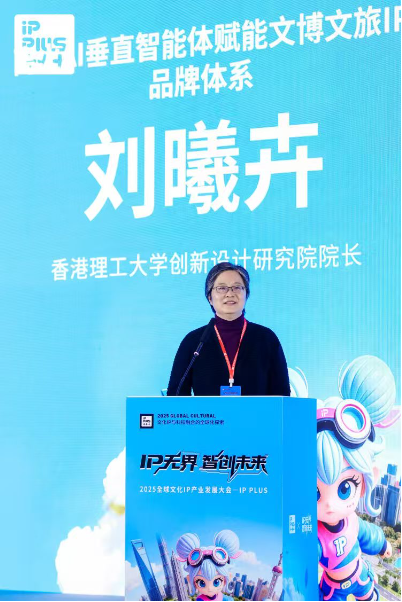
刘曦卉:离火AI垂直智能体赋能文博文旅,打造可复制的IP品牌体系
Xin Lang Cai Jing· 2025-12-30 10:12
Core Insights - The 2025 Global Cultural IP Industry Development Conference will be held in Shanghai on December 26-27, 2025, focusing on the theme "IP Without Boundaries: Intelligent Creation of the Future - Global Exploration of Cultural IP and Technology Integration" [1][6] - Liu Xihui, a representative from Lihuo AI, emphasized that the brand system construction of cultural and tourism IP is transitioning from "content display" to "intelligent operation" [1][6] - The key to empowering intelligent systems lies in being "vertical, implementable, and reusable," which helps cultural resources enter public life in a more systematic way [1][6] Group 1: Intelligent Systems in Cultural IP - The proposed vertical intelligent system aims to address real-world challenges in the cultural and tourism sector, such as mismatched professional processes and unstructured data [4][12] - The system is designed to create a closed-loop from IP to commercial transformation, enhancing content discovery, immersive experiences, and sustainable product development [4][12] Group 2: Implementation Strategies - A cross-disciplinary team is essential for the system's implementation, covering areas like digital media, AR/VR, and cultural content [5][13] - The system will include matching and evaluation mechanisms to help organizations quickly determine the best transformation paths for different IPs [5][13] - The goal is to create a platform that enhances the efficiency, reliability, and sustainability of cultural and tourism IP innovation and commercialization [5][13]
深度智联“地产AI-Ready”战略落地:筑牢行业最“深”护城河
Huan Qiu Wang Zi Xun· 2025-12-15 14:46
Core Insights - The focus of artificial intelligence is shifting from general models to "vertical intelligent agents" that can deeply engage with specific industries, marking a new competitive landscape in AI applications, particularly in the Chinese real estate sector [1] - Deep Intelligence has established a clear development path with its "AI + Real Estate" strategy, aiming to enhance quality and efficiency in the real estate industry [1][2] Group 1: Strategic Framework - Deep Intelligence introduced the "Real Estate AI-Ready" strategy, which is built on "one exclusive space, four core capabilities, and three application scenarios," presenting a comprehensive system-level solution [2][3] - The intelligent architecture supporting this strategy includes a "Real Estate Brain" that allows all AI applications to share and evolve, ensuring consistency and professionalism from strategy to execution [3] Group 2: Core Capabilities - The four core capabilities include a database, knowledge base, expert repository, and engineering capability, forming a dedicated AI space for real estate [4] - The data moat will upgrade a vast, multidimensional dataset accumulated over 20 years into a structured database that AI models can read, providing reliable data for intelligent decision-making [4] - The knowledge moat will transform unstructured knowledge into traceable, verifiable, and inferable "industry secrets," ensuring AI outputs reflect professional language [4] - The industry moat will incorporate expert "thinking models" into AI, enabling it to understand business at an expert level [4] - The technology moat will integrate cutting-edge AI capabilities, such as the Agentic architecture, into specific products [4] Group 3: Product Offerings - Deep Intelligence has launched eight products covering three major application scenarios in real estate, including the CRIC2025 platform for decision-making and the "Digital Employee" for talent structure optimization [5][4] - These products aim to transform traditional data querying and manual analysis into automated workflows that deliver deep analytical reports [5] Group 4: Industry Trends - The shift towards vertical industry models is seen as a precursor to a new wave of AI application, with AI becoming integral to various sectors [9] - Companies are realizing that the speed of AI's impact on business is determined by their own transformation pace rather than just technological advancements [9][10] - Data quality is identified as a significant barrier to AI implementation in the real estate sector, affecting the entire industry [11] Group 5: Future Outlook - Deep Intelligence aims to be a reliable "co-builder" and "enabler" in the industry, continuously strengthening its professional moat and iterating on application products [11] - The company plans to open its core capabilities and interfaces to allow broader access to AI tools, fostering more applications in real estate [11] - A prediction is made that 2026 will be a breakout year for vertical industry AI applications in China [11]

企业数字化深水区:财税垂直AI智能体的价值重构之路
Zhong Guo Chan Ye Jing Ji Xin Xi Wang· 2025-06-03 06:47
Core Insights - The integration of general AI models into various industries is establishing a foundational technology for digital applications, but challenges in "scene adaptability" are emerging in specialized fields like financial and tax management [1] - The emergence of vertical AI models signifies a shift from "general cognition" to "professional understanding," with a focus on enhancing the execution of business processes [1] - Over 70% of enterprises are prioritizing the development of vertical intelligent agents, indicating a consensus on the need for in-depth scene-specific technology [1] Industry Dynamics - The financial and tax sectors are seen as a testing ground for AI's vertical capabilities due to their complex regulatory and data environments [2] - A dual-track strategy combining "general capability foundation + vertical fine-tuning" is becoming mainstream, enhancing AI's execution precision in specialized scenarios [2] - The approach taken by companies like Weifengqi, which focuses on integrating policy, business, and data, exemplifies the practical application of vertical intelligent agents in the financial sector [2][3] Technological Innovations - Weifengqi's financial and tax vertical intelligent agent utilizes a self-developed vertical model that combines general capabilities with scene-specific fine-tuning, improving adaptability to complex business scenarios [3] - The shift in technology competition from "computational power" to "scene cultivation" is redefining the boundaries of professional services in the financial and tax sectors [3][4] - The transformation towards AI-driven services is expected to lead to three major trends: intelligent and precise policy analysis, proactive risk prevention, and scenario-based decision support [3] Future Outlook - The rise of financial and tax vertical intelligent agents marks a new phase in industry digitalization, focusing on "value creation" [4] - Companies like Weifengqi are paving a differentiated path for professional services through the integration of general technology and vertical scene innovation [4] - As more similar practices emerge, vertical intelligent agents may redefine industry competition rules, positioning AI as a core driver of professional service upgrades [4]
GEO,是门好生意吗?
Tai Mei Ti A P P· 2025-05-28 02:31
Core Insights - The year 2025 is widely recognized as the year of intelligent agents, with companies increasingly betting on this technology for survival [2] - Youyi Technology, established in 2007 and focused on MarTech, has begun exploring intelligent agent business since last year, raising questions about opportunities for a marketing-centric company in this domain [2] Group 1: Market Dynamics - AI search is expected to significantly impact internet operations, particularly for Gen Z users who are native to AI, making AI search a crucial aspect of brand communication [2] - As AI search becomes more prevalent, Generative Engine Optimization (GEO) will become a core focus for brand communication, replacing traditional SEO [2] Group 2: GEO Effectiveness - GEO's effectiveness can be assessed by predicting market demand and verifying whether communication content is indexed by large models, which is a key selling point of Youyi Technology's new GEO intelligent agent [4] - Youyi Technology has developed a multi-layered rule engine to simulate the indexing processes of mainstream large models, allowing for dynamic adjustments and validation strategies [4][5] Group 3: Market Potential - The AI search market is projected to reach $360 billion by 2029, with GEO expected to capture a portion of this market as a service provider [6][7] - The technology barrier for GEO is higher than traditional SEO, as the indexing and citation rules of large models are opaque, requiring GEO service providers to validate content through simulation testing [5] Group 4: Algorithm Fairness - The challenge of algorithm fairness arises as GEO aims to optimize algorithm results for brand enterprises, with concerns about the commercial viability of Youyi Technology's GEO intelligent agent still in early stages [7][8] - Some AI search platforms are proactively regulating advertising content to ensure user respect and content safety, indicating a shift in how advertising is integrated into AI-generated content [8] Group 5: Future Outlook - The future of GEO intelligent agents as a marketing vertical is still uncertain and will depend on collaboration among users, brands, and AI search platforms [9]