CRIC2025

Search documents
CRIC2025:重塑地产决策工作流,从“系统查数”到“AI交付”
克而瑞地产研究· 2025-12-16 09:52
Core Viewpoint - The article emphasizes that 2025 is seen as the year of AI implementation in real estate, with the launch of CRIC2025 marking a fundamental transformation in decision-making support models within the industry. This shift represents not just a technological upgrade but a comprehensive restructuring of work processes and execution methods [1]. Group 1: Full Process AI Transformation - CRIC2025 achieves significant cost reduction and efficiency improvement through full-process AI integration, utilizing a data architecture that intelligently reorganizes two decades of industry data from Ke Rui. This system includes traditional data such as transaction data and policy documents, as well as multidimensional information like population movement and urban planning, forming a data ecosystem that supports complex analysis and significantly reduces labor costs [2]. - The system constructs an intelligent analysis framework covering macro, meso, and micro dimensions, allowing for city development cycle assessments, regional value analyses, and project risk warnings. This multi-level analysis capability simplifies traditional workflows that required multiple analysts, enhancing analysis efficiency [3]. Group 2: Cost and Efficiency Benefits - The application of CRIC2025 has demonstrated multidimensional cost and efficiency benefits. For instance, a leading development company reduced its market analysis team from five to two members, saving over 1.5 million yuan annually while tripling analysis efficiency [5]. - The system transforms project feasibility report preparation time from weeks to just 2-3 hours, and market trend analysis can now be generated in real-time, significantly improving decision-making response times [5]. - The standardization of processes ensures the professionalism and consistency of output, with report accuracy exceeding 95%, thereby reducing decision-making risks associated with data errors [5]. Group 3: AI Workflow and Collaboration Ecosystem - CRIC2025 redefines the logic of data querying, providing answers to both "what" and "why" questions through an AI workflow model that automates complex tasks, requiring only 10-20% of human time for verification and decision-making [7]. - The system evolves from a smart tool to a collaborative ecosystem, redefining the relationships between people, data, and intelligent systems in the real estate industry. This transition allows professionals to focus more on strategic thinking and business innovation, fundamentally enhancing decision quality and response speed [8]. Group 4: Future Directions - The system aims to deepen its intelligent delivery capabilities by enhancing its understanding of complex business scenarios, improving multimodal output formats, and building collaborative capabilities through open interfaces for deeper integration with existing workflows [8]. - CRIC2025 is positioned as a new generation intelligent work platform that promotes human-machine collaboration and drives the industry towards a more efficient, transparent, and professional development phase [9].


深度智联“地产AI-Ready”战略落地:筑牢行业最“深”护城河
Huan Qiu Wang Zi Xun· 2025-12-15 14:46
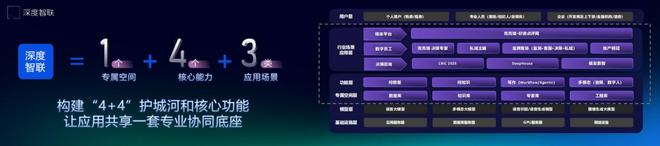
Core Insights - The focus of artificial intelligence is shifting from general models to "vertical intelligent agents" that can deeply engage with specific industries, marking a new competitive landscape in AI applications, particularly in the Chinese real estate sector [1] - Deep Intelligence has established a clear development path with its "AI + Real Estate" strategy, aiming to enhance quality and efficiency in the real estate industry [1][2] Group 1: Strategic Framework - Deep Intelligence introduced the "Real Estate AI-Ready" strategy, which is built on "one exclusive space, four core capabilities, and three application scenarios," presenting a comprehensive system-level solution [2][3] - The intelligent architecture supporting this strategy includes a "Real Estate Brain" that allows all AI applications to share and evolve, ensuring consistency and professionalism from strategy to execution [3] Group 2: Core Capabilities - The four core capabilities include a database, knowledge base, expert repository, and engineering capability, forming a dedicated AI space for real estate [4] - The data moat will upgrade a vast, multidimensional dataset accumulated over 20 years into a structured database that AI models can read, providing reliable data for intelligent decision-making [4] - The knowledge moat will transform unstructured knowledge into traceable, verifiable, and inferable "industry secrets," ensuring AI outputs reflect professional language [4] - The industry moat will incorporate expert "thinking models" into AI, enabling it to understand business at an expert level [4] - The technology moat will integrate cutting-edge AI capabilities, such as the Agentic architecture, into specific products [4] Group 3: Product Offerings - Deep Intelligence has launched eight products covering three major application scenarios in real estate, including the CRIC2025 platform for decision-making and the "Digital Employee" for talent structure optimization [5][4] - These products aim to transform traditional data querying and manual analysis into automated workflows that deliver deep analytical reports [5] Group 4: Industry Trends - The shift towards vertical industry models is seen as a precursor to a new wave of AI application, with AI becoming integral to various sectors [9] - Companies are realizing that the speed of AI's impact on business is determined by their own transformation pace rather than just technological advancements [9][10] - Data quality is identified as a significant barrier to AI implementation in the real estate sector, affecting the entire industry [11] Group 5: Future Outlook - Deep Intelligence aims to be a reliable "co-builder" and "enabler" in the industry, continuously strengthening its professional moat and iterating on application products [11] - The company plans to open its core capabilities and interfaces to allow broader access to AI tools, fostering more applications in real estate [11] - A prediction is made that 2026 will be a breakout year for vertical industry AI applications in China [11]
房地产开发数据同比降幅超10%,地产AI落地能给行业带来解法吗?
Guan Cha Zhe Wang· 2025-12-15 09:41
Core Insights - The real estate industry is facing significant challenges, with a need for new development models and the integration of AI to enhance efficiency and quality [1] - National statistics indicate a 15.9% year-on-year decline in real estate development investment, totaling 7.8591 trillion yuan, with residential investment down by 15% [1] - The central economic work conference emphasizes the importance of stabilizing the real estate market and promoting the construction of quality housing [1] Group 1: AI Integration in Real Estate - Real estate companies are exploring AI applications to address industry challenges, with a focus on five key trends: technology selection, marketing applications, privatization frameworks, deep use of intelligent agents, and improving data quality [2] - Deep Intelligence's "Real Estate AI-Ready" strategy aims to assist real estate practitioners by providing a systematic solution that includes a dedicated AI space built from extensive data accumulated over 20 years [2] - The AI space will feature a structured database for intelligent decision-making, transforming unstructured knowledge into a verifiable industry language for quick understanding by practitioners [2] Group 2: AI Product Offerings - Deep Intelligence has launched eight products tailored to three major application scenarios in the real estate sector, including CRIC2025 for decision-making and the "Kerry Digital Employee" for market analysis and strategic assessments [3][4] - The "Kerry Digital Employee" automates various tasks such as market monitoring, customer service, and marketing decision-making, enhancing operational efficiency for real estate marketing teams [4] - The "Good House Review Network" redefines traditional property evaluation and recommendation processes, providing a one-stop intelligent service for homebuyers through natural language interactions [4] Group 3: Future Outlook - The chairman of E-House Holdings predicts that 2026 will be a breakthrough year for vertical AI applications in China, with Deep Intelligence planning to open its core capabilities and data interfaces to users [4]

深度智联地产AI就绪,房地产智能化进入“交付时刻”
3 6 Ke· 2025-12-13 10:58
Core Insights - The real estate industry is in the early stages of AI transformation, with a need for more companies to implement AI in core areas [2] - Deloitte's research indicates that while some companies report unmet expectations from AI investments, none have ceased their investments, highlighting a growing emphasis on AI [1] Group 1: AI Trends and Characteristics - Companies recognize that the speed of AI's impact on business is not aligned with the rapid development of AI technologies [1] - The focus is shifting towards integrating AI into core business functions rather than just easy-to-implement areas [1] - There is a general lack of awareness regarding risk management associated with AI applications, which is crucial for internal and external business operations [1] - Companies are experiencing a transformation in roles, with management attitudes towards AI significantly influencing development speed and intensity [1] Group 2: Industry-Specific AI Developments - Deep Intelligence has launched the "Real Estate AI-Ready" strategy, marking a shift from fragmented tool empowerment to a systematic deployment of AI across the industry [3] - The strategy includes a comprehensive product matrix covering three business scenarios, aiming to facilitate a data-driven transformation in real estate [3] - The company emphasizes the importance of data quality as a major challenge for AI implementation in the real estate sector [5] Group 3: Product Innovations and Applications - Deep Intelligence has introduced eight products that cover three major application scenarios in real estate, aiming to redefine decision-making processes [8] - The "CRIC2025" platform and other AI-driven tools are designed to automate complex tasks traditionally performed by human analysts [8] - The introduction of digital employees signifies a new organizational model where human and AI collaboration enhances efficiency in real estate operations [8] Group 4: Market Positioning and Competitive Advantage - Deep Intelligence's products demonstrate significant advantages in knowledge depth, data breadth, and application capabilities compared to general and vertical AI platforms [7] - The company is building a "data moat" by upgrading its extensive data resources into a structured database that supports AI decision-making [9] - The integration of expert knowledge into AI models allows for the scalable transfer of professional insights, enhancing AI's business understanding [9]
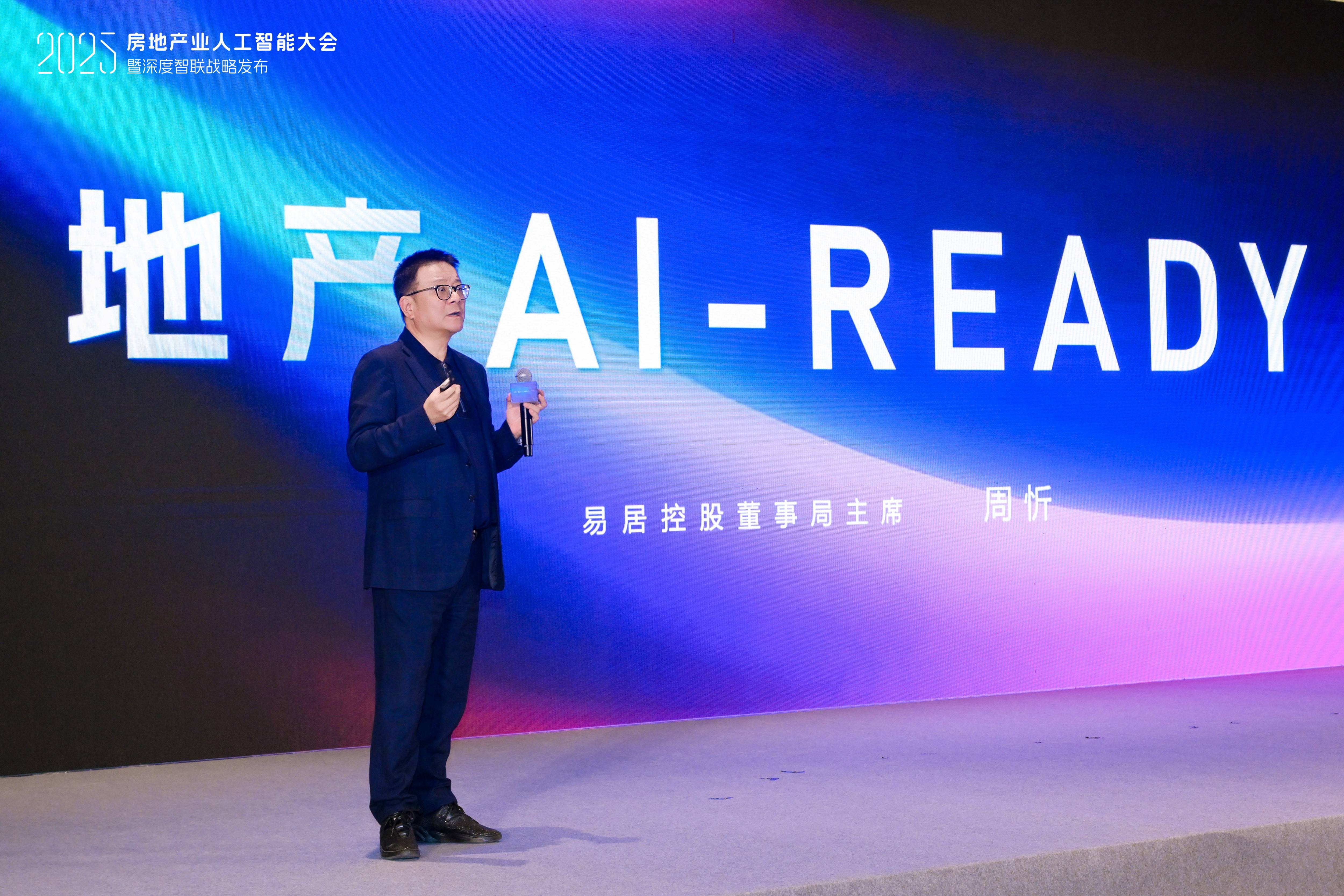
深度智联:地产AI-READY
克而瑞地产研究· 2025-11-24 09:02
Core Viewpoint - The real estate industry is undergoing a significant transformation towards intelligence, driven by the need for systematic solutions to address challenges such as fragmented data and complex decision-making processes [2]. Group 1: Industry Transformation - Artificial intelligence is reshaping various sectors, including real estate, where many players are still constrained by outdated practices [2]. - The transformation is not merely a technological upgrade but a comprehensive restructuring of business processes [2]. - The company aims to integrate industry experience with cutting-edge technology to empower real estate professionals more efficiently [2]. Group 2: AI-Ready Framework - The company has developed an "AI-Ready" positioning, indicating readiness in data, knowledge, technology, business, and organization [3]. - A suite of applications has been launched, including CRIC2025 for research decision-making, DeepHouse for global investment advisory, and AI-driven platforms for the aging population sector [3]. - The digital workforce, including roles like "decision experts" and "real estate sales champions," is designed to enhance productivity across various scenarios [3]. Group 3: Collaborative Approach - The company emphasizes the importance of collaboration in driving industry progress and aims to be a partner in the transformation journey of the real estate sector [4]. - The digital ecosystem and intelligent foundation built by the company are intended to benefit the entire industry, not just its own growth [4]. Group 4: Future Outlook - The current phase marks the beginning of a new era characterized by human-machine collaboration and AI readiness in the real estate sector [5]. - The company expresses readiness to embark on this journey and looks forward to co-creating a smart future for the real estate industry [6].

CRIC2025重磅上线:携手深度智联,AI重构不动产决策大脑
克而瑞地产研究· 2025-11-03 09:11
Core Insights - The launch of CRIC2025 marks a significant upgrade in the real estate decision-making consulting system, integrating AI technology to transform the industry into a new phase of intelligent decision-making [2][11] - CRIC2025 represents a critical step from information and digitalization to AI intelligence, fundamentally reconstructing the workflow in the real estate sector [3][11] AI Modules Overview - The system features three core modules: "AI Data Intelligence," "AI Reports," and "AI Tasks," which collectively create an AI-exclusive space covering the entire workflow from data to knowledge to reports and tasks [3][10] - "AI Data Intelligence" allows users to interact with the system using natural language, generating multi-dimensional, interactive data visualizations and reports without needing complex query syntax [4][10] - "AI Reports" revolutionizes the report writing process by automating data extraction, analysis, and report generation, reducing production time from weeks to minutes and enhancing efficiency significantly [6][10] - "AI Tasks" will enable users to input real estate task requirements directly, allowing the system to autonomously plan and execute multi-step tasks, enhancing user experience and customization [9][10] Professional Foundation and Technological Integration - CRIC2025's AI capabilities are built on a robust foundation of 20 years of industry data and 30 years of market cycle insights, ensuring reliable data-driven decision-making [10][11] - The integration of deep learning technology from Deep Intelligence enhances the system's analytical and reasoning capabilities, providing a solid basis for every interaction [10][11] Industry Transformation - The introduction of CRIC2025 is a milestone in the evolution of the real estate industry, shifting the focus from experience-driven to AI-driven decision-making [11] - By automating data processing and report writing, the system allows industry professionals to concentrate on strategic thinking and innovation, fostering a collaborative human-machine working model [11]