
增产不增收

Search documents
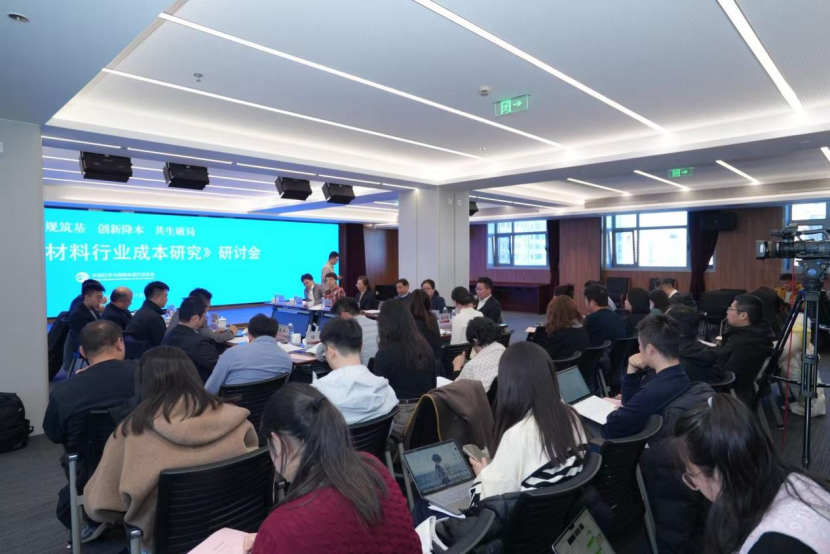
磷酸铁锂“增产不增收”困局如何破?这场研讨会直指成本核心
Zheng Quan Shi Bao Wang· 2025-11-19 07:26
Core Insights - Lithium iron phosphate (LFP) has become a mainstream technology for power and energy storage batteries due to its high safety, long cycle life, and cost advantages. However, since 2022, the LFP industry has entered a "production increase without revenue increase" cycle, leading to intensified competition within the industry [1][3]. Industry Overview - The lithium battery industry in China is experiencing strong growth, with lithium-ion battery exports reaching $55.38 billion from January to September 2025, a year-on-year increase of 26.75%. The penetration rate of domestic new energy vehicles has surpassed 45%, and energy storage installations have surged by 60% year-on-year, with the entire industry expected to exceed a market value of 3 trillion yuan [3]. - LFP materials account for nearly 74% of the cathode material shipments, providing a solid foundation for the electrification of transportation and the green transition of energy [3]. Market Challenges - Structural contradictions in the rapid development of the LFP industry are becoming increasingly prominent. From the end of 2022 to August 2025, the price of LFP materials plummeted from 173,000 yuan/ton to 34,000 yuan/ton, a decline of 80.2%. The industry has faced continuous losses for over 36 months, with an average asset-liability ratio of 67.81% among six listed companies [3]. - The soaring prices of upstream raw materials have not effectively transmitted to LFP companies. Downstream cell manufacturers often exert strong pressure on LFP companies to meet order demands, leading many firms to produce at a loss [3]. Competitive Landscape - The influx of numerous new entrants into the LFP industry is disrupting the existing market structure. Some new companies, lacking core technologies, can only produce relatively low-end products, further intensifying competition and leading to ongoing price wars [4]. Proposed Solutions - The industry association has proposed three collaborative action initiatives to address these challenges: 1. Rebuild market pricing logic using a cost index as a measurement tool, creating a comprehensive cost accounting system covering all aspects of the supply chain to provide transparent value references and curb malicious competition [4]. 2. Promote innovation and upgrades as a breakthrough, encouraging the industry to shift from scale competition to quality competition [4]. 3. Focus on supply-demand balance by establishing a capacity warning mechanism and fostering long-term strategic cooperation between material companies and downstream leaders to guide orderly capacity release [4]. Cost Structure Analysis - The cost structure of LFP materials shows that the main material accounts for the highest proportion, with material costs comprising 35%-40%, energy consumption and direct costs each around 19%, and other expenses at 16%. Auxiliary material costs are only 5%-6%. This cost index provides transparent value references for companies and precise data support for government regulation, enhancing market transparency and aiding decision-making for upstream and downstream enterprises [5][7].

内河航运业务持续承压 凤凰航运2024年亏损8270万元
Jing Ji Guan Cha Bao· 2025-04-30 00:34
Core Viewpoint - Phoenix Shipping reported a significant increase in cargo volume and turnover for 2024, but faced substantial losses due to declining profit margins and increased competition in the market [1][2] Financial Performance - In 2024, the company achieved a cargo volume of 32.26 million tons, an increase of 2.01 million tons or 6.64% year-on-year [1] - The cargo turnover reached 46.15 billion ton-kilometers, up by 4.34 billion ton-kilometers, reflecting a growth of 10.37% compared to the previous year [1] - The net profit attributable to shareholders was -82.7 million yuan, indicating an expanded loss [1] Business Operations - Phoenix Shipping's main operations include dry bulk shipping and port logistics services, with a focus on self-operated, time-chartered, and voyage-chartered shipping models [1] - The company has a self-owned capacity of nearly 400,000 tons, which is significantly lower compared to leading shipping companies [1] Market Challenges - The company has experienced a decline in gross profit margins due to insufficient market demand, intensified industry competition, and provisions for asset impairment [1][2] - The main business revenue for 2024 was 799 million yuan, with an overall gross margin turning negative for the first time, decreasing by 3.41% year-on-year [2] - Coastal transportation faced severe challenges, with gross margins dropping to -7.43%, a reduction of 8.49% year-on-year, significantly impacting overall performance [2] Strategic Initiatives - In response to the declining margins, the company has initiated a project to convert domestic vessels for international operations, aiming to improve asset structure and profitability [2] - A new foreign trade vessel was added to the fleet, which helped the ocean transportation segment achieve a gross margin of 4.71%, indicating a relatively stable performance [2]

营收增五成、净利六连亏:至正股份增产不增收,深陷“越卖越亏”怪圈
Shen Zhen Shang Bao· 2025-04-16 01:58
Core Viewpoint - Despite a significant revenue increase of 52.27% year-on-year to 365 million yuan in 2024, the company continues to face net losses, marking its sixth consecutive year of losses since 2019 [1][2] Revenue and Profitability - The revenue growth is primarily driven by double-digit increases in the cable polymer materials and semiconductor equipment segments, with the cable polymer materials contributing over 60% of total revenue [2] - The company reported a net loss attributable to shareholders of 30.53 million yuan, which is an improvement from a loss of 44.42 million yuan in 2023 [1][2] Cost Structure and Financial Health - The company is experiencing rising sales and management expenses due to increased market investments to maintain market share, alongside a significant rise in financial expenses due to expanded financing [3] - The traditional polymer materials business is facing low gross margins, while the semiconductor equipment business has not yet achieved sufficient scale to offset the profit gap from traditional operations [3] Market Position and Product Development - The company is struggling with a product structure that remains predominantly mid-to-low-end, limiting its penetration in high-end applications such as new energy and photovoltaics [3][4] - The company has emphasized its core product, environmentally friendly low-smoke halogen-free polyethylene cable polymer materials, which align with national industrial policies and are recognized by major cable manufacturers [3] Strategic Adjustments - In response to performance pressures, the company is working to reduce inefficient production capacity and shift resources towards high value-added products [4] - The company needs to find a new balance between enhancing product technology and controlling operational costs to break the cycle of increasing losses [4] Regulatory Issues - The company faced regulatory penalties in February for a past violation involving a guarantee of 16.70 million yuan related to a personal loan taken by a former controlling shareholder [5] - The company has been involved in frequent asset restructuring announcements, including a significant transaction to acquire 99.97% of Advanced Packaging Materials International Limited [6]
