增量破局

Search documents
白酒周期没有“第三条道路”:存量爆改,还是增量破局?丨老邵酒业评论
Sou Hu Cai Jing· 2026-02-14 22:38
Core Insights - The white liquor industry is entering a new adjustment period, with traditional business rules remaining unchanged [2][4] - The focus is on "explosive transformation" of existing business models to create new consumption cycles and commercial opportunities [5][6] Group 1: Stock Innovation - Stock innovation involves selecting the right pricing strategy or exploring higher price segments to attract new consumer groups and enhance distribution networks [2][4] - Traditional enterprises have historically succeeded in this area due to prolonged consumer upgrade cycles [2][4] Group 2: Incremental Breakthrough - Incremental breakthroughs are driven by the expansion of new categories and trends, which lead to consumption changes and the initiation of new cycles [7][8] - The emergence of new consumption patterns, such as sauce-flavored and clear-flavored liquors, reflects the evolution of industry and economic cycles [10][12] Group 3: Market Dynamics - The current market structure shows a "strong leaders, scattered middle, and weak bottom" scenario, indicating a need for clearer business and marketing models among non-leading brands [14] - There is significant potential for revenue generation for businesses that can match resources effectively in this competitive landscape [14] Group 4: Future Trends - The future of liquor consumption is expected to be more youthful and popularized, with low-alcohol and new beverage trends becoming increasingly prominent [15] - The industry provides a quality platform, but success will not come easily, contrasting with previous "windfall" profits [15][16]

黑马金茂,又杀回来了!
3 6 Ke· 2025-05-23 02:34
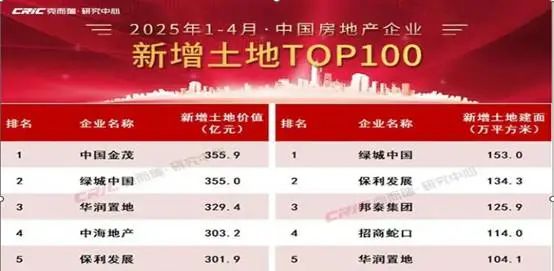
Core Viewpoint - China Jinmao is transitioning from a loss-making state to a proactive land acquisition strategy, aiming to leverage new land to improve cash flow and profitability amidst a challenging real estate market [1][5][30]. Group 1: Company Strategy - The new chairman, Tao Tianhai, has initiated comprehensive reforms in organization, investment, product, and operations, summarized as the "three axes" of Jinmao's turnaround: organizational streamlining, aggressive land acquisition, and product optimization [2][5]. - Jinmao's land acquisition strategy has seen it become the top acquirer in the industry, with a reported land acquisition value of 356 billion yuan from January to April 2025, surpassing major competitors [3][4][20]. - The company aims to create a positive feedback loop where increased land acquisition leads to new cash flow and profits, which in turn supports further land purchases [2][5]. Group 2: Financial Performance - In 2023, Jinmao reported a significant loss of 6.9 billion yuan, but turned around to achieve a profit of 1.07 billion yuan in 2024, indicating a successful recovery [5][8]. - The company’s sales figures have shown a downward trend over the past four years, dropping from 235.6 billion yuan in 2021 to 98.3 billion yuan in 2024, highlighting the challenges faced [8][9]. - Jinmao's land acquisition intensity has been notably high, with a ratio of 1.4 in early 2025, indicating a strong commitment to expanding its land bank despite previous losses [4][5]. Group 3: Market Context - The real estate market is currently in a downturn, but Jinmao is focusing on core first- and second-tier cities where demand remains relatively strong, providing opportunities for growth [21][22]. - The company is strategically shifting away from lower-tier cities, which have higher inventory and lower sales rates, to focus on more profitable markets [23][24]. - Jinmao's approach to land acquisition is supported by recent policy changes that have lifted price restrictions, allowing the company to leverage its high-end product capabilities [22][30].