
外汇危机

Search documents
触发“创伤记忆”,韩国走向“第三次外汇危机”?
Huan Qiu Wang· 2025-12-30 00:25
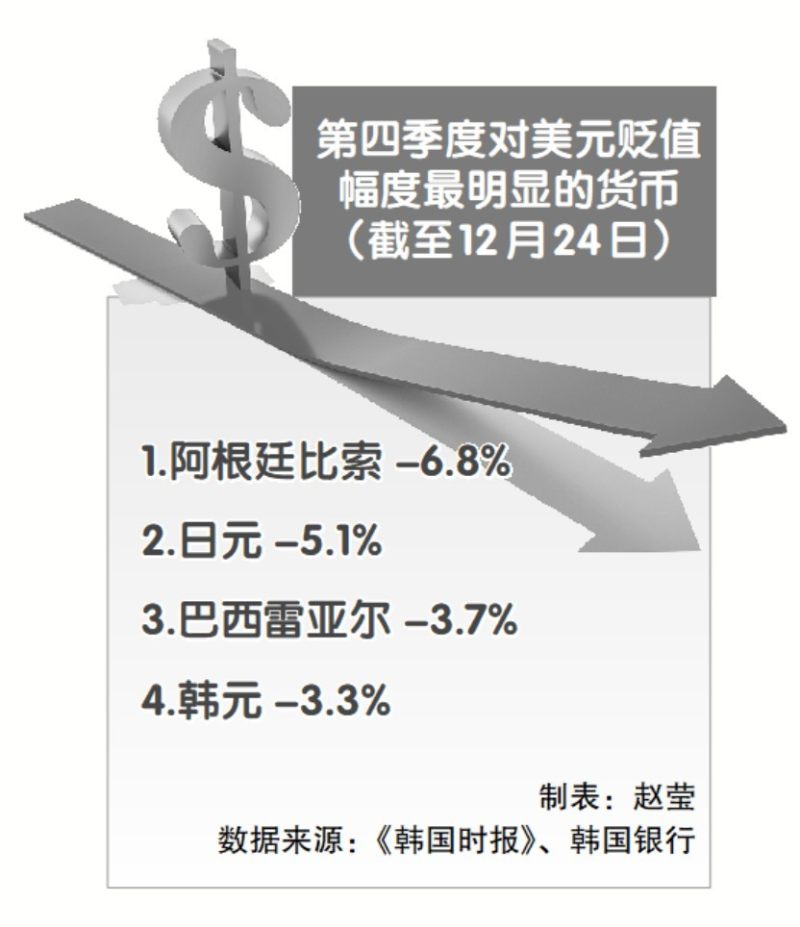
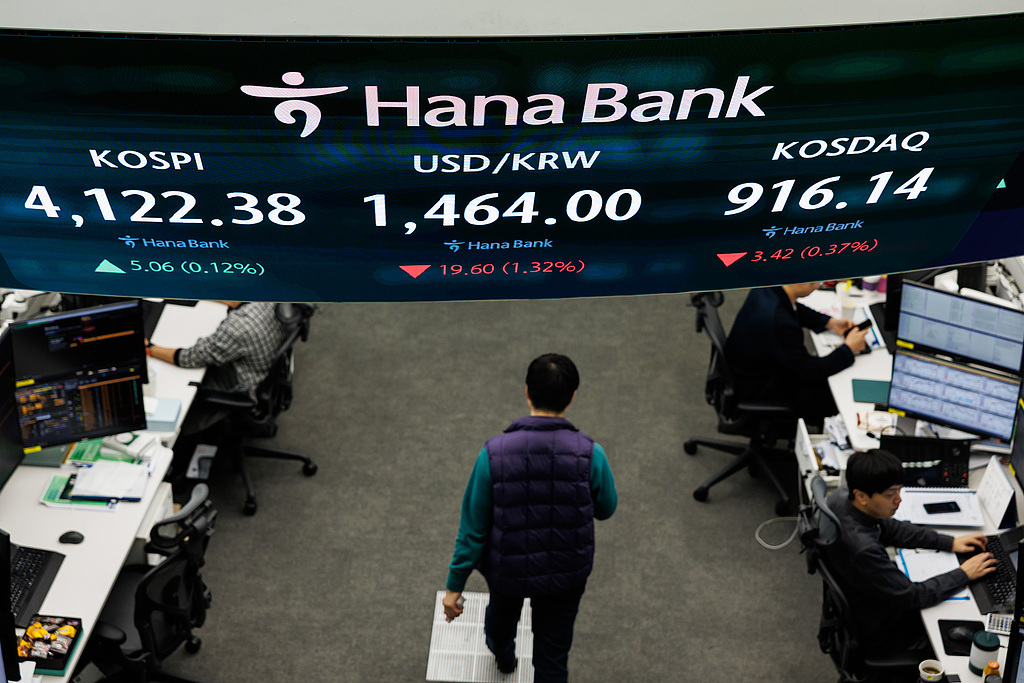
Core Viewpoint - There is a growing sense of "crisis" in South Korea as the Korean won continues to weaken against the US dollar, approaching the critical psychological level of 1500 won per dollar, a level not seen since the 1997 Asian financial crisis and the 2008 global financial crisis. This situation has led to concerns about a potential "third foreign exchange crisis" [1]. Group 1: Currency Fluctuations and Government Response - The Korean won started 2025 at just over 1400 won per dollar, fluctuating between 1350 and 1485 won throughout the year, indicating a high volatility range [2]. - In response to the ongoing pressure on the won, the South Korean government has intensified its regulatory measures, including verbal warnings against excessive weakness of the won and tax support plans to boost domestic investment [2][3]. - Despite these interventions, the won remains in a high volatility range, with recent fluctuations around 1435 won per dollar [2]. Group 2: Historical Context and Structural Issues - Historical experiences from the 1997 and 2008 crises have made South Korea acutely aware of foreign exchange issues, leading to a focus on maintaining foreign exchange reserves as a safety net during extreme situations [7]. - The current weakening of the won is attributed to multiple structural factors, including significant capital outflows and a growing trend of domestic investors purchasing overseas assets, which exacerbates the supply-demand imbalance for the won [8][9]. - South Korea's net foreign assets have exceeded 380 billion dollars, and while this provides a financial cushion, the ability to liquidate these assets quickly in a crisis is limited [9]. Group 3: Economic Confidence and Structural Reforms - Analysts suggest that the underlying cause of the won's depreciation is a loss of investor confidence in the South Korean economy, driven by structural issues such as low growth rates and a deteriorating business environment [10][11]. - The government is urged to focus on structural reforms rather than temporary measures to restore market confidence and stabilize the currency [10]. - Strengthening economic ties with China through increased cooperation could provide opportunities for South Korean companies, potentially alleviating some of the pressures on the won [11].

财经观察:触发“创伤记忆”,韩国走向“第三次外汇危机”?
Huan Qiu Shi Bao· 2025-12-29 23:14
Core Viewpoint - There is a growing sense of "crisis" in South Korea as the Korean won continues to weaken against the US dollar, approaching the critical psychological level of 1500 won per dollar, reminiscent of the 1997 Asian financial crisis and the 2008 global financial crisis [1] Group 1: Currency Trends and Government Response - The Korean won's exchange rate against the US dollar fluctuated, starting at just over 1400 won in early 2025, with significant volatility observed throughout the year, including a rise to 1485 won in late December [3][4] - The South Korean government has intensified its intervention efforts, issuing verbal warnings against excessive weakness of the won and implementing tax support measures to boost domestic investment and address foreign exchange supply-demand imbalances [3][4] - Despite these interventions, the won remains one of the weakest currencies globally, indicating ongoing challenges in stabilizing the currency [7] Group 2: Historical Context and Structural Issues - Historical experiences from the 1997 and 2008 crises highlight the sensitivity of South Koreans to foreign exchange issues, leading to a significant focus on maintaining foreign exchange reserves and financial stability [8][9] - Current structural factors contributing to the won's weakness include significant capital outflows driven by investor sentiment, with South Korean individuals and institutions investing heavily overseas, totaling $117.1 billion in foreign stocks and bonds from January to October [9][10] - The South Korean economy is facing deep-rooted structural problems, including insufficient growth momentum, deteriorating business environments, and rigid industrial structures, which are undermining investor confidence and contributing to currency depreciation [11][12] Group 3: Future Outlook and Economic Cooperation - Analysts predict that the won will likely remain around the 1400 won mark against the dollar in the short term, with the International Monetary Fund suggesting a more reasonable level at approximately 1330 won [6] - Strengthening economic cooperation with China is seen as a potential opportunity for South Korea to enhance its economic prospects, leveraging China's market and supply chain advantages to alleviate domestic market saturation and improve the overall economic environment [12]
美索3500亿 韩国为何硬气拒签
Jin Tou Wang· 2025-09-17 06:33
Group 1 - The U.S. proposed to reduce tariffs on South Korean imports from 25% to 15%, contingent on South Korea committing $350 billion to specific industries, which South Korea found unacceptable [1] - South Korea's economy is significantly smaller than Japan's, with a GDP of about half and foreign reserves of $416 billion, which is less than one-third of Japan's [1] - The proposed investment amount represents 84% of South Korea's foreign reserves, raising concerns about the potential economic crisis if the agreement is accepted [1] Group 2 - The South Korean won is not freely convertible, lacking reserve currency status, which limits South Korea's risk hedging capabilities [2] - The majority of the $350 billion investment must be raised through loans and guarantees from South Korean institutions, with only a small portion available for direct equity financing [2] - South Korean companies have announced an additional $150 billion investment to negotiate better terms, including a $50 billion order for Boeing aircraft, but this is insufficient to alleviate immediate financial pressures [2]