
经济结构改革

Search documents
触发“创伤记忆”,韩国走向“第三次外汇危机”?
Huan Qiu Wang· 2025-12-30 00:25
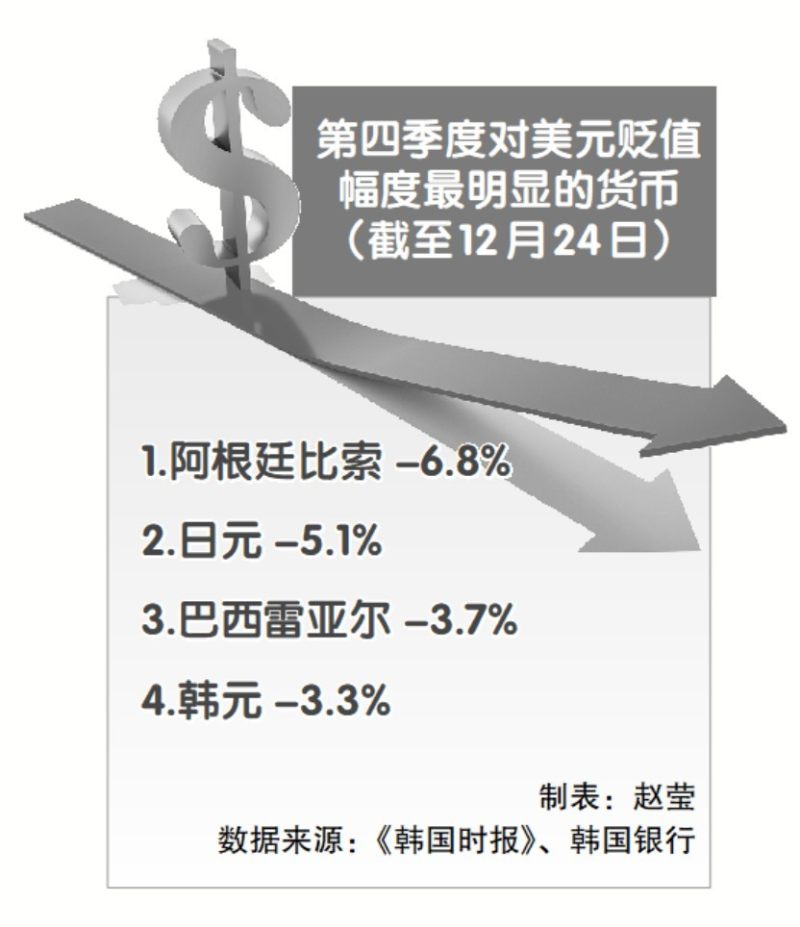
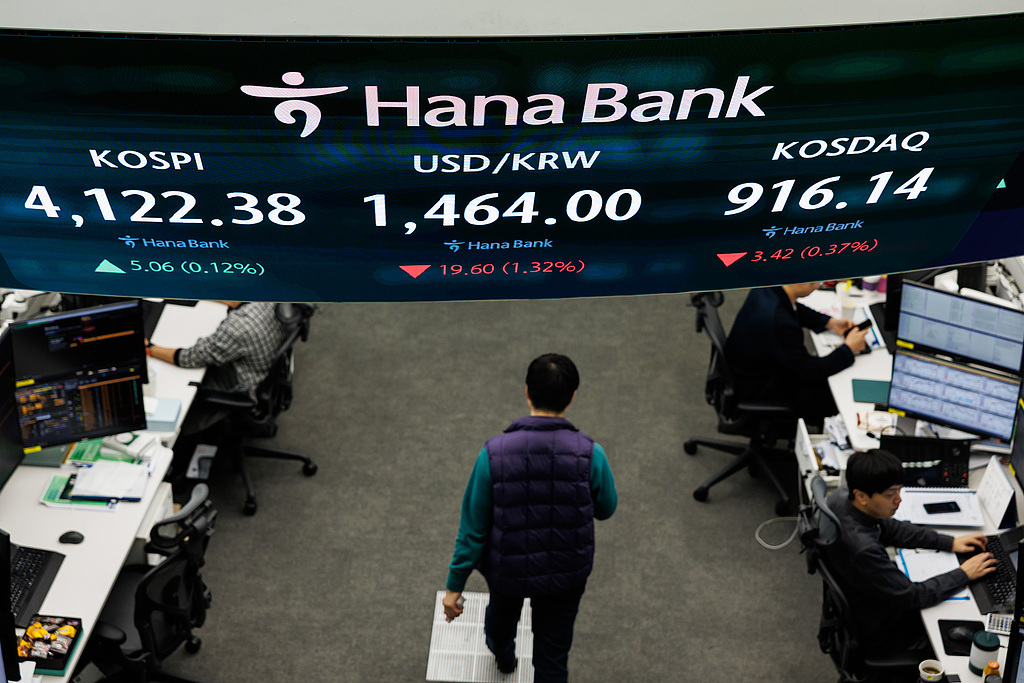
Core Viewpoint - There is a growing sense of "crisis" in South Korea as the Korean won continues to weaken against the US dollar, approaching the critical psychological level of 1500 won per dollar, a level not seen since the 1997 Asian financial crisis and the 2008 global financial crisis. This situation has led to concerns about a potential "third foreign exchange crisis" [1]. Group 1: Currency Fluctuations and Government Response - The Korean won started 2025 at just over 1400 won per dollar, fluctuating between 1350 and 1485 won throughout the year, indicating a high volatility range [2]. - In response to the ongoing pressure on the won, the South Korean government has intensified its regulatory measures, including verbal warnings against excessive weakness of the won and tax support plans to boost domestic investment [2][3]. - Despite these interventions, the won remains in a high volatility range, with recent fluctuations around 1435 won per dollar [2]. Group 2: Historical Context and Structural Issues - Historical experiences from the 1997 and 2008 crises have made South Korea acutely aware of foreign exchange issues, leading to a focus on maintaining foreign exchange reserves as a safety net during extreme situations [7]. - The current weakening of the won is attributed to multiple structural factors, including significant capital outflows and a growing trend of domestic investors purchasing overseas assets, which exacerbates the supply-demand imbalance for the won [8][9]. - South Korea's net foreign assets have exceeded 380 billion dollars, and while this provides a financial cushion, the ability to liquidate these assets quickly in a crisis is limited [9]. Group 3: Economic Confidence and Structural Reforms - Analysts suggest that the underlying cause of the won's depreciation is a loss of investor confidence in the South Korean economy, driven by structural issues such as low growth rates and a deteriorating business environment [10][11]. - The government is urged to focus on structural reforms rather than temporary measures to restore market confidence and stabilize the currency [10]. - Strengthening economic ties with China through increased cooperation could provide opportunities for South Korean companies, potentially alleviating some of the pressures on the won [11].

财经观察:触发“创伤记忆”,韩国走向“第三次外汇危机”?
Huan Qiu Shi Bao· 2025-12-29 23:14
Core Viewpoint - There is a growing sense of "crisis" in South Korea as the Korean won continues to weaken against the US dollar, approaching the critical psychological level of 1500 won per dollar, reminiscent of the 1997 Asian financial crisis and the 2008 global financial crisis [1] Group 1: Currency Trends and Government Response - The Korean won's exchange rate against the US dollar fluctuated, starting at just over 1400 won in early 2025, with significant volatility observed throughout the year, including a rise to 1485 won in late December [3][4] - The South Korean government has intensified its intervention efforts, issuing verbal warnings against excessive weakness of the won and implementing tax support measures to boost domestic investment and address foreign exchange supply-demand imbalances [3][4] - Despite these interventions, the won remains one of the weakest currencies globally, indicating ongoing challenges in stabilizing the currency [7] Group 2: Historical Context and Structural Issues - Historical experiences from the 1997 and 2008 crises highlight the sensitivity of South Koreans to foreign exchange issues, leading to a significant focus on maintaining foreign exchange reserves and financial stability [8][9] - Current structural factors contributing to the won's weakness include significant capital outflows driven by investor sentiment, with South Korean individuals and institutions investing heavily overseas, totaling $117.1 billion in foreign stocks and bonds from January to October [9][10] - The South Korean economy is facing deep-rooted structural problems, including insufficient growth momentum, deteriorating business environments, and rigid industrial structures, which are undermining investor confidence and contributing to currency depreciation [11][12] Group 3: Future Outlook and Economic Cooperation - Analysts predict that the won will likely remain around the 1400 won mark against the dollar in the short term, with the International Monetary Fund suggesting a more reasonable level at approximately 1330 won [6] - Strengthening economic cooperation with China is seen as a potential opportunity for South Korea to enhance its economic prospects, leveraging China's market and supply chain advantages to alleviate domestic market saturation and improve the overall economic environment [12]
国际货币基金组织公布2025年非洲GDP排名
Shang Wu Bu Wang Zhan· 2025-12-23 03:29
Core Insights - Algeria has risen to the third position in Africa's GDP rankings for 2025, surpassing Nigeria and closely following Egypt [1] Economic Rankings - South Africa remains the largest economy in Africa with a GDP of approximately $420 billion [1] - Egypt ranks second with a GDP of about $350 billion [1] - Algeria's GDP is around $290 billion, moving up to third place [1] - Nigeria's GDP is approximately $280 billion, dropping to fourth place [1] - Morocco ranks fifth with a GDP of $180 billion [1] Factors Influencing Rankings - Algeria's rise in ranking is attributed to increased energy export revenues and enhanced macroeconomic stability [1] - Nigeria's decline is influenced by currency depreciation and structural economic issues [1] - Morocco's ranking improvement, surpassing Ethiopia, indicates a need for economic structural reforms, industrial upgrades, and strengthening of self-development capabilities to enhance competitiveness in Africa and globally [1]
俄罗斯增长放缓但可控
Jing Ji Ri Bao· 2025-12-23 00:03
Economic Overview - In 2025, the Russian economy is expected to experience a controlled cooling period, with GDP growth projected to decline to around 1% after reaching a 12-year high of 4.3% in 2024 [1] - The economic slowdown is attributed to weak production growth, reduced consumer spending, and declining contributions from key sectors [1][2] GDP and Growth Projections - The Russian Academy of Sciences predicts a GDP growth of 0.7% for 2025, while some commercial banks estimate it at 0.9% [2] - Industrial production remains a significant driver of economic growth, with manufacturing, particularly machinery and chemical production, showing stable contributions [2] Inflation and Monetary Policy - Inflation pressure is easing, with the inflation rate dropping to 6.6% in November from a high of 10.34% in March, although it remains above the central bank's target of 4% [3] - The central bank has more room to ease monetary policy due to the declining inflation and cooling domestic demand [3] Currency and Debt Dynamics - The real effective exchange rate of the ruble has appreciated significantly, increasing by 25.2% from January to November [3][4] - Public debt has risen by 10.1% to 32.98 trillion rubles, with domestic debt increasing while external debt has decreased [4] Future Economic Strategy - The Russian government is focusing on structural economic reforms aimed at creating high-tech industries and high-value production jobs, with a plan extending to 2030 [7] - Balancing inflation control, exchange rate stability, and growth is emphasized as crucial for achieving national development goals [7]
日本21万亿救市,“饮鸩止渴”?
Sou Hu Cai Jing· 2025-11-25 02:43
Core Viewpoint - Japan's economy is facing significant challenges, including a return to negative growth due to external factors such as U.S. tariff policies impacting key industries like automotive, compounded by long-standing structural issues and short-term political risks [1][3][8]. Economic Growth and External Demand - In Q3, Japan's real GDP decreased by 1.8% on an annualized basis, marking a return to negative growth since Q1 2024, primarily driven by a sharp contraction in external demand, which contributed -0.2 percentage points to economic growth [1]. - The U.S. increased tariffs on Japanese goods, particularly raising automotive tariffs from 2.5% to 15%, severely impacting Japan's automotive industry and creating a vicious cycle of order declines and economic recession [1][3]. Domestic Demand and Consumer Behavior - Domestic demand remains weak, with inflation and declining real wages leading to reduced consumer spending. Personal consumption, which accounts for over half of Japan's economy, saw a slight increase of 0.1% quarter-on-quarter, while private residential investment fell by 9.4% [3][8]. - The deterioration of Japan-China relations, exacerbated by controversial statements from Prime Minister Fumio Kishida, has led to travel warnings from China, potentially costing Japan between $11.5 billion to $14 billion in tourism revenue, further dragging down GDP growth by 0.29 to 0.36 percentage points [3][5]. Government Response and Economic Stimulus - In response to the economic crisis, the Kishida government approved a ¥21.3 trillion (approximately $135.4 billion) economic stimulus plan aimed at addressing rising prices and boosting investment in sectors like semiconductors and AI. However, this plan relies heavily on fiscal expansion and monetary easing without addressing structural economic reforms [5][7]. - The government's debt, which stands at about 263% of GDP, raises concerns about the sustainability of increased spending, potentially leading to higher long-term interest rates and further pressure on government finances [7][8]. Structural Issues and Long-term Outlook - Japan's economy is hindered by deep-rooted structural issues, including an aging population (29% aged 65 and older), declining labor force, and reduced competitiveness in key industries like automotive, which has lagged in the transition to electric vehicles [8]. - The reliance on external markets exposes Japan's economy to risks, as evidenced by the impact of U.S. tariffs and geopolitical tensions. Analysts suggest that Japan's economy may continue to fluctuate around the growth line without effective reforms, and the current fiscal stimulus may only provide temporary relief without addressing fundamental issues [8].
北非经济前景向好,毛里塔尼亚仍依赖自然资源型租金经济
Shang Wu Bu Wang Zhan· 2025-11-06 06:39
Core Insights - North Africa is emerging as a key engine of economic growth in Africa, driven by strong performances from Egypt and Morocco, while countries like Mauritania remain heavily reliant on resource-based rent economies [1] Economic Growth Projections - The International Monetary Fund forecasts that the overall growth rate for the six North African countries (Mauritania, Morocco, Algeria, Tunisia, Egypt, Libya) will reach 4% in 2025, surpassing the average growth rate of 3.9% for Sub-Saharan Africa and 2% for the Middle East [1] Economic Diversification and Challenges - Morocco and Egypt have made significant progress in economic diversification and attracting foreign investment, while Mauritania faces challenges due to its heavy reliance on mining and marine fishing for revenue, indicating a closed rent-seeking economic model [1] - Tunisia, Algeria, and Libya are also hindered by structural issues that prevent them from fully unleashing their economic potential [1] Future Outlook - The report emphasizes that North Africa's ability to maintain its status as a leading growth region in Africa depends on the implementation of substantial economic structural reforms, deepening regional trade integration, and reducing reliance on natural resources as the primary source of income [1]