
多元化变现

Search documents
营收高增利润减亏,客路旅行(KLK.US)为何能让红杉、软银“站台”?
Zhi Tong Cai Jing· 2025-11-26 06:14
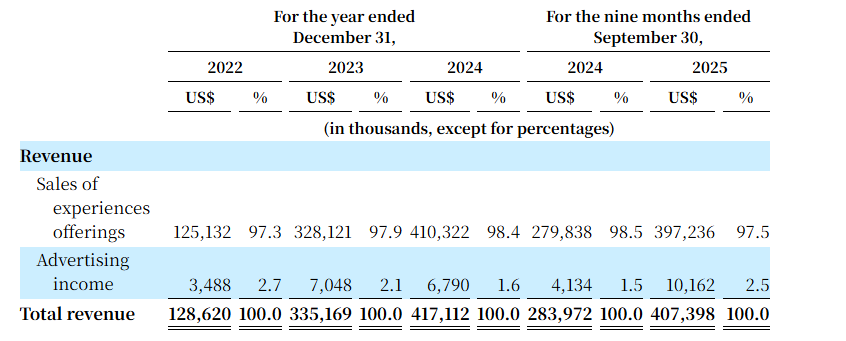
Core Viewpoint - Klook Travel, the largest pan-regional experience platform in the Asia-Pacific, has initiated its journey towards a U.S. IPO, aiming to list on the New York Stock Exchange under the ticker "KLK" with backing from major underwriters like Goldman Sachs, JPMorgan, and Morgan Stanley [1][2]. Company Overview - Klook Travel has completed nine rounds of financing, raising over $1 billion, with a recent $100 million round led by Vitruvian Partners in February 2025 [1]. - The company has a strong institutional shareholder base, including Sequoia Capital, Matrix Partners, and SoftBank, holding approximately 15.5%, 12.3%, and 11.1% of Class A common stock, respectively [1]. Financial Performance - Klook's revenue is projected to grow significantly, with figures of $129 million, $335 million, and $417 million for 2022, 2023, and 2024, respectively, reflecting a compound annual growth rate (CAGR) of 79.72% [1][5]. - For the first nine months of 2025, Klook reported a 43.5% year-on-year revenue increase to $407 million, indicating continued high growth [1]. - The adjusted EBITDA has shown a trend of reducing losses, achieving a profit of $6.28 million in the first three quarters of 2025, compared to losses in previous years [6][10]. Business Model - Klook's business model focuses on destination experiences rather than standardized travel products, catering to the specific needs of travelers upon arrival at their destinations [3]. - The company has established partnerships with approximately 4,200 merchants across 31,000 experience offerings, enhancing its service diversity [3][4]. Market Position and Growth Potential - The global destination travel experience market is projected to grow from $318.1 billion in 2024 to $512.8 billion by 2029, with a CAGR of 10%, positioning Klook favorably within a rapidly expanding sector [8][9]. - Klook holds the leading market share in the Asia-Pacific region, which is expected to grow from $102.5 billion in 2024 to $197.9 billion by 2029, with a CAGR of 14.1% [9]. Competitive Landscape - The company faces challenges from established online travel agencies (OTAs) that are increasingly entering the destination experience market, necessitating a focus on brand building and customer service [10][11]. - Klook's future growth strategy involves deepening its presence in the Asia-Pacific while accelerating global expansion, which may require significant capital investment [10]. Conclusion - Klook Travel is well-positioned to benefit from the ongoing growth in the destination travel experience market, with a strong financial trajectory and a unique business model. However, it must navigate challenges related to competition and service quality to maintain its market leadership [11].


“剧王”奈飞的财报,华尔街不满意
Sou Hu Cai Jing· 2025-10-22 10:25
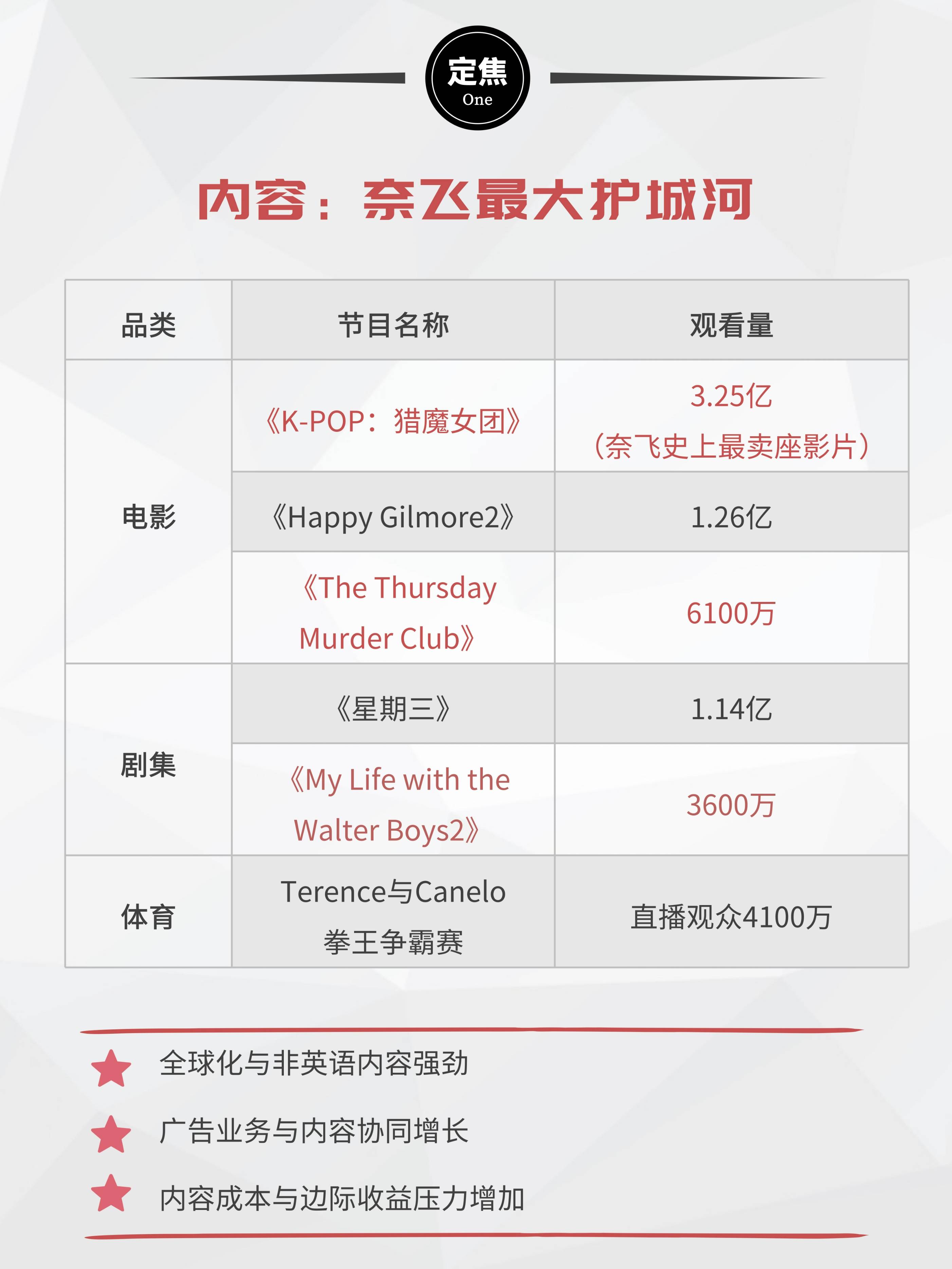
Core Viewpoint - Netflix reported disappointing earnings for Q3 despite having strong content, with revenue growth driven by membership increases, price hikes, and advertising revenue [1][2]. Revenue Performance - Q3 revenue reached $11.51 billion, a year-over-year increase of 17.2%, primarily due to membership growth, pricing increases, and advertising revenue [1]. - The advertising business set a record for sales in this quarter, with expectations to double advertising revenue by 2025 [1]. Profitability Metrics - Net profit was $2.547 billion, below market expectations of $3 billion, with growth slowing from 45.6% in Q2 to 7.7% [2]. - Operating profit was $3.24 billion, with an operating margin of 28%, both lower than market expectations [2]. - Earnings per share (EPS) were $5.87, falling short of the anticipated $6.94 [3]. Market Reaction - Following the earnings report, Netflix's stock price dropped 6.5% in after-hours trading [4]. - The stock had previously reached an all-time high of nearly $1,340 on June 30, but has since experienced volatility [4]. Content and Engagement - Netflix's content remains strong, with "Kpop: The Witch's Revenge" becoming the platform's highest-grossing film and shows like "Wednesday" maintaining popularity [4]. - User engagement reached historical peaks, indicating strong content performance [4]. Growth Sustainability Concerns - Market anxiety stems from concerns about the sustainability of growth, as Netflix will stop disclosing "net subscriber additions" starting in 2025, focusing instead on revenue and engagement [5]. - Analysts believe Netflix is nearing saturation in key markets like North America and Europe, raising questions about future growth [5]. Diversification Strategies - Netflix aims to diversify revenue streams through advertising, gaming, and sports live streaming, though these avenues present challenges [5]. - The gaming and sports sectors require ongoing investment, which may impact short-term profits [5]. - The advertising model carries risks of user downgrade and relies on high engagement and user acceptance [5]. Q4 Guidance - For Q4, Netflix provided cautious guidance, expecting revenue of $11.96 billion and an operating margin of 23.9% [6]. - The company raised its full-year free cash flow forecast to $9 billion, indicating strong cash generation capabilities [6]. Future Outlook - Content remains Netflix's primary competitive advantage, but future success will depend on balancing diversified monetization and long-term profitability [7]. - The challenge for Netflix, as a leader in the streaming industry, is to demonstrate that the streaming "ceiling" has not yet been reached [8].

泡泡玛特20250811
2025-08-11 14:06
Summary of the Conference Call for Pop Mart Company Overview - **Company**: Pop Mart - **Industry**: Toy and IP (Intellectual Property) Retail Key Points and Arguments Industry Positioning and Strategy - Pop Mart has transformed its market positioning from a leading blind box and trendy toy company to a full-chain IP operation company, establishing a strong IP operation platform that addresses market skepticism regarding weak content IP longevity and user stickiness [2][3] - The company has enhanced its position in upstream IP resource signing and downstream channel negotiations, confirming the scarcity of trendy toys and quality IP derivative retail formats [2][3] Growth Drivers - Short-term growth drivers include diversified IP monetization and expansion into overseas markets. The projected revenue for 2024 is 13 billion yuan, a 107% year-on-year increase, with profits expected to reach 3.4 billion yuan, a 186% increase [2][4] - Overseas revenue is projected to account for 39% of total revenue in 2024, reflecting a 375% year-on-year growth [2][5] Business Model and Competitive Advantage - Pop Mart employs a direct sales and free IP business model, with core competencies in IP selection, incubation, and operation systems. Exclusive artist IPs like Molly and Demo are expected to contribute 85% of revenue in 2024 [2][6] - The company has a robust membership system, with over 46 million members contributing more than 90% of sales and an average repurchase rate of 49.4% [2][7] Product Line Expansion - The company has successfully expanded its product categories beyond blind boxes to include plush toys, building blocks, and Mega accessories, significantly enriching its product line and monetization channels [2][8] - Plush toy revenue is projected to reach 2.8 billion yuan in 2024, indicating substantial growth potential [9] Market Trends - From 2023 to 2024, the market share of figurines decreased from 76% to 53%, while plush toys and other derivatives saw significant increases, with plush toys rising from 3% to 22% [9] - The Mega series is expected to grow by 146% in 2024, nearing 1.7 billion yuan in revenue, driven by new market scenarios and enhanced value [10] Comparison with Global Competitors - Compared to global players like Sanrio, Bandai, and Disney, Pop Mart is still in the early stages of diversified monetization, indicating significant growth potential in this area [11] International Expansion Strategy - The company has adopted a gradual global expansion strategy, with 120 overseas stores expected by the end of 2024, primarily through direct sales [12][15] - The Southeast Asian market is in a growth phase, while the North American market is still in its early stages, with expectations for rapid growth in the next 1 to 3 years [16] Online Business Development - Pop Mart is innovating in its online business to accelerate user acquisition and repurchase rates, showing a trend of rapid growth in online operations [17] Impact of Tariffs - Tariffs have a limited impact on the company's business, as the majority of trendy toy products have low value, making them less sensitive to tariff increases [18] Future Revenue and Profit Projections - Revenue projections for 2025 to 2027 are 22.1 billion yuan, 29.9 billion yuan, and 38.7 billion yuan, with expected year-on-year growth rates of 69%, 35%, and 30% respectively [19] Industry Position and Future Outlook - Pop Mart is recognized as a leading player in China's trendy toy industry, with strong barriers in IP incubation, supply chain management, and product innovation. The growth path for the next three to five years is clear, with a target price of 185.6 HKD based on a 40x PE valuation [20]

在直播间跳团舞、PK打赏的年轻人
Jing Ji Guan Cha Bao· 2025-07-23 04:01
Core Insights - The article highlights the competitive nature of group live streaming on platforms like Douyin, where fans engage in gifting to support their favorite hosts, leading to significant financial contributions and viewer engagement [2][3][12] - The rise of group live streaming has transformed the industry, with a notable increase in the number of live streaming rooms and a shift from individual to group-based models, emphasizing systematic operations and resource utilization [3][8][11] Group 1: Industry Trends - The number of group live streaming rooms on Douyin has surged from an average of 4,000 per day in mid-2024 to over 15,000 currently [3] - The transition from individual to group live streaming represents a fundamental restructuring of the business model, where group streaming relies more on company resources and systematic operations [8] - The monthly revenue for the company Whale Red Culture has increased from 10 million yuan to 30 million yuan, reaching a leading position in the South China market [7] Group 2: Operational Dynamics - Group live streaming involves a collaborative effort where multiple members interact with each other and the audience, creating a more diverse user profile [6] - The operational model includes a structured competition system with various levels of contests to maintain user engagement and encourage long-term financial contributions [11] - The industry is moving towards professionalization, with an emphasis on equipment, technology, and content innovation, driven by platform regulations and talent upgrades [12][13] Group 3: Financial Aspects - Gifting remains the primary monetization method for most group live streaming rooms, with platforms typically taking a 50% cut of the revenue [11] - The article mentions a significant instance where a supporter group gifted 903 items worth over 2.7 million yuan to help their favorite host win a competition [3] - The industry is exploring diversified monetization strategies, including ticketed offline events for group live streamers [12]