多样化

Search documents
分领域出台创新支持举措
Xin Lang Cai Jing· 2026-02-06 21:01
Core Insights - The Chinese government is promoting a new work plan to accelerate the cultivation of new growth points in service consumption, aiming to optimize and expand service supply and enhance the quality of service consumption [1][2] Group 1: Policy Overview - The work plan includes systematic deployments to stimulate development in key service sectors and nurture potential growth areas, focusing on transportation, domestic services, online audio-visual services, tourism, automotive aftermarket services, and inbound consumption [1] - Specific innovative support measures are proposed for various sectors, including easing market access, removing unreasonable restrictions, fostering quality brands, and optimizing the consumption environment [1] Group 2: Economic Impact - Service consumption is becoming a crucial engine for high-quality economic development, with an expected annual growth rate of 8.5% in per capita service consumption expenditure from 2020 to 2025 [2] - By 2025, per capita service consumption expenditure is projected to account for 46.1% of total per capita consumption expenditure, indicating a significant shift towards service-oriented consumption [2] Group 3: Consumer Trends - There is a notable shift in consumer focus from mere availability of services to the quality and personalization of service offerings, with increasing demand for diverse and high-quality service products [2] - The work plan aims to support emerging fields such as emotional and experiential services through innovative regulatory approaches and the creation of healthy development environments [2] Group 4: Social Relevance - The development of service consumption is closely linked to public welfare, with the work plan targeting areas that directly impact daily life, thereby enhancing residents' sense of happiness and satisfaction [2] - The government plans to leverage a service consumption coordination mechanism to ensure the effective implementation of the work plan, mobilizing various resources to support high-quality economic development [2]
香港IPO募资额全球登顶!
Jin Rong Shi Bao· 2026-01-14 13:24
Core Insights - Hong Kong Stock Exchange (HKEX) regained the top position globally in IPO fundraising in 2025, completing 119 listings with a total fundraising amount of HKD 285.8 billion [1] Group 1: Factors Driving IPO Success - The resurgence of Hong Kong's IPO market is attributed to multiple factors, including strong capital market performance, increased attractiveness of Chinese assets, and rising international allocation demand [1] - Mainland enterprises played a crucial role, with 111 companies successfully listing in Hong Kong, raising a total of HKD 228.6 billion, accounting for 94% of new listings and 88% of total fundraising [2] - Improved market liquidity, enhanced domestic asset attractiveness, and a favorable policy environment contributed to the IPO boom, as noted by UBS executives [2] Group 2: International Investor Engagement - Increased attention from international investors significantly impacted the IPO landscape, with many re-entering as cornerstone investors and forming teams to study Chinese market opportunities [3] - Hong Kong's unique capital market positioning, backed by China and its connectivity mechanisms, serves as a vital gateway for international capital entering China and for domestic companies connecting with global investors [3] Group 3: Outlook for 2026 - The momentum in the Hong Kong IPO market is expected to continue into 2026, with 11 companies already listed in early January 2026, raising HKD 33.1 billion [4] - HKEX aims to leverage its advantages, such as the unique connectivity with mainland markets and a diverse, liquid market, to attract more listings and meet global investor needs [4] - The IPO market in 2026 is anticipated to exhibit characteristics of globalization, diversification, and high-quality reforms, driven by the rapid development of Chinese enterprises and global investor demand [5] Group 4: Market Trends and Innovations - Globalization of Chinese enterprises is evolving from product export to comprehensive brand and capital structure strategies, which will drive IPOs and cross-border mergers [5] - The Hong Kong market is witnessing a diversification of industries, including new consumption, AI technology, and healthcare, along with a mix of established and emerging companies seeking listings [5] - Innovations in financing, such as convertible bonds, are expected to become more flexible, while the focus on fundamental company performance and governance is leading to lower IPO failure rates [5]





趋势研判!2025年中国供暖设备行业政策、产业链、市场规模、重点企业及发展趋势:供暖设备向节能环保与智能化转型,市场规模将增长至686.56亿元[图]
Chan Ye Xin Xi Wang· 2026-01-06 01:17
Industry Overview - The Chinese heating equipment industry has experienced robust growth driven by rising living standards and supportive government policies. Consumer demand has shifted from basic heating functions to higher energy efficiency, smart control, and environmental features [1][5] - The market size of China's heating equipment industry is projected to grow from 40.082 billion yuan in 2020 to 62.101 billion yuan in 2024, with a compound annual growth rate (CAGR) of 11.57%. By 2025, the market size is expected to reach 68.656 billion yuan [1][9] Policy Support - National policies in energy conservation and clean energy have created a favorable environment for technological upgrades and market expansion in the heating equipment sector. For instance, initiatives promoting sewage source heat pump technology and clean heating solutions are being implemented [5][11] - The continuous expansion of urban centralized heating areas, which grew from 8.309 billion square meters in 2017 to 12.094 billion square meters in 2024, provides a solid market demand foundation for the heating equipment industry, with a CAGR of 5.51% [5][6] Industry Chain - The heating equipment industry chain consists of upstream raw materials and components, including steel, copper, aluminum, and various other materials. The midstream involves the manufacturing of heating equipment, while the downstream includes applications in sectors like real estate [6][7] - Key raw materials such as steel, copper, and aluminum are essential for constructing core structures and functional components of heating equipment. The production of these materials has been increasing, with steel output rising from 1.05 billion tons in 2017 to 1.4 billion tons in 2024, and copper output increasing from 1.867 million tons to 2.350 million tons in the same period [7][8] Market Trends - The heating equipment industry is moving towards higher efficiency, environmental sustainability, and smart technology integration. Future trends include the deep integration of heating systems with renewable energy sources, such as heat pumps and solar energy, to achieve near-zero carbon operations [11][12] - The industry is also expected to see advancements in smart technology, transitioning from automated control of individual devices to autonomous decision-making and collaborative optimization across entire heating systems [12][13] - Customization and diversification of heating solutions will be key, with tailored products and services designed for different climates, building types, and user needs, enhancing overall energy efficiency and user experience [13][14] Key Companies - Major players in the industry include international brands like Vaillant, Bosch, and Ariston, which dominate the high-end market, and domestic leaders like Wanhe and Sunflower, which focus on mid-range and mass-market segments [9][10] - Wanhe Electric, a notable company in the heating equipment sector, reported a revenue of 5.524 billion yuan in the first three quarters of 2025, reflecting a year-on-year growth of 5.54% [10][11]


广交会观察:中国食品“出海”升级 深加工、品牌化成新优势
Zhong Guo Xin Wen Wang· 2025-11-03 17:03
Core Insights - The 138th China Import and Export Fair (Canton Fair) is showcasing high-quality Chinese food and specialty agricultural products, attracting international buyers and generating significant interest in potential collaborations [1][2] Group 1: Market Demand and Trends - There is a notable increase in overseas demand for Chinese food products, with a focus on health, diversity, and customization, leading to the development of low-salt and organic products [3][4] - The demand for snacks is shifting towards low-sugar, environmentally friendly options, and products that promote children's intellectual development [3] Group 2: Product Offerings and Innovations - The Qujiang District is the largest producer of edible mushrooms in Guangdong Province, emphasizing the importance of quality and deep processing to enhance product value [2] - Companies are leveraging international certifications and smart manufacturing systems to ensure quality and streamline production processes [3] Group 3: Export Performance and Future Outlook - The Qujiang District has received over $15 million in orders from countries like Poland and New Zealand during the fair [1] - Despite stable export figures in the first three quarters, companies anticipate a slight increase in exports by year-end due to growing demand in emerging markets [3]
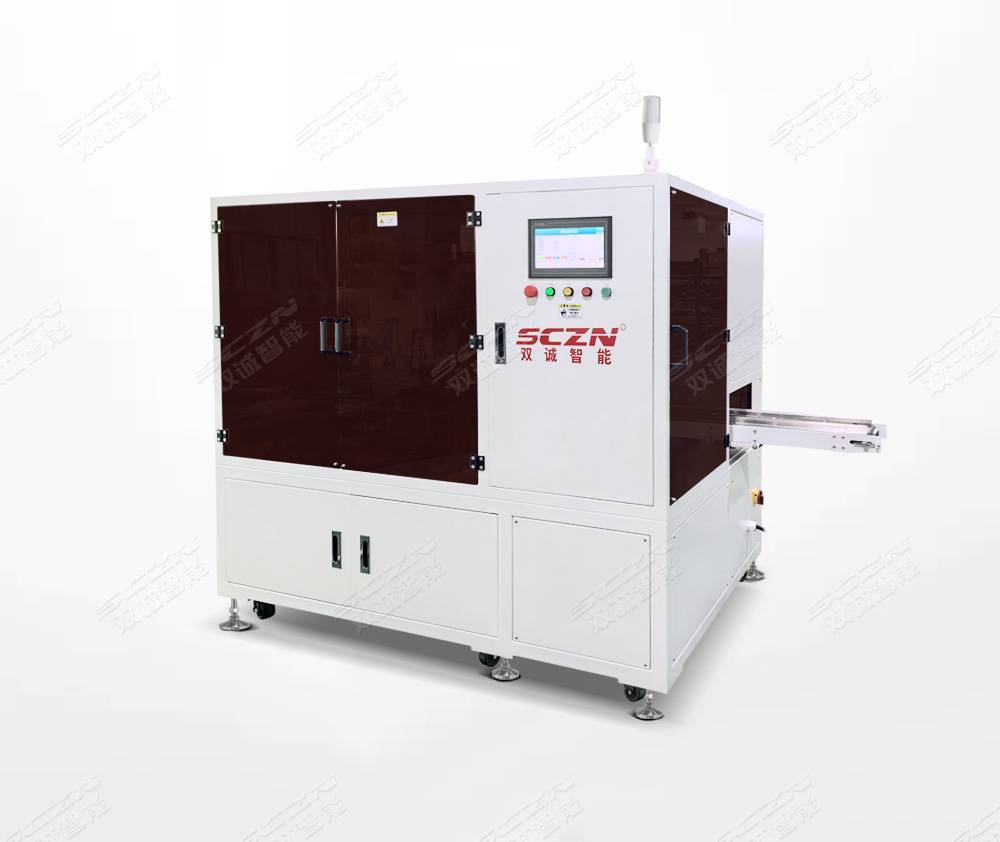
自动套袋机厂家介绍未来发展趋势
Sou Hu Cai Jing· 2025-05-07 20:02
Core Insights - The future development trends of automatic bagging machines will focus on intelligence, environmental sustainability, diversity, simplicity, and customization [8] Group 1: Intelligent Development - Intelligent manufacturing will be a key direction for the future of automatic bagging machines, integrating more intelligent control systems for real-time monitoring and adjustments [1] - The incorporation of data collection and analysis will enhance production efficiency and reduce labor costs while improving product quality consistency [1][6] Group 2: Environmental Sustainability - The use of eco-friendly materials will become a significant trend, with companies seeking biodegradable and recyclable packaging solutions [3] - This shift aligns with global environmental protection efforts and meets the growing consumer demand for sustainable products [3] Group 3: Technological Diversity - Future automatic bagging machines will offer diverse designs and functionalities, catering to different product characteristics [5] - Custom packaging solutions will be developed for fragile items and food products, adhering to safety standards [5] Group 4: Simplified Operation and Maintenance - Advances in technology will lead to lower failure rates and reduced maintenance needs for automatic bagging machines [5] - User-friendly interfaces will allow operators to easily manage the machines with minimal training, decreasing reliance on highly skilled personnel [5] Group 5: Customization and Market Competitiveness - Personalization will become an important trend, with manufacturers needing to innovate and provide tailored packaging solutions based on specific customer requirements [5] - This flexibility will enhance market competitiveness and meet the increasing consumer demand for personalized products [5] Group 6: Integration with IoT - The combination of automation and networking through IoT technology will enable real-time connections between automatic bagging machines and other production line equipment [6] - This integration will optimize production efficiency and reduce costs, positioning automatic bagging machines as essential components of the overall production system [6]