大规模储能

Search documents
煤基电池材料储锂性能研究获突破
Zhong Guo Hua Gong Bao· 2026-02-02 03:37
Core Viewpoint - The research team from the Beijing Low Carbon Clean Energy Research Institute of the State Energy Group has developed a high-capacity battery material using coal direct liquefaction pitch, which significantly enhances lithium storage capacity and addresses key technical bottlenecks in silicon-based materials [1] Group 1: Research and Development - The new battery material combines oxidized silicon, silicate, graphene, and amorphous carbon to improve lithium storage capacity [1] - The team proposed a solution to the issues of large volume expansion, low initial efficiency, and poor conductivity of silicon-based anodes by constructing a "carbon-carbon network" using coal direct liquefaction pitch and graphene [1] - The in-situ generation of highly active lithium disilicate on the surface of oxidized silicon, combined with the high conductivity and structural toughness of the "carbon-carbon network," enhances initial coulombic efficiency [1] Group 2: Performance Improvements - The "carbon-carbon network" acts as an "elastic armor," effectively buffering the volume expansion during the charge and discharge processes of oxidized silicon, thus suppressing electrode pulverization [1] - The electrode thickness expansion rate was reduced from 109% to 41%, with cycling stability improved nearly ninefold and charging speed increased by three times [1] Group 3: Applications and Implications - This research provides a key material foundation for the development of high energy density, long-life lithium-ion batteries for applications in new energy vehicles, high-end electronic devices, and large-scale energy storage [1] - The mechanistic study reveals the synergistic enhancement mechanism among multiple components, offering important references for the rational design of future battery materials [1]

绿色经济转型下的投资机会盘点
Di Yi Cai Jing· 2026-01-06 03:39
Group 1 - The core argument suggests that the green transition driven by carbon neutrality presents significant investment and development opportunities, despite the perception of high costs in the short to medium term [1] - Achieving carbon neutrality requires a fundamental energy transition, relying on a substantial increase in the demand for key mineral resources such as silver, cadmium, germanium, indium, selenium, tellurium, copper, tin, and zinc [1] - By 2060, global reserves of selenium and cadmium need to increase by 14.3 times and 4.9 times, respectively, to meet the demand for wind and solar power in China and globally [1] Group 2 - Large-scale energy storage facilities and technology development are crucial for addressing the intermittent use of renewable energy and promoting green energy transition [2] - Investment in the recovery and secondary use of storage facilities, particularly batteries, and the effective recovery of key mineral resources is a core focus area [2] - Carbon sinks play an important role in achieving carbon neutrality and are a key component of carbon trading, with current focus on forest and forestry carbon sinks [2] Group 3 - Investors can gain financial returns by purchasing and holding rights to carbon sink projects, while also actively participating in reducing greenhouse gas emissions and promoting renewable energy [3] - The development of carbon-inclusive platforms represents a valuable investment direction in the future carbon market [3] - Smart grid technologies are essential for the digitalization, automation, and intelligence upgrades of power systems, with significant future investment potential [3] Group 4 - The electrification of transportation is gaining momentum, with future low-carbon transitions extending beyond road transport to include aviation and shipping, creating numerous investment opportunities [3] - Investment areas include biofuels, batteries, electric motors, charging facilities, smart traffic management systems, and the development of the autonomous driving technology supply chain [3]
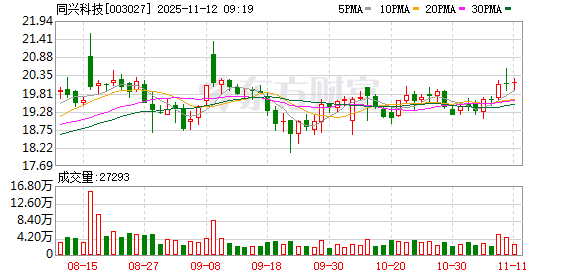
同兴科技:公司钠离子电池在-40℃环境下保持近90%容量,适配欧洲户用储能等应用场
Mei Ri Jing Ji Xin Wen· 2025-11-12 01:18
Core Viewpoint - The EU's environmental legislation is expected to have a positive impact on the company's operations, aligning with its "one body, two wings" strategic layout [2]. Group 1: Environmental Legislation Impact - The EU's focus on carbon reduction, pollution control, and sustainable development aligns with the company's strategic goals [2]. - The company plans to leverage its technological advantages and market positioning to capitalize on policy benefits [2]. Group 2: Core Business Areas - In air pollution control, the company’s low-temperature SCR denitration catalyst technology is at an internationally leading level, applicable in over 20 industries including steel, coking, and building materials [2]. - In the CCUS field, the company has developed a long-life Tx-1 carbon capture absorbent, with antioxidant capabilities improved by 20-300 times compared to competitors [2]. - The company’s innovative TXio carbon capture process achieves over 90% carbon capture efficiency, with energy consumption reduced to 2.0-2.2 GJ/tCO2, successfully applied in large-scale marine installations [2]. Group 3: Sodium-Ion Battery Development - The company’s sodium-ion batteries maintain nearly 90% capacity at -40°C, suitable for European residential energy storage applications [2]. - The production of sodium-ion batteries requires no cobalt and minimal nickel, utilizing abundant and easily extractable sodium resources, offering significant low-carbon advantages over lithium-ion batteries [2]. - Sodium-ion batteries are considered ideal for large-scale energy storage systems due to their low cost and high safety, effectively storing intermittent energy sources like wind and solar, thus promoting decarbonization of the power system [2].


首块氢负离子原型电池研制成功
Ke Ji Ri Bao· 2025-09-18 23:43
Core Viewpoint - A new type of hydrogen negative ion electrolyte has been developed by a research team from the Dalian Institute of Chemical Physics, Chinese Academy of Sciences, leading to the creation of the world's first hydrogen negative ion prototype battery, marking a significant advancement from conceptualization to experimental validation [1][2]. Group 1: Battery Development - The hydrogen negative ion battery operates similarly to lithium-ion batteries, utilizing the movement of ions between electrodes for charging and discharging, but replaces lithium ions with hydrogen negative ions [1]. - The research team employed a "core-shell structure" strategy, using barium hydride to encapsulate cerium trihydride, resulting in an electrolyte with high hydrogen negative ion conductivity, low electronic conductivity, and high stability [1]. Group 2: Performance Metrics - The prototype battery achieved a discharge capacity of 984 milliampere-hours per gram (mAh/g) and maintained a capacity of 402 mAh/g after 20 charge-discharge cycles [2]. - A stacked battery configuration was developed, increasing the voltage to 1.9 volts, successfully powering an LED light, demonstrating the feasibility of the hydrogen negative ion battery for electronic devices [2]. Group 3: Future Applications - The hydrogen negative ion battery represents a new energy storage technology path, with potential applications in large-scale energy storage, hydrogen storage, and mobile power sources [2]. - The research team plans to focus on optimizing the core materials and performance of the hydrogen negative ion battery, aiming to expand its application scenarios and support the development of green energy in China [2].
盟固利:公司开发的固态电解质产品未来有望应用于固态储能领域
Mei Ri Jing Ji Xin Wen· 2025-09-11 09:36
Core Viewpoint - The company is actively developing solid electrolyte products for potential applications in solid-state energy storage, alongside ongoing research in sodium-ion battery technology, indicating a strong commitment to advancing energy storage solutions [1] Group 1: Company Developments - The company has developed solid electrolyte products that are expected to be applicable in the solid-state energy storage sector [1] - The company is advancing research in sodium-ion battery technology, specifically focusing on composite sodium iron phosphate products that offer high capacity, long cycle life, and high safety advantages [1] - The performance of the developed products is at an advanced level within the industry, suggesting competitive positioning for future large-scale energy storage applications [1]
一次烧结+高压实,锂源科技发布大储专用正极材料S406
高工锂电· 2025-06-28 09:42
Core Insights - The article discusses the launch of a new lithium iron phosphate cathode material, S406, by Longpan Technology's subsidiary, Lithium Source Technology, aimed at large-scale energy storage systems [1][2] - The development of S406 is in response to the growing global demand for renewable energy storage, transitioning from policy-driven supplementary facilities to a rigid market demand [1][2] Summary by Sections Product Launch - Lithium Source Technology has introduced S406, designed to reduce the lifecycle costs of energy storage while enhancing performance [1] - The material focuses on lowering the cost per kilowatt-hour, which is crucial for the economic efficiency of energy storage stations [1] Technical Specifications - S406 achieves an energy efficiency of over 94.5% at 0.5P and a capacity release ratio of 93% when discharged to 3.2V at 1C, indicating high energy output capability [2] - The product exhibits excellent rate performance, suitable for diverse large-scale energy storage applications [2] Market Context - The global large-scale energy storage market is expected to enter a rapid growth phase, with the International Energy Agency predicting a market size exceeding 1 TWh by 2030 and a compound annual growth rate of over 30% [2] - The shift from policy-driven storage to market-driven mechanisms increases the demand for high-cost performance core materials [2] Industry Impact - The release of S406 is anticipated to influence the energy storage battery supply chain by providing a cost-effective and high-performance option [2] - This material may accelerate the adoption of battery cells with capacities of 500+ Ah and larger, further reducing the construction and operational costs of large-scale energy storage systems [2]