太空军备竞赛

Search documents
亚马逊,4500颗卫星获批
财联社· 2026-02-11 02:12
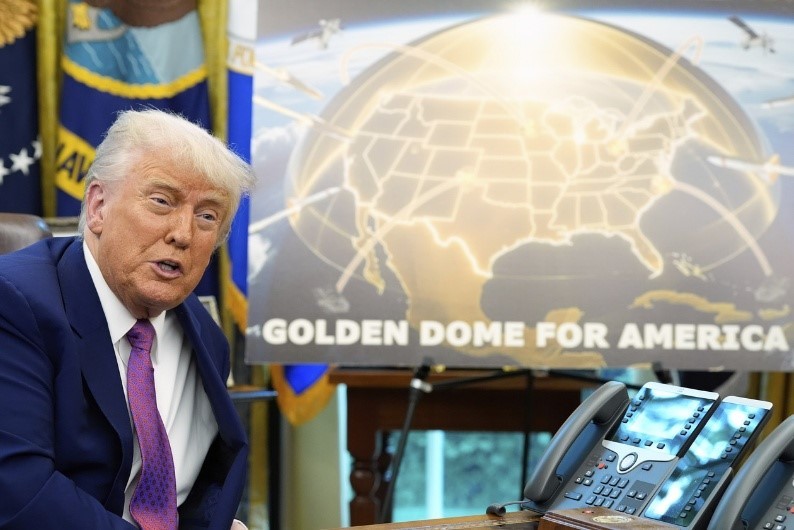
Core Viewpoint - Amazon has received approval from the FCC to deploy 4,500 satellites, expanding its satellite constellation to approximately 7,700 satellites to compete with SpaceX [4] Group 1: Satellite Deployment Plans - Amazon plans to launch its "Low Earth Orbit" (LEO) satellite internet service later this year, having already launched over 150 satellites since April last year [4] - The next batch of satellites will be part of Amazon's second-generation orbital system, operating at an altitude of about 400 miles, supporting more frequency bands and expanding coverage [4] - Amazon must launch 50% of its approved satellites by February 10, 2032, and the remaining by February 10, 2035, but has requested an extension for deploying 1,600 first-generation satellites to July 2028 [4][5] Group 2: Investment and Competition - Amazon plans to invest an additional $1 billion in the LEO project in Q1 of this year to accelerate satellite deployment, with over 20 launches planned in 2026 and 30 in 2027 [5] - In comparison, SpaceX is applying to launch and operate a constellation of up to 1 million satellites, which will provide unprecedented computing power for advanced AI applications [5] - The competition between Amazon and SpaceX marks the beginning of a new space arms race, with SpaceX's Starship set to enter large-scale launch phases [5] Group 3: Upcoming Launches - Amazon's next orbital flight is scheduled for Thursday, with Arianespace's rocket set to launch an additional 32 satellites, and has reserved 17 more launch missions with the French company [6]


中美太空竞赛日趋激烈:中国打出“南天门计划”,加速航天产业发展
Jin Rong Jie· 2026-01-13 00:28
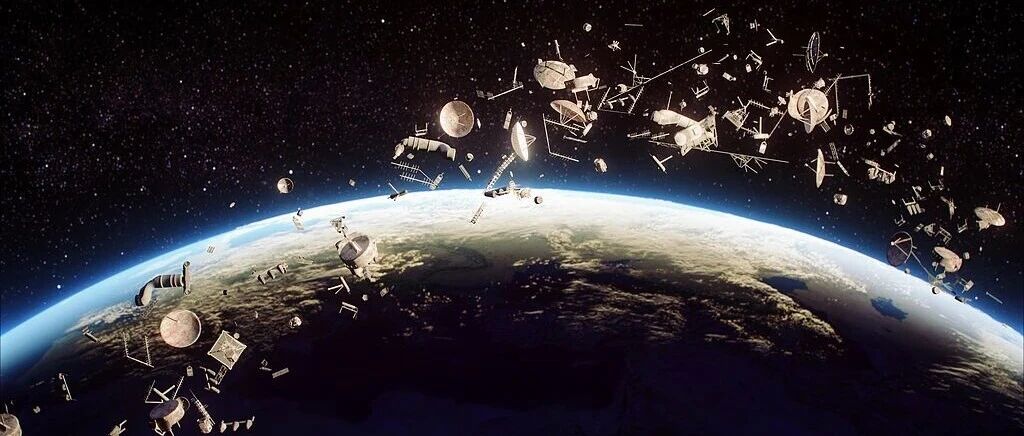
Group 1 - The "Nantianmen Plan" features a 100,000-ton space mother ship "Luanniao," measuring 242 meters in length and 684 meters in wingspan, with a maximum takeoff weight of 120,000 tons, capable of carrying 88 "Xuannü" unmanned aerial vehicles [1] - The plan serves as a futuristic framework for China's aerospace defense system, enhancing market recognition of the strategic value of the aerospace industry [1] - The core technologies reflected in the plan, such as hypersonic flight, dual-mode propulsion, metamaterials for stealth, and intelligent swarm control, align closely with China's actual advancements in aerospace information technology [1] Group 2 - The U.S.-China space race is intensifying, with SpaceX deploying 15,000 Starlink satellites and aiming to significantly reduce launch costs through its Starship program [2] - In response, China has applied to the International Telecommunication Union (ITU) for 203,000 low-orbit satellites, indicating a potential market worth trillions of dollars and marking the beginning of a super cycle in space infrastructure [2] - The geopolitical climate has heightened the urgency of the space arms race, with major powers viewing space as a critical infrastructure for national survival [2] Group 3 - The "Nantianmen Plan" encompasses multiple sectors, including aerospace, artificial intelligence, new materials, and energy, likely driving upgrades in strategic emerging industries [2] - The development of space mother ships and unmanned aerial vehicles involves key areas such as high-temperature alloys, composite materials, advanced propulsion systems, and satellite communications [2] - Attention is drawn to leading companies in the aerospace industry chain as 2026 is projected to be a year of accelerated growth in the global aerospace sector [2]
日本要建航空宇宙自卫队,国防部提醒:“太空珍珠港” 事件可能重现!
Xin Lang Cai Jing· 2025-12-25 15:18
Core Viewpoint - Japan's plans to develop an aerospace self-defense force and build a space aircraft carrier are seen as provocative actions that could lead to a new arms race in space, raising concerns about potential military conflicts reminiscent of historical events like the "Pearl Harbor" incident [1] Group 1 - Japan claims to have made substantial progress in satellite interference technology and plans to reorganize its Air Self-Defense Force into an "Aerospace Self-Defense Force" by 2026 [1] - The Chinese defense ministry warns that Japan's aggressive development of space interference technology and acceleration of the militarization of space will undoubtedly stimulate an arms race in space [1] - Concerns are heightened due to Japan's historical militarism, with fears that its current offensive space policies could lead to a repeat of past aggressive actions [1]
为太空战争做准备?德国首个太空安全战略引解读
Huan Qiu Shi Bao· 2025-11-20 22:55
Core Viewpoint - Germany has unveiled its first space security strategy aimed at protecting satellites and communication technologies while preventing an arms race in space [1] Group 1: Strategic Goals - The new strategy identifies three strategic action areas: identifying dangers and threats, promoting international cooperation, and building a sustainable space order [1] - Germany plans to establish its own military capabilities in space and develop its own satellites for tasks such as spacecraft fuel replenishment [1] Group 2: Financial Commitment - The German government intends to invest €35 billion (approximately $38 billion) by 2030 to build its defense space capabilities [1] Group 3: International Cooperation - Germany aims to enhance its participation in existing EU, NATO, and U.S. projects related to space security [1] Group 4: Context of Space Warfare - The strategy reflects the reality that space is no longer solely a domain for peaceful research, as evidenced by the Ukraine conflict, which has highlighted space as a battlefield [1] - The German Foreign Minister emphasized the importance of protecting national interests in space, particularly in the context of communication control for cruise missiles and drones, as well as the development of strategic raw materials [1]
2天内特朗普连出3记"重拳",其中1个与华有关,另外2个影响全球
Sou Hu Cai Jing· 2025-06-30 09:14
Group 1: Impact on U.S. Ports and Shipping Industry - The Trump administration's proposal to impose a 100% tariff on Chinese-manufactured port cranes and high port fees on Chinese vessels has faced significant opposition from the U.S. port and shipping industry, with critics labeling it as "suicidal" [4][12] - The American Association of Port Authorities (AAPA) highlighted that there have been no domestic crane manufacturers in the U.S. since the 1980s, and the limited production capacity of existing global manufacturers cannot meet demand [6] - The Houston Port has a contract with China for eight cranes worth approximately $300 million, and the proposed tariffs could increase costs by up to 270%, jeopardizing port expansion plans [8] Group 2: Trade Negotiations and Economic Consequences - Shipping associations warned that such tariffs contradict the goals of ongoing U.S.-China trade negotiations and would ultimately raise logistics costs in the U.S., leading to higher prices for consumers [12] - Industry predictions suggest that these measures could result in a 15% decline in U.S. port throughput, further diminishing its status as a global trade hub [14] Group 3: Nuclear Weapons Development and International Concerns - The U.S. Department of Energy announced the early completion of the B61-13 nuclear bomb, which has a yield of 320,000 tons of TNT, significantly raising concerns about the potential lowering of the nuclear weapon usage threshold [18][22] - The B61-13's production plan contradicts global nuclear disarmament trends and could trigger a new arms race, as the U.S. has spent over $30 billion on nuclear modernization in recent years, surpassing the total of other nuclear-armed states [24] Group 4: Space Defense Initiatives and Political Implications - Trump's announcement of the "Iron Dome" space-based missile defense system, with a proposed budget of $175 billion, has been criticized for its technical feasibility and potential to escalate the militarization of space [28][37] - The project faces significant funding challenges, as the budget has not been approved by Congress, and there are concerns about the long-term maintenance costs of such a system [37]
加媒:特朗普称加拿大希望加入“金穹”导弹防御系统计划,加政府回应
Huan Qiu Wang· 2025-05-21 04:44
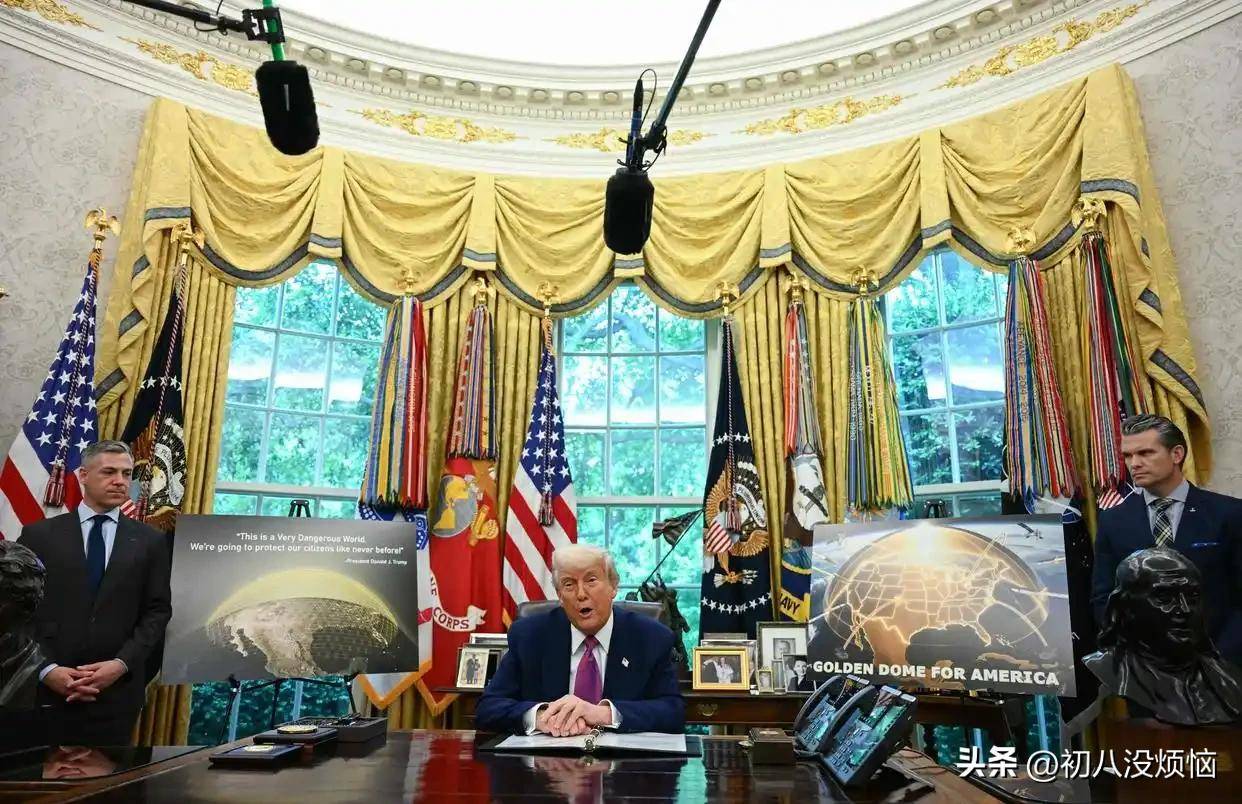
Group 1 - The core point of the article is that Canada has expressed interest in joining the U.S. "Iron Dome" missile defense system project, which is currently under discussion between the two governments [1][3]. - The "Iron Dome" missile defense system is a three-year project with an estimated cost of approximately $175 billion, aimed at creating a multifunctional missile defense system [3][4]. - President Trump stated that Canada will pay its "fair share" for the project and that discussions regarding the financial arrangements are ongoing [3][4]. Group 2 - The Canadian government confirmed that discussions about missile defense are part of broader trade and security negotiations between Prime Minister Trudeau and President Trump [3]. - The specifics of Canada's participation in the "Iron Dome" project, including responsibilities and payment amounts, remain unclear [3][4]. - The "Iron Dome" system is intended to integrate with existing U.S. missile defense capabilities and aims to intercept missiles launched from various locations, including space [4].