
奇点时刻

Search documents
任泽平年度预测:2026十大趋势,一起看清未来
泽平宏观· 2026-03-16 16:06
Core Viewpoint - The article emphasizes the transformative impact of AI on the global landscape, highlighting a significant historical shift characterized by the decline of the old order and the rise of AI as a powerful force [4][6]. Group 1: Major Predictions for 2026 - Seven major events are anticipated for 2026, including the end of a major cycle, increased geopolitical tensions, global interest rate cuts, the explosion of AI super applications, the rise of China's AI capabilities, a bullish stock market, a new era for commodities, and a bifurcation in the real estate market [6]. - The article warns that "AI is a tsunami, not a trend," indicating its unstoppable nature and profound implications for businesses and individuals [7]. Group 2: Investment Opportunities - The article outlines ten key areas of focus for the annual forecast, including identifying directions in the "dawn of the Kondratiev wave," recognizing the arrival of the "singularity moment," and exploring opportunities in agents, robotics, autonomous driving, AI healthcare, and commercial aerospace [9][10]. - It highlights the unique acceleration provided by China's "super-large market, complete supply chain, and engineer dividend," which presents distinct opportunities in the global race for AI dominance [11]. Group 3: Optimism and Future Insights - The article posits that true optimism stems from simplifying complex realities and making informed predictions about the future, positioning the annual forecast as a "ticket to a new world" [12].


2026十大趋势:任泽平年度预测定档
泽平宏观· 2026-03-15 16:06
Core Viewpoint - The article emphasizes the transformative impact of AI on the world, highlighting a significant historical cycle where traditional growth is waning while AI is emerging as a powerful force [4][6]. Group 1: Major Events and Predictions - Seven major events are predicted for 2026: the end of a major cycle, increased geopolitical turmoil, global interest rate cuts, the explosion of AI super applications, the rise of China's AI capabilities, a bullish stock market, and a bifurcation in the real estate market [7]. - The article warns that "AI is a tsunami, not a trend," indicating its unstoppable nature and profound implications for national competitiveness and individual wealth [8][9]. Group 2: Opportunities and Market Dynamics - The annual forecast will cover ten parts, including directions in the "dawn of the Kondratiev wave," the arrival of the "singularity moment," and opportunities in areas such as agents, robotics, autonomous driving, AI healthcare, and commercial aerospace [10][11]. - China's unique advantages, including a super-sized market, complete supply chain, and engineering talent, are expected to create a distinctive acceleration in the AI sector [12]. Group 3: Optimism and Future Insights - The article suggests that true optimism comes from simplifying complex insights and making future predictions, positioning the annual forecast as a "ticket" to a new world [13].

2025物业机器人奇点已至?
机器人大讲堂· 2025-09-25 10:07
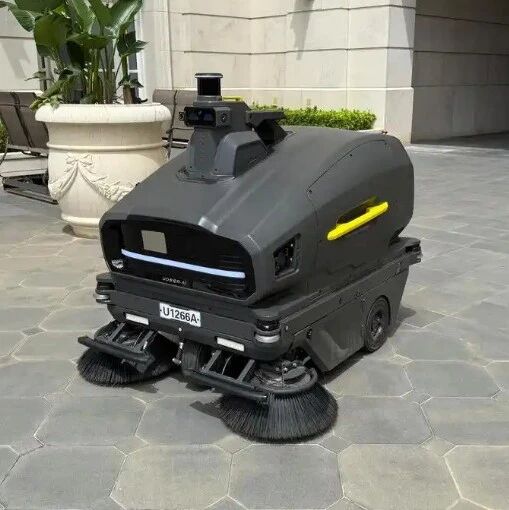
Core Viewpoint - The property robot sector is poised for significant growth, with expectations of technological maturity and cost optimization leading to a breakthrough in market penetration by 2025, fundamentally transforming property management efficiency, cost, and user experience [1][3][20]. Group 1: Key Developments in Property Robots - Property robots have rapidly integrated into communities, becoming essential tools for property management, with capabilities such as cleaning and patrols [1]. - Leading property management companies have collaborated with robot manufacturers to establish operational data, algorithm adaptations, and multi-functional product upgrades, laying the groundwork for large-scale implementation [3][12]. - The current low penetration rate of property robots indicates a pre-explosion phase, with expectations for high-frequency, low-speed applications to achieve over 10% market penetration within the next year [4]. Group 2: Economic Drivers for Adoption - The property management industry faces significant labor cost pressures, with personnel costs constituting approximately 70% of total expenses, necessitating the adoption of robots to reduce costs and improve service quality [6][9]. - Robots can replace 1-2 cleaning staff, eliminating additional costs such as social security and accommodation, leading to substantial long-term savings [6]. - The introduction of robots has resulted in improved service efficiency, transitioning from reactive to proactive service models, enhancing overall operational effectiveness [7][9]. Group 3: Technological and Cost Breakthroughs - Advances in technology and cost reductions are critical for the widespread adoption of property robots, with key components like laser radar seeing price drops from tens of thousands to thousands of yuan [11]. - The integration of AI algorithms and lower-cost camera modules has significantly improved the robots' ability to accurately identify obstacles and enhance operational efficiency [11]. - The scaling of production by leading companies is expected to further reduce costs, with estimates suggesting a 20%-30% decrease in hardware costs as production volumes increase [12]. Group 4: Innovative Business Models - New business models, such as leasing instead of outright purchases, have emerged, allowing property management companies to reduce financial burdens and operational risks associated with technology obsolescence [15]. - The collaborative model between robots and human staff enhances service quality, with robots handling routine tasks while humans focus on specialized cleaning [16]. - Flexible pricing models linked to service usage rather than personnel numbers are being introduced, allowing property management companies to better align costs with service delivery [18]. Group 5: Future Market Potential - The property management sector in China generated revenues of 1.69 trillion yuan in 2023, with labor costs exceeding 56%, indicating a substantial market opportunity for property robots [19]. - The future of property robots is expected to encompass multifunctional capabilities, integrating cleaning, inspection, security, and customer service into a single platform [19]. - Leading property management firms are transitioning from buyers to co-developers of robotic solutions, fostering deeper collaboration with technology providers to enhance product offerings [19].
做“有趣的人”vs“有用的工具”?
Hu Xiu· 2025-08-24 06:37
Core Perspective - The article emphasizes the need to shift from an education system that prioritizes being "useful tools" to one that fosters "interesting individuals" in response to changing societal needs and technological advancements [2][6]. Group 1: Changing Societal Context - The current generation is experiencing a "singularity moment" characterized by material abundance, where survival is no longer the primary concern, shifting focus to quality of life and personal fulfillment [3][4]. - The rapid advancement of technology, particularly AI, is diminishing the value of traditional skills, necessitating a redefinition of both work and social roles [4][5]. Group 2: Educational Recommendations - Education should aim to cultivate empathy in children by exposing them to global inequalities, fostering a sense of responsibility and a broader worldview [6]. - Encouraging children to discover their true passions and align them with their innate talents is crucial, as future competition will hinge on creativity and uniqueness rather than mere skills [7]. - Children must be guided to develop their own value systems and critical thinking skills, enabling them to navigate a complex world and define their own sense of purpose [8].