
契约理论

Search documents
诺奖得主奥利弗·哈特吐槽波音:公司文化变了,多起空难是因董事会失职
Xin Lang Cai Jing· 2026-02-12 09:12
Group 1 - The core theme of the World Economic Forum 2026 is "dialogue," emphasizing the importance of trust and integrity in maintaining effective communication amidst global trade tensions and competition [1][11] - Oliver Hart, a Nobel laureate, highlights that the crisis is not just about rules but the norms and trust that support them, suggesting that without these foundations, dialogue becomes meaningless [1][11] - Hart expresses skepticism about the effectiveness of corporate leaders' claims to avoid corruption, citing examples of companies like McKinsey and Boeing that have faced significant ethical challenges yet continued to operate [4][13] Group 2 - Hart emphasizes the need for companies to incorporate principles of honesty, fairness, and integrity into contracts, suggesting that dialogue should be explicitly included in agreements to foster reliable business relationships [6][15] - He proposes a mechanism for "shareholder democracy," where a random selection of shareholders can make collective decisions on significant corporate values, challenging the traditional view that shareholders only seek profit maximization [8][16] - Hart argues that the concentration of decision-making power in CEOs can lead to a disconnect from shareholder preferences, which may explain the recent decline in focus on ESG and sustainability issues [9][17]

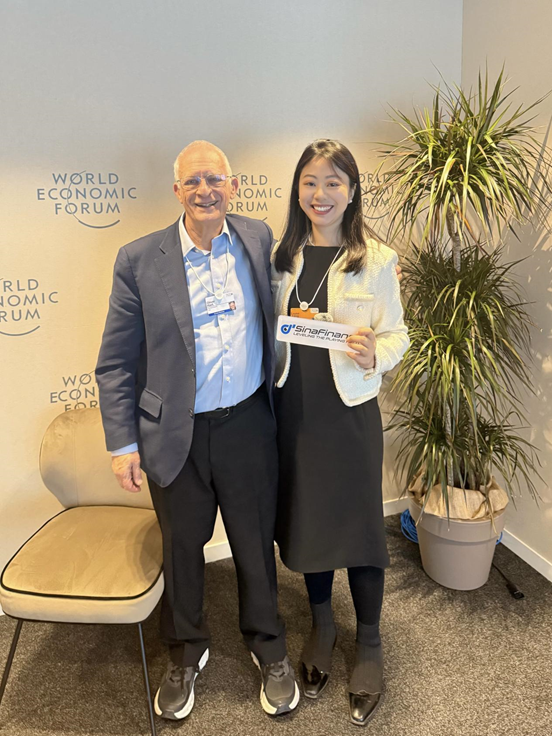
直击达沃斯|诺奖得主吐槽波音:公司文化变了,多起空难是因董事会失职
Xin Lang Cai Jing· 2026-01-23 00:04
Group 1 - The core theme of the 2026 World Economic Forum is "dialogue," emphasizing the importance of trust and integrity in maintaining international order amidst rising global trade tensions and competition [1][10] - Nobel laureate Oliver Hart highlights that the crisis is not just about rules but the norms and trust that support them, suggesting that without these foundations, dialogue becomes meaningless [1][10] - Hart's observations during the forum included discussions on corruption, where CEOs debated the ethical implications of engaging in bribery in countries with weak legal systems [3][12] Group 2 - Hart expressed skepticism about the effectiveness of CEOs' claims that they would not engage in corrupt practices, citing examples of companies like McKinsey and Boeing that have faced significant ethical challenges yet continued to operate [4][12] - He noted that the current political climate in the U.S. is concerning, as it reflects a breakdown of norms and trust, which are essential for effective dialogue and governance [5][13] - Hart argues that effective dialogue requires mutual trust and integrity, and without these, discussions can only serve as a means of information exchange rather than fostering genuine understanding [5][13] Group 3 - To maintain reliable business relationships in uncertain environments, Hart suggests incorporating principles of honesty, fairness, and integrity into contracts, along with establishing regular communication mechanisms [6][14] - He emphasizes that while this approach may not work for everyone, identifying unsuitable partners early can help businesses avoid unproductive collaborations [6][14] - Hart's recent research focus has shifted towards "shareholder democracy," challenging the notion that shareholders only prioritize profit maximization [7][8] Group 4 - He argues that individuals often consider ethical and environmental factors in their decisions, and this should also apply to corporate governance [8][15] - Hart proposes a mechanism for companies to genuinely gauge shareholder preferences on ethical issues by randomly selecting shareholders to participate in informed discussions on significant corporate decisions [8][15] - He believes that returning decision-making power to shareholders could reduce the influence of political pressures on corporate sustainability initiatives [9][16]
直击达沃斯|对话诺奖得主哈特:当规范开始崩塌时,对话如何进行?
Xin Lang Cai Jing· 2026-01-22 23:59
Core Viewpoint - The 2026 World Economic Forum emphasizes the importance of "dialogue" amidst increasing global trade tensions and competition among major powers, highlighting that the crisis is not just about rules but also about the norms, trust, and integrity that support these rules [1][10]. Group 1: Corruption and Business Ethics - A significant discussion at the forum focused on how companies, particularly from countries with strong legal systems, should navigate corruption in countries where bribery is common [3][12]. - Some CEOs expressed a firm stance against participating in corrupt practices, fearing it would lead to a "race to the bottom," while others, including Hart, questioned the sustainability of such ethical positions in practice [4][12]. - Hart cited examples of companies like McKinsey and Boeing, which, despite past ethical failures, have managed to survive and recover, suggesting that the reality of corporate behavior often contradicts idealistic views [4][12]. Group 2: Trust and Dialogue - Hart emphasized that without trust, dialogue becomes meaningless, and effective dialogue relies on the integrity and baseline ethics of the parties involved [5][13]. - He noted that the current political climate lacks empathetic dialogue, which is essential for genuine understanding and respect among parties [5][13]. - In contrast, the business sector is less affected by political changes, as businesspeople tend to prioritize cooperation and mutual needs [5][13]. Group 3: Contractual Integrity - Hart proposed that in uncertain environments, businesses should incorporate guiding principles of honesty, fairness, and integrity into contracts, along with establishing regular communication mechanisms [6][14]. - He suggested that dialogue should be explicitly included in contracts to foster transparency and proactive communication about potential risks [6][14]. Group 4: Shareholder Democracy - Hart's recent research focuses on "shareholder democracy," challenging the notion that shareholders only seek profit maximization [7][8]. - He argued that individuals often consider ethical and environmental factors in their decisions, and companies should genuinely inquire about shareholders' preferences regarding these issues [8][15]. - Hart proposed a mechanism for collective decision-making among shareholders, which would differ from traditional voting processes, allowing for more thoughtful deliberation on significant corporate values [8][16].
两本书,看懂经济社会,作出最优决策
Sou Hu Cai Jing· 2025-08-21 05:14
Group 1 - The core idea of the articles revolves around understanding economic decision-making and the implications of work on individuals and society [2][6][9] - "Everyone's Economics" and "Everything is a Contract" are two recommended books that provide insights into economic theories and practical decision-making [2] - The historical context of work hours shows a significant reduction in working hours in wealthy countries compared to the past, while poorer countries still experience longer work hours [10][11] Group 2 - The concept of the "ratchet effect" explains how employees may feel pressured to continuously perform at higher levels, leading to increased workloads over time [15][20] - Strategies to mitigate the ratchet effect include implementing relative performance evaluations, creating career growth paths, internal job rotations, and adopting seniority-based pay systems [23][24][25] - The ratchet effect can negatively impact both employees and employers, suggesting a need for careful management of performance expectations [22][20]

创金合信基金魏凤春:相持期的并购重组
Xin Lang Ji Jin· 2025-05-19 08:22
Group 1 - The market has entered a new phase of strategic equilibrium following the US-China negotiations, with a shift towards internal economic growth in China and a reduction in global risk aversion [1][2] - Gold prices have adjusted significantly, with COMEX gold down 4.1% as the need for safe-haven assets diminishes due to improved geopolitical stability [1][2] - The Nasdaq index saw a weekly increase of 7.2%, benefiting from the easing of trade tensions between the US and China, while the S&P 500 and Dow Jones also recorded gains [2][3] Group 2 - The recent financial data indicates a significant drop in new bank loans in China, with only 280 billion yuan in new loans in April 2025, the lowest since 2005 for the same period [3][4] - The US has faced a downgrade in its credit rating from Aaa to Aa1 by Moody's, primarily due to rising debt and interest payment concerns, which could lead to increased borrowing costs [4][5] - The loss of credibility in the US is attributed to both rising debt pressures and inconsistent political commitments, which may increase transaction costs in international dealings [6][7] Group 3 - The ongoing trade war has led to a deterioration in market trust, increasing transaction costs and complicating contractual agreements [5][6] - The financial strain on companies is linked to poor resource allocation and aggressive expansion strategies, which could lead to a rise in financial crises and loss of credibility [8][9] - Mergers and acquisitions are becoming a focal point for investors, with a need for careful analysis of post-merger competitiveness to achieve desired returns [10][11]