季节性调整

Search documents
美国经季节性调整后假日销售持平
Xin Lang Cai Jing· 2026-02-12 15:48
Core Viewpoint - US retail sales in December remained flat month-over-month, contrary to expectations of a 0.4% increase, while the control group sales decreased by 0.1%. However, the unadjusted sales figures surged to a record $817 billion, influenced by seasonal factors [1][2]. Group 1 - December retail sales in the US showed no month-over-month growth, against a forecasted increase of 0.4% [1][2]. - The control group sales experienced a slight decline of 0.1% [1][2]. - Unadjusted retail sales reached a historic high of $817 billion, significantly impacted by seasonal factors [1][2].
重磅预警!本周非农或诡谲难读,年度数据恐再面临大修正
Jin Shi Shu Ju· 2026-02-09 02:49
Core Viewpoint - Investors are highly anxious about the January employment report, which may reflect the past state of the fragile U.S. labor market rather than its future direction [1] Group 1: Employment Report Predictions - Economists predict that the U.S. will add 55,000 jobs in January, which is considered optimistic [2] - The unemployment rate is expected to remain low at 4.4%, with January's unemployment rate being a more effective measure of the labor market [2] - The release of the employment report has been delayed due to a brief budget dispute in Congress [2] Group 2: Market Expectations - If the January employment report meets or exceeds Wall Street expectations, the bull market may extend beyond technology stocks [3] - Conversely, a disappointing report could exacerbate the volatility seen in the market this year [3] - The labor market is perceived to be in a balanced state, despite a decrease in job openings in the professional and business services sector, influenced by immigration policies and AI [3] Group 3: Complexity of Employment Data - January employment reports are often complicated and subject to seasonal adjustments, with adverse winter weather impacting the data [3] - The holiday hiring surge typically leads to significant layoffs in January, with the U.S. economy usually losing 2 to 3 million jobs during this month [3] Group 4: Adjustments and Trust Issues - The U.S. Bureau of Labor Statistics (BLS) adjusts employment data to reflect significant seasonal fluctuations, but the pandemic has altered seasonal hiring patterns, leading to potential biases in adjustments [4] - There is a growing trust crisis regarding the accuracy of the BLS reports, exacerbated by high-level departures and budget constraints within the agency [6] - Critics argue that the BLS needs to modernize its data collection methods to improve the accuracy of employment reports [6] Group 5: Future Employment Market Outlook - The BLS has indicated that employment growth data for 2024-2025 may have been overestimated by 911,000 jobs, leading to expectations of downward revisions [5] - Monthly job additions may be revised down by 20,000 to 30,000, with the Federal Reserve suggesting potential reductions of up to 60,000 [5] - The year 2025 is projected to be the worst for employment growth in 16 years, excluding the pandemic period, with only 584,000 jobs expected to be added [5]
中国宏观周报(2025年11月第3周):农产品批发价季节性回落-20251124
Ping An Securities· 2025-11-24 05:08
Industrial Sector - Steel and building materials production has rebounded, while the operating rate of float glass has decreased[2] - The apparent demand for steel building materials has increased, while the operating rate for the textile polyester sector has shown seasonal weakness[2] - The operating rates for automotive tires have slightly declined this week[2] Real Estate - New home sales in 30 major cities decreased by 20.8% year-on-year, but the growth rate improved by 8.7 percentage points compared to last week[2] - The second-hand housing listing price index fell by 0.98% week-on-week, indicating a slight narrowing of the decline[2] Domestic Demand - Movie box office revenue increased by 74.7% year-on-year, with a daily average of 83.89 million yuan[2] - The volume of postal express deliveries has grown by 8.3% year-on-year, showing recovery in logistics[2] - Retail sales of major home appliances decreased by 34.6% year-on-year, a decline of 7.2 percentage points compared to the previous value[2] External Demand - Port cargo throughput increased by 3.4% year-on-year, while container throughput rose by 7.4%[2] - The export container freight index rose by 2.6% week-on-week, indicating a slight increase in shipping costs[2] Prices - The agricultural product wholesale price index fell by 0.1% week-on-week, reflecting seasonal trends[2] - The industrial product prices weakened, with the South China industrial product index dropping by 1.9%[2]
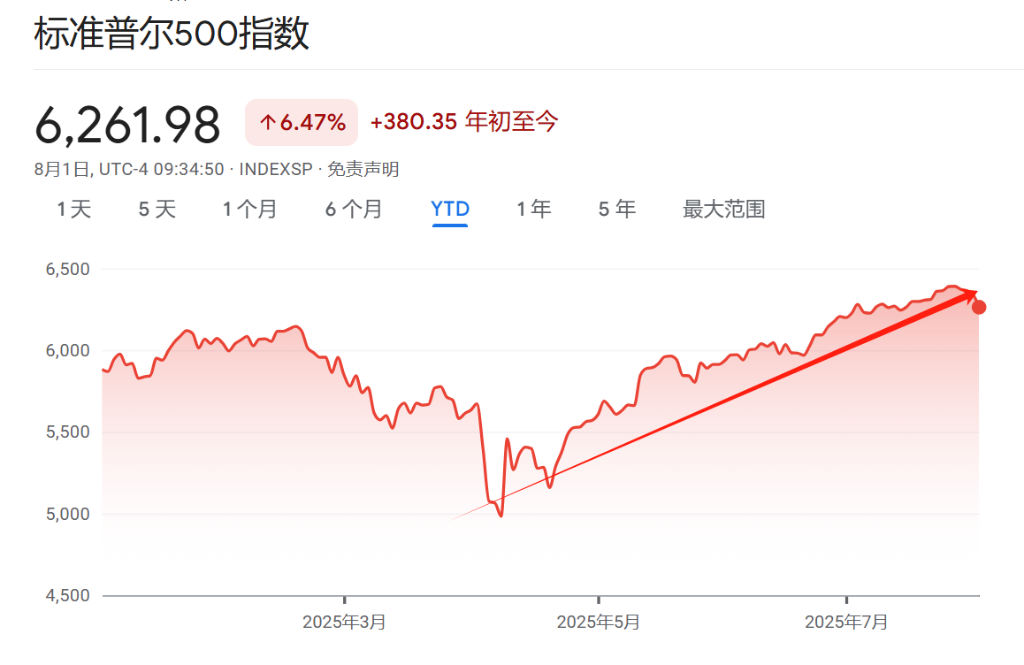
贸易战阴霾下谨慎情绪升温,对冲基金连续四周抛售美股
Hua Er Jie Jian Wen· 2025-08-01 13:49
Group 1 - Hedge funds are maintaining a cautious stance, continuing to sell U.S. stocks for four consecutive weeks, particularly in the technology, media, and telecommunications sectors, at the fastest pace in a year [1] - Retail investors have been net buyers of stocks for 23 consecutive trading days, contrasting with the cautious approach of hedge funds [1] - The Federal Reserve has kept interest rates unchanged, with Chairman Powell emphasizing the need for more time to assess the impact of tariffs on inflation before easing policies [1] Group 2 - Hedge funds reduced stock exposure and increased short positions in late March ahead of expected tariff announcements, a strategy that proved wise as global markets outperformed U.S. markets [2] - Despite missing the recent market rally, hedge funds have avoided significant losses by lowering leverage in advance, allowing them to sidestep forced participation in rebounds [2] - As of June, hedge funds' performance was flat, with a return rate of 7.8%, ranking in the 72nd percentile for the past six months since January 2000 [4] Group 3 - Seasonal patterns indicate that August and September are typically the worst-performing months of the year, which, combined with high valuations and tariff pressures, could pose challenges for the S&P 500 index [5] - Historical data shows that these two months perform particularly poorly during the first year of a presidential term, suggesting potential difficulties ahead before a strong year-end rally [5]