宏观基金

Search documents
创16年来最佳战绩!2025年全球对冲基金狂赚12.6% 股票与宏观策略最赚钱
Zhi Tong Cai Jing· 2026-01-13 07:45
Core Insights - The hedge fund industry achieved its best performance since the global financial crisis in 2025, with a return of 12.6%, marking the strongest annual performance since 2009 [1] - The HFRI Fund Weighted Composite Index (FWC) rose by 1.6% in December, contributing to the anticipated 12.6% increase for the year [1] - Key drivers of the hedge fund returns included long/short equity strategies and macroeconomic themes across stocks, bonds, commodities, and currencies, both exceeding 17% gains [1] Group 1: Performance Highlights - The hedge fund industry, valued at $4.98 trillion as of September 2025, demonstrated its ability to diversify investor portfolios amid geopolitical changes and macroeconomic uncertainties [1] - HFR President Kenneth J Heinz noted that diverse performance engines allowed the hedge fund industry to achieve uncorrelated performance growth across various financial market environments [2] - The healthcare, energy, and commodities sectors provided substantial returns, with healthcare-focused hedge funds rising by 33.8% and energy and materials funds increasing by 23.4% [3] Group 2: Strategy Performance - The HFRI Equity Hedge Index rose by 1.8% in December and achieved a cumulative increase of 17.3% for the year, marking the largest annual gain since 2020 and the second-largest since 2009 [2] - The HFRI Macro (Total) Index increased by 1.9% in December, marking seven consecutive months of growth with a total increase of 9.9% during that period [4] - Event-driven strategies saw a rise of 1.5% in December, with an annual increase of 11%, the highest since 2021, driven by expectations of a strong merger and acquisition environment in 2026 [4] Group 3: Strategy Challenges - The only strategy type that ended the year with a loss was the quantitative diversified funds, which fell by 0.65% due to increased volatility during key market events [4]
宏观基金迎“黄金年份” 黄金强势冲高至4402关口
Jin Tou Wang· 2025-12-22 06:11
Group 1 - The macro hedge fund industry is experiencing its best year since 2008, with significant volatility in currencies, commodities, and bonds providing lucrative opportunities for traders [2] - The HFR index tracking these funds rose by 16% as of the end of November, potentially marking the highest annual return since data collection began in 2008 [2] - Fund managers attribute the favorable market conditions to the volatility caused by the Trump trade war, which has led to a decline in the dollar, a sell-off in long-term bonds, and an increase in gold prices [2][3] Group 2 - Strong returns are continuing to revive the macro fund industry, which had been in a prolonged slump due to low interest rates and low volatility since 2008-09 [3] - Some funds are betting on the widening of the long-short bond spread to profit from the sell-off in long-term bonds, with notable gains reported by firms like Caxton and Grayscale Capital [3] - The current market environment is characterized by high enthusiasm for gold, a bear market for the dollar, and significant divergence in central bank policies [2]
加仓中国资产
Shang Hai Zheng Quan Bao· 2025-09-17 19:28
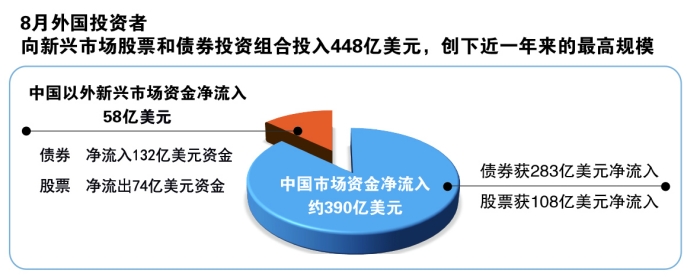
Group 1 - Foreign capital has shown increasing interest in the Chinese market, with a net inflow of 1.1 billion yuan from actively managed foreign investments for four consecutive weeks, marking the highest duration of net inflow since 2024 [3][4] - In August, foreign investors allocated approximately 39 billion USD to Chinese stocks and bonds, with 28.3 billion USD flowing into Chinese bonds and 10.8 billion USD into Chinese stocks, contributing to a total net inflow of around 39 billion USD [4] - International investment banks, such as Morgan Stanley and UBS, have noted a significant rise in overseas investors' interest in Chinese assets, with over 90% of U.S. investors expressing willingness to increase their allocation to the Chinese market, the highest level since early 2021 [4][5] Group 2 - The investment interest is extending towards the A-share market, with U.S. investors beginning to focus on A-shares rather than just American Depositary Receipts (ADRs) and internet sectors [6] - Factors driving this investment interest include China's leading position in sectors like humanoid robotics and biotechnology, ongoing policy support for economic stability, improved market liquidity, and a growing need for portfolio diversification away from the U.S. market [6][7] - Despite the heightened interest, the inflow of U.S. funds into the Chinese market is still in its early stages, with many investors needing time to familiarize themselves with specific stocks, particularly in sectors lacking U.S. counterparts [7]