宽严相济刑事政策

Search documents
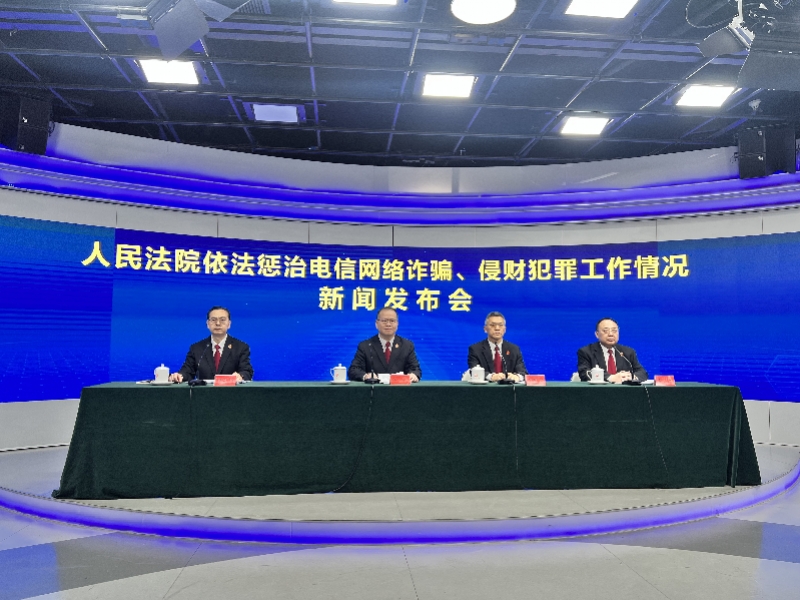
最高法:诈骗犯罪智能化特征明显,AI换脸被应用于诈骗场景
Nan Fang Du Shi Bao· 2026-02-26 03:25
Core Viewpoint - The Supreme People's Court emphasizes the increasing sophistication and intelligence of fraud crimes, highlighting the use of emerging technologies such as AI face-swapping and deep forgery in fraudulent activities [1][3]. Group 1: Fraud Crime Trends - Fraud crimes have consistently ranked among the top five new criminal cases received by the People's Courts over the years [3]. - From 2021 to 2025, the number of first-instance fraud criminal cases rose from a low of 52,000 in 2022 to 94,000 in 2024, with a slight decrease to 93,000 in 2025, marking an 81.2% increase compared to the lowest year [3]. - While the number of fraud cases is on the rise, the overall number of new criminal cases in national courts has shown a downward trend during the same period [3]. Group 2: Evolving Fraud Techniques - Traditional fraud methods such as false investment schemes, fake sales, and impersonation of customer service remain prevalent [3]. - New fraud techniques are emerging, utilizing advanced technologies to change methods and "scripts," leading to a more intelligent approach to fraud [3]. - Criminals are employing tools like "traffic scripts" and "promotion gadgets" to disseminate fraudulent information, making it easier to identify potential victims with lower costs and higher efficiency [3]. Group 3: Legal Response and Policy - The Supreme People's Court is actively addressing the new situations and characteristics of fraud crimes by leveraging legal networks and case databases [4]. - A draft opinion on the trial of fraud criminal cases is being prepared, aimed at guiding courts nationwide in implementing a balanced criminal policy, emphasizing the distinction between civil fraud and criminal offenses [4]. - The policy will focus on increasing the application of property penalties and maximizing efforts to recover losses, thereby enhancing the protection of public financial security [4].

敢担当勇作为有力维护安全稳定
Xin Lang Cai Jing· 2026-02-25 23:03
Core Viewpoint - The article emphasizes the importance of safety as a prerequisite for development and development as a guarantee for safety, highlighting the role of the national prosecution system in enhancing legal supervision and promoting a higher level of safety and rule of law in China by 2025 [1] Summary by Relevant Sections Legal Supervision and Crime Prosecution - In the first 11 months of 2025, national prosecution agencies approved the arrest of 604,000 criminal suspects and initiated public prosecutions for 1,272,000 cases, including 49,000 serious violent crimes such as intentional homicide, robbery, and kidnapping [9] - Prosecutions for crimes related to "yellow, gambling, and drugs" and theft, robbery, and fraud reached 446,000, while 4,014 cases of production safety crimes were prosecuted [10] - The application of the leniency system for guilty pleas was standardized, with 84.8% of suspects admitting guilt during prosecution, and a first-instance conviction rate of 96.8% [10] Anti-Organized Crime Efforts - In the same period, 8,528 individuals were prosecuted for organized crime, along with 58 "protective umbrella" cases, with 13 major cases under special supervision by the Supreme People's Procuratorate [10] Protection of Minors - Prosecutions for crimes against minors, including sexual assault and harm, totaled 66,000, showing a year-on-year decrease of 1.9%, while cases of juvenile crime received 85,000 prosecutions, down 9.7% [10] - The prosecution agencies supervised over 1,000 cases involving minors, correcting over 900 missed captures and filing 300 appeals against adults harming minors [10] Cyber Governance and Social Management - A plan for promoting legal governance in cyberspace was established, with 166,000 prosecutions for crimes committed online, including 62,000 for telecom and internet fraud [11] - The Supreme People's Procuratorate issued guidelines to standardize petition work, achieving a 99.8% procedural response rate within seven days for public petitions [15] Community Engagement and Conflict Resolution - In 2025, prosecution leaders handled 29,500 cases and resolved 70% of petition conflicts at the grassroots level, with a decrease in repeated and collective petitions by 2.4% and 15.8%, respectively [14][15] - The promotion of effective conflict resolution methods, such as the "Five Have" working method, was highlighted as part of the efforts to enhance community governance [13]

“两高一部”联合印发《关于依法惩治水运物流领域侵犯财产犯罪的指导意见》
Yang Shi Wang· 2026-02-12 07:33
Core Viewpoint - The Supreme People's Court, the Supreme People's Procuratorate, and the Ministry of Public Security jointly issued guidelines to combat property crimes in the water transport logistics sector, emphasizing the need for strict legal enforcement and comprehensive governance to protect the interests of the public and ensure the safe and efficient operation of inland waterway transport [1][2]. Group 1: Overall Requirements - The guidelines define property crimes in the water transport logistics sector as those occurring during the transportation, loading, storage, and distribution of goods via inland waterways, highlighting their cross-regional, mobile, and concealed nature [5][6]. - The guidelines advocate for a balanced criminal policy, suggesting that the severity of punishment should correspond to the offender's intent, circumstances, and role in the crime, with stricter penalties for organizers and repeat offenders [7]. Group 2: Legal Application - The guidelines specify that illegal possession of goods during transport and storage should be assessed based on whether the offender had actual control over the goods and the methods used to commit the crime [8]. - It is stated that public officials or those managing state-owned assets who illegally appropriate goods during water transport can be prosecuted for embezzlement or misappropriation [8]. Group 3: Evidence Collection - Law enforcement agencies are instructed to enhance evidence collection, focusing on documentation such as shipping logs, transaction records, and communication logs to support investigations [12]. - The guidelines emphasize the importance of thorough evidence review by the judiciary to ensure clarity and sufficiency in criminal cases related to property crimes in the water transport sector [12][13]. Group 4: Long-term Mechanisms - The guidelines call for industry governance, urging judicial bodies to report significant illegal activities to relevant authorities to improve management and prevention measures within the water transport logistics sector [15]. - There is a strong emphasis on legal education and awareness, with a directive for judicial bodies to engage in public legal education to foster a supportive legal environment for high-quality development in water transport logistics [16].
推进受贿行贿一起查 去年起诉行贿犯罪196人
Xin Lang Cai Jing· 2026-02-08 00:57
Group 1 - The Anhui Provincial People's Procuratorate handled a total of 165,000 cases in 2025, with 71 cases selected as typical or excellent nationwide [1] - The procuratorate prioritized safeguarding national political security, prosecuting 20,675 criminal suspects and filing public prosecutions for 57,495 cases [1] - The ongoing campaign against organized crime resulted in the prosecution of 631 individuals involved in gang-related crimes, placing Anhui's efforts among the top in the country [1] Group 2 - The procuratorate prosecuted 11,825 individuals for crimes endangering public safety and handled 600 public interest litigation cases in this area [1] - Financial security was a focus, with 759 individuals prosecuted for financial securities and money laundering crimes, achieving a high prosecution rate compared to upstream crimes [1] - Cybersecurity efforts included the prosecution of 4,381 individuals for telecom and internet fraud, along with 159 cases related to personal information protection [1] Group 3 - The procuratorate addressed corruption in power-concentrated and resource-rich areas, accepting 1,674 cases of occupational crimes and prosecuting 1,369 individuals, including 2 former provincial-level officials [2] - The initiative to investigate bribery alongside corruption led to the prosecution of 196 individuals for bribery offenses [2] - The procuratorate enhanced enterprise-related services, visiting 1,088 companies and resolving 971 practical issues, contributing to a favorable legal environment ranking third nationally [2]
全省监狱工作会议召开
Xin Lang Cai Jing· 2026-02-07 17:44
Core Viewpoint - The meeting emphasized the achievements of the prison system during the "14th Five-Year Plan" period and outlined the tasks for 2026, focusing on enhancing safety, education, and modernization in prison management [1] Group 1: Achievements and Goals - The prison system has achieved new results during the "14th Five-Year Plan" period, maintaining a 24-year record of safety with no incidents, contributing positively to national security and social stability [1] - For 2026, the focus will be on political leadership, building a tighter safety governance system, and ensuring the safety baseline is firmly upheld [1] Group 2: Strategic Directions - The meeting highlighted the need to advance a scientific education and reform system to improve the effectiveness of rehabilitation [1] - Emphasis was placed on legal governance in prisons, aiming to enhance the credibility of law enforcement and judicial systems [1] - The integration of digital technology is crucial for creating a more efficient smart prison system, promoting modernization in prison governance [1] Group 3: Implementation and Development - The meeting called for practical efforts in building a reliable and loyal workforce, essential for high-quality development in the prison system [1] - There is a commitment to accurately implement a balanced criminal policy and contribute to the broader goals of a safe and lawful Qinghai [1] - Continuous efforts will be made in various areas including education, law enforcement, and coordinated development to modernize prison work [1]
去年受理案件41.65万件
Xin Lang Cai Jing· 2026-01-29 16:41
Group 1 - The Hainan Provincial High People's Court reported a total of 416,500 cases accepted and 377,200 cases concluded last year, representing year-on-year increases of 6.25% and 6.06% respectively [1] - The average number of cases handled per judge was 360, an increase of 12 cases compared to the previous year [1] - All 16 judicial quality management indicators set by the Supreme Court were met, with 9 indicators exceeding the national average [1] Group 2 - A total of 10,273 criminal cases were concluded, resulting in 11,920 individuals being sentenced [1] - The court took a strong stance against crimes such as subversion, infiltration, espionage, and illegal religious activities, concluding 15 cases involving 18 individuals [1] - The ongoing campaign against organized crime resulted in the conclusion of 19 cases involving 195 individuals, with 102 million yuan in "black assets" disposed of [1] Group 3 - The court also addressed serious violent crimes, concluding 1,215 cases involving 3,052 individuals related to homicide, assault, robbery, and gun-related offenses [1] - Guidance was strengthened for new types of drug-related crimes, with 290 drug cases involving 505 individuals concluded [1] - A total of 195 cases of occupational crimes involving 212 individuals and 31 bribery cases involving 44 individuals were concluded [1] Group 4 - The court emphasized the importance of grassroots conflict resolution, successfully mediating 17,500 disputes through local people's courts [2] - The court concluded 1,507 foreign-related civil and commercial cases, promoting equal protection of the legal rights of both domestic and foreign parties [2] - Environmental resource cases totaled 944, supporting ecological civilization initiatives, while 2,828 maritime cases were concluded as part of ongoing reforms in maritime adjudication [2]
【新华社】最高法:加强新型犯罪综合治理
Xin Hua Wang· 2026-01-29 09:16
Core Viewpoint - The Supreme People's Court emphasizes the need to enhance the connection between administrative and criminal penalties to effectively govern new types of crimes, particularly those utilizing advanced technologies like artificial intelligence [1] Group 1: New Types of Crimes - New types of crimes are characterized by increasingly sophisticated methods and greater concealment, necessitating a focus on their social harm and the subjective illegal intent of the perpetrators [1] - Crimes involving high-tech professional gangs and temporary online coordination are to be strictly punished while also revealing their methods and dangers to educate the public [1] Group 2: Crime Trends and Policies - Overall, criminal activity is on a decline, with serious crimes decreasing and general crimes increasing, indicating a need for more targeted criminal policy [1] - The Supreme People's Court advocates for a balanced approach to criminal policy, maintaining strict measures against serious threats to national security and social stability while applying leniency to common, less severe offenses to promote rehabilitation and layered governance [1]
推进更高水平平安建设
Xin Lang Cai Jing· 2026-01-29 00:07
Core Viewpoint - The meeting emphasized the need for comprehensive implementation of criminal policies to enhance public safety and legal protection in Hunan Province [1] Group 1: Criminal Policy Implementation - The meeting highlighted the importance of strictly punishing crimes that threaten national security, severe violent crimes, and crimes that have strong public backlash [1] - It aims to promote a higher level of safety in Hunan through these measures [1] Group 2: Legal and Economic Development - The meeting discussed the deepening of the "Three Highs and Four News" special action to enhance intellectual property prosecution and support the development of new productive forces tailored to local conditions [1] - This initiative is intended to optimize the legal business environment [1] Group 3: Social Welfare and Public Interest - The "Protecting People's Livelihood" special action will strengthen judicial protection in areas such as food and drug safety, social security, healthcare, employment, and consumer rights [1] - Continuous promotion of ecological protection through public interest litigation in the Changsha-Zhuzhou-Xiangtan area is also a focus [1] Group 4: Youth Protection - The meeting emphasized the need for the "Sword Protecting Buds" special action to enhance the prevention and governance of juvenile crime, ensuring the healthy growth of minors [1] Group 5: Judicial Oversight and Efficiency - There is a focus on correcting prominent issues in law enforcement and judicial practices, strengthening the basic functions of criminal, civil, and administrative prosecution [1] - The meeting also discussed the importance of building a digital prosecution system and exploring high-efficiency case handling mechanisms [1]
宽严相济的传统思维及其当代转化
Xin Lang Cai Jing· 2026-01-27 17:52
Core Viewpoint - The article discusses the historical evolution and core connotations of the "leniency and severity" legal philosophy in China, emphasizing its importance in governance and social order throughout Chinese legal history [2][3]. Historical Evolution - The evolution of the "leniency and severity" legal thought can be divided into three stages: 1. The foundational theories during the Pre-Qin period, where Confucianism emphasized benevolence and the value of leniency, while Legalism advocated for strict laws to maintain social order [2]. 2. The formation of a systematic approach during the Han and Tang dynasties, where the integration of Confucian and Legalist ideas led to the principle of "morality as the mainstay, punishment as a supplement" [2]. 3. The deepening of practical applications during the Song, Ming, and Qing dynasties, where the dialectical use of leniency and severity became more pronounced in legal practices [2]. Core Connotations - The core connotations of the "leniency and severity" philosophy are reflected in three main aspects: 1. The value orientation of "morality as the mainstay, punishment as a supplement," emphasizing the leading role of moral education while using punishment as a secondary means [2]. 2. The principle of "appropriate leniency and severity," which includes leniency for minor offenses and strict punishment for serious crimes, ensuring that leniency does not encourage wrongdoing and severity does not harm the innocent [2]. 3. The dynamic adjustment of "adapting to circumstances," which highlights the need to flexibly adjust the balance of leniency and severity according to social conditions [2]. Modern Transformation - The contemporary transformation of the "leniency and severity" philosophy is characterized by its integration with the rule of law, ensuring that both leniency and severity adhere strictly to legal norms [3]. - The philosophy has evolved from a criminal justice policy to a comprehensive governance concept, as seen in the regulations of the Communist Party of China regarding disciplinary actions [3]. - Specific institutional innovations, such as the plea bargaining system and non-prosecution policies, have made the "leniency and severity" philosophy more operational in modern judicial practices [3][4]. Implementation and Adaptation - The implementation of the "leniency and severity" policy requires innovative practices, including legislative reforms to modernize penalties and judicial mechanisms that balance legal norms with case-specific circumstances [4]. - Recent trends show a dynamic adaptability in applying the policy, such as a more lenient approach towards juvenile offenders and a stricter stance on serious crimes [4]. - In the context of the digital age, the policy must address new types of crimes while maintaining a balance between strict enforcement and leniency for minor infractions, reflecting the evolving nature of societal challenges [4].
最高检:去年前11个月起诉未成年人犯罪8.5万人,同比下降9.7%
Xin Lang Cai Jing· 2026-01-26 06:39
Group 1 - The core viewpoint of the articles emphasizes the ongoing efforts of the judicial system in China to strengthen the protection of minors' rights and prevent crimes against them, with a focus on strict punishment for serious offenses while balancing rehabilitation for less severe cases [1][2] - In the first eleven months of 2025, the prosecution of crimes against minors, such as sexual assault and harm, decreased by 1.9% year-on-year, with a total of 66,000 cases [1] - The number of accepted and reviewed juvenile crime cases was 85,000, reflecting a year-on-year decline of 9.7% [1] Group 2 - The Supreme People's Procuratorate reported that from January to November 2025, a total of 604,000 individuals were arrested for various crimes, and 1.272 million were prosecuted, including 8,528 for organized crime [2] - The prosecution of drunk driving cases saw a significant decrease, with 236,000 cases accepted and 211,000 prosecuted, down 22.1% and 17.2% respectively [2] - The judicial system is actively combating cross-border telecom fraud, with 62,000 prosecutions for telecom network fraud in the same period [4]