
因时制宜

Search documents
宽严相济的传统思维及其当代转化
Xin Lang Cai Jing· 2026-01-27 17:52
Core Viewpoint - The article discusses the historical evolution and core connotations of the "leniency and severity" legal philosophy in China, emphasizing its importance in governance and social order throughout Chinese legal history [2][3]. Historical Evolution - The evolution of the "leniency and severity" legal thought can be divided into three stages: 1. The foundational theories during the Pre-Qin period, where Confucianism emphasized benevolence and the value of leniency, while Legalism advocated for strict laws to maintain social order [2]. 2. The formation of a systematic approach during the Han and Tang dynasties, where the integration of Confucian and Legalist ideas led to the principle of "morality as the mainstay, punishment as a supplement" [2]. 3. The deepening of practical applications during the Song, Ming, and Qing dynasties, where the dialectical use of leniency and severity became more pronounced in legal practices [2]. Core Connotations - The core connotations of the "leniency and severity" philosophy are reflected in three main aspects: 1. The value orientation of "morality as the mainstay, punishment as a supplement," emphasizing the leading role of moral education while using punishment as a secondary means [2]. 2. The principle of "appropriate leniency and severity," which includes leniency for minor offenses and strict punishment for serious crimes, ensuring that leniency does not encourage wrongdoing and severity does not harm the innocent [2]. 3. The dynamic adjustment of "adapting to circumstances," which highlights the need to flexibly adjust the balance of leniency and severity according to social conditions [2]. Modern Transformation - The contemporary transformation of the "leniency and severity" philosophy is characterized by its integration with the rule of law, ensuring that both leniency and severity adhere strictly to legal norms [3]. - The philosophy has evolved from a criminal justice policy to a comprehensive governance concept, as seen in the regulations of the Communist Party of China regarding disciplinary actions [3]. - Specific institutional innovations, such as the plea bargaining system and non-prosecution policies, have made the "leniency and severity" philosophy more operational in modern judicial practices [3][4]. Implementation and Adaptation - The implementation of the "leniency and severity" policy requires innovative practices, including legislative reforms to modernize penalties and judicial mechanisms that balance legal norms with case-specific circumstances [4]. - Recent trends show a dynamic adaptability in applying the policy, such as a more lenient approach towards juvenile offenders and a stricter stance on serious crimes [4]. - In the context of the digital age, the policy must address new types of crimes while maintaining a balance between strict enforcement and leniency for minor infractions, reflecting the evolving nature of societal challenges [4].
为什么“冬吃萝卜夏吃姜”
Xin Lang Cai Jing· 2026-01-19 19:14
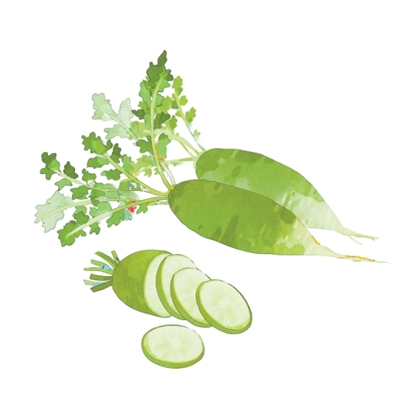
Core Viewpoint - The article emphasizes the traditional Chinese dietary wisdom of consuming specific foods in accordance with seasonal changes, highlighting the benefits of eating radishes in winter and ginger in summer for maintaining health and balance in the body [1][2][3]. Group 1: Winter Dietary Practices - In winter, the consumption of radishes is recommended as they help balance the body's internal heat and prevent issues like abdominal bloating and dryness [2]. - Radishes are noted for their ability to aid digestion and alleviate internal heat, making them a suitable choice for winter when the body's energy is more inward [2][3]. - The saying "Winter eating radish is better than ginseng" underscores the unique value of radishes during this season for maintaining health [2]. Group 2: Summer Dietary Practices - In summer, the consumption of ginger is advised to combat the effects of humidity and to support digestive health [3]. - Ginger's warming properties help to dispel internal cold and enhance appetite, counteracting the negative effects of cold foods and air conditioning during hot weather [3]. - The article stresses that the pairing of radishes in winter and ginger in summer reflects the Chinese medical philosophy of maintaining balance in response to environmental changes [3]. Group 3: Traditional Chinese Medicine Philosophy - The concept of "eating according to the seasons" is rooted in the traditional Chinese medical principle of harmonizing the body's internal state with external environmental conditions [3]. - The article illustrates the importance of seasonal eating as a means to achieve dynamic balance within the body, aligning dietary choices with natural rhythms [3]. - This approach promotes a holistic view of health, emphasizing the need for balance rather than the pursuit of singular dietary elements [3].
2000多岁的都江堰仍在使用,“乘势利导,因时制宜”的治水智慧有多牛?
Zhong Guo Huan Jing Bao· 2025-12-12 00:26
Core Insights - The Dujiangyan irrigation system, built over 2000 years ago, is the only ancient water conservancy project still in use today, exemplifying successful human-nature harmony [1] - The construction philosophy of Dujiangyan emphasizes "leveraging natural forces and adapting to circumstances," showcasing respect for nature while effectively managing water resources [1] Group 1: Historical Significance - Dujiangyan's greatest innovation lies in abandoning traditional dam-building methods, instead utilizing the natural topography of the Min River to create an efficient water management system [2] - The system includes three main components: the Fish Mouth (diversion dam), the Flying Sand Weir (flood control), and the Bottle Neck (flow regulation), which work together to address irrigation, flood prevention, sediment control, and flow management [2] Group 2: Construction Techniques - Historical construction techniques of Dujiangyan utilized local materials such as bamboo, wood, and pebbles, demonstrating a principle of using available resources effectively [2] - The design of structures like bamboo cages filled with stones and the conical shape of the wooden weirs reflects a harmonious relationship with nature, emphasizing flexibility over rigidity [2] Group 3: Modern Developments - Modern advancements in Dujiangyan have evolved traditional water engineering techniques, incorporating materials like steel wire and metal nets while maintaining the core philosophy of harmony with nature [3] - The irrigation area of Dujiangyan has reached 11.647 million acres, serving over 30 million people, with water quality consistently rated above Class II [3] Group 4: Societal Impact - The Dujiangyan project integrates human needs with ecological requirements, balancing water usage among various stakeholders and ensuring sustainable development [3] - The project has become a significant cultural and tourism asset, aligning with public expectations for improved quality of life and sustainable resource management [3]
(近观中国)在成都,中法元首为何来到都江堰?
Zhong Guo Xin Wen Wang· 2025-12-05 15:45
Group 1 - The meeting between Chinese President Xi Jinping and French President Emmanuel Macron in Dujiangyan symbolizes a deep cultural exchange and diplomatic dialogue between China and France [3][4] - The historical significance of Dujiangyan, as the world's oldest functioning irrigation system, serves as a backdrop for discussions on governance and international cooperation [4][5] - Both leaders emphasized the importance of adapting to global changes and maintaining balance in international relations, reflecting the ancient Chinese philosophy of "顺势而为" (acting in accordance with the situation) [7] Group 2 - Xi highlighted the wisdom derived from Dujiangyan's water management principles, which can be applied to modern governance and international diplomacy [4][5] - Macron praised the ingenuity of the Chinese people, noting that the ancient engineering marvel continues to inspire leaders from various countries [5] - The dialogue between Xi and Macron opened up further opportunities for cooperation in areas such as renewable energy, aerospace, and global governance [7]


为什么“冬吃萝卜夏吃姜”(文化中国行·二十四节气二十四问)
Ren Min Ri Bao· 2025-11-09 22:20
Core Points - The article discusses the significance of the "Beginning of Winter" (立冬) as the first solar term of winter, marking the transition into a season of cold and dormancy in nature [2] - It emphasizes the traditional dietary practices associated with this season, particularly the consumption of warming foods to combat the cold [2][3] - The article highlights the balance in dietary choices, advocating for the consumption of radishes in winter and ginger in summer, reflecting traditional Chinese medicine principles [3][4][5] Summary by Sections - **Beginning of Winter Significance** - "Beginning of Winter" is the 19th solar term, starting on November 7, 2025, symbolizing the onset of winter and the end of the year [2] - It represents a time when nature begins to freeze, and people prepare for the cold by adjusting their diets and clothing [2] - **Dietary Practices in Winter** - Traditional foods like hot pot and noodle soup are favored during winter to provide warmth and energy [2] - The saying "Eat radish in winter and ginger in summer" reflects the understanding of balancing dietary intake according to seasonal changes [3] - **Health Benefits of Radish** - Radish, particularly white radish, is considered beneficial in winter due to its cooling properties, helping to balance the body's internal heat [3] - It aids digestion and prevents issues like bloating and dryness, which can occur from excessive consumption of warming foods [3] - **Health Benefits of Ginger** - Ginger is recommended in summer to combat dampness and enhance appetite, as it has warming properties that help to dispel cold and humidity [4] - The consumption of ginger aligns with the body's need to maintain balance during hot weather [4] - **Traditional Chinese Medicine Philosophy** - The article underscores the philosophy of "nourishing yin in winter and yang in summer," promoting a holistic approach to health that aligns with natural cycles [5] - It advocates for seasonal eating as a means to maintain balance and harmony within the body, reflecting the wisdom of traditional Chinese dietary practices [5]
桃子更甜的密码(人民论坛)
Ren Min Ri Bao· 2025-07-20 21:52
Group 1 - The core idea of the articles revolves around the development of the peach industry in China, highlighting the importance of scientific advancements and local conditions in enhancing the sweetness and quality of peaches [1][2]. - A recent scientific discovery identified a special protein that plays a crucial role in the accumulation of sucrose in peaches, providing a theoretical basis for breeding better-tasting varieties [1]. - The peach industry in Zaoyang, Hubei, has evolved significantly, with fresh peaches available from mid-May to early November, and a variety of products such as peach wine and peach gum being developed [2]. Group 2 - The integration of cultural and tourism activities with the peach industry has led to comprehensive revitalization, showcasing the importance of local resources and conditions in driving economic growth [2]. - The article emphasizes the need for continuous exploration and adaptation in business, as illustrated by the story of a businessman from Yiwu who found success by pivoting to a specific product after multiple attempts [3]. - The concept of "maturity" in industry and regional development is highlighted, suggesting that a mature industry can better withstand external shocks and navigate challenges, ultimately contributing to a stronger national economy [4].