
小寒养生

Search documents
小寒节气寒邪最盛、阳气最弱 日常推拿这几个穴位才是护阳关键
Xin Lang Cai Jing· 2026-01-12 18:01
Core Viewpoint - The article emphasizes the importance of health preservation during the "Minor Cold" season, advocating for gentle nourishment and moderate exercise to protect the body's yang energy against the harsh cold [1]. Group 1: Health Recommendations - During the Minor Cold, the focus should be on warming and nourishing the body rather than resisting the cold [1]. - The key to health preservation is to prevent cold damage, strengthen the body's foundation, and promote yang energy [1]. - Specific massage techniques are recommended to stimulate key acupuncture points, which can help resist external cold and prepare the body for spring [1][2]. Group 2: Acupuncture Points and Techniques - **Guanyuan Point**: Located three inches below the navel, it is considered a reservoir of vital energy. Massaging this point can significantly enhance yang energy and improve conditions like cold abdomen and menstrual issues [3][4]. - **Mingmen Point**: Found at the second lumbar vertebra, it is crucial for gathering yang energy and eliminating cold and dampness from the lower back. Recommended techniques include pressing and rubbing until warmth is felt [5][6][7]. - **Dazhui Point**: Located at the seventh cervical vertebra, it governs the body's yang energy. Techniques include using hot water during bathing or rubbing the area until the skin feels warm [8].
小寒养生抓“三防”:防寒 防燥 防抑郁
Xin Lang Cai Jing· 2026-01-06 16:24
Core Viewpoint - The article emphasizes the importance of health preservation during the "Minor Cold" solar term, highlighting the need for scientific approaches to maintain well-being in winter, including dietary recommendations and lifestyle adjustments [1]. Group 1: Health Preservation Strategies - The core of winter health preservation is to "store" energy, particularly during the Minor Cold period, which requires protecting Yang energy and avoiding cold invasions [2]. - Key protective measures include keeping vital body parts warm, adhering to a "sleep early, rise late" routine, and engaging in gentle exercises like walking and Tai Chi to prevent excessive sweating and energy loss [2]. Group 2: Dietary Recommendations - Dietary adjustments should follow the "warming and nourishing" principle, avoiding excessive consumption of rich foods while ensuring a balanced intake of nutrients [3]. - Recommended foods include yam, chicken, fish, and red dates, which support spleen and kidney health, aligning with the winter's "storage and nourishment" needs [3]. Group 3: Recommended Herbal Dish - A suggested home remedy is the "Yam and Pig Stomach Chicken Soup," which combines ingredients like yam, pig stomach, old hen, ginger, red dates, and goji berries to enhance nutrition and health benefits [4]. - The preparation involves simmering the pig stomach and chicken with ginger, followed by adding yam and other ingredients to maximize nutrient release, with a caution to adjust for individual health conditions [4].
温阳祛湿护脾胃 养生固本正当时
Xin Lang Cai Jing· 2026-01-05 23:52
Core Viewpoint - The article emphasizes the importance of targeted health management during the "Minor Cold" season in Nanning, focusing on methods to combat the unique challenges posed by the local climate, including humidity, cold, and significant temperature fluctuations [1]. Group 1: Health Recommendations - The key health issues during the Minor Cold season in Nanning include dampness, cold, and large temperature differences, which can lead to various health problems such as joint pain and digestive issues [1]. - It is advised that residents, especially the elderly and children, should follow the principle of "early to bed and late to rise" to avoid exposure to cold and dampness [1]. - Simple health practices such as soaking feet in warm water before bed can enhance circulation and strengthen the body [1]. Group 2: Dietary Guidance - The article stresses the importance of "balanced nourishment" rather than blindly following popular trends in dietary supplements during the Minor Cold season [2]. - It is recommended to start with easily digestible foods like millet porridge and pumpkin to prepare the digestive system before consuming more substantial nourishing foods [2]. - Specific foods such as yam, lotus seeds, and red dates are suggested for making soups or teas, as they are gentle on the digestive system and provide nourishment without burdening it [2].

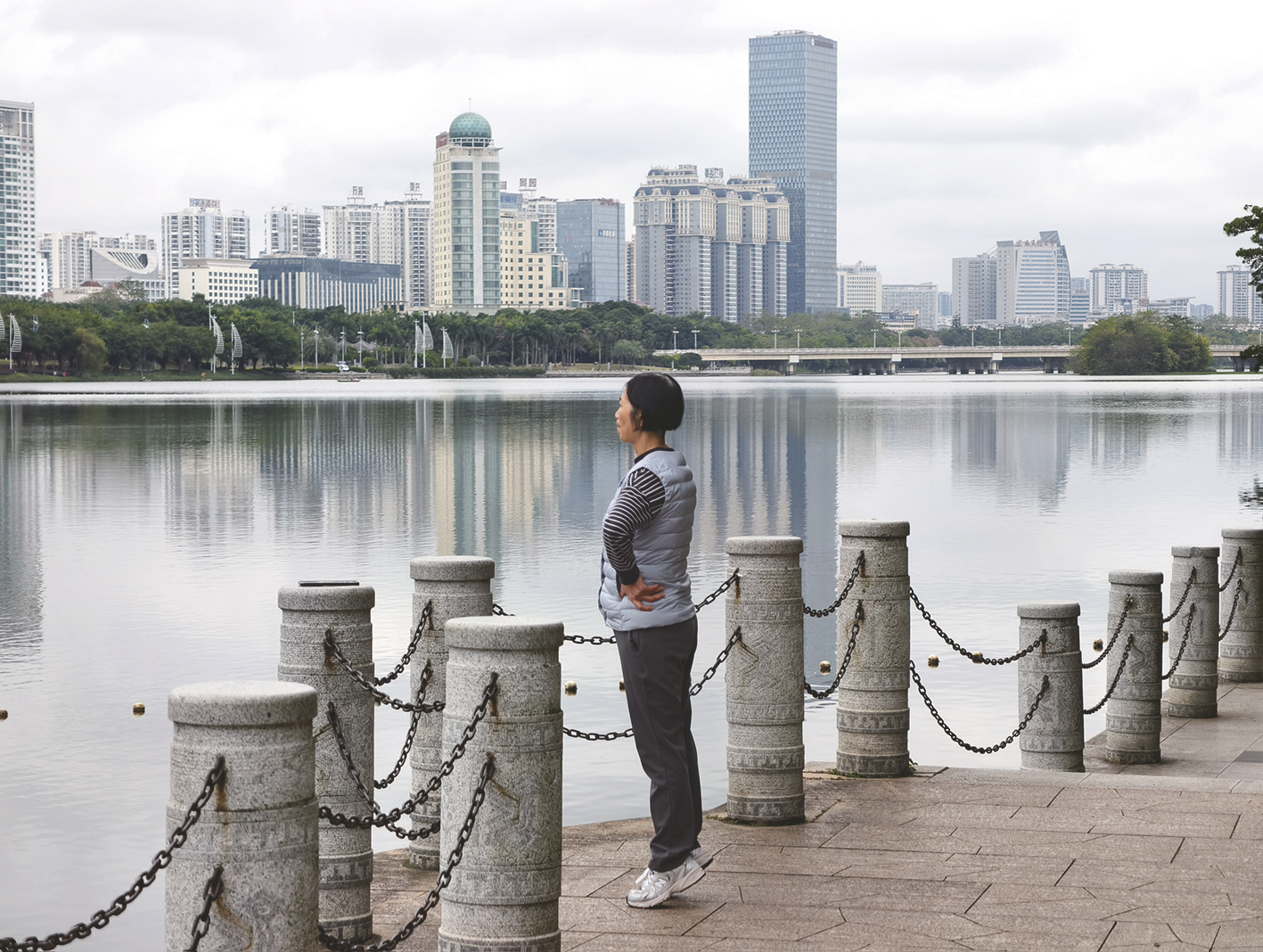
小寒养生 四个维度教你安稳过寒冬
Xin Lang Cai Jing· 2026-01-05 19:46
Core Viewpoint - The article emphasizes the importance of health maintenance during the "Minor Cold" solar term, focusing on warming the body, nourishing the yin, and preventing cold exposure to ensure well-being during winter [1]. Group 1: Lifestyle Recommendations - The principle of "early sleep and late rising" is advised to protect yang energy and reduce exposure to cold [2]. - Special attention should be given to keeping the head, neck, and feet warm when going outside, using hats, scarves, thick socks, and warm shoes to prevent the loss of yang energy [2]. Group 2: Dietary Guidance - A diet that focuses on warming the spleen and kidneys, as well as nourishing yin, is recommended, avoiding cold and raw foods [3]. - Suggested foods include warm meats like lamb, beef, and chicken, along with nuts and dried fruits to strengthen the spleen and kidneys [3]. - Ingredients like tremella, lily, snow pear, and honey should be included to alleviate dryness caused by winter [3]. Group 3: Emotional Well-being - Maintaining emotional balance is crucial during this season, as negative emotions can affect organ function [4]. - Activities such as listening to soothing music, practicing Tai Chi, and meditation are recommended to relieve stress and promote a positive mindset [4]. Group 4: Exercise Recommendations - Exercise should be gentle and moderate to avoid excessive sweating that could deplete yang energy [5]. - Activities like walking, slow jogging, Tai Chi, and Ba Duan Jin are suggested during sunny periods to enhance circulation and strengthen the body against cold [5].
早卧晚起 静心养神
Xin Lang Cai Jing· 2026-01-05 19:46
Group 1 - The article emphasizes the importance of adapting to seasonal changes during the "Minor Cold" period, focusing on nurturing Yang energy and protecting Yin to maintain health during winter [3][4][5] - It highlights the need for proper daily routines, such as going to bed early and waking up late to align with the natural rhythms of Yang energy, and emphasizes the importance of keeping warm, especially for the head, neck, and feet [4] - Dietary recommendations include consuming warming foods like lamb, beef, and chicken, along with nuts and fruits to nourish the spleen and kidneys, while also incorporating ingredients that moisten and relieve dryness [5][6] Group 2 - The article discusses the significance of emotional well-being during winter, suggesting practices like listening to soothing music and engaging in gentle exercises to alleviate stress and maintain a balanced mood [7] - It advises on moderate physical activities that promote circulation without exhausting Yang energy, recommending exercises like walking, Tai Chi, and gentle stretching during sunny periods [7] - The overall message is to harmonize with nature's rhythms to protect internal Yang energy and nourish Yin fluids, laying a solid foundation for health as spring approaches [7]
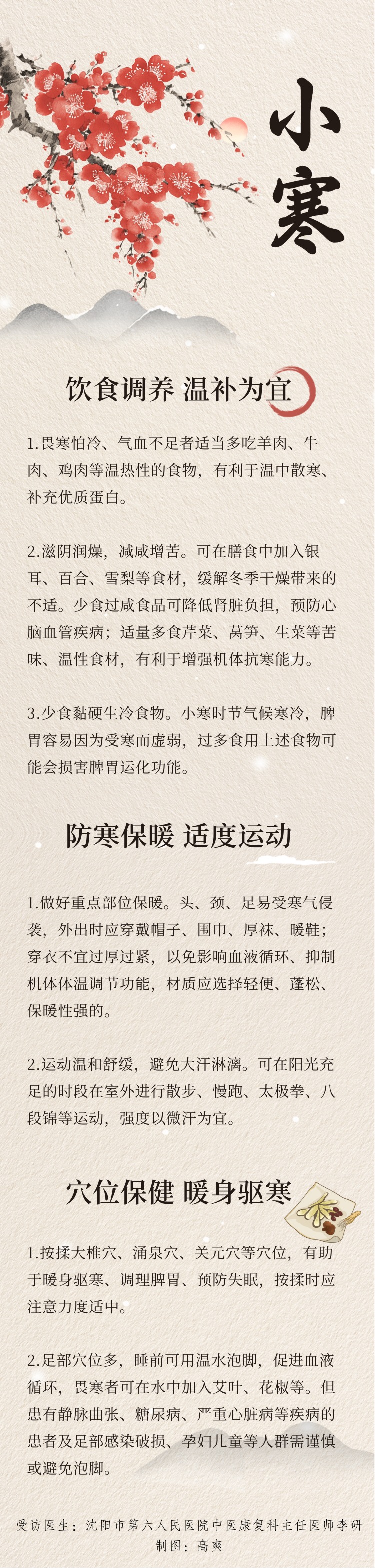
小寒养生,这份指南请查收
Xin Hua Wang· 2026-01-05 07:53
Group 1 - The article emphasizes the importance of dietary adjustments, moderate exercise, and acupoint health care during the cold season to enhance physical health [1] - It suggests incorporating ingredients like tremella, lily, and snow pear into the diet to alleviate dryness caused by winter, while reducing salty foods to lower kidney burden and prevent cardiovascular diseases [4] - The article advises against consuming sticky, hard, and cold foods during the cold season, as they may weaken the spleen and stomach [5] Group 2 - It highlights the need for proper warmth in key body areas such as the head, neck, and feet, recommending the use of hats, scarves, thick socks, and warm shoes when going outside [5] - The article encourages outdoor activities like walking, jogging, tai chi, and Ba Duan Jin, with exercise intensity kept to a level that induces slight sweating [7] - It discusses acupoint health care techniques, such as massaging specific acupoints to warm the body and prevent cold, while also promoting foot baths with warm water to enhance blood circulation [8]
进入最冷的三九天,小寒养生请牢记“四注意”“四不吃”,少生病、不遭罪!
Bei Jing Ri Bao Ke Hu Duan· 2026-01-04 23:28
Group 1 - The article discusses the arrival of the "Minor Cold" solar term, which is characterized by increased coldness and snowfall [4][1] - It highlights that "Minor Cold" is the fifth solar term of winter and is often colder than "Major Cold," as it falls within the coldest period known as "Three Nines" [4][6] - The article mentions traditional sayings that emphasize the significance of "Minor Cold" being colder than "Major Cold" [4] Group 2 - The article provides health tips for the "Minor Cold" period, emphasizing the importance of warming the body and nourishing the kidneys to prevent cold-related ailments [7][11] - It suggests specific dietary recommendations, including the consumption of warm foods and avoiding cold, spicy, and raw foods to maintain energy and health [16][17][18] - The article also includes recipes for nourishing soups and teas that are beneficial during this season, such as chestnut chicken soup and pumpkin millet porridge [21][25][27]