
桂圆

Search documents
古集新韵乡情切
Xin Lang Cai Jing· 2026-02-15 22:17
Core Insights - The traditional market in Hemudu Town, Yuyao City, is experiencing a vibrant atmosphere as it continues its centuries-old tradition, showcasing local delicacies and crafts during the festive season [1][2] Group 1: Market Atmosphere - The market is adorned with festive decorations, including red couplets and various Chinese knots, creating a lively and celebratory environment [1] - Vendors are offering a wide range of traditional foods and goods, such as local sausages, dried mushrooms, and handmade bamboo products, reflecting the local culture and craftsmanship [1][2] Group 2: Vendor Experiences - Long-time vendors, like Rong Xin from Anhui and Kong Erqiu from Jiangsu, highlight their dedication to their craft, with many having established a loyal customer base over the years [2] - The market serves as a vital hub for local residents and visitors from surrounding areas, providing a one-stop shop for New Year goods, especially for those who may not be familiar with modern technology [2] Group 3: Community Engagement - The market attracts a diverse crowd, including elderly residents who reminisce about the past and appreciate the convenience of modern transportation to access the market [2] - The market administrator notes the significant turnout, with over 60 stalls participating in the last major market day before the New Year, indicating strong community engagement and participation [2]
年货市场采购旺
Xin Lang Cai Jing· 2026-02-09 20:20
Core Insights - The article highlights the surge in demand for seasonal and imported fruits in Yiwu, Zhejiang, as the market enters the peak purchasing season for the Lunar New Year [1] - The increase in market foot traffic is attributed to the upcoming Spring Festival Gala's sub-venue being located in Yiwu, contributing to a steady rise in customer numbers [1] Market Trends - The Yiwu fruit market has seen a significant influx of customers since the beginning of the lunar calendar's last month, indicating a robust demand for various fruits such as apples, sugar oranges, longans, durians, and cherries [1] - The combination of seasonal demand and the Spring Festival Gala's influence is expected to sustain the market's growth trajectory [1]
立春起就要“养肝”了,有3个表现的人尤其注意
Xin Lang Cai Jing· 2026-02-05 15:05
Core Viewpoint - The article emphasizes the importance of liver health during the beginning of spring, highlighting traditional Chinese medicine's perspective on the liver's role in regulating bodily functions and the need for specific care during this season [1][2]. Group 1: Key Points on Liver Care - The core of spring liver care is to promote the smooth flow of liver qi, avoiding repression or depletion, which can lead to various health issues [2][4]. - There are two potential imbalances during this period: excessive liver qi leading to "liver fire," and insufficient liver qi resulting in "liver stagnation," both of which can cause emotional and physical symptoms [5][6]. Group 2: Three Main Principles of Liver Care - **Soothe Liver Qi**: Avoid emotional repression and anxiety, which can lead to discomfort and symptoms like rib pain and throat discomfort. Activities such as walking and practicing Qigong can help [4][6]. - **Clear Liver Fire**: For those with a hot constitution or poor dietary habits, it is essential to clear excess liver fire through a light diet and adequate sleep to prevent symptoms like dry mouth and insomnia [6][10]. - **Nourish Liver Yin**: To prevent liver blood deficiency, which can lead to dizziness and other symptoms, it is important to avoid excessive eye strain and include nourishing foods like goji berries and spinach in the diet [6][10]. Group 3: Dietary Adjustments - The dietary focus during spring should be on increasing spicy and sweet flavors while reducing sour and spicy foods to support the liver's upward energy [10][11]. - **Increase Spicy Foods**: Foods like leeks and garlic can help disperse stagnant energy and enhance liver function [12]. - **Increase Sweet Foods**: Ingredients such as yam and lotus seeds can nourish the spleen and liver, promoting overall health [13]. - **Reduce Sour Foods**: Excessive sour foods can hinder the liver's ability to function properly during this energetic season [14]. Group 4: Daily Habits for Liver Health - Simple daily habits can significantly contribute to liver health, such as avoiding smoke, managing emotions, and maintaining a regular sleep schedule [15][18]. - **Avoiding Alcohol**: Individuals who naturally avoid alcohol are protecting their liver from potential damage caused by alcohol metabolism [18]. - **Regular Sleep Patterns**: Going to bed at a consistent time supports liver repair and overall health [19]. - **Monitoring Weight**: Keeping track of weight can help prevent excess fat accumulation around the liver, which is crucial for maintaining liver health [20].


泸州“村播”的进阶之路 一个个直播间成为乡村振兴的“新引擎”
Si Chuan Ri Bao· 2026-01-27 08:25
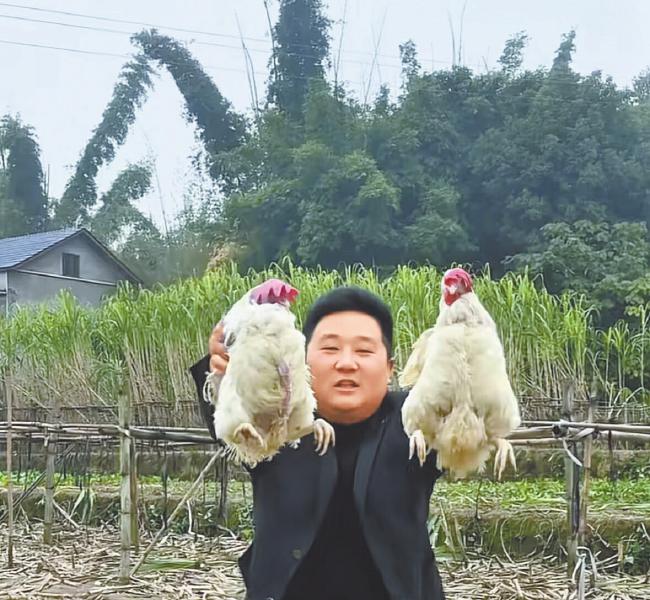
Core Insights - The rise of rural e-commerce influencers, known as "village broadcasters," in Luzhou is significantly contributing to local economic development and agricultural sales [5][10] - The transformation from attracting followers to generating revenue through local industries marks a new phase for these influencers [10][11] Group 1: Village Broadcasters' Impact - Ming Hongqiang, a prominent village broadcaster, has over 1.68 million followers on Douyin and estimates sales of tens of thousands of yuan during the upcoming New Year festival [5][6] - Luzhou has seen the emergence of numerous rural e-commerce influencers, with two having over 10 million followers, 80 with over 1 million, and 1,130 with over 100,000 followers [5] - The success of these influencers is leading to a broader trend of rural entrepreneurship and economic revitalization in the region [6][8] Group 2: Economic Contributions - Ming Hongqiang's live broadcasts have achieved a peak viewership of 100,000, generating over 200,000 yuan in sales per session [7] - The total rural online retail sales in Luzhou reached 1.901 billion yuan in 2025, a year-on-year increase of 16.59%, while agricultural product online retail sales were 1.169 billion yuan, up 12% [10] - The "village broadcasting" model is evolving from merely attracting attention to effectively converting traffic into economic value [10] Group 3: Challenges and Support - New village broadcasters face challenges such as competition and lack of systematic operational knowledge, which can hinder their growth [12][14] - The local government is implementing policies to strengthen the training and development of rural e-commerce talent, with 21 training sessions held in 2025 for 770 participants [14][15] - Future initiatives include hosting competitions and events to provide broader platforms for village broadcasters and enhance their market analysis and brand operation skills [15][16]
一个个直播间成为乡村振兴的“新引擎”
Xin Lang Cai Jing· 2026-01-26 21:05
Core Viewpoint - The rise of rural e-commerce influencers, known as "village broadcasters," in Luzhou is significantly contributing to local economic development and the promotion of agricultural products through live streaming platforms like Douyin [3][4][5]. Group 1: Growth of Rural E-commerce - The village broadcaster Ming Hongqiang has over 1.68 million followers on Douyin and estimates sales of tens of thousands of yuan during the upcoming New Year festival [3]. - Luzhou has cultivated a significant number of rural e-commerce influencers, with 2 individuals having over 10 million followers, 80 with over 1 million, and 1,130 with over 100,000 followers [3]. - Ming Hongqiang's live streaming sessions have reached up to 100,000 viewers, generating sales exceeding 200,000 yuan in a single session [4]. Group 2: Economic Impact - The rural e-commerce sector in Luzhou achieved a network retail sales figure of 1.901 billion yuan in 2025, marking a year-on-year growth of 16.59%, while agricultural product sales reached 1.169 billion yuan, up 12% [7]. - Ming Hongqiang has established two companies to support local farmers, teaching them video production and facilitating the sale of local products, including over 6,000 free-range chickens and more than 500,000 jin of local specialties [5]. Group 3: Challenges and Support - New rural broadcasters face challenges such as competition and lack of experience in account management and market analysis [9][10]. - The Luzhou government is implementing policies to strengthen the training of rural e-commerce personnel, having conducted 21 training sessions for 770 individuals in 2025 [11][12]. - Future initiatives include hosting live streaming competitions and resource matching events to enhance the capabilities of rural broadcasters and connect them with agricultural producers and sales enterprises [12].
内蒙古呼和浩特市市场监督管理局关于食品安全监督抽检信息公告(2025年第16期)
Zhong Guo Zhi Liang Xin Wen Wang· 2026-01-19 09:00
Core Insights - The announcement from the Hohhot Market Supervision Administration details the results of food safety inspections conducted on 811 batches of various food products, with 798 passing and 13 failing the tests [1]. Summary by Category Inspection Results - A total of 811 food samples were tested, with 798 deemed qualified, resulting in a pass rate of approximately 98.4% [1]. - 13 samples were found to be non-compliant with safety standards [1]. Non-compliant Products - Specific non-compliant products included: - Dried longan with sulfur dioxide residue exceeding the limit of 0.05g/kg, recorded at 0.0713g/kg [1]. - Roasted sunflower seeds with peroxide value exceeding the limit of 0.50g/100g, recorded at 1.9g/100g [1]. - Cooking oil with acid value exceeding the limit of 5mg/g, recorded at 6.6mg/g [1]. - Lychee with pesticide residues (chlorpyrifos) exceeding the limit of 0.1mg/kg, recorded at 0.19mg/kg [1]. - Various other products also showed pesticide residues exceeding the permissible limits [1].
重庆市长寿区市场监督管理局关于104批次食品安全抽检情况的通告(2025年第10号)
Zhong Guo Zhi Liang Xin Wen Wang· 2026-01-13 07:45
Summary of Key Points Core Viewpoint - The Chongqing Changshou District Market Supervision Administration conducted a food safety inspection of 104 batches of various food products, revealing that 100 batches met safety standards while 4 batches were found to be non-compliant [2]. Group 1: Inspection Results - A total of 104 food samples were tested, covering 12 categories including restaurant food, starch products, seasonings, and alcoholic beverages [2]. - Out of the 104 samples, 100 were compliant with national food safety standards, while 4 samples were deemed non-compliant [2]. - The non-compliant products were subjected to legal actions as per the Food Safety Law of the People's Republic of China, including recall and removal from shelves [2]. Group 2: Non-Compliant Products - Specific non-compliant products included: - Fried dough sticks with aluminum residue at 957 mg/kg, exceeding the limit of 100 mg/kg [4]. - Steamed buns containing sweeteners at 1.83 g/kg, which are prohibited [4]. - Longan with sulfur dioxide residue at 0.138 g/kg, exceeding the permissible limit of 0.05 g/kg [4]. - Another longan sample with sulfur dioxide residue at 0.115 g/kg, also exceeding the limit [4]. Group 3: Compliance Actions - The local market supervision department initiated investigations into the non-compliant products, tracing their distribution and implementing risk control measures [2]. - Actions taken included product recalls and corrective measures to address the reasons for non-compliance [2].
冬季进补勿“盲补” 专家提醒辨清体质科学滋养
Xin Lang Cai Jing· 2026-01-10 14:21
Core Viewpoint - Winter is considered an ideal time for supplementation to enhance physical health, but individuals should understand their body constitution to avoid inappropriate supplementation that may lead to adverse effects [1][5] Group 1: Body Constitution Types - Traditional Chinese medicine categorizes body constitution into nine types, with six common types in winter:平和质 (Balanced), 气虚质 (Qi Deficiency), 阳虚质 (Yang Deficiency), 阴虚质 (Yin Deficiency), 痰湿质 (Phlegm-Damp), and 湿热质 (Damp-Heat) [1][5] - Individuals with a balanced constitution do not require excessive supplementation and should maintain a moderate and balanced diet [1] Group 2: Supplementation Principles - For Qi Deficiency, characterized by fatigue and pale complexion, the principle is to supplement gently with foods like yam and lotus seeds, avoiding heavy or overly warming supplements [1][2] - Yang Deficiency presents with cold extremities and a preference for warm foods; suitable foods include lamb and ginger, while cold foods should be avoided [2] - Yin Deficiency is marked by symptoms like dry mouth and insomnia; individuals should focus on nourishing foods like duck and black sesame, avoiding spicy and hot foods [2] - For Damp-Heat constitution, the focus is on clearing heat and dampness with foods like adzuki beans and winter melon, while avoiding warming foods [4] - Phlegm-Damp constitution requires strengthening the spleen and eliminating phlegm, with recommended foods including yam and poria, while avoiding cold drinks and fatty foods [4] Group 3: Professional Guidance - Due to the complexity of body constitutions, individuals experiencing difficulty in self-assessment or with complicated symptoms are advised to seek professional help from a traditional Chinese medicine practitioner for personalized supplementation plans [5]

温阳祛湿护脾胃 养生固本正当时
Xin Lang Cai Jing· 2026-01-05 23:52
Core Viewpoint - The article emphasizes the importance of targeted health management during the "Minor Cold" season in Nanning, focusing on methods to combat the unique challenges posed by the local climate, including humidity, cold, and significant temperature fluctuations [1]. Group 1: Health Recommendations - The key health issues during the Minor Cold season in Nanning include dampness, cold, and large temperature differences, which can lead to various health problems such as joint pain and digestive issues [1]. - It is advised that residents, especially the elderly and children, should follow the principle of "early to bed and late to rise" to avoid exposure to cold and dampness [1]. - Simple health practices such as soaking feet in warm water before bed can enhance circulation and strengthen the body [1]. Group 2: Dietary Guidance - The article stresses the importance of "balanced nourishment" rather than blindly following popular trends in dietary supplements during the Minor Cold season [2]. - It is recommended to start with easily digestible foods like millet porridge and pumpkin to prepare the digestive system before consuming more substantial nourishing foods [2]. - Specific foods such as yam, lotus seeds, and red dates are suggested for making soups or teas, as they are gentle on the digestive system and provide nourishment without burdening it [2].

富硒富镁水果 对甲状腺有益
Xin Lang Cai Jing· 2025-12-29 21:24
Core Viewpoint - Dietary adjustments are crucial for individuals with thyroid dysfunction, with selenium and magnesium-rich fruits providing essential nutritional support for thyroid health, but they should not replace medical treatment for thyroid diseases [1][2]. Group 1: Selenium-Rich Fruits - Selenium is a vital trace element and a key component of glutathione peroxidase, acting as an "antioxidant shield" for thyroid cells by effectively eliminating free radicals generated during hormone synthesis [1]. - Adequate selenium intake can help regulate immune responses and reduce inflammation in autoimmune thyroid diseases such as Hashimoto's thyroiditis [1]. - Common selenium-rich fruits include mulberries, jackfruit, and longan [1]. Group 2: Magnesium-Rich Fruits - Magnesium is essential for over 300 enzymatic reactions in the body and is crucial for maintaining normal thyroid function, acting as a cofactor in thyroid peroxidase and directly participating in hormone synthesis [1]. - Magnesium deficiency may affect thyroid hormone production and is associated with common symptoms of hypothyroidism, such as fatigue and muscle weakness [1]. - Common magnesium-rich fruits include bananas, avocados, blackberries, and kiwis [1]. Group 3: Dietary Recommendations - Selenium and magnesium-rich fruits should be part of a healthy, balanced diet rather than being viewed as "miracle cures" [2]. - It is recommended to consume fresh fruits directly, avoiding juices or dried fruits, with a daily intake of 200 to 350 grams [2]. - Patients with thyroid diseases should be cautious with high-sugar fruits like jackfruit, longan, and ripe bananas to prevent significant blood sugar fluctuations [2]. Group 4: Nutritional Sources and Guidelines - Fruits are not the primary source of selenium and magnesium; animal organs, seafood, and Brazil nuts have higher selenium content, while green leafy vegetables, nuts, and whole grains are better sources of dietary magnesium [2]. - The Chinese Nutrition Society recommends a daily selenium intake of 60 micrograms for adults, as excessive supplementation can pose risks [2]. - Processed foods, excessive alcohol, and caffeine can interfere with magnesium absorption [2].