小米超强钢

Search documents
雷军说“骂小米有流量”,还回应 N 多质疑:不让农民卖小米、200公里瞬间刹停、7000法务…
程序员的那些事· 2026-01-04 05:06
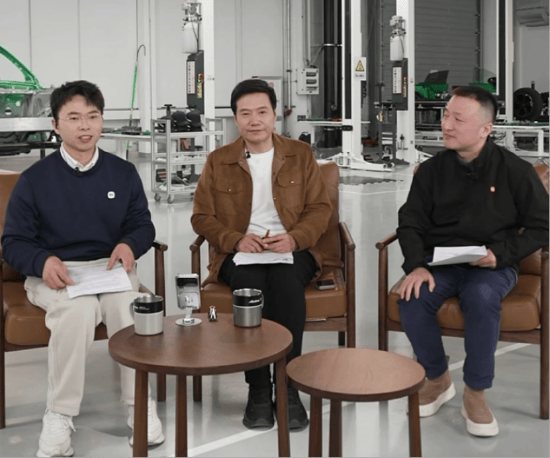
Core Viewpoint - The article discusses Xiaomi's recent live stream led by Lei Jun, addressing various controversies and criticisms regarding the company's new vehicle, the YU7, while emphasizing transparency and commitment to quality [1]. Group 1: Material and Design Controversies - Lei Jun confirmed the authenticity of the "super steel" used in the YU7, developed in collaboration with academic experts, and invited third-party testing to validate its strength [3]. - The design of the YU7's long front end was defended as a balance of aesthetics and practicality, enhancing safety and providing a spacious front trunk [5]. Group 2: Safety Features - The vehicle's wheel detachment during collisions was explained as a safety feature designed to protect passengers by redirecting impact forces [4]. - The YU7's door handle incorporates a dual mechanical design to ensure functionality even in extreme conditions, showcasing industry-leading safety redundancy [7]. Group 3: Marketing and Public Relations - Lei Jun acknowledged the issue of "small print marketing" as a common industry practice and committed to making changes to improve clarity in advertising [8]. - The company refuted rumors about preventing farmers from selling millet, emphasizing its unrelatedness to agricultural products and expressing outrage over the misinformation [9]. Group 4: Legal and Regulatory Matters - Lei Jun denied the claim of having 7,000 legal staff, asserting that the legal team is actively pursuing cases against malicious infringement [10]. - The company is taking steps to combat defamation and misinformation, with a focus on protecting its reputation and the rights of its customers [10]. Group 5: Performance Claims - Lei Jun provided evidence to support the claim of the YU7 achieving 1,300 kilometers on a single charge, clarifying that this was based on real-world testing and not exaggerated marketing [12]. - The statement regarding the vehicle's braking performance was clarified as a subjective expression rather than a technical specification, addressing concerns about misinterpretation [11].


小米集团CEO雷军4小时回应十大质疑:骂小米有流量,但一定要客观,尬黑让我有心理阴影了!谈7000名法务:怎么可能
Sou Hu Cai Jing· 2026-01-04 01:56
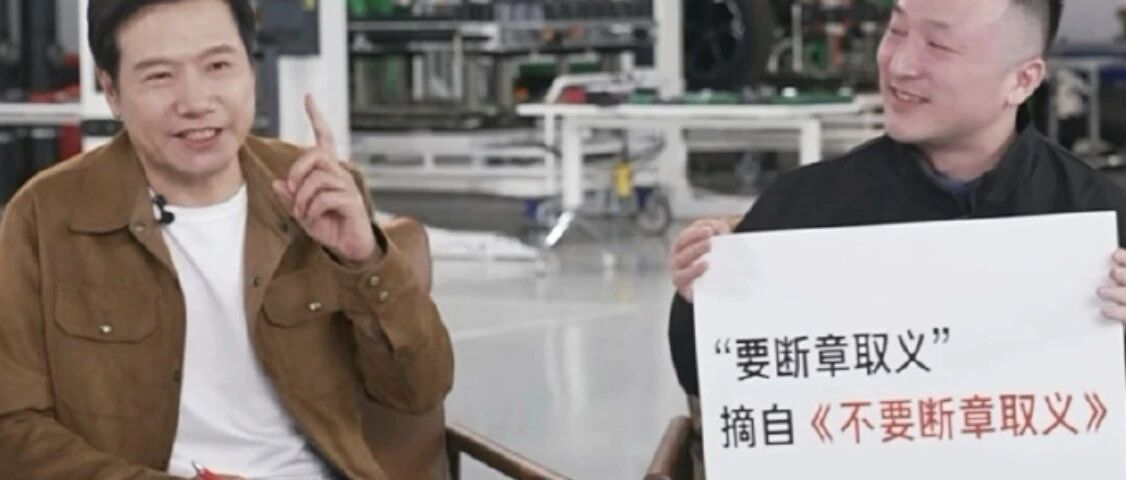
Core Viewpoint - Xiaomi's CEO Lei Jun addressed various criticisms and controversies surrounding the company during a recent live stream, emphasizing the importance of fair and objective feedback while expressing frustration over misinformation and malicious attacks against the brand [2][3][4]. Group 1: Response to Criticisms - Lei Jun highlighted that some critics exaggerate issues for attention, particularly regarding a teardown of Xiaomi's car, which was initially approached with a negative bias but ended up being more favorable [2]. - The company’s public relations manager stated that many negative videos about Xiaomi's vehicles are deliberately edited and misrepresented, leading to unwarranted personal attacks on car owners [3]. - Lei Jun expressed anger over claims that Xiaomi prevents farmers from selling millet, asserting that such accusations are unfounded and part of a smear campaign [4]. Group 2: Commitment to Improvement - Lei Jun acknowledged the issue of small print in advertising as an industry-wide problem and committed to immediate changes to rectify this practice [4]. - He refuted claims that Xiaomi employs 7,000 legal staff, emphasizing the need for a more focused legal team to combat misinformation [4]. - The company’s vice president discussed the strength of their "super steel" used in vehicles, inviting scrutiny and validation of their claims [5]. Group 3: Product Features and Performance - The design feature of "losing wheels" in the Xiaomi YU7 is explained as a safety strategy, intended to protect the vehicle and its occupants during collisions [6]. - The YU7's winter testing results were highlighted, showing superior performance in various metrics compared to competitors, including Tesla, with the lowest overall energy consumption [7]. - Regarding repair costs, the company clarified that the costs associated with replacing certain parts are not as high as perceived, emphasizing the vehicle's design for maintainability [8]. Group 4: Future Goals - Xiaomi aims to deliver 41,000 vehicles in 2025 and has set a target of 55,000 for 2026, indicating a focus on growth and improvement in the automotive sector [8].