绿化带战神

Search documents
新年首播拆小米YU7,雷军回应“小字营销“等质疑!小米汽车26年交付目标55万辆
Sou Hu Cai Jing· 2026-01-04 10:14
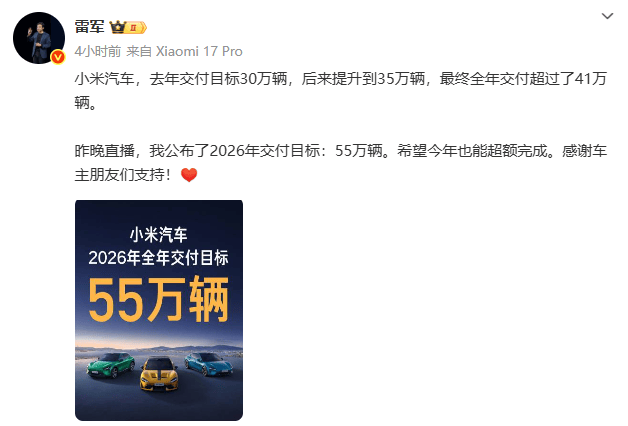
Core Viewpoint - Xiaomi's chairman Lei Jun addressed concerns regarding the materials used in their vehicles during a live stream, emphasizing transparency and inviting scrutiny from the public and media [1]. Group 1: Vehicle Production Goals - Xiaomi aims to deliver 300,000 vehicles by early 2025, increasing the target to 350,000, with an annual goal of over 410,000 vehicles. By 2026, the company plans to focus more on automotive production, setting a delivery target of 550,000 vehicles [4]. Group 2: Response to Marketing Practices - Lei Jun acknowledged the issue of "small print marketing" as an industry norm and committed to immediate changes, stating that previous practices were more about legal compliance than customer perception [5]. - The company’s strategic marketing department noted that the use of small print in promotional materials has been a common practice, but they recognize the need to improve customer communication [5]. Group 3: Addressing Negative Publicity - The term "Green Belt Warrior" was described as a result of malicious editing and labeling by individuals aiming to create negative narratives about the company [6]. - Lei Jun explained that disabling comments during live streams was a measure to prevent spam attacks, ensuring a better experience for genuine users [7]. - The claim of having 7,000 legal staff was dismissed as exaggerated, with a focus on combating misinformation and protecting the brand's reputation [8]. - Lei Jun expressed frustration over the various criticisms faced by the company, emphasizing the importance of objective feedback while condemning malicious attacks [9]. Group 4: Clarification on Misunderstandings - The rumor that "Xiaomi prevents farmers from selling millet" was clarified as a misunderstanding, with the company asserting that there is no connection between its brand and the agricultural product [10].


雷军说“骂小米有流量”,还回应 N 多质疑:不让农民卖小米、200公里瞬间刹停、7000法务…
程序员的那些事· 2026-01-04 05:06
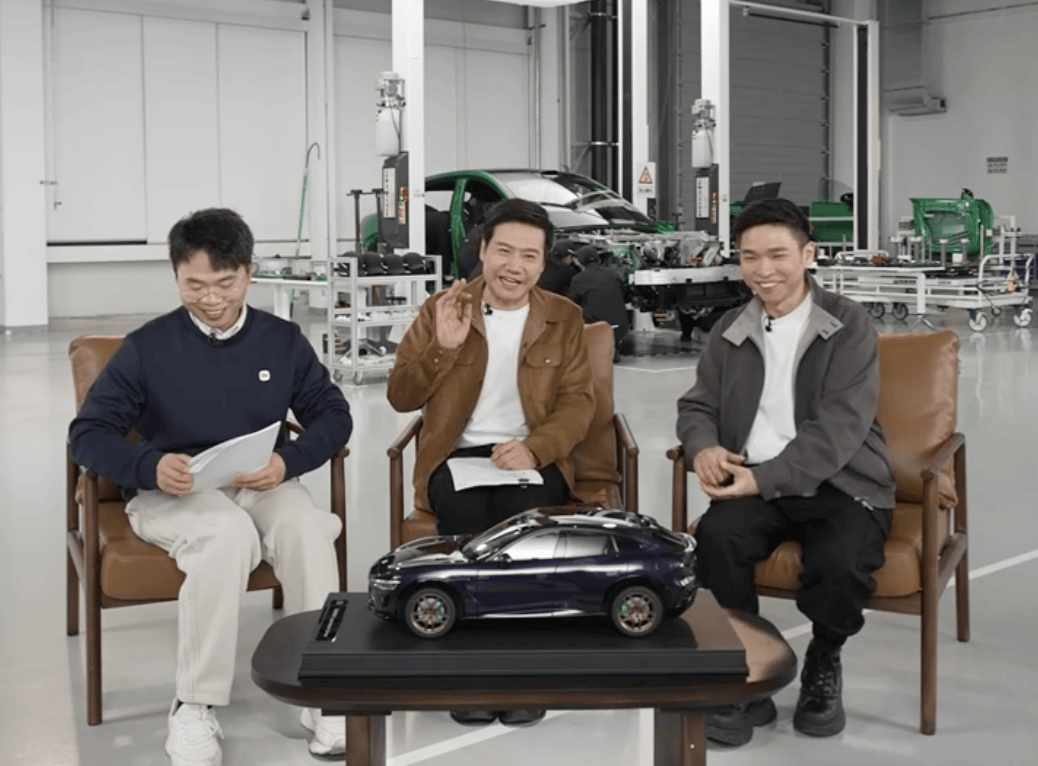
Core Viewpoint - The article discusses Xiaomi's recent live stream led by Lei Jun, addressing various controversies and criticisms regarding the company's new vehicle, the YU7, while emphasizing transparency and commitment to quality [1]. Group 1: Material and Design Controversies - Lei Jun confirmed the authenticity of the "super steel" used in the YU7, developed in collaboration with academic experts, and invited third-party testing to validate its strength [3]. - The design of the YU7's long front end was defended as a balance of aesthetics and practicality, enhancing safety and providing a spacious front trunk [5]. Group 2: Safety Features - The vehicle's wheel detachment during collisions was explained as a safety feature designed to protect passengers by redirecting impact forces [4]. - The YU7's door handle incorporates a dual mechanical design to ensure functionality even in extreme conditions, showcasing industry-leading safety redundancy [7]. Group 3: Marketing and Public Relations - Lei Jun acknowledged the issue of "small print marketing" as a common industry practice and committed to making changes to improve clarity in advertising [8]. - The company refuted rumors about preventing farmers from selling millet, emphasizing its unrelatedness to agricultural products and expressing outrage over the misinformation [9]. Group 4: Legal and Regulatory Matters - Lei Jun denied the claim of having 7,000 legal staff, asserting that the legal team is actively pursuing cases against malicious infringement [10]. - The company is taking steps to combat defamation and misinformation, with a focus on protecting its reputation and the rights of its customers [10]. Group 5: Performance Claims - Lei Jun provided evidence to support the claim of the YU7 achieving 1,300 kilometers on a single charge, clarifying that this was based on real-world testing and not exaggerated marketing [12]. - The statement regarding the vehicle's braking performance was clarified as a subjective expression rather than a technical specification, addressing concerns about misinterpretation [11].
雷军回应“小字营销”
Sou Hu Cai Jing· 2026-01-04 04:31
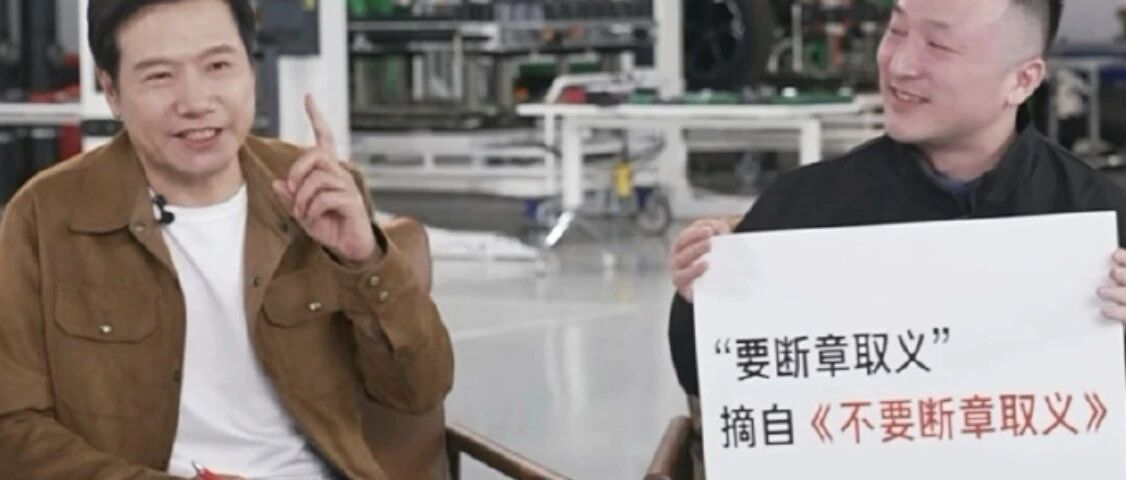
Core Viewpoint - Xiaomi's CEO Lei Jun announced ambitious delivery targets for Xiaomi's electric vehicles, aiming for 410,000 units in 2025 and 550,000 units in 2026, while addressing public concerns during a live stream event [2][3][5]. Group 1: Delivery Targets - In 2025, Xiaomi aims to deliver a total of 410,000 electric vehicles [2]. - For 2026, the delivery target is set at 550,000 units, with an emphasis on not setting targets too high or too low [3]. - The previous year's target was initially 300,000 units, later raised to 350,000, with actual deliveries exceeding 410,000 [5][7]. Group 2: Public Relations and Marketing - Xiaomi's public relations manager responded to criticisms regarding the "Green Belt Warrior" incident, stating it was a deliberate attempt to misrepresent Xiaomi's automotive issues [4]. - Lei Jun addressed the decision to disable comments during live streams, explaining it was to prevent spam attacks that could disrupt the viewing experience for genuine users [4]. - Lei Jun acknowledged the issue of "small print marketing" as a common industry practice that needs to be improved, emphasizing the importance of user perception [4].