就矿找矿

Search documents
为大地“听诊” 为祖国找矿
Zhong Guo Qing Nian Bao· 2026-02-11 08:58
Core Viewpoint - The article highlights the ongoing geological exploration efforts in the Lanping area of Yunnan Province, focusing on the dedication and challenges faced by geologists in discovering mineral resources, particularly in the context of China's growing mineral wealth. Group 1: Geological Exploration Efforts - The geological team, consisting of members with an average age of 30, is actively engaged in fieldwork in the remote and temperature-variable regions of northwest Yunnan, collecting over 6,000 samples from the Jin Ding lead-zinc mine area [3][4] - The team utilizes traditional geological tools alongside modern technology, including GNSS positioning systems and handheld computers, to conduct their work effectively [4] - The exploration is part of a broader initiative during the "14th Five-Year Plan" period, which aims to rejuvenate old resource bases and develop new ones, with significant discoveries reported in various provinces [5][6] Group 2: Mineral Resource Statistics - As of now, China has 174 mineral types and over 70,000 mineral sites, including 1,034 super-large mineral deposits and 4,997 large deposits, a significant increase from the records of 30 mineral types and 1,203 sites 120 years ago [6] - New resource bases are emerging, such as the rich phosphorus mine in Zhenxiong, Yunnan, and the deep brine potassium salt mine in Qinghai, with the Dadonggou gold mine in Liaoning showing promising initial evaluations of nearly 1,500 tons of gold resources [5] Group 3: Team Dynamics and Challenges - The geological team members often face harsh conditions, including freezing temperatures and challenging terrains, which require physical endurance and adaptability [4][10] - The exploration work is not only about finding minerals but also about documenting geological conditions, which can provide valuable data for future explorations [8][12] - Many team members have backgrounds in the military, specifically in geological exploration, which has contributed to their skills and experience in the field [12] Group 4: Personal Commitment and Support - The article emphasizes the personal sacrifices made by geologists, including time away from family, and the importance of familial support in pursuing their geological careers [14][15] - The team members maintain connections with their families through video calls, sharing their experiences and educating their children about geology [15][16]

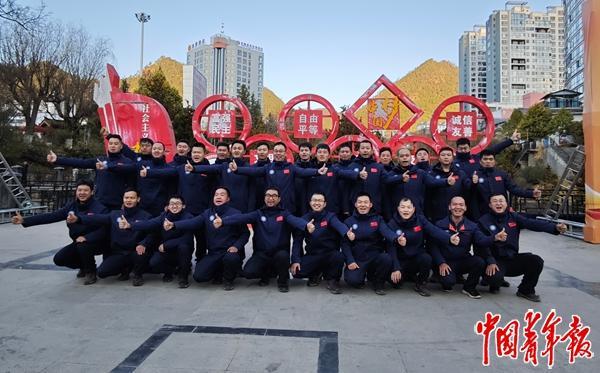
为大地“听诊” 为祖国找矿——跟着地质队员一起探索大地矿藏的“信号”
Zhong Guo Qing Nian Bao· 2026-02-10 05:39
Core Viewpoint - The article highlights the ongoing geological exploration efforts in the Lanping area of Yunnan Province, focusing on the dedication and challenges faced by geological teams in discovering mineral resources, particularly in the context of China's growing mineral wealth and resource base [1][5][8]. Group 1: Geological Exploration Efforts - The geological team, consisting of members with an average age of 30, is actively engaged in fieldwork in the remote and temperature-variable regions of northwest Yunnan, collecting over 6,000 samples from the vicinity of the Jin Ding lead-zinc mine [3][4]. - The team utilizes traditional geological tools alongside modern technology, including GNSS positioning systems and handheld computers, to conduct their work effectively in challenging terrains [4][10]. - The exploration is part of a broader initiative to assess and evaluate mineral resources, with significant findings reported in various regions, including the discovery of new mineral bases and the extension of service life for existing mines [5][6]. Group 2: Mineral Resource Statistics - As of now, China boasts 174 mineral types and over 70,000 mineral sites, including 1,034 super-large mineral deposits and 4,997 large deposits, a significant increase from the records of 30 mineral types and 1,203 sites 120 years ago [6][8]. - The "14th Five-Year Plan" period has seen revitalization in old resource bases and the emergence of new ones, with notable discoveries in provinces like Shanxi, Shandong, and Tibet, contributing to the country's mineral resource portfolio [5][6]. Group 3: Team Dynamics and Personal Stories - The geological teams often face harsh conditions and long hours, with many members expressing gratitude for family support, which is crucial for their demanding work schedules [14][15]. - The article emphasizes the personal sacrifices made by team members, including time away from family, and their commitment to the geological profession, which is often seen as a calling [15][16]. - The camaraderie and shared experiences among team members are highlighted, showcasing their dedication to the mission of resource exploration and the importance of their work for national interests [12][14].
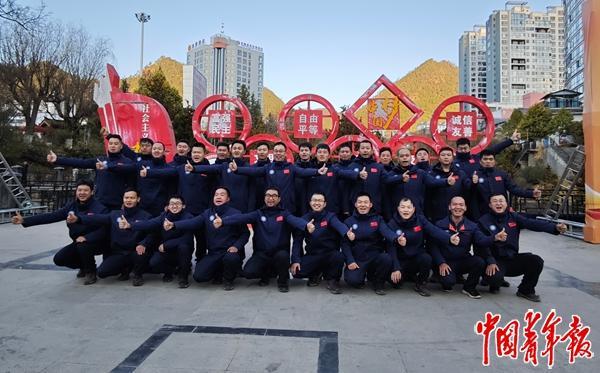
跟着地质队员一起探索大地矿藏的“信号”
Xin Lang Cai Jing· 2026-02-09 22:25
Core Viewpoint - The article highlights the ongoing geological exploration efforts in the Lanping County of Yunnan Province, focusing on the search for mineral resources, particularly in the context of the Jin Ding lead-zinc mine, showcasing the dedication and challenges faced by geological teams in their work [2][4][6]. Group 1: Geological Exploration Efforts - The geological team, consisting of members with an average age of 30, has been actively collecting samples in the Lanping area, having gathered over 6,000 samples in the past month [4][6]. - The team utilizes various tools, including geological hammers and GNSS positioning devices, to conduct their fieldwork, often facing challenging terrain and weather conditions [6][11]. - The exploration is part of a broader initiative to assess and evaluate mineral resources in China, with significant findings reported in both established and emerging mining regions [7][8]. Group 2: Mineral Resource Data - As of now, China has 174 mineral types and over 70,000 mineral sites, including 1,034 super-large mineral deposits and 4,997 large deposits, indicating a substantial increase in mineral resources compared to historical records [8]. - The "14th Five-Year Plan" period has seen the revitalization of old resource bases and the emergence of new ones, with notable discoveries in various provinces, including significant gold resources in Liaoning [7][8]. Group 3: Team Dynamics and Personal Stories - The geological team members often express gratitude for the support of their families, highlighting the personal sacrifices made in pursuit of their geological careers [15][16]. - The article emphasizes the camaraderie and shared experiences among team members, as they navigate the challenges of fieldwork together [17].
“国家高层次人才特殊支持计划”入选者、中国地质科学院矿产资源研究所研究员欧阳荷根,多年潜心研究钼矿成矿理论——科研之光在找矿一线闪耀
Zhong Guo Zi Ran Zi Yuan Bao· 2025-05-22 01:41
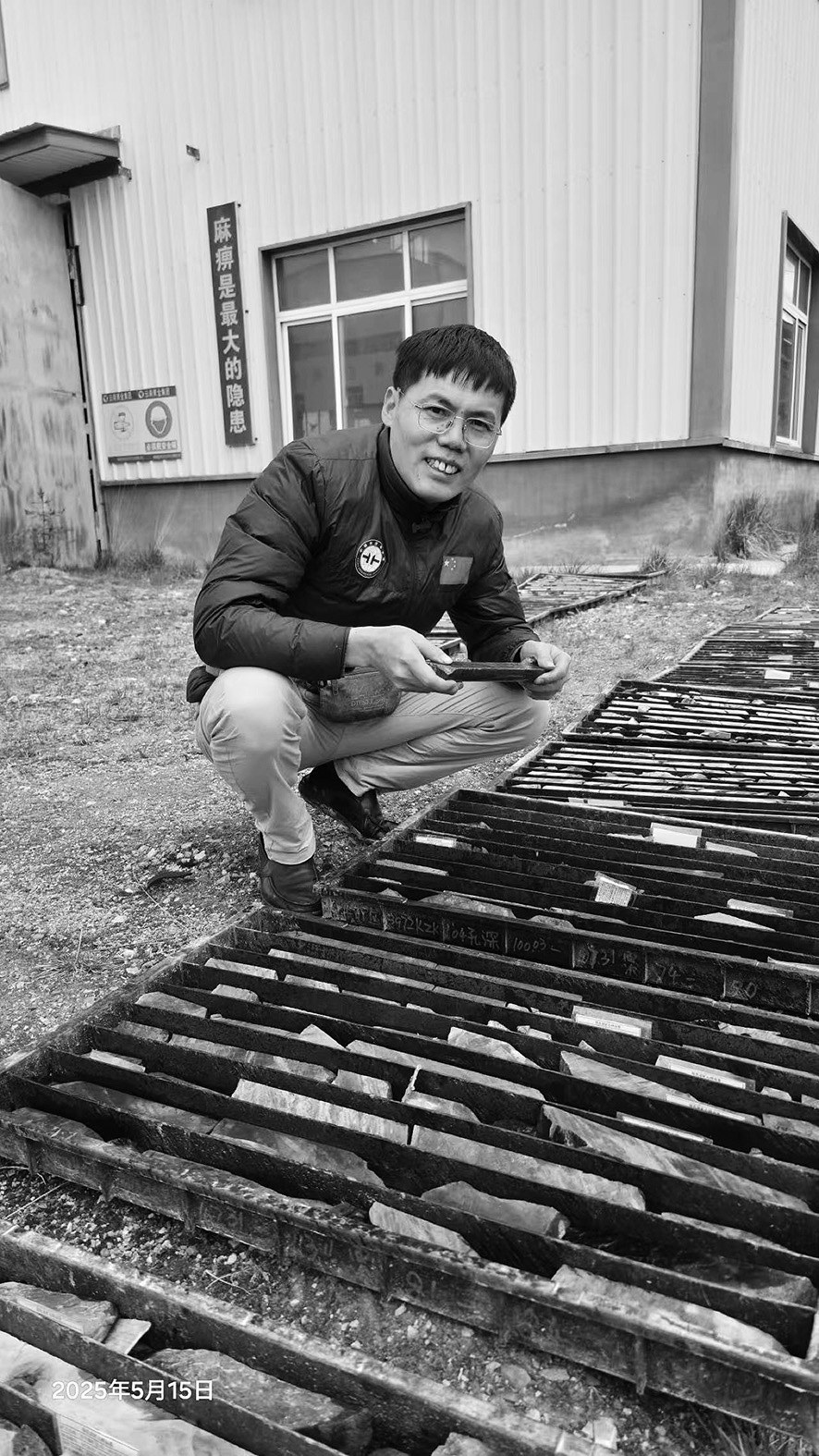
Core Viewpoint - The article highlights the research journey of Ouyang Hegen, a young scholar in the field of geology, focusing on his contributions to molybdenum ore formation theories and the challenges he faces in advancing mining exploration strategies in China. Group 1: Research Background - Ouyang Hegen began his academic journey in 2003 at East China University of Technology, where he studied resource exploration engineering, a national key discipline [5]. - His interest in geology was ignited during a research expedition in 2008, where he participated in a scientific survey in Papua New Guinea, leading to a passion for geological research [6][7]. - After completing his master's degree, he pursued a PhD at China University of Geosciences (Beijing), focusing on mineralogy and petrology, and developed a theoretical model for ore formation [10][11]. Group 2: Focus on Molybdenum Research - Since 2017, Ouyang has dedicated his research to the formation mechanisms of molybdenum ores, leveraging China's significant molybdenum resource reserves, which account for about one-third of the global total [9][18]. - He has proposed a new molybdenum ore formation mechanism that challenges traditional theories, suggesting that mantle-derived magma assimilates reduced crustal materials to form molybdenum deposits in arc environments [10][19]. - His research indicates that the northeastern region of China has vast potential for molybdenum exploration, while the potential for copper mining is limited [11][19]. Group 3: Challenges and Strategies in Mining Exploration - Ouyang identifies two main challenges in the "mining for mining" strategy, which involves exploring known mining areas for hidden deposits: complex geological conditions in deep areas and the limitations of traditional exploration technologies [12][21]. - He advocates for a systematic approach to improve geological data management and the use of advanced technologies, such as 3D modeling and artificial intelligence, to enhance exploration efficiency [14][22]. - Ouyang emphasizes the importance of integrating new theories, innovative exploration methods, and advanced technologies to effectively implement the "mining for mining" strategy [12][22].
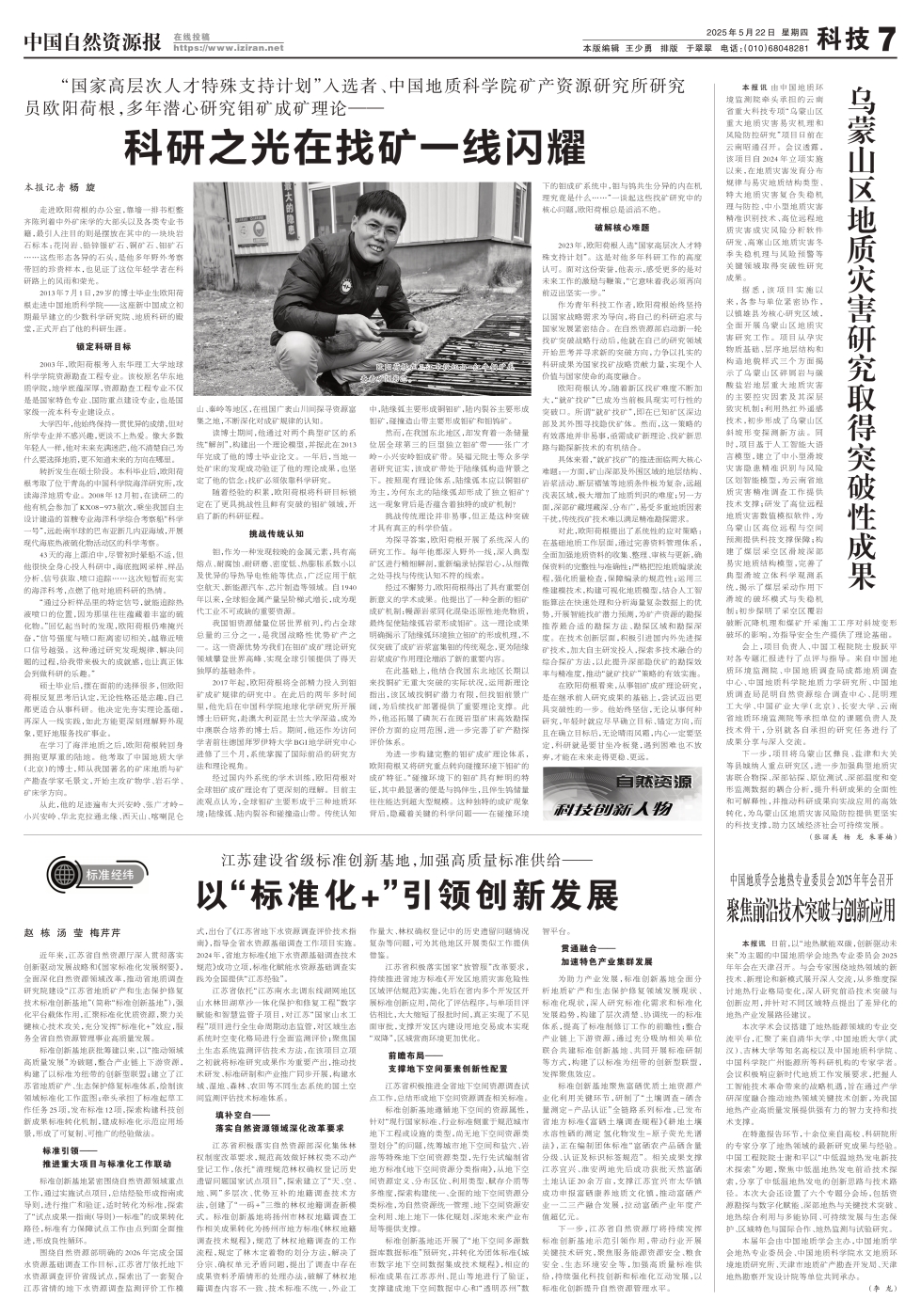
江苏建设省级标准创新基地,加强高质量标准供给——以“标准化+”引领创新发展
Zhong Guo Zi Ran Zi Yuan Bao· 2025-05-22 01:41
Core Viewpoint - Jiangsu Province's Natural Resources Department is implementing an innovation-driven development strategy and standardization to enhance the quality of natural resource management through the establishment of a "Standard Innovation Base" for geological minerals and ecological protection and restoration [1][18]. Group 1: Standard Innovation Base Development - The Standard Innovation Base aims to promote high-quality development in the natural resources sector by integrating resources along the industrial chain and establishing an innovative alliance centered around standards [1][3]. - Since its establishment, the base has undertaken 25 standard drafting tasks and published 12 standards, creating a standard system for geological minerals and ecological protection [1][3][18]. Group 2: Pilot Projects and Standardization - The base has implemented pilot projects to summarize experiences and form guidelines, which are then converted into standards, ensuring a positive cycle of standardization that supports comprehensive advancement [3][19]. - A provincial standard for groundwater resource investigation has been successfully established, providing a model for nationwide practices [19]. Group 3: Reform Implementation - Jiangsu Province is actively implementing reforms in collective forest rights and has developed a multi-layered cadastral survey method to address historical issues in land rights registration [5][20]. - The base has created local standards for land rights surveys, resolving inconsistencies and improving the efficiency of land rights registration processes [5][20]. Group 4: Underground Space Resource Management - The province is advancing pilot projects for underground space resource surveys, developing standards for classification and management of underground resources [7][21]. - A standard for urban digital underground space data integration has been established, supporting the development of data centers and smart platforms [7][21]. Group 5: Industry Development Support - The Standard Innovation Base has analyzed the current state of geological minerals and ecological restoration, creating a clear and coordinated standard system to enhance the foresight of standard formulation [9][21]. - Standards related to selenium-rich land resource utilization have been developed, supporting the certification of over 200,000 acres of natural selenium-rich land [9][21].
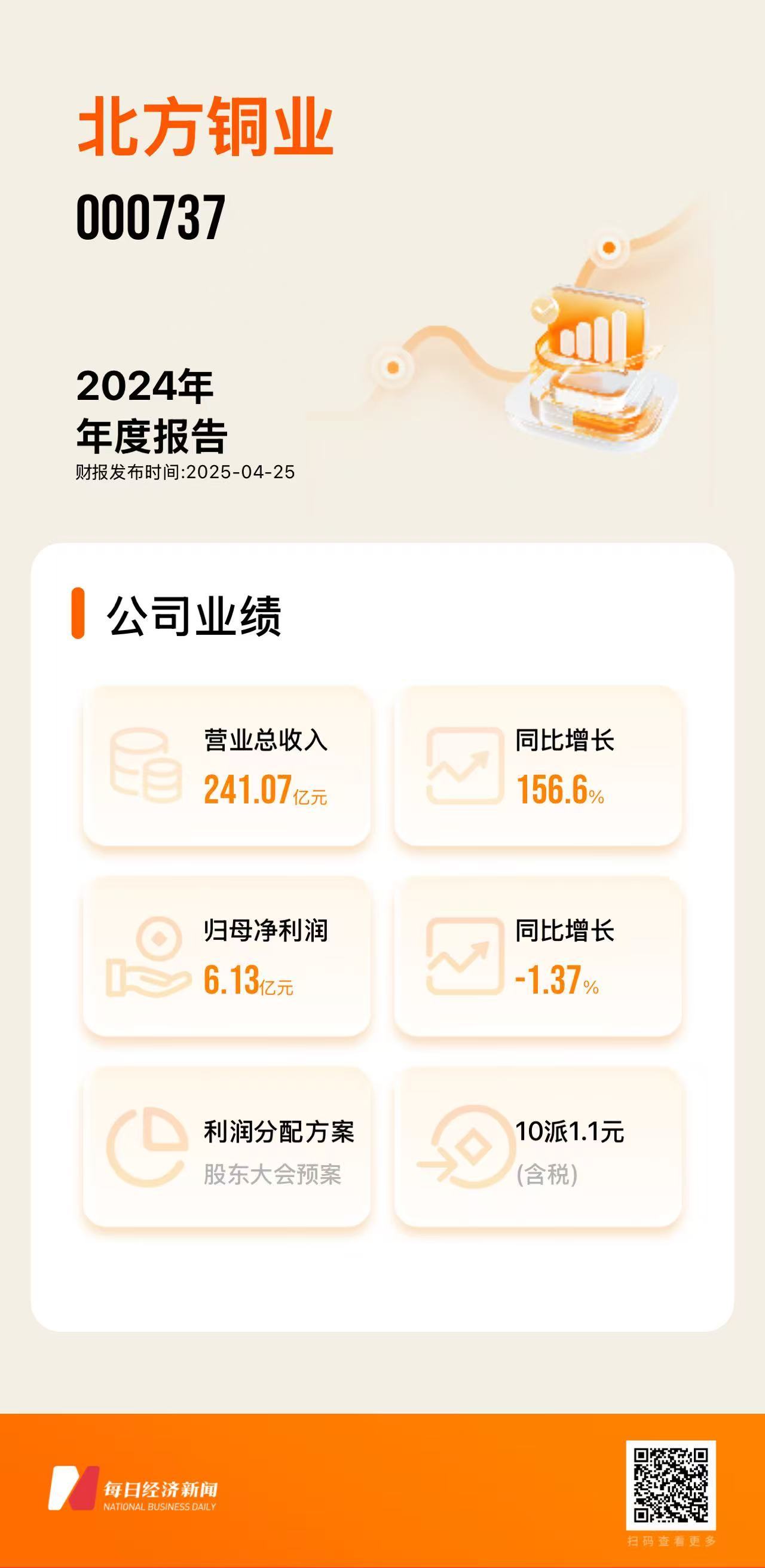
直击股东大会|营收大涨净利却微降 北方铜业:铜精矿现货加工费持续走低影响业绩,今年推进“就矿找矿”
Mei Ri Jing Ji Xin Wen· 2025-05-16 15:05
Core Viewpoint - Northern Copper Industry is actively advancing deep resource exploration at its copper mine, which is expected to increase copper concentrate production after completion [1][4]. Group 1: Company Performance - In 2024, Northern Copper achieved a copper concentrate production of 43,600 tons and cathode copper production of 313,200 tons, representing a year-on-year increase of 133.03% [4]. - The company reported a significant revenue increase, with total operating income reaching 24.107 billion yuan, up 156.60% from the adjusted 9.395 billion yuan in 2023 [4]. - Despite the revenue growth, the net profit attributable to shareholders slightly decreased by 1.37% to 613 million yuan [4]. Group 2: Production and Operations - The company operates a copper mine with an annual processing capacity of 9 million tons and two smelting plants with a total copper concentrate processing capacity of 1.3 million tons [4]. - The increase in production for 2024 was primarily driven by the commissioning of a comprehensive recovery project at its subsidiary, which significantly boosted capacity [6]. - The company plans to maintain stable production levels in 2025, with expected outputs similar to 2024, unless new projects are initiated [9]. Group 3: Market Conditions - The processing fee for copper concentrate has drastically decreased, impacting profitability, with fees dropping from around $60 per dry ton to below $10 [6]. - The copper price is expected to remain volatile but high, with historical peaks observed in May 2024 [7][8]. - The company is engaging in hedging activities to mitigate price fluctuations, with a proposed cap of $600 million for financial derivatives [8]. Group 4: Future Plans - Northern Copper is focusing on deep resource exploration to enhance production, with a project expected to add approximately 15,000 tons of copper concentrate annually [9]. - The company is also exploring international opportunities for resource development and cooperation [9]. - Domestic demand for copper is anticipated to remain stable, driven by traditional industries and emerging sectors such as electric vehicles and renewable energy [10].