
币值稳定

Search documents
潘功胜:探索拓展中央银行宏观审慎和金融稳定功能
Bei Jing Shang Bao· 2025-12-04 02:52
Core Viewpoint - The People's Bank of China emphasizes the dual objectives of maintaining currency stability and financial stability, highlighting the importance of a robust monetary policy framework and macro-prudential management system as foundational tools for macroeconomic management [1][2]. Group 1: Monetary Policy and Macro-Prudential Management - The central bank aims to construct a scientifically sound monetary policy system and a comprehensive macro-prudential management framework to better integrate currency stability and financial stability, which is crucial for supporting the construction of a strong financial nation [1]. - The macro-prudential management framework has been explored in various sectors, including credit, capital, foreign exchange, and real estate markets, reflecting China's early adoption of macro-prudential concepts [1]. Group 2: Financial Risk and Economic Development - There is a need to closely monitor and assess the relationship between macroeconomic operations and financial risks, as high-quality financial development is fundamentally based on high-quality economic development [2]. - The financial market landscape in China has become increasingly sophisticated, necessitating the expansion of macro-prudential management coverage to address the complexities and interconnections within the financial system [2]. Group 3: Systemically Important Financial Institutions - Systemically important financial institutions pose significant risks if not managed prudently, requiring comprehensive assessments and additional regulatory measures to ensure their safe and sound operations [2]. - Collaboration across various sectors is essential for timely identification and action against systemic risks associated with these institutions [2]. Group 4: External Economic and Financial Risks - The external environment is becoming more complex and severe, with increased risks from geopolitical conflicts and trade protectionism, necessitating dynamic assessments of external shocks on China's economy and financial stability [2]. - Establishing robust defenses against external risk shocks is critical for maintaining stability in cross-border capital flows and exchange rates [2].
潘功胜:把握好货币政策的力度、时机和节奏
Bei Jing Shang Bao· 2025-12-04 02:52
Core Viewpoint - The People's Bank of China emphasizes the dual objectives of maintaining currency stability and financial stability, utilizing a robust monetary policy framework and macro-prudential management system as foundational tools for macroeconomic management [1] Group 1: Monetary Policy Framework - The central bank aims to construct a scientifically sound and robust monetary policy system that effectively combines currency stability and financial stability, which is crucial for supporting the construction of a financial powerhouse [1] - It is essential to accurately grasp the connotations and requirements of a scientific and robust monetary policy, focusing on the strength, timing, and rhythm of monetary policy [1] Group 2: Economic Adjustment - The central bank should enhance cross-cycle and counter-cyclical adjustments, ensuring that monetary conditions align with supporting potential economic growth and basic price stability [1] - There is a need to manage the relationship between short-term and long-term objectives, utilizing various monetary policy tools to smooth economic fluctuations while avoiding excessive policy interventions that could lead to diminishing returns and long-term side effects [2] Group 3: Financial Support and Risk Management - The relationship between stabilizing growth and preventing risks is critical, as changes in the economic structure and credit structure affect the demand for monetary credit growth [2] - Improving the efficiency of existing funds and optimizing the allocation of new loans are equally important for supporting economic growth [2] Group 4: Internal and External Relations - Domestic economic and financial conditions primarily guide China's monetary policy, while also considering the spillover effects from other economies and their monetary policy cycles [2] - The flexibility of the RMB exchange rate has gradually increased, and the maturity of foreign exchange market participants has improved, enabling better management of internal and external relationships [2]
潘功胜:“十四五”期间,实现了币值稳定和金融稳定双目标
第一财经· 2025-09-22 08:17
Core Viewpoint - The People's Bank of China (PBOC) is focusing on establishing a dual-pillar framework for monetary policy and macro-prudential policy during the 14th Five-Year Plan period, aiming to achieve both currency stability and financial stability, while supporting high-quality economic development [1] Group 1 - The PBOC is constructing a scientific and robust monetary policy system, with a modern monetary policy framework that is continuously improving, effectively promoting reasonable growth in total financial volume, steady decline in financing costs, and optimization of credit structure, thereby maintaining currency stability [1] - The PBOC is enhancing the macro-prudential policy framework and the systemic financial risk prevention and disposal mechanism [1] - The PBOC is improving the financial market and financial market infrastructure system, having launched a "Technology Board" in the bond market and essentially established a multi-tiered bond market framework [1] Group 2 - The Chinese market is being orderly connected with global financial markets, with a steady increase in foreign capital participation [1] - The PBOC is building a higher-level open financial new system [1]

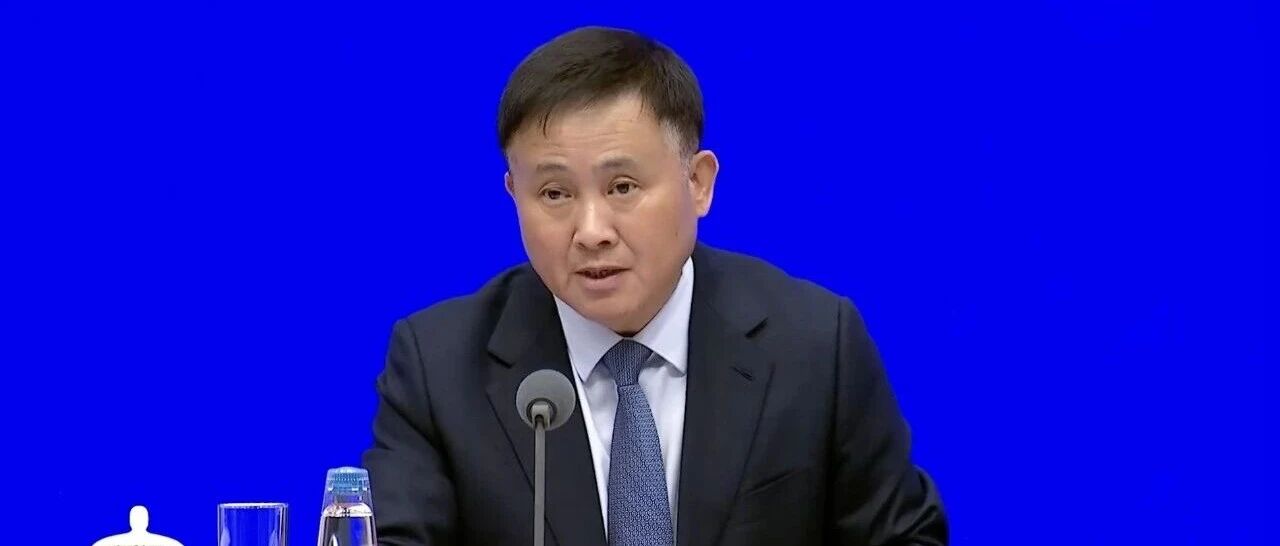
潘功胜:“十四五”期间,实现了币值稳定和金融稳定双目标
Di Yi Cai Jing· 2025-09-22 07:47
Core Viewpoint - The People's Bank of China (PBOC) is focused on establishing a dual-pillar regulatory framework for monetary policy and macroprudential policy during the 14th Five-Year Plan, aiming for currency stability and financial stability to support high-quality economic development [1] Group 1: Monetary Policy - A scientific and robust monetary policy system is being constructed, with a modern monetary policy framework that is continuously improving, effectively promoting reasonable growth in total financial volume, steadily decreasing financing costs, and optimizing credit structure to maintain currency stability [1] Group 2: Macroprudential Policy - The macroprudential policy framework and systemic financial risk prevention and disposal mechanisms are being enhanced [1] Group 3: Financial Market Infrastructure - The financial market and its infrastructure are being improved, including the launch of a "Technology Board" in the bond market, which contributes to the establishment of a multi-tiered bond market framework [1] Group 4: Financial Openness - A higher-level open financial system is being constructed, with orderly connections between the Chinese market and global financial markets, and a steady increase in foreign capital participation [1]