货币政策体系

Search documents
每周海内外重要政策跟踪:多方释放原油储备稳定市场-20260313
Guoxin Securities· 2026-03-13 11:37
Domestic Macro - The National People's Congress emphasized enhancing macroeconomic regulation effectiveness and allocating more funds to high-quality development areas [1][14] - New measures will be introduced to deepen the reform of the ChiNext board and optimize the refinancing mechanism [1][14] - The Ministry of Human Resources and Social Security proposed initiatives to create new jobs through AI and support labor-intensive industries [1][14] - Domestic fuel prices were adjusted, with gasoline and diesel increasing by 695 RMB and 670 RMB per ton, respectively [1][14] - The People's Bank of China will continue to implement a moderately loose monetary policy and enhance counter-cyclical adjustments [1][14] Industrial Policy - The China Securities Regulatory Commission issued new regulations on short-term trading, effective from April 7, 2026, including various financial instruments [2][15] - Key work arrangements for the 14th Five-Year Plan were introduced, focusing on urban commuting, multi-modal transport, and agricultural technology [2][15] - A risk warning was issued regarding the OpenClaw application in industrial sectors, highlighting potential security risks [2][15] - A standard contract template for water-saving management projects was released to enhance efficient water resource utilization [2][15] Local Policy - Wuxi aims to develop its commercial aerospace industry into a national-level industrial cluster worth over 100 billion RMB during the 14th Five-Year Plan [3][16] - Shanghai's implementation plan for the free trade zone focuses on trade facilitation and cross-border services [3][16] - The Hong Kong Independent Commission Against Corruption and the Securities and Futures Commission launched a joint operation to combat insider trading [3][16] Overseas Dynamics - Iran's interim leadership announced a policy of non-aggression towards neighboring countries unless provoked [3][16] - The International Energy Agency and South Korea took measures to release strategic oil reserves to stabilize energy markets [3][16]
宣昌能:中国经济长期向好的支撑条件和基本趋势没有改变
Bei Jing Shang Bao· 2026-02-28 04:26
Core Viewpoint - The G20 meeting emphasized the need for multilateralism and open cooperation to address global economic growth challenges, with a focus on maintaining international economic order and promoting sustainable and inclusive growth [1] Group 1: Global Economic Coordination - The G20 meeting discussed the importance of macro policy coordination and experience sharing among countries to eliminate barriers to economic growth [1] - China supports strengthening financial channels within the G20 to facilitate coordinated macroeconomic policies [1] Group 2: China's Economic Position - China's economy is characterized by a solid foundation, multiple advantages, strong resilience, and significant potential, with long-term positive trends remaining unchanged [1] - The country is promoting a scientific and robust monetary policy system alongside a comprehensive macro-prudential management framework [1] Group 3: Financial Resource Allocation - China aims to enhance the transmission mechanism of monetary policy and improve the coordination between investment and financing in capital markets [1] - The goal is to better direct financial resources to support high-quality growth and facilitate economic structural transformation and upgrading [1]
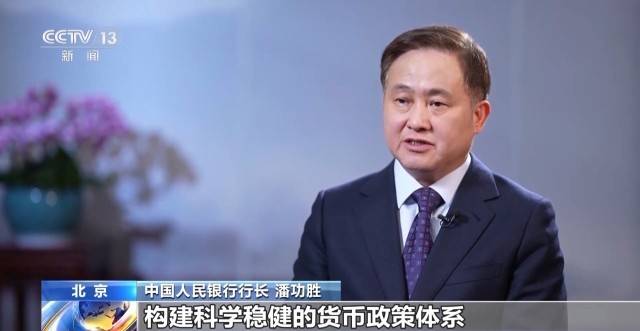
权威访谈 开局“十五五”丨央行行长:有序推进人民币国际化
Sou Hu Cai Jing· 2026-01-24 03:00
Core Viewpoint - The People's Bank of China (PBOC) aims to maintain currency stability and financial stability as dual objectives while promoting a robust monetary policy framework and macro-prudential management system during the 14th Five-Year Plan period [1][3]. Group 1: Monetary Policy Framework - The PBOC will optimize the monetary policy target system, focusing less on quantitative targets and more on interest rate adjustments to enhance financial stability [5]. - A scientific and robust monetary policy system will be constructed, balancing short-term and long-term goals, economic growth, and risk prevention [3]. Group 2: Financial Stability and Risk Management - The PBOC emphasizes the importance of a comprehensive macro-prudential management system to monitor and assess financial risks systematically [9]. - There will be an expansion of macro-prudential coverage to include financial markets, non-bank financial institutions, financial infrastructure, and internet finance [9]. Group 3: International Cooperation and Currency Internationalization - The PBOC will enhance international cooperation in cross-border payments and actively participate in global financial governance reforms [1]. - Efforts will be made to promote the internationalization of the Renminbi and improve the cross-border payment system [1]. Group 4: Interest Rate and Exchange Rate Mechanisms - The PBOC will improve the market-oriented interest rate formation and transmission mechanism to ensure effective monetary policy implementation [7]. - A flexible exchange rate formation mechanism will be maintained, with a focus on preventing excessive fluctuations [7].

央行行长:有序推进人民币国际化
Yang Shi Xin Wen· 2026-01-24 01:31
Group 1 - The core viewpoint emphasizes the need for a moderately loose monetary policy to support domestic growth while promoting international financial cooperation and the internationalization of the Renminbi by 2026 [1] - The People's Bank of China (PBOC) aims to build a multi-channel, comprehensive, secure, and efficient cross-border payment system for the Renminbi, enhancing international cooperation in cross-border payments [1] - The PBOC will focus on maintaining currency stability and financial stability as dual objectives, which are foundational tools for macroeconomic management [2] Group 2 - The PBOC plans to optimize its monetary policy target system during the 14th Five-Year Plan, shifting focus from quantitative targets to more observational and reference indicators, thereby enhancing the role of interest rate adjustments [4] - There will be improvements in the market-oriented interest rate formation, adjustment, and transmission mechanisms to ensure effective transmission from central bank policy rates to market benchmark rates [6] - A comprehensive macro-prudential management system will be established, expanding coverage to include financial markets, non-bank financial institutions, financial infrastructure, and internet finance [8]
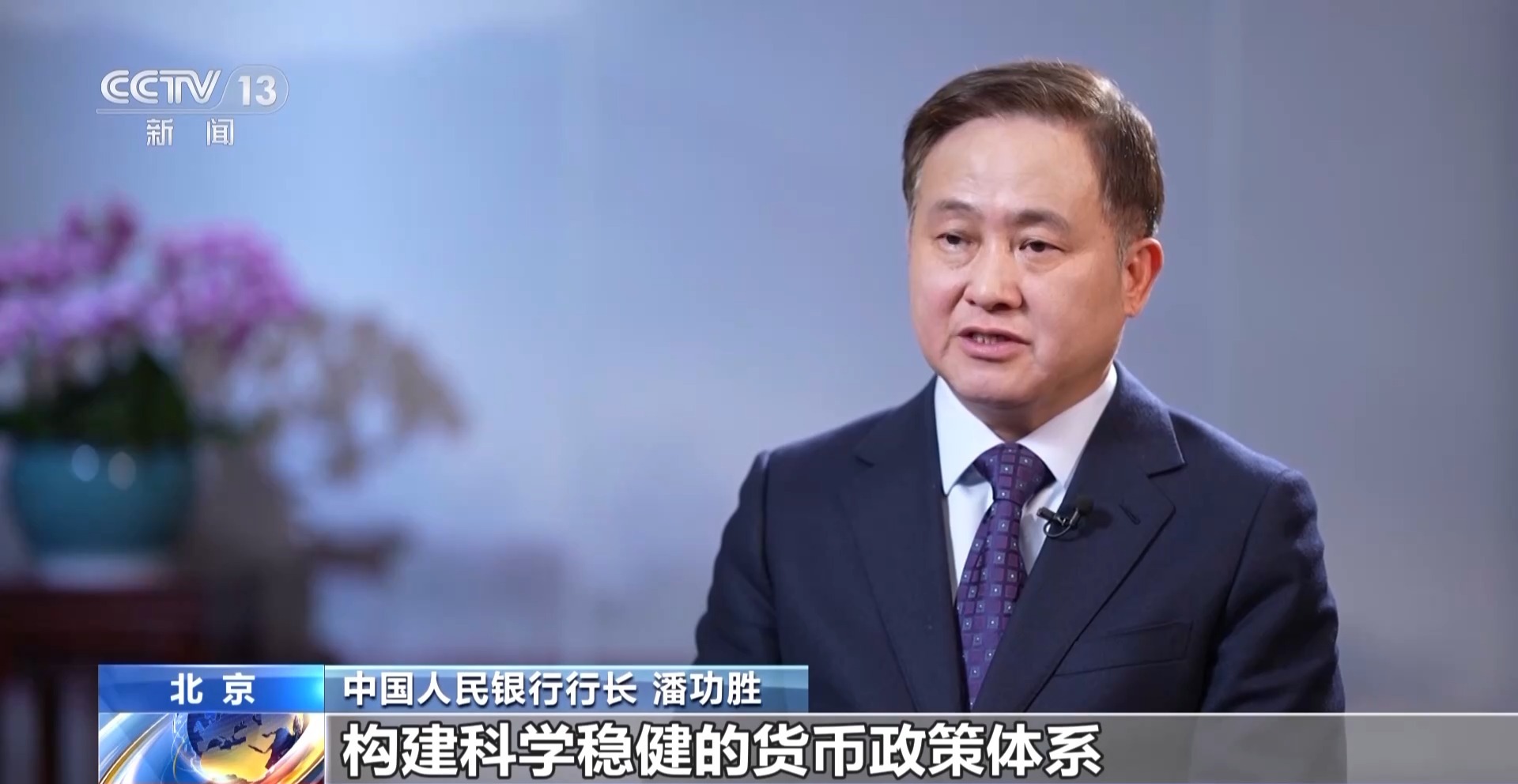
中国人民银行党委书记、行长潘功胜:为实现“十五五”良好开局提供有力金融支撑
Xin Lang Cai Jing· 2026-01-23 00:20
Core Viewpoint - The People's Bank of China (PBOC) emphasizes the implementation of a moderately accommodative monetary policy to support stable economic growth and achieve a strong start for the 14th Five-Year Plan [1][2]. Group 1: Monetary Policy Implementation - The PBOC has implemented a moderately accommodative monetary policy since last year, focusing on enhancing the intersection of central bank policies and market concerns, with plans for continued support in 2024 and 2025 [2][15]. - In 2026, the PBOC will continue to prioritize economic stability and reasonable price recovery as key considerations in monetary policy, aiming to create a favorable financial environment for high-quality development [2][15]. Group 2: Total and Structural Policies - The PBOC will flexibly utilize various monetary policy tools, such as reserve requirement ratio (RRR) cuts and interest rate reductions, to maintain ample liquidity and align social financing scale and money supply growth with economic growth targets [3][16]. - Structural monetary policy tools will be optimized to enhance support for major strategies and key areas, with a recent reduction of 0.25 percentage points in the interest rates of various structural monetary policy tools [3][16]. Group 3: Macro-Prudential Management - The PBOC aims to construct a robust monetary policy system and a comprehensive macro-prudential management framework to support high-quality financial development during the 14th Five-Year Plan [4][18]. - Key initiatives include enhancing risk monitoring and assessment, expanding the coverage of macro-prudential management, and improving the legal framework for macro-prudential policies [8][23]. Group 4: Financial Support for Key Areas - The PBOC plans to increase policy support for expanding domestic demand, technological innovation, and small and micro enterprises, including a dedicated 500 billion yuan for consumer and pension-related loans [9][24]. - An additional 400 billion yuan will be allocated to the existing 800 billion yuan for technology innovation and transformation loans, raising the total to 1.2 trillion yuan [9][25]. Group 5: International Financial Cooperation - The PBOC will actively engage in global governance initiatives, promoting high-level openness in the financial services sector and supporting the internationalization of the renminbi [14][29]. - Efforts will include developing a secure and efficient cross-border payment system and participating in international financial governance and cooperation [14][30].
营造良好货币金融环境 有力支撑经济高质量发展
Zhong Guo Zheng Quan Bao· 2026-01-22 20:56
Core Viewpoint - The article emphasizes the importance of financial policies in supporting China's economic stability and high-quality development, particularly through the implementation of a moderately loose monetary policy as outlined in the 14th Five-Year Plan [1][2]. Group 1: Implementation of Monetary Policy - The People's Bank of China (PBOC) will continue to implement a moderately loose monetary policy through 2026, focusing on stabilizing economic growth and ensuring reasonable price recovery [1]. - The PBOC plans to utilize various monetary policy tools, including reserve requirement ratio (RRR) cuts and interest rate reductions, to maintain ample liquidity and align social financing scale with economic growth targets [1]. - There is still room for further RRR and interest rate cuts this year, with an emphasis on managing interest rate policies to keep financing costs low [1]. Group 2: Structural Policy Adjustments - The PBOC has introduced several structural monetary policies, including a 0.25 percentage point reduction in the interest rates of various structural monetary policy tools [2]. - The PBOC has increased the quotas for agricultural and small enterprise loans by 500 billion to 4.35 trillion and for technology innovation loans by 400 billion to 1.2 trillion [2]. - New support tools for carbon reduction and consumer services have been expanded, indicating a focus on diverse financial needs [2]. Group 3: Financial System Development - The PBOC aims to construct a robust monetary policy framework and a comprehensive macro-prudential management system to support high-quality financial development during the 14th Five-Year Plan [3]. - Key initiatives include optimizing the monetary policy target system, enhancing the market-based interest rate formation mechanism, and improving the structural monetary policy tool system [3][4]. - The PBOC will also focus on improving policy communication and transparency to enhance market confidence [3]. Group 4: Support for Real Economy - The PBOC will enhance financial support for key areas such as domestic demand expansion, technological innovation, and small and micro enterprises [5]. - Specific measures include a dedicated 500 billion yuan for consumer services and elderly care loans, as well as increased support for technology innovation and private enterprises [5][6]. - Collaboration with various government departments will be strengthened to improve the effectiveness and accessibility of financial services [6]. Group 5: Global Financial Governance - The PBOC is committed to advancing global financial governance reforms and international cooperation, promoting a fair and inclusive global financial system [6][7]. - Efforts will include enhancing the cross-border payment system for the yuan and participating in international financial regulatory frameworks [7]. - The PBOC aims to align its regulatory capabilities with high-level openness to maintain national financial security [7].
潘功胜:逐步发挥国债买卖在流动性管理中的作用
Bei Jing Shang Bao· 2026-01-22 12:03
Group 1 - The People's Bank of China (PBOC) will advance six key areas to construct a scientific and robust monetary policy system during the 14th Five-Year Plan period [1][2] - The first area focuses on optimizing the monetary policy target system, particularly intermediate variables, and reducing emphasis on quantitative targets to enhance the role of interest rate adjustments [1] - The second area involves improving the mechanism for the issuance of base currency with Chinese characteristics, gradually utilizing government bond transactions in liquidity management to maintain ample liquidity in the banking system [1] Group 2 - The third area aims to enhance the market-oriented interest rate formation, adjustment, and transmission mechanisms to ensure smooth transmission from central bank policy rates to market benchmark rates and various financial market rates [2] - The fourth area seeks to improve the structural monetary policy tool system to better guide and incentivize financial institutions in optimizing loan allocations [2] - The fifth area focuses on refining the RMB exchange rate formation mechanism, maintaining market determination of the exchange rate while ensuring exchange rate flexibility and preventing excessive fluctuations [2] - The sixth area emphasizes increasing policy communication and transparency, establishing a credible, normalized, and institutionalized market communication mechanism [2]
央行行长潘功胜:将优化货币政策目标体系,把金融总量更多作为观测性、参考性、预期性指标
Sou Hu Cai Jing· 2026-01-22 09:55
Core Viewpoint - The People's Bank of China aims to construct a scientific and stable monetary policy system during the "14th Five-Year Plan" period, focusing on six key areas of work [1] Group 1: Monetary Policy Goals - Optimize the monetary policy target system, particularly intermediate variables, and reduce emphasis on quantitative targets, allowing financial totals to serve as observational, reference, and anticipatory indicators to enhance the role of interest rate adjustments [1] Group 2: Liquidity Management - Improve the short, medium, and long-term currency issuance mechanism with Chinese characteristics, gradually utilizing government bond transactions in liquidity management to maintain ample liquidity in the banking system [1] Group 3: Interest Rate Mechanism - Enhance the market-oriented interest rate formation, adjustment, and transmission mechanism to facilitate the transmission from central bank policy rates to market benchmark rates and various financial market rates [1] Group 4: Structural Monetary Policy Tools - Refine the structural monetary policy tool system to better guide and incentivize financial institutions in optimizing loan allocations, addressing the "five major articles" of finance [1] Group 5: Exchange Rate Mechanism - Improve the RMB exchange rate formation mechanism, maintaining the decisive role of the market in exchange rate formation, ensuring exchange rate flexibility, and preventing excessive exchange rate fluctuations [1] Group 6: Policy Communication - Increase policy communication and transparency, further establishing a credible, normalized, and institutionalized market communication mechanism [1]
潘功胜:逐步发挥国债买卖在流动性管理中的作用,保持银行体系流动性充裕
Xin Lang Cai Jing· 2026-01-22 09:44
Core Viewpoint - The People's Bank of China (PBOC) is adapting its monetary policy framework to the evolving financial system, with a focus on enhancing the scientific and effective nature of its regulation as the proportion of new loans in the social financing scale has dropped below 50% by 2025 [1][4]. Group 1: Monetary Policy Framework Enhancements - The PBOC aims to optimize the monetary policy target system, particularly intermediate variables, by downplaying quantity targets and using financial totals more as observational, reference, and expectation indicators to facilitate greater interest rate regulation [1][4]. - There will be improvements in the short, medium, and long-term matching of the currency issuance mechanism with Chinese characteristics, gradually enhancing the role of government bond trading in liquidity management while maintaining ample liquidity in the banking system [1][4]. - The PBOC plans to establish a market-oriented interest rate formation, regulation, and transmission mechanism to ensure smooth transmission from the central bank's policy rates to market benchmark rates and various financial market rates [1][4]. Group 2: Structural and Communication Improvements - The PBOC intends to enhance the structural monetary policy tool system to better guide and incentivize financial institutions in optimizing loan allocations, contributing to the "Five Major Articles" of finance [2][5]. - There will be improvements in the formation mechanism of the Renminbi exchange rate, emphasizing the decisive role of the market in exchange rate formation while maintaining exchange rate flexibility and preventing excessive fluctuations [2][5]. - The PBOC aims to increase policy communication and transparency, further establishing a credible, normalized, and institutionalized market communication mechanism [3][6].
焦点访谈丨金融“活水”赋能经济发展 城市更新托举美好生活
Sou Hu Cai Jing· 2026-01-22 00:47
Group 1: Monetary Policy and Economic Development - The People's Bank of China (PBOC) will implement a moderately loose monetary policy in 2026 to support stable economic growth and high-quality development, aligning with the "14th Five-Year Plan" goals [5][11][33] - The PBOC has introduced eight policy measures, including the first structural interest rate cut in 2026, to direct more financial resources towards technology, green initiatives, and small and micro enterprises, facilitating economic restructuring [3][6] - The average reserve requirement ratio for financial institutions is currently 6.3%, indicating room for further cuts, while the net interest margin has stabilized at 1.42% since 2025, providing a favorable environment for interest rate reductions [7][9] Group 2: Financial Support for Key Sectors - The PBOC will allocate 500 billion yuan for consumer and elderly care loans, and increase the quota for technology innovation loans from 800 billion yuan to 1.2 trillion yuan, targeting high R&D investment private SMEs [9][18] - An additional 5 trillion yuan will be allocated for agricultural and small enterprise loans, with a dedicated 1 trillion yuan for private enterprises, enhancing financing accessibility for these sectors [9][29] - The PBOC emphasizes the importance of financial institutions in supporting domestic demand, technological innovation, and small and micro enterprises as part of a strategy to strengthen domestic circulation and promote high-quality development [9][11] Group 3: Urban Development and Housing Quality - The Ministry of Housing and Urban-Rural Development plans to implement urban renewal actions in 2026, focusing on improving living conditions and environments for residents [17][20] - The "Good House" initiative aims to enhance housing quality through better standards, designs, materials, and maintenance, with a comprehensive deployment outlined in the recent guidelines [24][26] - The ministry will adopt a targeted approach to real estate regulation, emphasizing localized strategies to stabilize the housing market and support reasonable financing needs of real estate companies [29][31]